The Evolving Economics of Veterinary Procurement
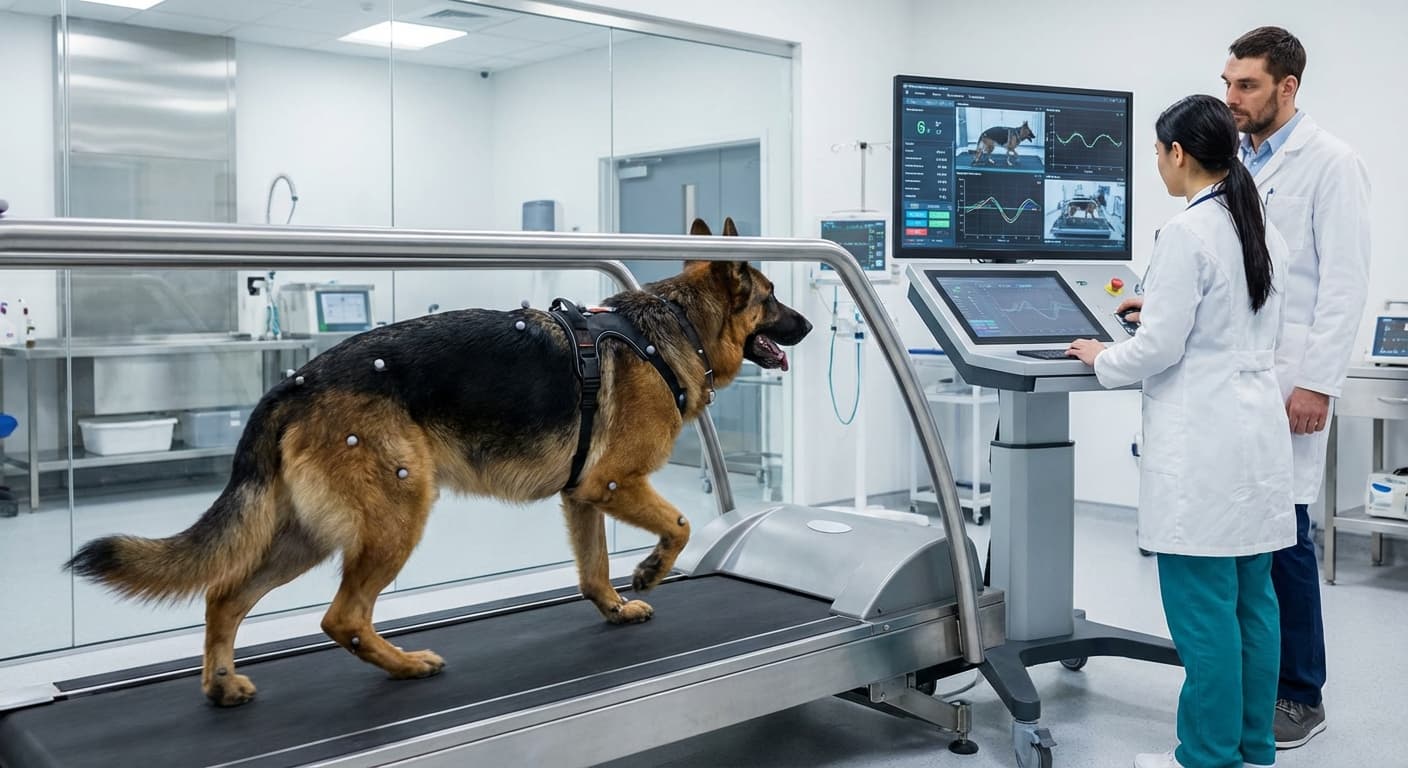
The landscape of veterinary asset management has shifted dramatically over the last decade. It is no longer sufficient to purchase equipment solely based on clinical necessity; today's practice owners must view every acquisition through the lens of revenue generation per square foot. In the realm of physical rehabilitation, the Pet Treadmill has emerged not merely as a therapeutic tool, but as a central pillar of scalable service models. The demand for post-operative rehabilitation, geriatric mobility management, and canine conditioning has grown faster than general practice revenue, forcing clinics to scrutinize the commercial viability of their equipment choices.
For a procurement manager or clinic owner, the challenge lies in distinguishing between glorified consumer-grade equipment and true medical-grade systems. The market is saturated with devices that look robust on a spec sheet but fail under the relentless duty cycle of a busy referral center. Understanding the total cost of ownership (TCO)—which includes downtime, belt replacement frequency, and motor longevity—is critical. This analysis aims to dissect the engineering and economic factors that define a high-performance investment.
Critical Engineering Standards & Component Quality
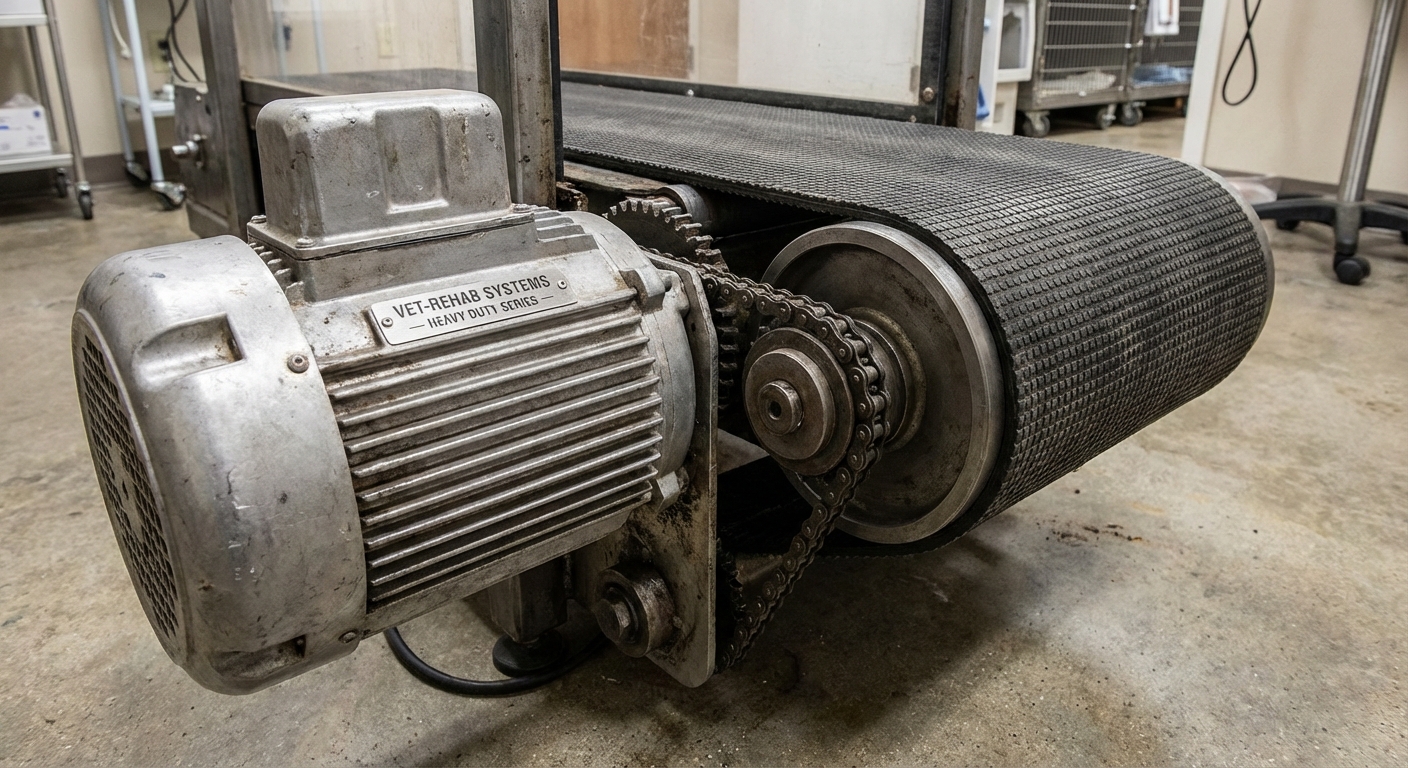
From an engineering perspective, the primary failure point in most veterinary treadmills is the drive system's inability to handle low-speed high-torque requirements. Unlike human treadmills, which rely on the momentum of a bipedal runner to assist the belt, a dog—particularly a neurological patient—may be dead weight or have an irregular gait that increases friction coefficient against the deck. This requires a motor capable of delivering consistent torque at speeds as low as 0.5 km/h without "stuttering," a phenomenon that can terrify a patient and compromise therapy.
High-quality systems utilize AC motors with Variable Frequency Drives (VFD) rather than the cheaper DC motors found in home equipment. An AC motor system provides superior thermal management. In my fifteen years of consulting, I have seen countless DC motors burn out because they rely on high RPMs for cooling; when running slow for a spinal rehab patient, they overheat. Conversely, a medical-grade unit often employs a dedicated cooling fan independent of the motor shaft, ensuring thermal stability even during hours of low-speed operation.
Another often overlooked aspect is the deck suspension and belt composition. A clinical environment involves urine, fur, and claw traction. The belt material must be resistant to hydrolysis and provide grip without being abrasive to paw pads. The deck beneath must offer shock absorption to protect osteoarthritic joints but remain rigid enough to provide proprioceptive feedback. When evaluating the Pet Treadmill TM-J100, for instance, notice the engineering focus on surface traction and ease of sanitization, which are non-negotiable for infection control protocols.
Comparison Table: Industry Benchmarks vs. Medical-Grade Standards
To make an informed decision, procurement teams must look past the maximum speed and focus on the parameters that affect clinical utility and durability.
Feature | Standard Commercial Unit | Medical-Grade Veterinary System | Clinical Impact |
|---|---|---|---|
Motor Type | DC Brush Motor (Peak Duty) | AC Motor with VFD (Continuous Duty) | AC motors prevent overheating during low-speed rehabilitation sessions. |
Speed Increment | 0.5 - 1.0 km/h steps | 0.1 km/h precise adjustment | Micro-adjustments are crucial for neurological retraining where 0.5 km/h is too large a jump. |
Weight Capacity | Static Load often overstated | Dynamic Load tested (up to 100kg+) | Ensures stability for giant breeds like Mastiffs without belt slippage. |
Control Interface | Integrated Console only | Remote Control + Side Panel | Allows therapists to control the unit while manually supporting the animal's gait. |
Emergency Stop | Magnetic Key | Dual E-Stop (Key + Button) | Redundant safety systems are essential for liability management. |
Enhancing ROI through Workflow Optimization
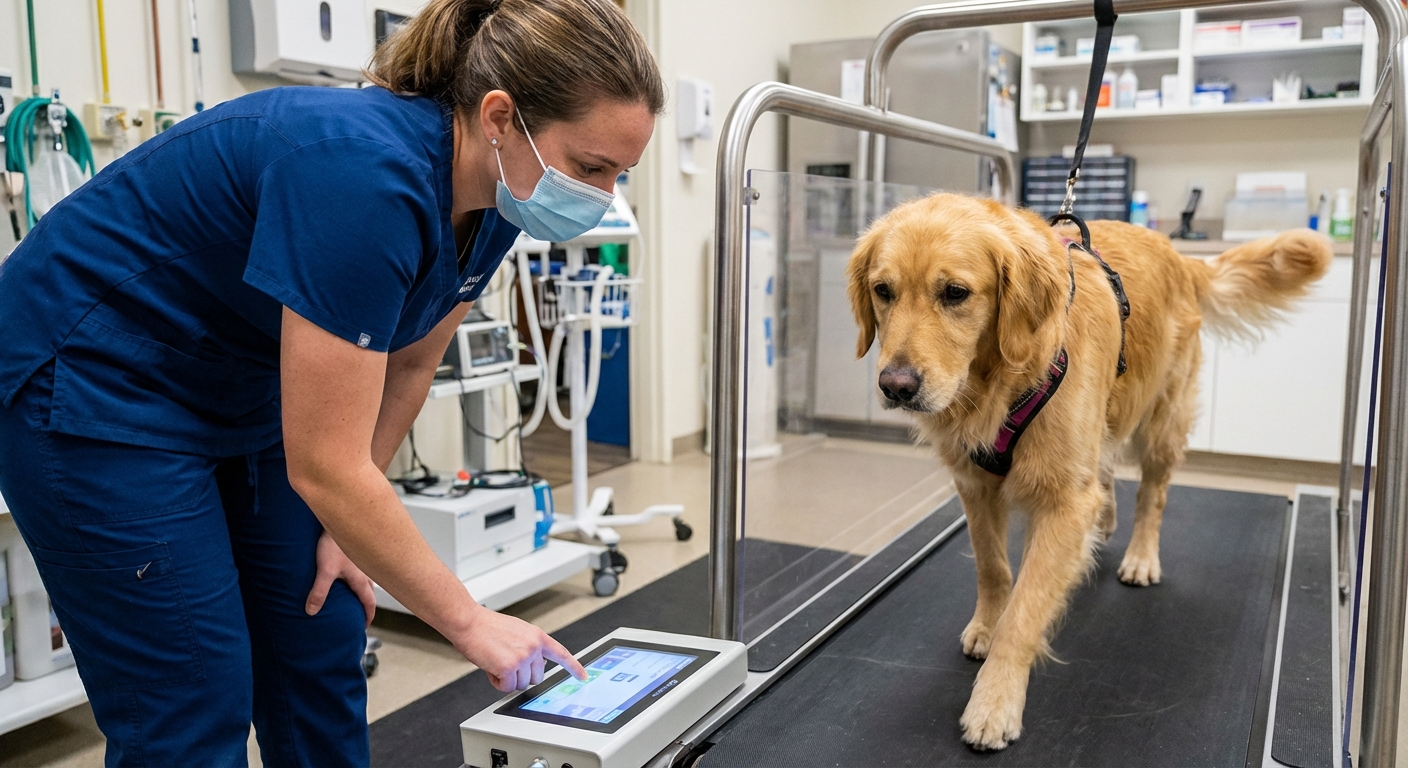
The financial viability of a rehabilitation wing depends heavily on workflow efficiency. A bottleneck occurs when equipment setup takes longer than the therapy session itself. High-performance treadmills feature "presets" and quick-entry designs that minimize the transition time between patients. For busy practices, the difference between a 2-minute setup and a 10-minute struggle with a nervous dog equates to potentially two lost billable hours per day.
Hydrotherapy adds another layer of complexity to the ROI calculation. While dry treadmills are excellent for gait patterning and conditioning, underwater treadmills (UWTM) offer buoyancy that is indispensable for severe osteoarthritis or post-op cruciate repair. The Pet Treadmill TM-C100/C100W series, for example, bridges this gap by offering robust water resistance and specialized chassis designs. However, the decision to deploy a UWTM requires analyzing water management systems. Does the clinic have the plumbing infrastructure? Does the unit have an integrated heater and filtration system that operates rapidly enough to cycle water between patients? If the water tank takes 20 minutes to fill and drain, patient throughput is severely capped.
Successful clinics often utilize a tiered pricing strategy. Dry treadmill sessions are marketed for weight management and conditioning (lower price point, higher volume), while underwater sessions command a premium for intensive medical rehabilitation. This mix diversifies revenue streams and maximizes the utilization of the Pet Treadmill category across different patient populations.
Strategic Procurement Checklist for Clinic Managers
Before signing a purchase order, procurement managers should enforce a rigorous vetting process. It is not enough to ask "how much is it?"; you must ask "how will it survive?".
What is the guaranteed parts availability timeline? If a control board fails, can the supplier ship a replacement within 48 hours? A treadmill sitting idle for three weeks is a liability, not an asset.
Does the vendor provide specific calibration protocols? Medical devices require calibration to ensure the speed displayed matches the belt speed. This is vital for tracking clinical progress accurately.
Is the incline mechanism electric or manual? Manual inclines are cheaper but require stopping the therapy and offloading the dog to adjust. This disrupts the workflow and is physically taxing for staff. Electric incline is mandatory for a professional setting.
How is the noise profile at operating speeds? According to research on veterinary behavioral health, loud mechanical noises can induce anxiety, elevating cortisol levels and hindering rehabilitation progress. Reference sources like the American Veterinary Medical Association (AVMA) often highlight the importance of low-stress handling environments.
The HQS Medical Value Proposition
HQS Medical approaches equipment manufacturing with a philosophy rooted in clinical reality. We understand that a veterinary clinic is a harsh environment for electronics and mechanical systems. Our engineering prioritizes sealed components to resist moisture and hair ingress, rigid steel frames to prevent chassis flex, and intuitive software that allows technicians to focus on the animal, not the manual.
We do not simply rebrand human fitness eqipment. Our designs, such as the advanced Pet Treadmill TM-C300/C300W, are the result of direct feedback from rehabilitation specialists who demanded longer tracks for natural stride extension and silent motor operation. Compliance with international electrical safety standards is maintained to ensure that our partners can operate without fear of regulatory or insurance complications.
Maintenance Strategies for Equipment Longevity
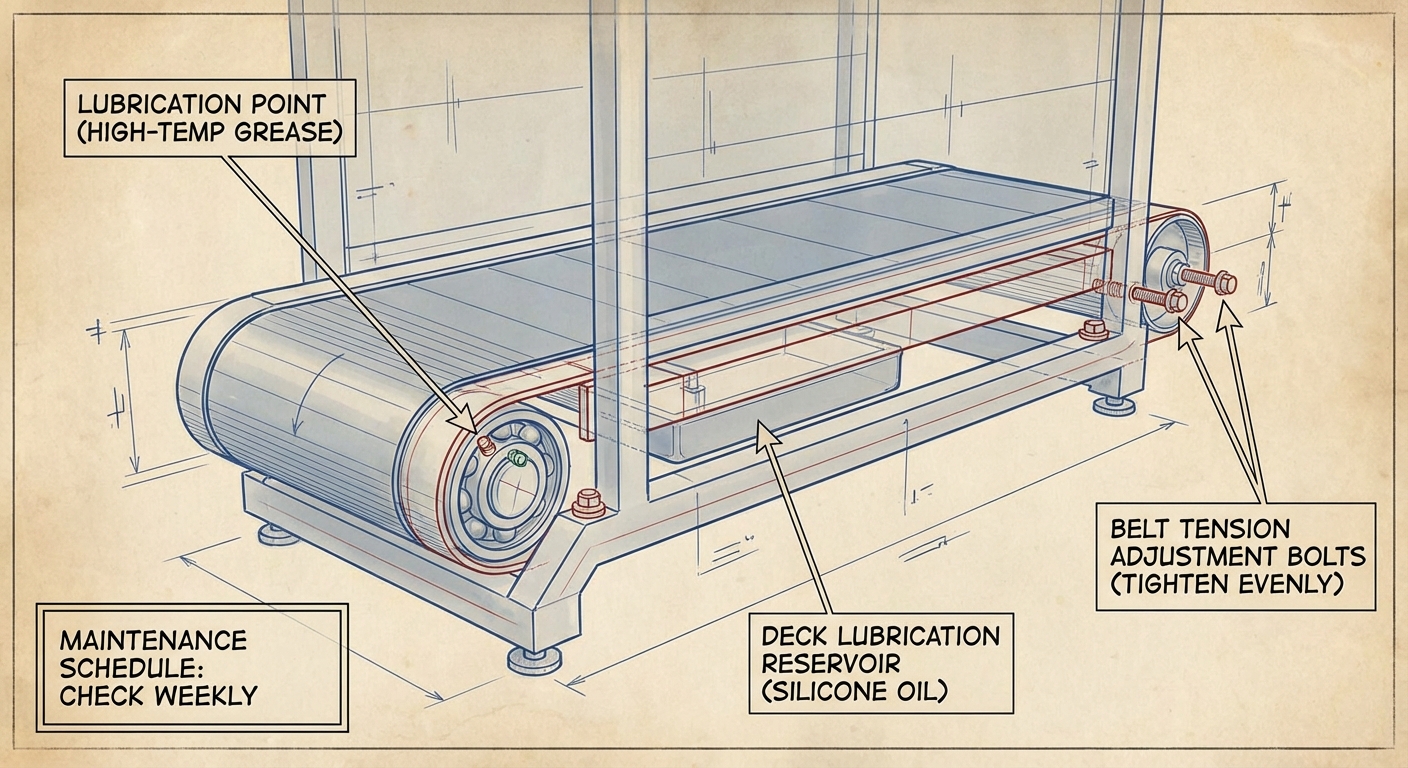
The lifespan of a treadmill is directly correlated to the discipline of its maintenance schedule. In my experience, 80% of motor controller failures are caused by friction buildup due to lack of lubrication or accumulated debris. Veterinary clinics are unique because of the sheer volume of fur. This fur migrates into the motor compartment, blocks air intakes, and insulates the electronics, leading to thermal death.
An effective maintenance protocol involves weekly vacuuming of the motor compartment (after unplugging the unit) and checking the belt tension. The belt should be loose enough to allow the motor to spin freely but tight enough to prevent slippage under load. Over-tightening the belt is a common error that destroys motor bearings rapidly. For underwater systems like the Pet Treadmill TM - C300S/C300WS, chemical balance of the water is equally critical to prevent corrosion of stainless steel components and hardening of the rubber belt seals.
Furthermore, sensor calibration should be performed annually. Gait analysis relies on precise speed data; if the machine reads 3.0 km/h but is actually moving at 2.6 km/h, the therapeutic data is compromised. Establishing a service contract or training an in-house technician on these basics is the best way to protect the investment.
Frequently Asked Questions
How much space is required for a professional pet treadmill setup?
While the footprint of the machine itself might be approximately 2 meters by 0.8 meters, you must allocate a "safety zone" of at least 1 meter behind the treadmill and 0.5 meters on each side. This allows staff to safely maneuver around the patient and intervene if necessary. For underwater units, additional space for water storage tanks and pumps is required, often necessitating a dedicated wet room.
Can a single treadmill accommodate both Chihuahuas and Great Danes?
Generally, yes, provided the treadmill has a sufficiently long track (at least 160-180cm walking surface) and a low starting speed (0.2-0.5 km/h). However, very small dogs may be intimidated by large overhead gantries. The key is the "stride length" capacity; a small treadmill physically cannot accommodate a Great Dane's stride, causing gait abnormalities, whereas a large treadmill can accommodate a small dog.
What is the typical ROI timeline for a veterinary treadmill?
Based on a conservative model of 3 sessions per day at $40-$60 per session, most clinics break even on a high-end dry treadmill within 4 to 6 months. Underwater treadmills have a higher capital cost and maintenance overhead, typically extending the ROI period to 12-18 months, though they often attract new referral clients which boosts overall clinic revenue.
Is gait analysis software necessary for the treadmill?
For general conditioning and weight loss, visual observation is often sufficient. However, for specialized orthopedic rehab or neurological cases, integrated gait analysis (or compatibility with external motion capture systems) provides objective data to track recovery. This data is invaluable for justifying continued therapy to clients and insurance providers.
Final Recommendations for Informed Decision-Making
Choosing the right Pet Treadmill is a strategic decision that impacts clinical outcomes and financial performance. By prioritizing medical-grade motor torque, ensuring precise speed control, and planning for rigorous maintenance, clinics can turn this equipment into a cornerstone of their practice. Avoid the temptation of low-cost consumer hybrids; the downtime and safety risks invariably outweigh the initial savings. Focus on robust engineering that supports your clinical team in delivering superior patient care.