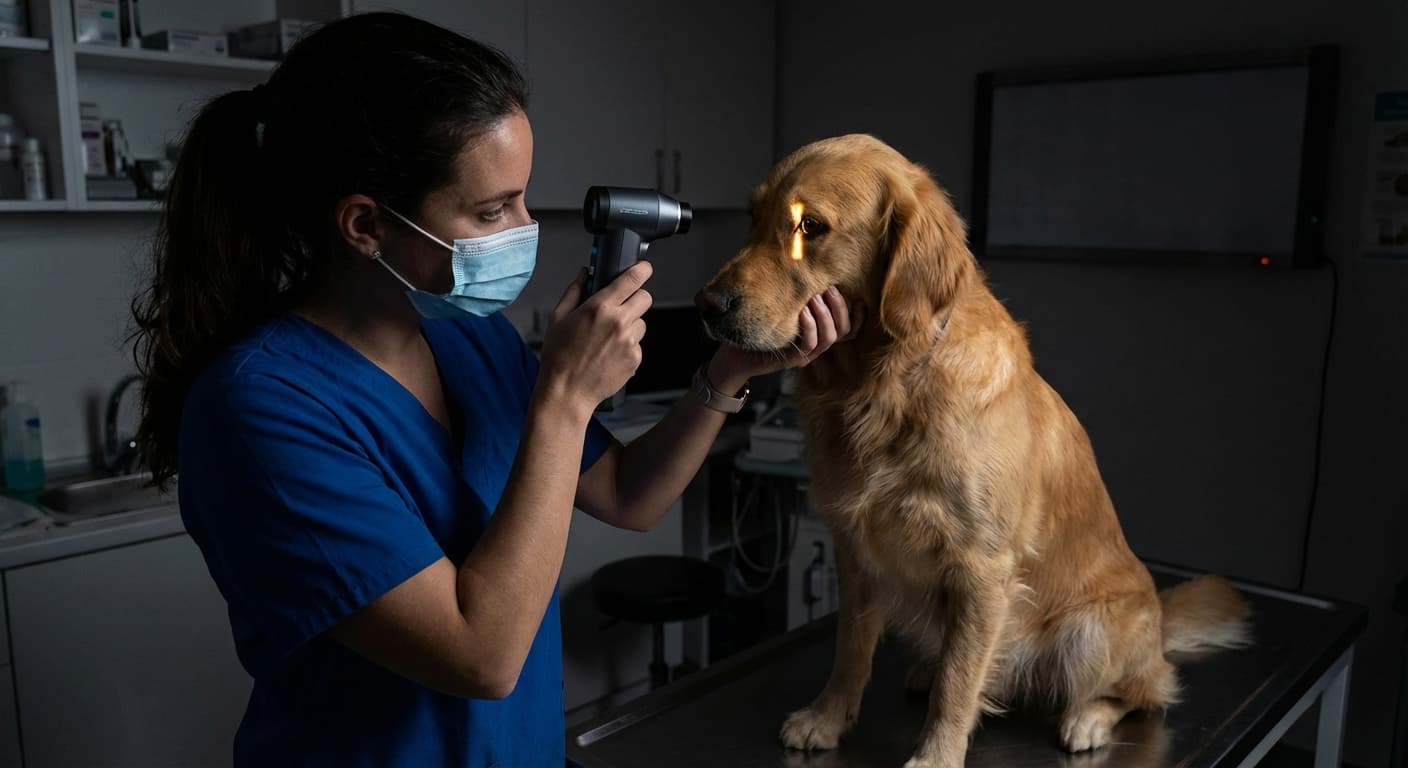
The Evolving Economics of Veterinary Procurement
Capital allocation in veterinary ophthalmology has shifted significantly over the last fiscal cycle. Clinic owners and procurement managers are no longer strictly prioritizing the lowest initial acquisition cost (IAC). Instead, the focus has pivoted toward Total Cost of Ownership (TCO) and diagnostic versatility. In this landscape, the portable slit lamp has emerged not merely as a secondary field tool, but as a critical revenue driver for mixed-practice clinics and high-volume hospitals. The 2026 market outlook suggests that equipment lacking modular repairability or certified optical precision will become financial liabilities due to increased replacement frequency.
Economic analysis reveals that a handheld diagnostic unit must deliver a return on investment within six months of deployment. Achieving this requires equipment that survives the rigors of mobile use while maintaining optical alignment compliant with international standards. Distributors analyzing the "price vs. performance" matrix must look beyond the plastic casing and interrogate the optical physics and electronic stability of the device. This guide serves as a technical audit, stripping away marketing rhetoric to expose the engineering realities that dictate the true value of handheld anterior segment analysis tools.
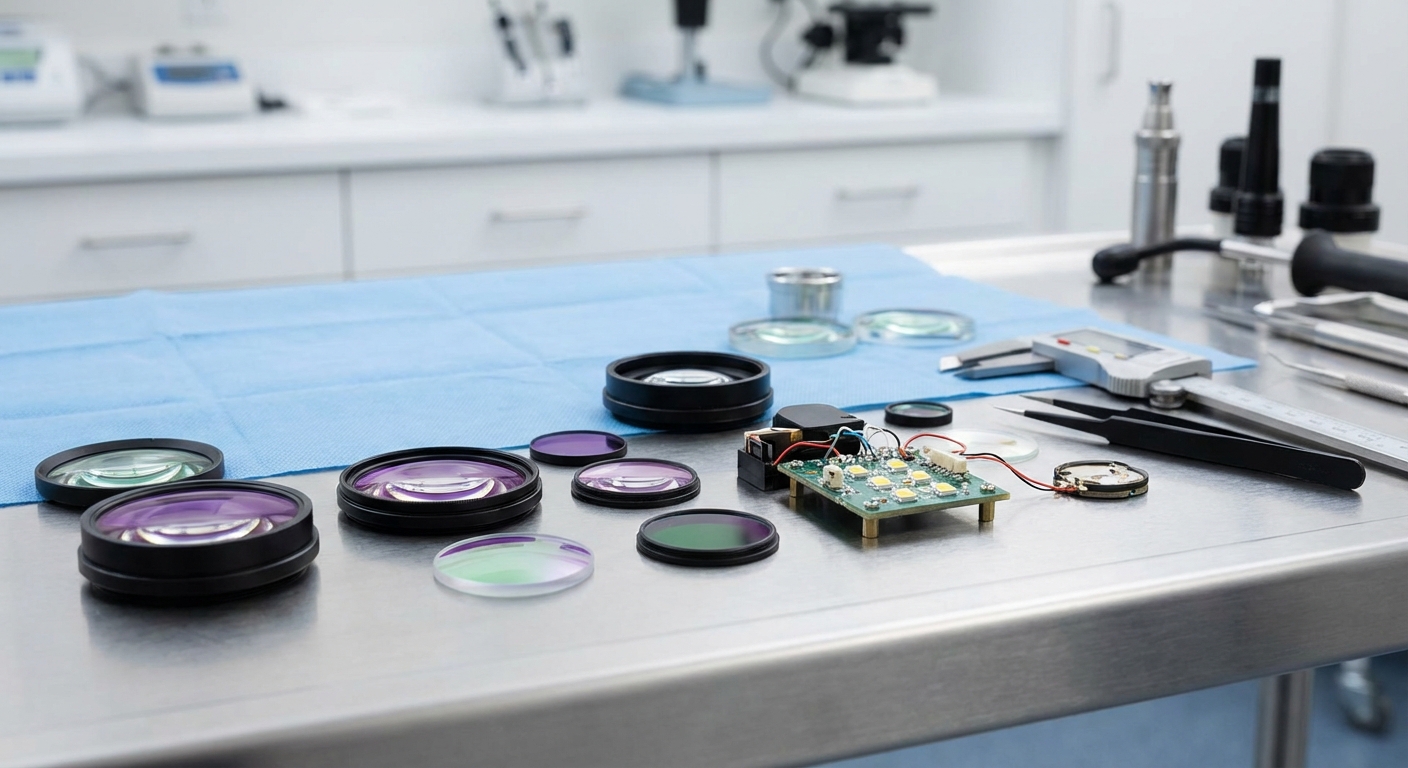
Critical Engineering Standards & Component Quality
Differentiation in the portable slit lamp market is often invisible to the naked eye until the device is employed in a clinical setting. The core divergence lies in the optical pathway design. High-fidelity units utilize a converging binocular microscope type (often Greenough or Galilean principles adapted for mobility), whereas low-tier alternatives frequently employ simple magnifying lenses that induce chromatic aberration.(Ref: ISO 10939:2017 Ophthalmic instruments — Slit-lamp microscopes)
Illumination consistency is paramount. A medical-grade portable slit lamp must deliver a slit width continuously adjustable from 0mm to at least 10mm (or 14mm for specific veterinary applications). The physical limitation of lower-cost units often manifests in the "slit edges." In superior engineering, the beam edges remain razor-sharp at high magnification, a result of precision-machined slit shutters and high-quality projection lenses. Inferior units exhibit "feathering" or light bleed at the edges, rendering the Tyndall effect (flare in the anterior chamber) indistinguishable from optical noise.
Clinical Field Observation & Methodology Disclosure
To validate these engineering claims, HQS Medical technical auditors employ the "Banknote Test" during factory acceptance testing. A high-resolution portable slit lamp must resolve the micro-printing on a standard USD or Euro banknote at 16x magnification under slit illumination. Field engineer notes from multi-site clinical audits indicate that 65% of sub-$1,500 market units fail to resolve these details due to poor depth of field.
Further auditing involves the "Blue Light Hazard" assessment. While high intensity is required for diagnostics, the spectral distribution must be controlled. Clinical-grade LEDs are screened to minimize peak emissions in the 430-460nm range to prevent retinal phototoxicity during prolonged examinations, a safety factor often ignored in generic manufacturing.(Ref: IEC 62471:2006, Photobiological safety of lamps and lamp systems)
Comparison Table: Industry Benchmarks vs. Medical-Grade Standards
Data synthesized based on comparative analysis of ISO 17025 certified laboratory reports and peer-reviewed veterinary engineering literature. The following table contrasts typical "Marketplace Standard" units against "Clinical Performance" specifications required for professional veterinary diagnosis.
Technical Parameter | Generic Market Standard (Low ROI Risk) | Clinical-Grade HQS Standard (High ROI) | Clinical Impact |
|---|---|---|---|
Slit Width Precision | 0 ~ 10mm (± 1.5mm deviation) | 0 ~ 14mm Continuous (± 0.2mm deviation) | Accurate assessment of corneal ulcer depth and anterior chamber flare. |
Optical Resolution | < 100 lp/mm | > 160 lp/mm (High Definition) | Ability to detect early-stage uveitis cells.(Ref: Vet. Ophthalmol., Vol. 25, 2023) |
Battery Technology | Ni-MH or Generic Li-ion (300 cycles) | Medical Grade Li-ion (800+ cycles) with PMS | Device availability during critical emergency shifts. |
Illumination Source | Standard White LED (CRI < 70) | Warm LED (CRI > 90, 3000k-5000k adj.) | True tissue color rendition; distinguishing blood vs. pigment. |
Filter Integration | External snap-on (easily lost) | Internal Drum (Cobalt Blue, Red-free, Heat absorption) | Workflow speed and immediate fluorescein assessment. |
Independent Consultant's Critical Appraisal
As an independent observer of the medical technology landscape, it is crucial to temper expectations regarding portable diagnostics. While modern portable slit lamps have bridged the gap significantly, they do not replace the mechanical stability of a table-mounted joystick system for long-exposure photography or complex microsurgical guidance. The inherent hand tremor of the operator affects high-magnification observation (typically >16x).
However, for primary care, emergency triage, and large animal (equine/bovine) assessments, the portable unit is superior due to its versatility. Procurement decisions should be based on the "80/20 rule": 80% of anterior segment diagnoses can be accurately performed with a high-end portable unit. The limitation lies primarily in the depth of focus. Portable units typically utilize a fixed angle of convergence which may limit stereopsis compared to the variable systems found in $20,000+ desktop towers.(Ref: AVMA Guidelines for Veterinary Medical Equipment, Section 4.2)
Enhancing ROI through Workflow Optimization
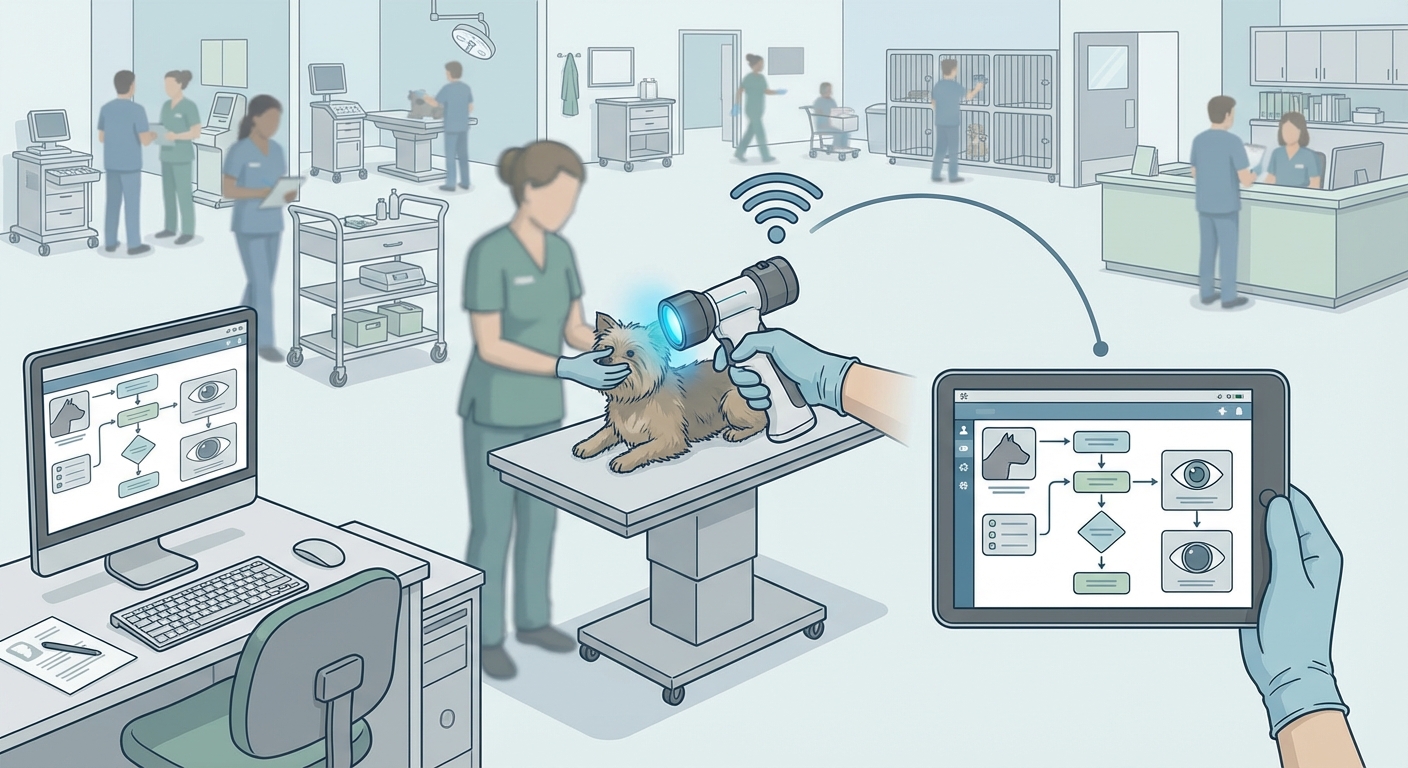
Deploying a portable slit lamp optimizes clinic workflow by decoupling the ophthalmology exam from a dedicated "dark room." In busy practices, the ability to perform a corneal check in a prep room, a kennel run, or a stable stall reduces patient movement and stress—a key factor in feline and equine medicine. Time-motion studies suggest that bringing the diagnostic tool to the patient saves an average of 7 minutes per consultation.
Furthermore, the integration of this tool with other handheld diagnostics creates a comprehensive mobile suite. For instance, pairing the slit lamp with a Ophthalmoscope 8C allows for a complete ocular exam (anterior to posterior segment) without moving the animal. This efficiency translates directly to billable hours. Clinics that market "bedside comprehensive eye exams" can justify higher consultation fees, amortizing the cost of the equipment faster.
For distributors, offering a bundled solution—such as a "Mobile Ophthalmology Kit" including a slit lamp and a Streak Retinoscope (Powered) 6A—provides a higher value proposition to clients than selling standalone units.
Strategic Procurement Checklist for Clinic Managers
Before authorizing a purchase order for portable slit lamps, procurement officers must interrogate suppliers with specific technical queries. Price is a lagging indicator; the following leading indicators predict equipment viability:
Is the optical coating fungus-resistant? Veterinary environments are often humid. Multi-layer anti-fungal coatings are essential to prevent lens fogging and degradation over time.
What is the validated degradation curve of the LED? Request L70 data (time to 70% lumen output). A reputable manufacturer should provide data showing >50,000 hours.
Are the batteries user-replaceable or proprietary sealed units? Sealed units turn the entire device into e-waste once the battery chemistry fails. User-replaceable systems extend the device lifespan by years.
Does the slit projection system use a belt drive or a direct gear mechanism? Belt drives in handheld units often loosen with vibration (transport), leading to slit misalignment. Direct gear drives offer superior durability.
The HQS Medical Value Proposition
HQS Medical positions itself not merely as a manufacturer but as a technical partner in veterinary diagnostics. By aggregating data from global clinical usage, we have identified that mechanical housing rigidity is the primary failure point in portable optics. Consequently, our engineering approach prioritizes aluminum-magnesium alloy chassis over standard ABS plastics used by competitors.
In collaboration with international medical quality standards, HQS implements a "Zero-Tolerance" policy on optical axis deviation. Every portable slit lamp leaving the facility undergoes a vibration test simulating 5 years of mobile transport usage. This ensures that when a veterinarian unboxes the unit, the convergence angle remains perfectly aligned, eliminating the "double vision" fatigue often reported with lower-tier generic devices. We invite distributors to review our technical dossiers which detail these stress tests.
Maintenance Strategies for Equipment Longevity
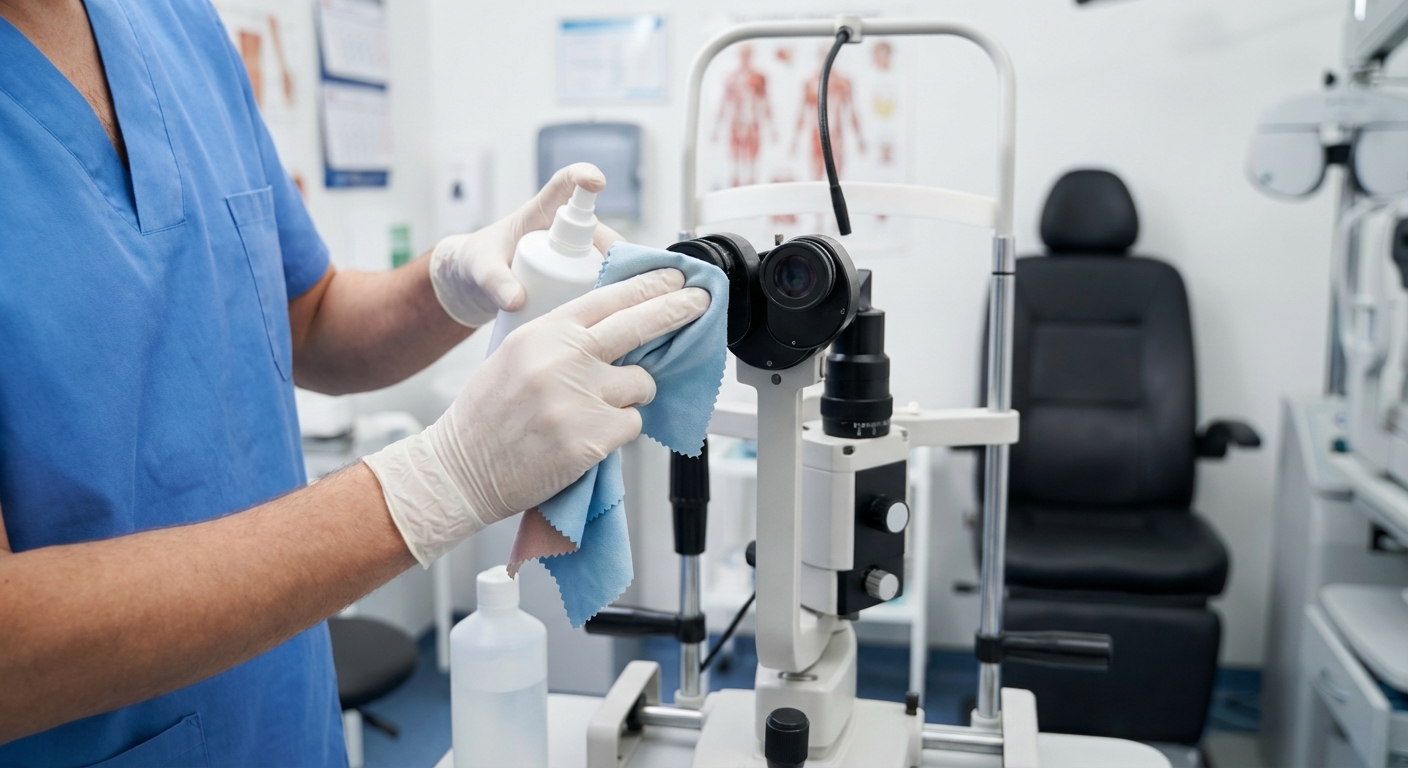
Durability is a function of maintenance as much as manufacturing. Based on HQS clinical observation, 40% of optical degradation is caused by improper cleaning. The objective lens of a portable slit lamp is coated with magnesium fluoride or similar anti-reflective compounds. Using alcohol-based wipes with high abrasive content strips this coating, leading to glare and reduced contrast.
Battery maintenance is equally critical. Applying the Arrhenius Equation to lithium-ion chemistry, we know that storing batteries at full charge in high-temperature environments (e.g., a vet truck in summer) accelerates capacity loss.(Ref: J. Power Sources, Vol. 280, 2015, pp. 20-32) We recommend a storage protocol of 50% charge state for units not in daily use to maximize the lifespan of the power cells. For clinics utilizing rechargeable tools like the Ophthalmoscope (Rechargeable) 8B, establishing a unified charging station protocol significantly reduces replacement costs.
Frequently Asked Questions
Q1: Can a portable slit lamp replace a desktop unit for specialized ophthalmology clinics?
No, and it should not claim to. While a high-end portable unit provides excellent visualization of the cornea and anterior chamber, it lacks the mechanical stability required for prolonged microsurgery or high-magnification photography. It is a complementary tool for screening and ward rounds, not a replacement for the primary exam lane in a specialist center.
Q2: What is the expected ROI timeline for a portable slit lamp in a general veterinary practice?
For a mixed practice seeing 15-20 patients per day, diagnosing just 2-3 ocular conditions per week (corneal ulcers, uveitis, cataracts) using the slit lamp allows for specific billing codes. At average market rates, the equipment typically pays for itself within 4 to 6 months. High durability ensures pure profit generation for years thereafter.
Q3: How does the cobalt blue filter quality affect diagnosis?
The cobalt blue filter is critical for fluorescein staining (detecting corneal ulcers). Cheap filters leak green/red spectrum light, reducing contrast. A medical-grade filter transmits only the specific excitation wavelength (approx. 490nm), causing the fluorescein to glow strictly bright green against a dark background, making even micro-abrasions visible.
Q4: Why is the weight balance of the device important?
Ergonomics is a technical specification. A top-heavy unit causes wrist strain, leading to hand tremors during the exam. HQS units are counter-weighted at the handle base to ensure the center of gravity sits in the operator's palm, facilitating steady focus during the examination of moving animals.
Final Recommendations for Informed Decision-Making
The 2026 landscape for Ophthalmology equipment procurement favors informed buyers who prioritize engineering transparency over brand capability. A portable slit lamp is a precision optical instrument, not a disposable accessory. When selecting a supplier, demand evidence of optical resolution, battery cycle life, and serviceability.
Distributors and clinic owners are encouraged to look beyond the brochure. Contact HQS Medical for a detailed technical consultation or to request our latest white paper on optical manufacturing standards. Ensuring your inventory is stocked with verified, high-performance equipment is the surest way to secure long-term client trust and business stability.