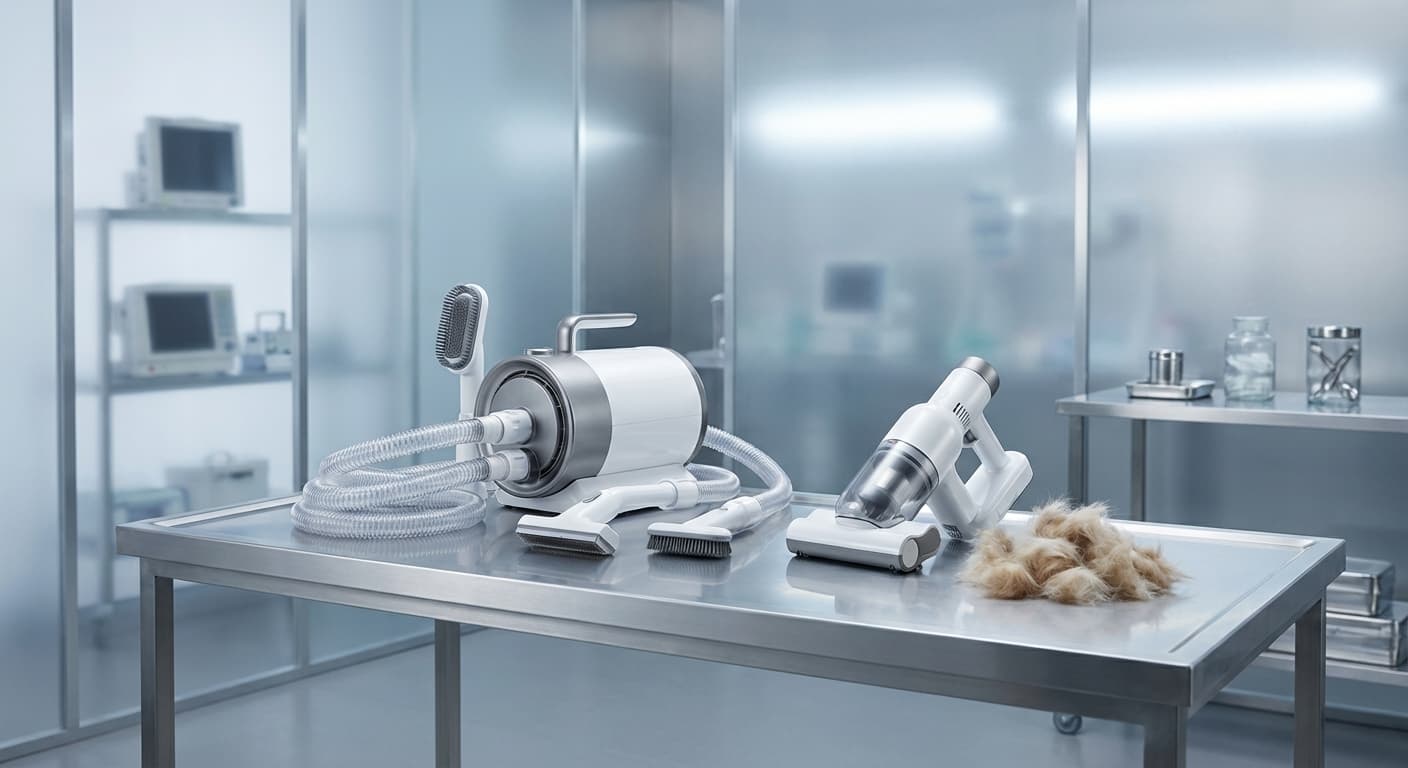
Selecting the right dog grooming vacuum is a strategic business decision that directly impacts operational efficiency and client satisfaction in veterinary clinics and professional grooming salons. A high-quality vacuuming system manages excessive shedding, reduces cleanup time, and minimizes airborne dander. This guide evaluates dog grooming vacuums across key parameters—including suction power, noise levels, filtration systems, and total cost of ownership (TCO)—providing a comprehensive framework for clinical and commercial procurement.
Evaluate Suction Power and Airflow Dynamics
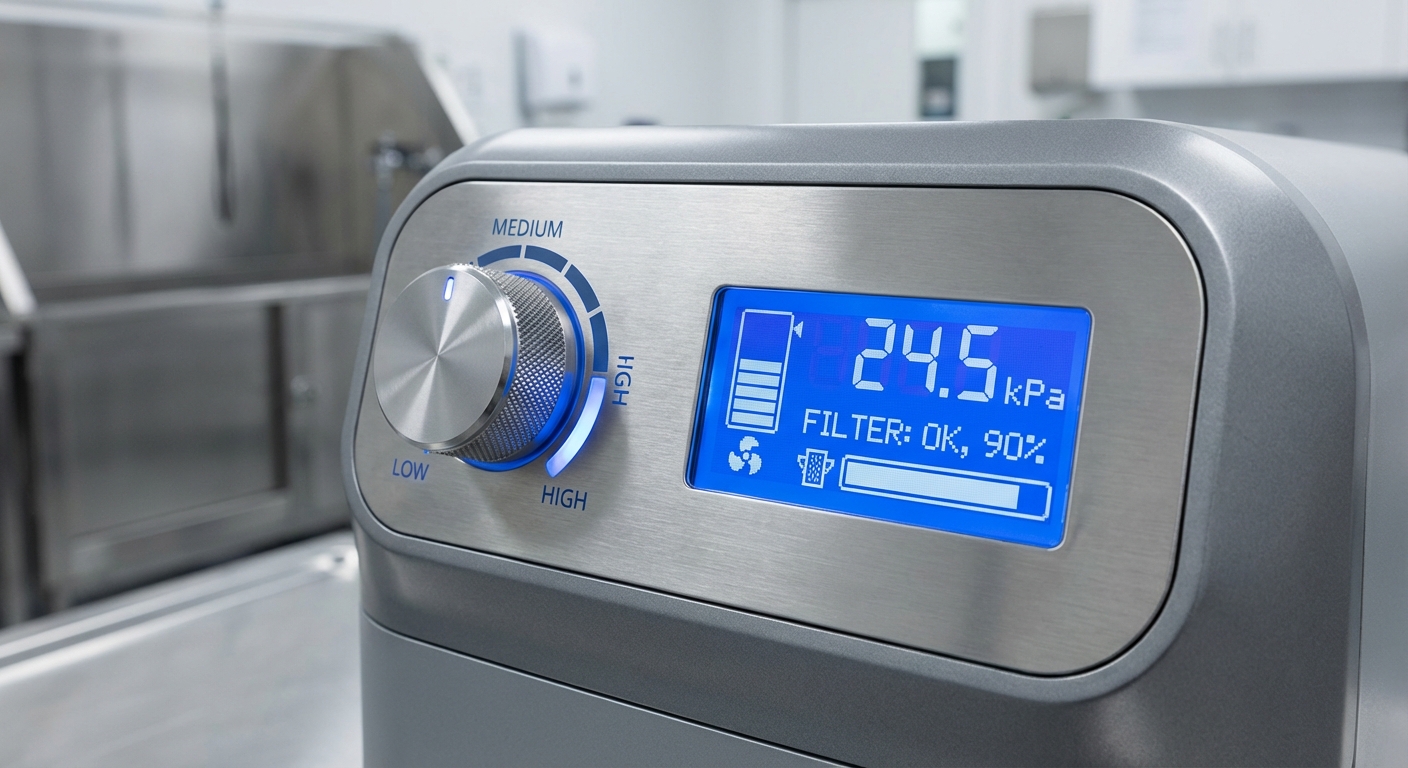
The core performance of any pet grooming vacuum relies on its motor's ability to generate sufficient suction without overwhelming the animal. Evaluate the Pa (Pascal) rating and the cubic feet per minute (CFM) specifications.
Low Suction (3,000–5,000 Pa): Suitable for short-haired breeds and delicate areas. Prevents skin pulling and minimizes stress.
Medium Suction (5,000–8,000 Pa): Ideal for general grooming, effectively capturing loose fur from double-coated breeds during deshedding.
High Suction (8,000–12,000+ Pa): Required for high-volume salons dealing with heavy shedders (e.g., Huskies, Malamutes) and matted fur.
Variable Control: Systems offering adjustable suction levels allow operators to adapt to different coat types and animal temperaments seamlessly.
Assess Acoustic Performance and Noise Management
Noise is a critical factor in veterinary and grooming environments. Loud equipment can induce significant anxiety in dogs, complicating the grooming process and risking injury. Acoustic engineering in premium vacuums focuses on decibel (dB) reduction without compromising airflow.
Ultra-Quiet Models (<50 dB): Engineered for highly sensitive or anxious dogs. Often utilize multi-layer sound insulation and brushless DC motors.
Standard Clinical Models (50–60 dB): The industry benchmark for professional use, balancing powerful suction with acceptable noise levels.
Industrial Models (>60 dB): Typically reserved for separate drying rooms where the animal is accustomed to higher noise levels, though less ideal for close-contact vacuuming.
Based on HQS clinical observation, utilizing a grooming vacuum that maintains noise levels below 55 dB significantly reduces the physical restraint required during deshedding, leading to a smoother workflow and a more positive experience for the animal.
Compare Filtration Systems and Capacity
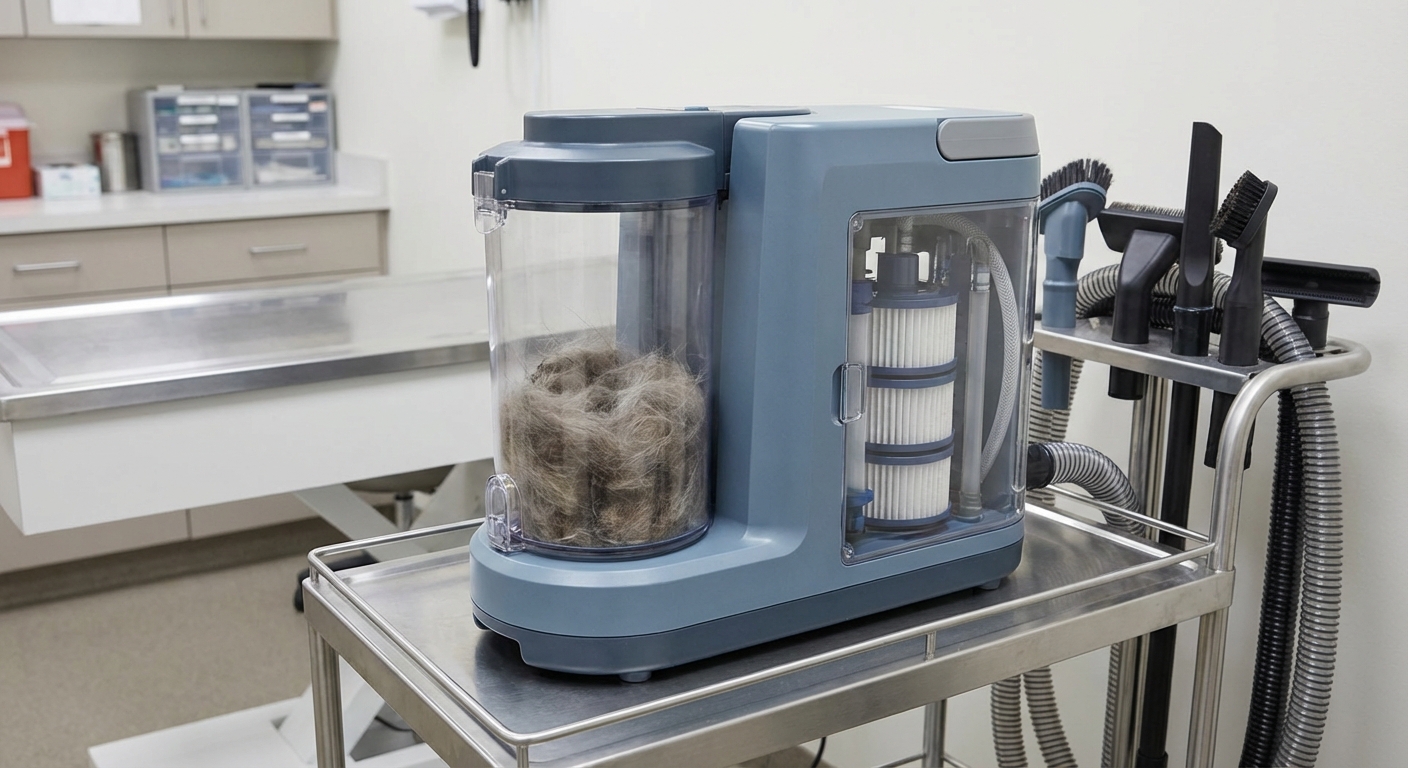
Effective filtration is essential to prevent dander and allergens from re-entering the clinical environment, protecting both staff and animals. Additionally, the collection bin capacity determines how frequently the device must be emptied, impacting continuous operational time.
Filtration Level | Particle Capture | Clinical Application | Estimated Bin Capacity (Liters) |
|---|---|---|---|
Standard Foam/Sponge | Large fur and debris | Basic home grooming; not recommended for clinics | 1.0 - 1.5L |
HEPA H11 | ≥95% of 0.3μm particles | Standard grooming salons | 1.5 - 2.5L |
True HEPA (H13) | ≥99.97% of 0.3μm particles | Veterinary clinics; allergy-sensitive environments | 2.0 - 4.0L |
Cyclonic + Multi-stage | Separates large fur before HEPA filter | High-volume continuous use | 3.0 - 5.0L+ |
Examine Attachments and Ergonomics
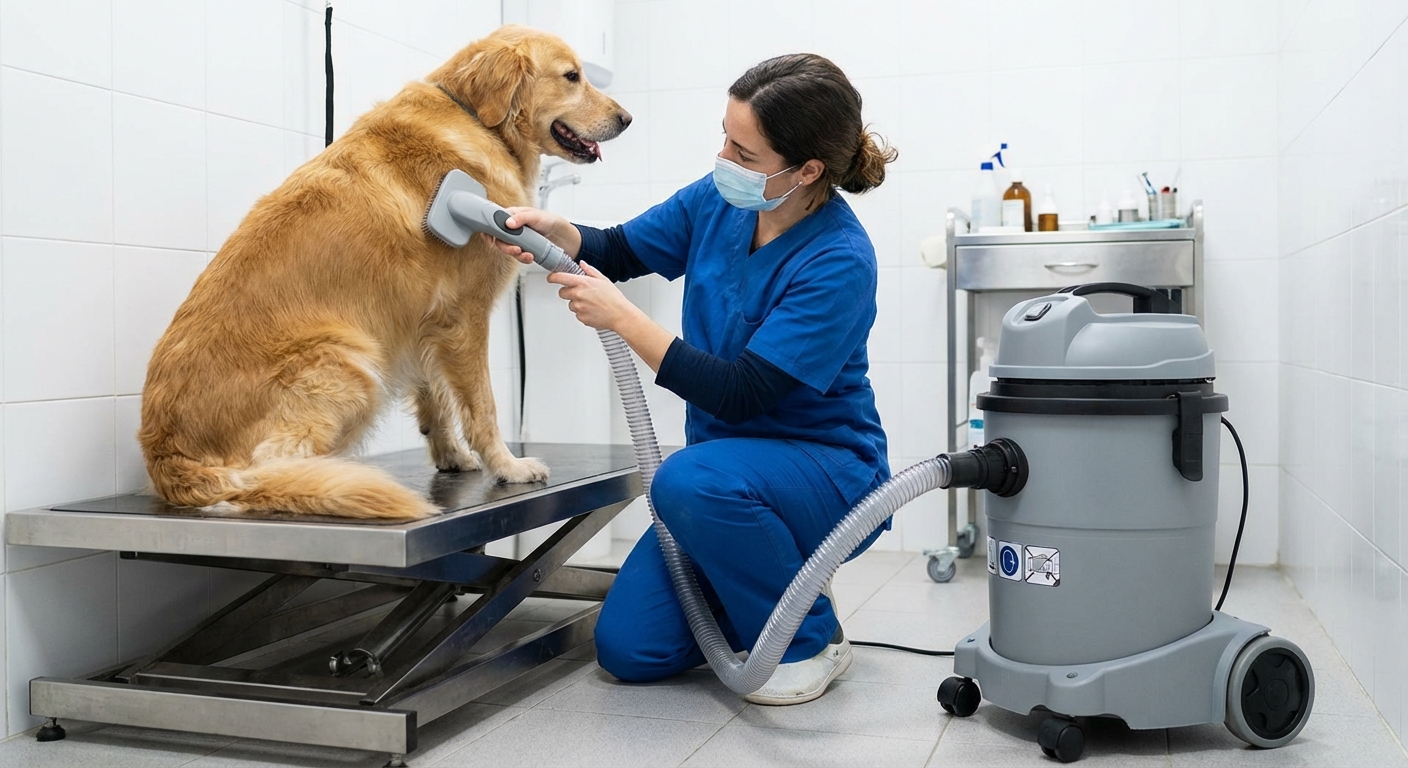
The versatility of a grooming vacuum is dictated by its included attachments. Ergonomically designed tools reduce groomer fatigue during extended sessions and ensure precise deshedding.
Deshedding Tool/Comb: The primary attachment, designed to reach through the topcoat to remove loose undercoat hair directly into the vacuum flow.
Slicker Brush Attachment: Ideal for detangling and smoothing the coat while simultaneously extracting loose fur.
Clippers with Vacuum Integration: Allows for simultaneous trimming and suction, keeping the workspace clean and preventing fur from falling onto the grooming table.
Crevice and Cleaning Tools: Essential for post-grooming cleanup of the salon floor, tables, and cages.
Calculate Total Cost of Ownership (TCO)
Procurement should look beyond the initial purchase price to understand the total cost over the equipment's lifespan. A comprehensive TCO analysis ensures you select a unit that offers the best return on investment.
Initial Capital Expenditure: The upfront cost of the vacuum unit and primary attachments. Professional models range significantly based on motor type and bin capacity.
Consumables (Filters and Blades): Factor in the replacement frequency and cost of HEPA filters and clipper blades. Frequent replacements in high-volume settings can quickly inflate operating costs.
Maintenance and Downtime: Calculate the cost of routine servicing. Units with easy-to-clean cyclonic systems and washable pre-filters reduce maintenance time.
Energy Efficiency: Brushless motors typically consume less power while delivering consistent suction, reducing long-term electrical costs.
Verify Safety Thresholds & Evidence-Based Parameters
Ensuring the safety of the animal during the vacuuming process requires strict adherence to specific operational parameters. Professional grooming equipment must mitigate risks such as skin irritation and thermal injury.
Thermal Management: Motors must feature automatic thermal overload protection. Exhaust air should not exceed 40°C (104°F) to prevent discomfort to the operator and the animal.
Static Discharge: Hoses and attachments must be constructed from anti-static materials to prevent painful shocks during the vacuuming of dry fur.
Suction Limitation: The maximum suction at the attachment interface should not exceed safe limits that could cause capillary damage or bruising on delicate canine skin.
Methodology & Verification Protocol
To validate the performance claims of dog grooming vacuums, rigorous testing protocols should be implemented during the evaluation phase.
Acoustic Testing: Measure decibel levels using a calibrated sound level meter at a distance of 1 meter from the unit, under various suction settings, simulating the animal's proximity.
Airflow Verification: Utilize an anemometer to verify CFM claims at the end of the hose, ensuring consistent suction regardless of bin fullness.
Filtration Integrity: Conduct particle counting tests near the exhaust port to verify HEPA filtration efficiency, ensuring no significant emission of dander.
Establish Supplier Evaluation Criteria
Partnering with a reliable supplier is as crucial as the equipment itself. Establish a scorecard to evaluate potential vendors objectively based on post-sale support and product reliability.
Evaluation Category | Key Metrics | Target Standard | Weight in Decision |
|---|---|---|---|
Warranty Coverage | Motor and parts duration | Minimum 1-2 years commercial warranty | 30% |
Parts Availability | Filters, hoses, attachments | Guaranteed stock for 5+ years | 25% |
Technical Support | Response time and channel | <24 hours, direct manufacturer access | 25% |
Clinical Validation | References and case studies | Proven use in professional/veterinary settings | 20% |
Strategic Procurement Advice
When selecting a dog grooming vacuum for shedding control, prioritize units that balance high suction capabilities with low acoustic output (<60 dB). For high-volume professional settings, mandate True HEPA (H13) filtration and a minimum bin capacity of 3 liters to maintain workflow efficiency. Always calculate the TCO, heavily weighting the availability and cost of replacement filters and grooming attachments. Conduct in-clinic trials if possible, assessing the ergonomic impact on staff and the stress response of the animals. Finally, ensure your supplier provides robust warranty terms and guaranteed long-term access to consumable parts.
Frequently Asked Questions
What is the optimal suction power for a professional dog grooming vacuum?
For professional settings, a variable suction range between 3,000 Pa and 12,000 Pa is optimal. This allows groomers to use lower suction for sensitive areas or smaller dogs, and maximum suction for heavy-shedding double-coated breeds, ensuring efficient fur removal without causing discomfort.
How often should HEPA filters in grooming vacuums be replaced?
In a high-volume professional grooming salon or veterinary clinic, true HEPA filters should generally be replaced every 3 to 6 months. However, washable pre-filters should be cleaned weekly to maintain optimal airflow and prolong the life of the primary HEPA filter.
Can a grooming vacuum completely replace traditional brushing?
No, a grooming vacuum is designed to augment traditional deshedding and brushing, not replace it entirely. It excels at capturing loose undercoat and preventing airborne dander during the process, but manual brushing is still required to break up severe mats and distribute natural oils across the dog's coat.