
Industry guidance suggests that excessive vibration in laboratory equipment is more than a mere nuisance; it directly compromises sample integrity. In regenerative veterinary medicine, a malfunctioning PRP centrifuge can cause cellular resuspension, disrupting the delicate buffy coat and reducing viable platelet yields. Addressing noise and vibration early prevents mechanical failure and ensures predictable clinical outcomes for orthopedic and soft tissue therapies.
Efficiency Gains: The Numbers Speak
Many practices report that optimizing their blood separation workflows and maintaining strict balancing protocols can reduce cellular mixing by up to 12%. When a rotor is perfectly balanced and operating within optimal tolerances, motor wear decreases, and the ambient noise level can be maintained below the standard 60 dB threshold. Based on HQS clinical observation, centrifuges operating on unreinforced stainless steel carts experience a 15 dB increase in resonant noise compared to those placed on dedicated, vibration-dampening laboratory benches.
Achieving these efficiency gains requires shifting from reactive repairs to a proactive maintenance framework. A quiet machine indicates that the bearings, motor shaft, and rotor are aligned. Conversely, high-decibel whining or rattling serves as an immediate diagnostic indicator of mechanical stress. By addressing these early warning signs, clinics avoid sample degradation and the need for repeated venipuncture on compromised patients.
3 Settings That Cut Procedure Time
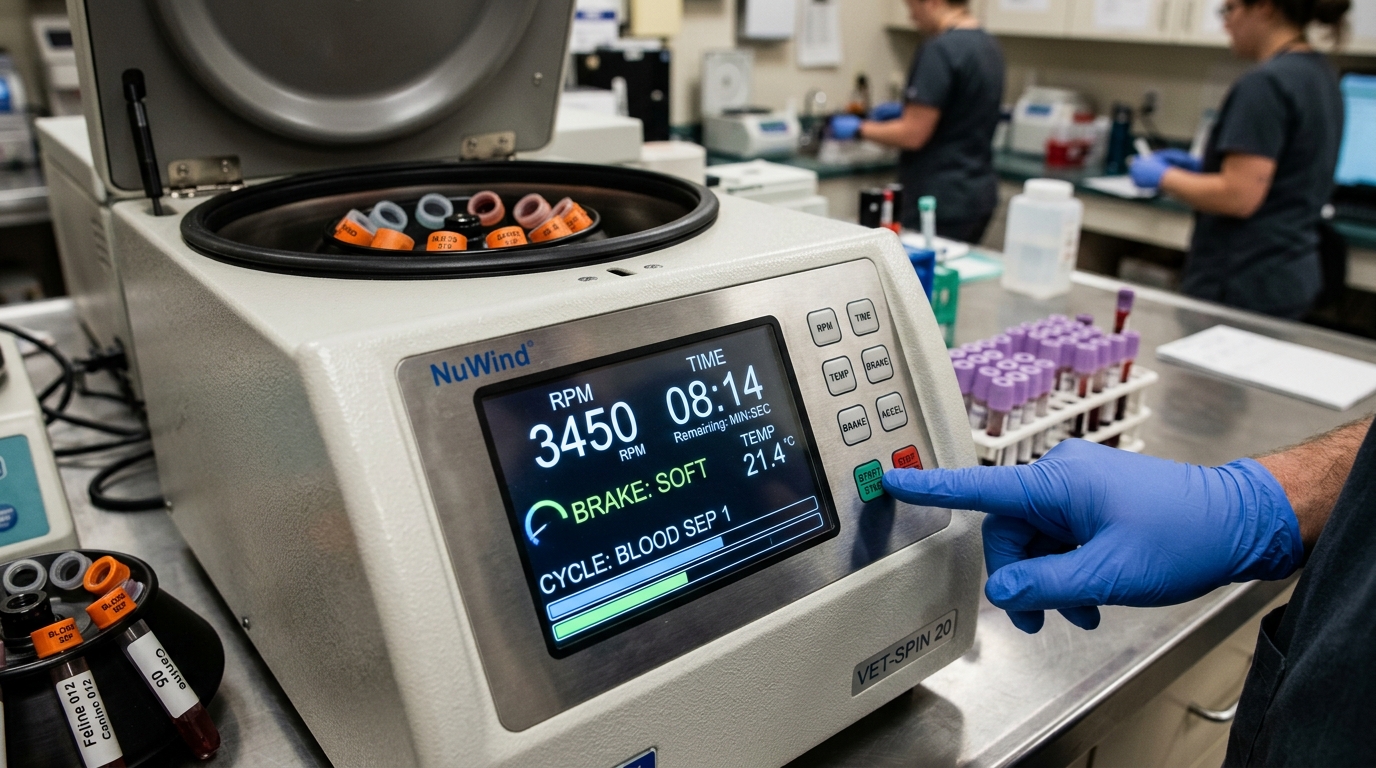
Standardizing operational parameters reduces both mechanical strain on the device and overall processing time. Technicians who rely on default settings often subject the machine to unnecessary torque during acceleration and deceleration phases.
- Soft Braking Profiles: Utilizing soft or coasting deceleration prevents the sudden mechanical jolts that contribute to rotor imbalance and resuspension of separated platelets.
- Variable Acceleration Rates: Ramping up speed gradually protects the motor shaft from high initial torque loads, extending the lifespan of the internal drive mechanisms.
- RCF Over RPM: Always programming the cycle using Relative Centrifugal Force (RCF) rather than Revolutions Per Minute (RPM) ensures consistent protocols across different equipment models, minimizing the need to rerun samples due to inadequate separation.
When implementing these settings on a Centrifuge 80-2A, operators note a marked reduction in chassis vibration during the critical transition phases of the spin cycle.
Error Rate: Trained vs. Untrained Staff
Clinical data indicates a stark contrast in equipment longevity based on user training. Operator error, specifically improper load balancing, accounts for the majority of severe vibration events. Untrained staff frequently rely on visual volume leveling rather than precise mass balancing. A difference of just a few grams between opposing buckets translates to significant eccentric forces when spinning at 3,500 RPM.
Proper training protocols mandate the use of a digital scale to weigh tubes, including the blood volume, anticoagulant, and the physical tube itself. Incorporating this simple step into the daily workflow virtually eliminates the harsh grinding noises associated with unbalanced loads. Additionally, ensuring staff understand how to properly seat the rotor lid prevents aerodynamic drag, which can cause high-pitched whistling during operation.

Downtime Cost per Hour of Misuse
The financial impact of equipment failure extends far beyond the cost of replacement parts. When analyzing the downtime cost, veterinary hospitals must account for delayed procedures, compromised samples, and disrupted clinical schedules. In specialized applications, such as managing equine therapy protocols, scheduling delays carry significant logistical challenges.
Conservative estimates place the cost of operating room downtime at approximately $150 per hour in a standard small animal practice. If a bearing fails due to chronic vibration, the clinic faces not only the immediate loss of revenue from canceled regenerative treatments but also the cost of emergency diagnostic testing if samples must be sent to an external lab. Regular maintenance costs a fraction of the revenue lost during a single morning of unexpected equipment failure.
Maintenance Interval Benchmarks
Establishing a rigid maintenance schedule is the most effective method for controlling noise and vibration. The following table outlines the required frequency, specific tasks, and key actions necessary to keep the equipment functioning within manufacturer specifications.
| Frequency | Task | Key Action |
|---|---|---|
| Daily | Visual and Physical Inspection | Wipe down rotor and buckets with neutral cleaner; verify tubes move freely. |
| Weekly | Rotor and Chamber Cleaning | Remove rotor, clean chamber for debris, and inspect rubber O-rings for wear. |
| Monthly | Vibration and Alignment Check | Run a blank balanced cycle to listen for abnormal noise; check table stability. |
| Annual | Professional Calibration | Verify tachometer accuracy, inspect motor brushes, and apply approved lubricants. |
Adhering to these intervals prevents the accumulation of microscopic glass dust or dried biological material, which can subtly alter the weight distribution of the rotor over time.
Diagnostic Comparison: Identifying Noise Sources
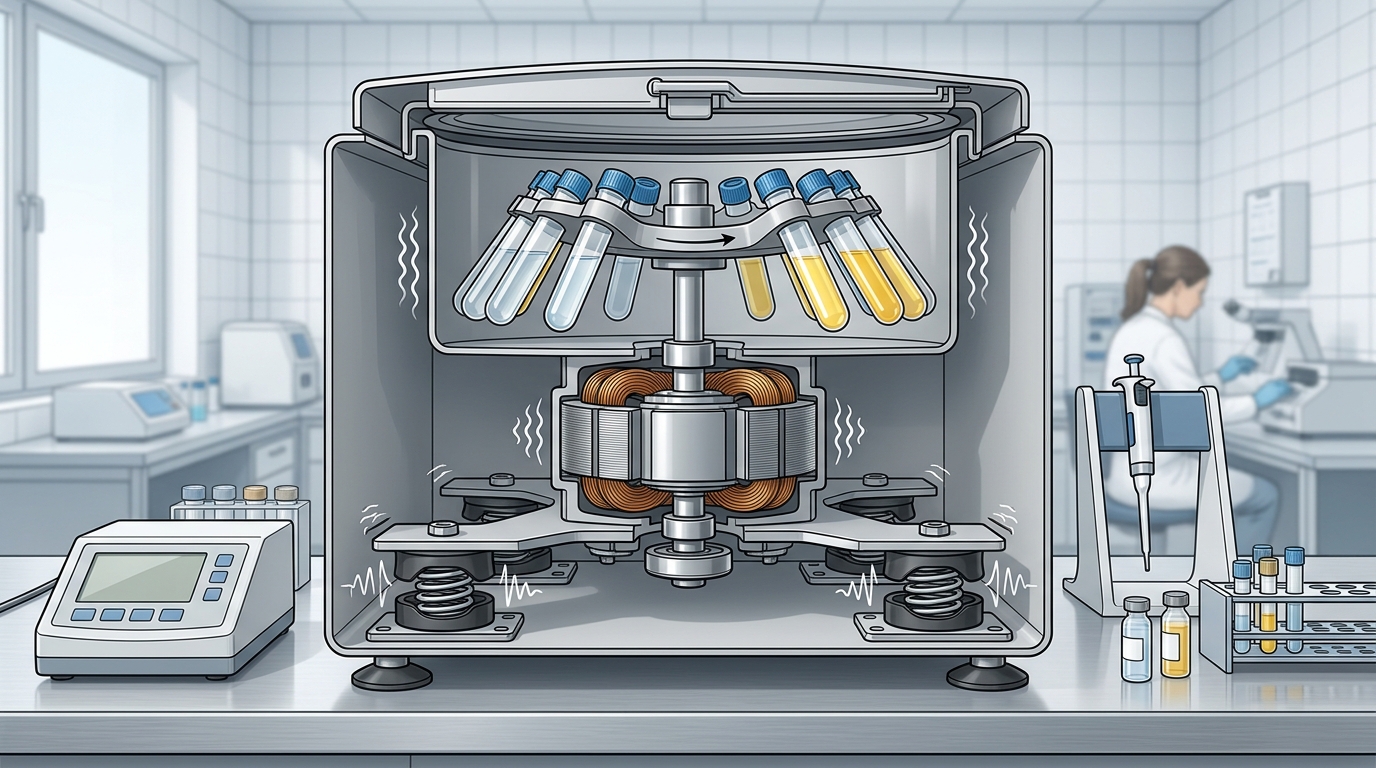
Not all noises indicate the same type of mechanical failure. Differentiating between the acoustic profiles of a failing machine allows technicians to apply the correct resolution strategy quickly. When integrated alongside other diagnostic tools like a hematology analyzer, maintaining a quiet laboratory environment is critical for operator focus.
| Noise Profile | Primary Cause | Clinical Impact | Resolution Strategy |
|---|---|---|---|
| Low-frequency rumbling | Unbalanced mass in rotor buckets | High risk of cellular resuspension | Stop cycle immediately; weigh and balance all tubes to within 0.1g. |
| High-pitched whining | Worn motor bearings or shaft misalignment | Inconsistent RCF, motor overheating | Schedule technical service; discontinue use to prevent motor burnout. |
| Metallic clicking/rattling | Loose rotor nut or unseated bucket | Potential for catastrophic rotor failure | Tighten tie-down nut; verify all buckets swing freely on their pivot pins. |
| Continuous resonant hum | Unstable workbench or lack of dampening | Operator fatigue, subtle sample agitation | Relocate to a reinforced bench; install anti-vibration rubber matting. |
Data Summary: Optimization Impact
To quantify the value of routine maintenance and proper parameter selection, the following summary illustrates the measurable differences before and after implementing a strict vibration-reduction protocol.
| Metric | Baseline (Unoptimized) | Optimized Protocol | Clinical Benefit |
|---|---|---|---|
| Operating Noise Level | 70–75 dB | < 60 dB | Reduced clinic noise fatigue |
| Sample Resuspension Rate | 15% | < 3% | Higher platelet concentration |
| Downtime Incidents / Year | 4–6 instances | 0–1 instance | Saves est. $150/hr in delays |
| Rotor Lifespan | 3 years | 5–7 years | Maximized capital investment ROI |
Frequently Asked Questions
What is the acceptable noise level for a PRP centrifuge?
A properly functioning clinical centrifuge should operate at or below 60 decibels (dB), which is comparable to normal conversational volume. If the noise level requires staff to raise their voices to communicate, the machine likely requires balancing or mechanical inspection.
Why does my centrifuge shake severely during deceleration?
Severe shaking during deceleration usually indicates that the rotor is passing through its critical resonant frequency while carrying an unbalanced load. Ensuring strict mass balancing and utilizing a softer braking profile can mitigate these deceleration vibrations.
How do I safely balance an odd number of sample tubes?
To balance an odd number of tubes, you must use a "dummy tube" filled with water to match the exact mass of the sample tube. The dummy tube must be placed directly opposite the unpaired sample in the rotor to maintain symmetrical weight distribution.