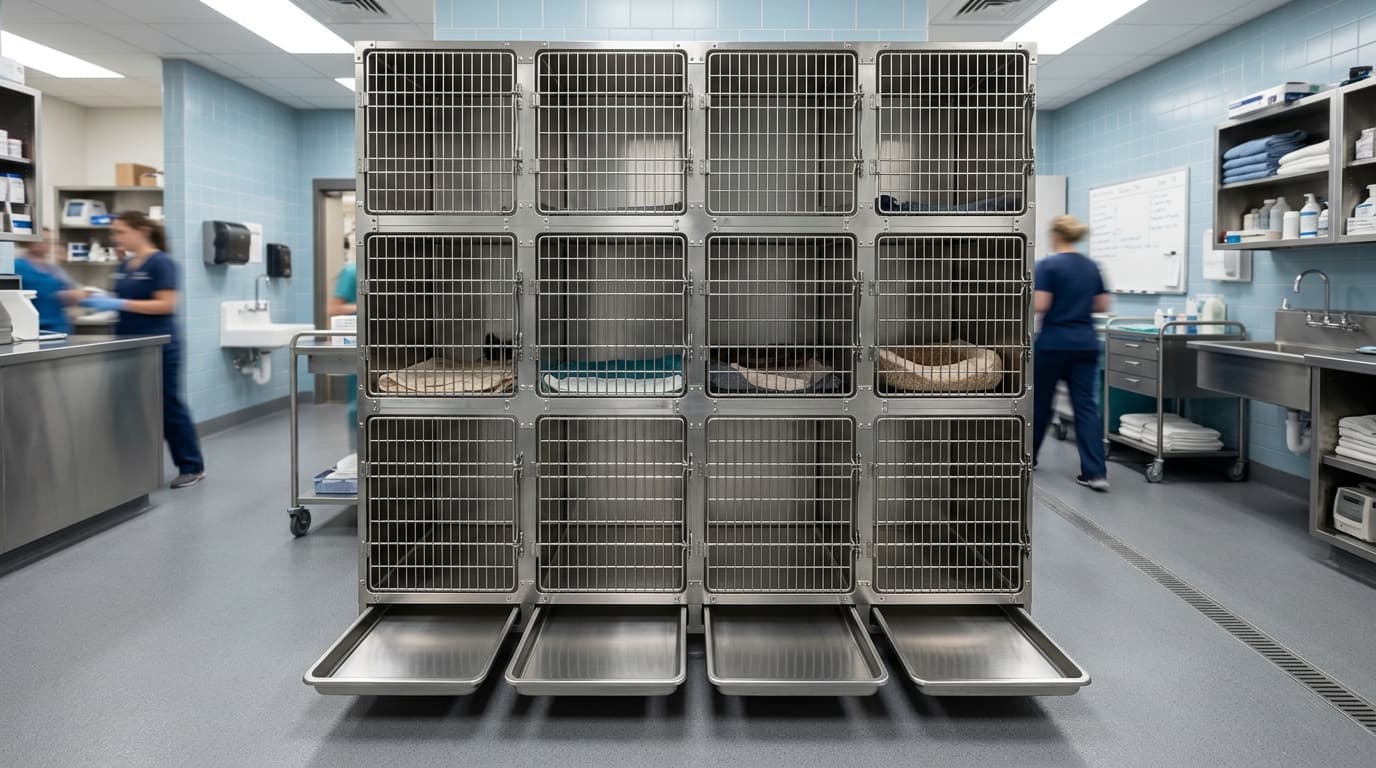
Industry data indicates that approximately 18% of felines admitted to high-volume veterinary clinics develop hospital-acquired upper respiratory infections (URIs) or gastrointestinal pathogens. The primary vector for these transmissions is often inadequate enclosure hygiene. Managing a high-turnover feline ward requires moving beyond superficial wiping; it demands a structured approach to environmental control. Implementing strict sanitation protocols for the primary stainless steel cage infrastructure is the most effective method for disrupting the pathogen transmission chain. By isolating structural variables and standardizing chemical contact times, clinical directors can lower cross-contamination rates, protect staff from zoonotic exposure, and extend the functional lifespan of costly holding equipment.
40% Reduction in URI: The Structural Baseline
The foundation of effective sanitation lies in the physical properties of the enclosure. Clinical observations suggest that transitioning from porous or heavily scratched materials to 304-grade stainless steel can reduce surface pathogen retention by up to 40%. Micro-abrasions in powder-coated or plastic surfaces create protective reservoirs for resilient viruses like feline panleukopenia (FPV) and feline calicivirus (FCV). When evaluating a modern cat cage, the presence of seamless, radiused corners prevents organic material buildup, ensuring that disinfectants make complete contact with the substrate. Evaluating the base material is the first critical step in standardizing ward hygiene.
| Cage Material / Type | Key Sanitation Parameters | Application Scenarios | Estimated Price Range |
|---|---|---|---|
| 304-Grade Stainless Steel | Non-porous, welded seams, high chemical resistance | High-volume wards, isolation units, surgical recovery | $2,500 - $6,000 per bank |
| Powder-Coated Steel | Medium porosity, susceptible to scratching and peeling | Short-term holding, low-turnover boarding areas | $800 - $1,500 per bank |
| Fiberglass / Composite | Seamless, warmer thermal properties, moderate scratch risk | Feline-only recovery, quiet wards | $3,000 - $5,500 per bank |
| High-Density PVC / Plastic | High scratch risk, potential odor and stain retention | Temporary transport, rescue intake areas | $300 - $800 per bank |
3 Protocols That Cut Sanitation Cycle Time
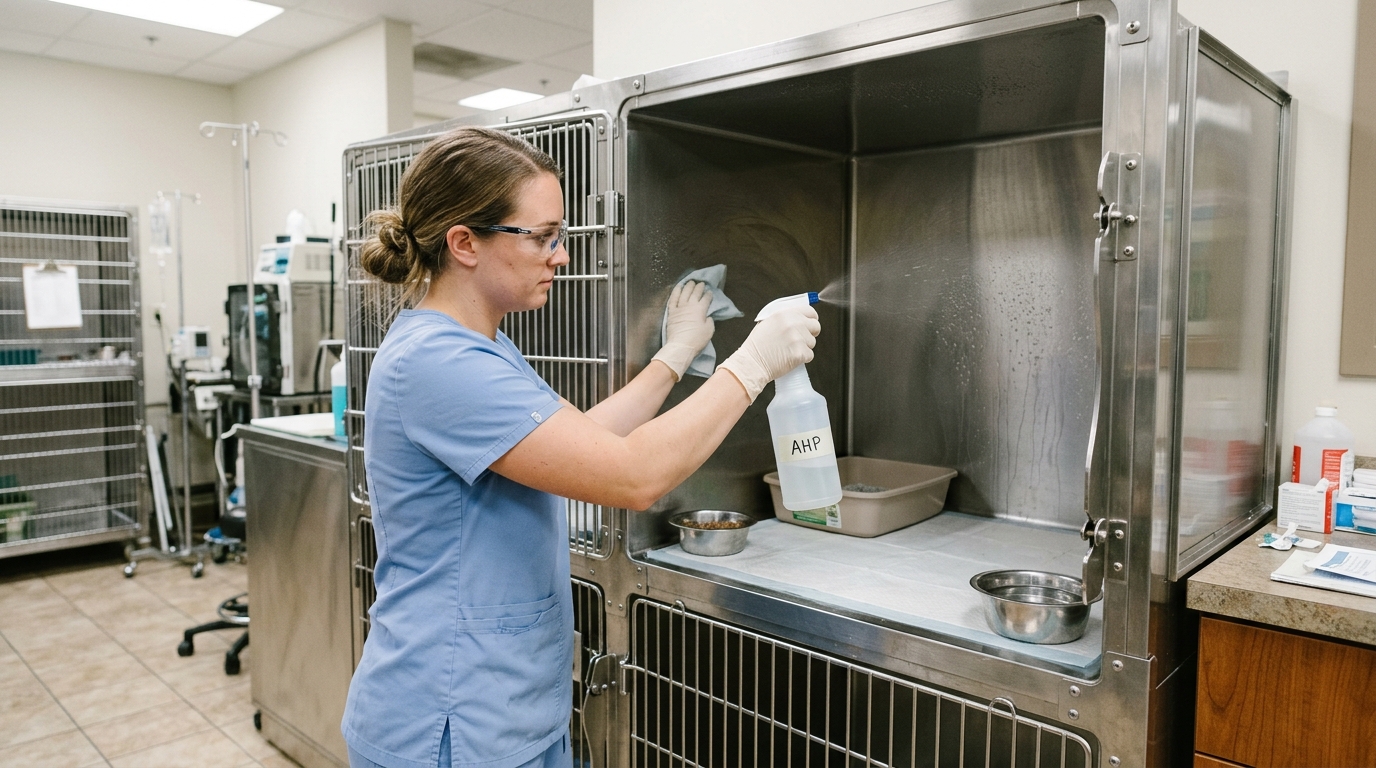
Time constraints often lead technicians to truncate vital sanitation steps. Establishing a rigid three-phase protocol—mechanical removal, chemical application, and rinsing—ensures consistency while actually reducing overall labor hours. First, all gross organic matter must be removed; chemical disinfectants are neutralized by proteins in feces and blood. Second, staff must strictly observe the chemical contact time. Quaternary ammonium compounds typically require 10 minutes of uninterrupted wet contact, while accelerated hydrogen peroxide may only need 1 to 5 minutes. Finally, thorough rinsing and drying prevent chemical residue buildup. Integrating these steps into the daily workflow cuts the average sanitation cycle time by eliminating the need for repeated, ineffective scrubbing.
Cross-Contamination Rate: Trained vs. Untrained Staff
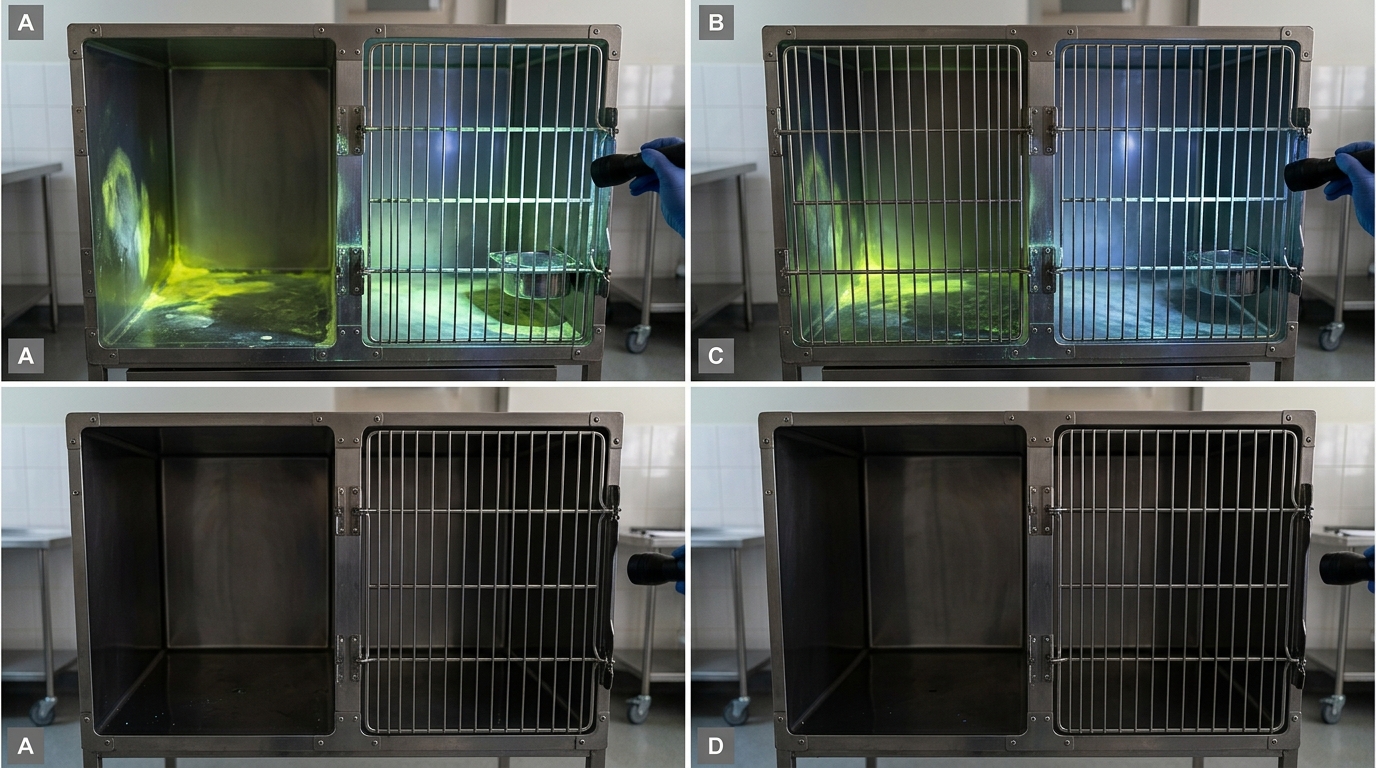
Equipment design cannot compensate for operational errors. Facilities tracking nosocomial infections report significant discrepancies based on staff training levels. Wards managed by untrained personnel show a 22% secondary transfer rate of common pathogens, largely due to cross-contamination via cleaning implements. Technicians who use the same towel across multiple units inadvertently spread fomites. Establishing dedicated cleaning supplies for isolation wards versus general holding areas is mandatory. Based on HQS clinical observation of high-volume shelters, staff who skip the mechanical scrubbing phase and rely solely on chemical sprays leave behind biofilm residues that harbor calicivirus for up to 28 days. Rigorous protocol training drives the transmission rate below 2%.
Downtime Cost per Hour of Misuse
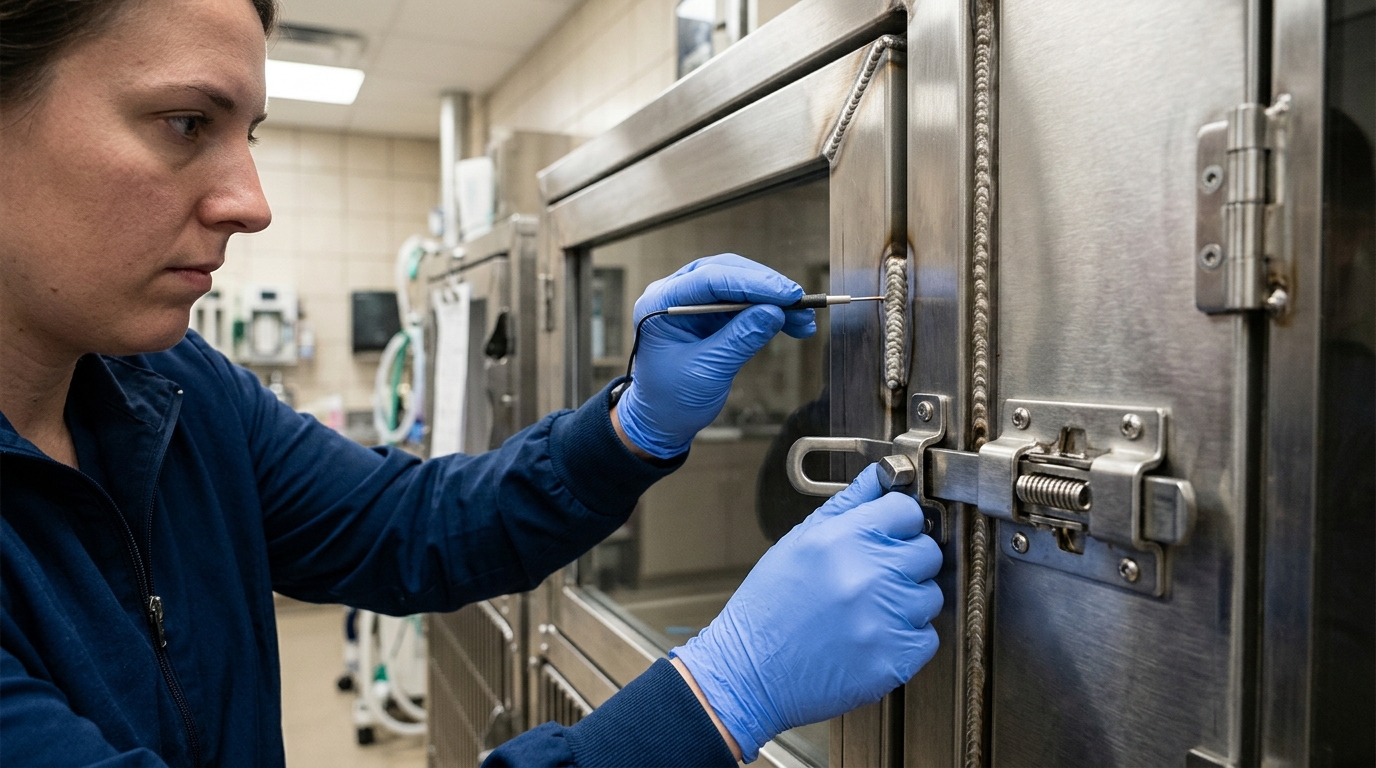
Improper sanitation chemistry not only fails to kill pathogens but actively degrades the equipment. Using bleach (sodium hypochlorite) at incorrect dilutions or failing to rinse it thoroughly causes pitting and rust in stainless steel hinges and latches. A malfunctioning latch creates two costly scenarios: either the unit becomes unusable, causing holding capacity downtime, or a feline patient escapes, creating a severe liability. If a specialized unit is out of service, the practice loses the daily boarding or recovery fee, which ranges from $40 to $120 per day depending on the facility. Following proper professional cat cage selection criteria and pairing it with pH-neutral cleansers protects the initial capital investment and ensures zero operational downtime due to hardware failure.
Maintenance Interval Benchmarks
Sustaining optimal hygiene and mechanical function requires scheduled, predictable maintenance. While technicians focus on daily spot-cleaning, long-term equipment viability depends on structural checks and deep-cleaning cycles. Adhering to the following benchmark intervals prevents hinge stiffness, latch failure, and hidden biofilm accumulation.
| Frequency | Task | Key Action |
|---|---|---|
| Daily | Organic Matter Removal & Disinfection | Remove all debris. Apply chemical disinfectant, observe specific contact time, wipe dry with single-use or unit-specific towels. |
| Weekly | Deep Crevice & Hardware Cleaning | Scrub hinges, latches, and resting shelf brackets with a stiff-bristled brush to remove hidden biofilm and accumulated hair. |
| Monthly | Mechanical Hardware Assessment | Inspect all door hinges and locking mechanisms. Apply food-grade, veterinary-safe lubricant to moving metal parts. |
| Annual | Structural Integrity Audit | Check for weld failures, deep substrate scratches, or surface pitting. Recalibrate alignment of doors to ensure secure closure. |
Frequently Asked Questions
What is the optimal contact time for disinfectants in feline wards?
Contact times vary strictly by the chemical formulation. Accelerated hydrogen peroxide typically requires 1 to 5 minutes, while standard quaternary ammonium compounds require 10 minutes of continuous wet contact. Staff must read the manufacturer guidelines, as removing the chemical prematurely drastically reduces its virucidal efficacy.
How do scratched cage floors impact sanitation efficacy?
Deep scratches in plastic, fiberglass, or powder-coated steel create microscopic ravines where bacteria and viruses evade chemical contact. Organic matter becomes trapped in these abrasions, forming resilient biofilms. Once a surface is heavily scored, it can no longer be considered truly sanitized, increasing the risk of nosocomial transmission.
Are steam cleaners effective for cat cage bank sanitation?
Yes, pressurized dry steam is highly effective for penetrating hinges, latches, and welded seams where chemical wiping may not reach. Steam delivered at temperatures exceeding 212°F (100°C) provides immediate thermal deactivation of many pathogens without leaving chemical residues, making it an excellent weekly supplemental sanitation method.
Data Summary: Sanitation Optimization Impact
Adopting evidence-based hygiene protocols transforms the feline holding area from a potential liability into a secure, sterile environment. The following data points summarize the operational impacts of optimized sanitation workflows.
| Operational Metric | Standard Practice | Optimized Protocol | Net Impact |
|---|---|---|---|
| Pathogen Surface Retention | Baseline | Reduced by up to 40% | Lower URI transmission risk |
| Cross-Contamination Rate | 22% (Untrained) | <2% (Trained) | Improved patient safety |
| Chemical Contact Time | Arbitrary wiping | 1-10 min (measured) | Validated virucidal kill rate |
| Equipment Hardware Lifespan | 3-5 years (harsh chemicals) | 10+ years (neutral pH) | Maximized capital ROI |