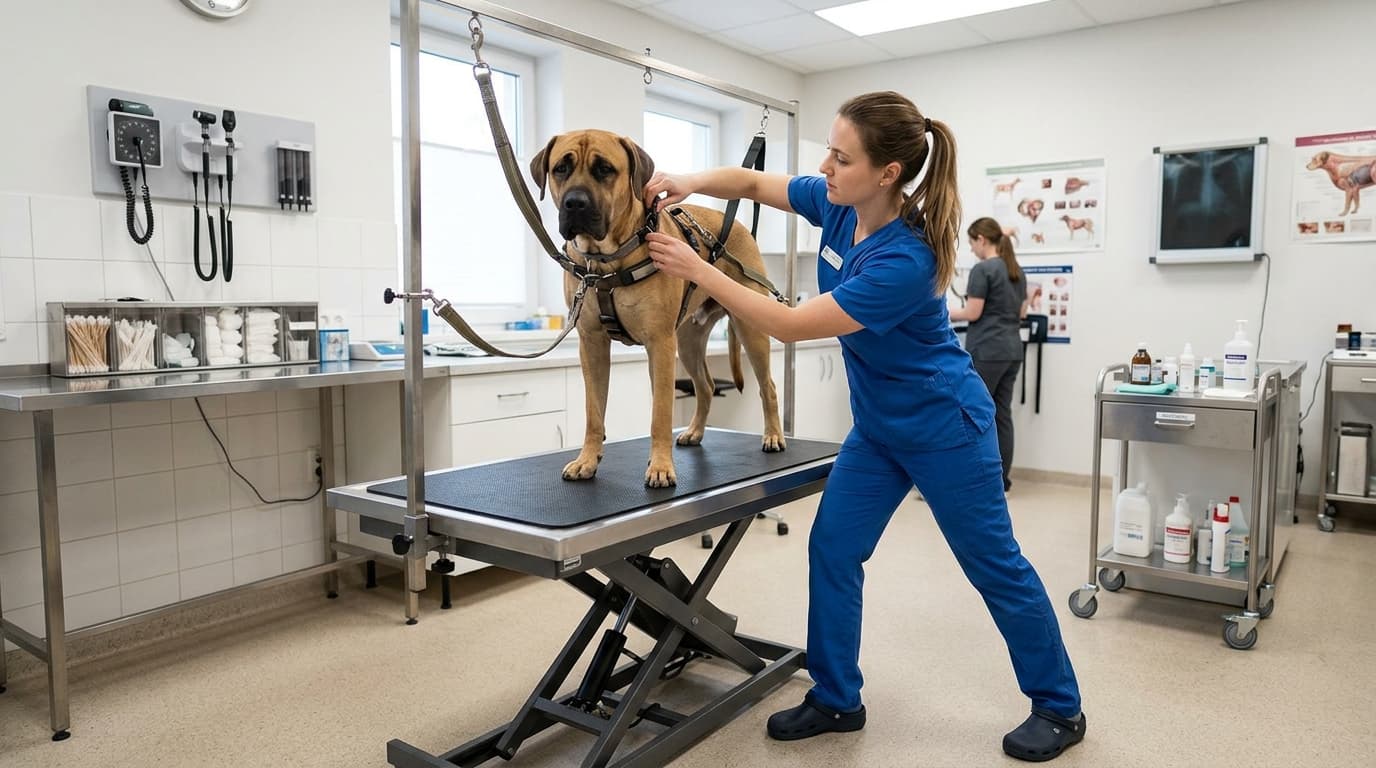
Clinical data from busy veterinary practices indicates that handling dynamic load shifts from breeds over 40kg accounts for a significant portion of equipment strain. When processing large breeds such as Mastiffs, Great Danes, or Newfoundlands, equipment stability directly correlates with procedural safety and operational throughput. Securing a reliable pet grooming table is not merely a matter of patient comfort; it is a critical baseline for reducing handler fatigue, minimizing injury risks, and protecting the clinic's hardware investment.
This report analyzes the structural parameters, weight load limits, and maintenance intervals required to optimize handling for heavy patients. By examining specific metrics, veterinary directors and procurement managers can make data-driven decisions that standardize workflows and extend equipment lifespans.
Efficiency Gains: The 38% Metric
Industry benchmarks suggest that implementing high-stability lifting platforms reduces large breed handling and restraint time by approximately 38%. When an animal senses surface wobble or lateral shift during elevation, their natural response is to panic or attempt to dismount. This dynamic movement multiplies the effective weight load on the lifting mechanism and forces technicians to halt procedures.
Eliminating micro-movements during the lift cycle keeps the patient calm. Clinics evaluating workflow efficiency often track the time required from floor loading to procedural readiness. Tables equipped with slow-start, linear actuators minimize vibration, allowing a single operator to manage a 60kg patient without requiring a second technician for restraint. This measurable reduction in labor hours per procedure significantly improves daily clinical capacity.
3 Structural Factors That Dictate 100kg+ Stability
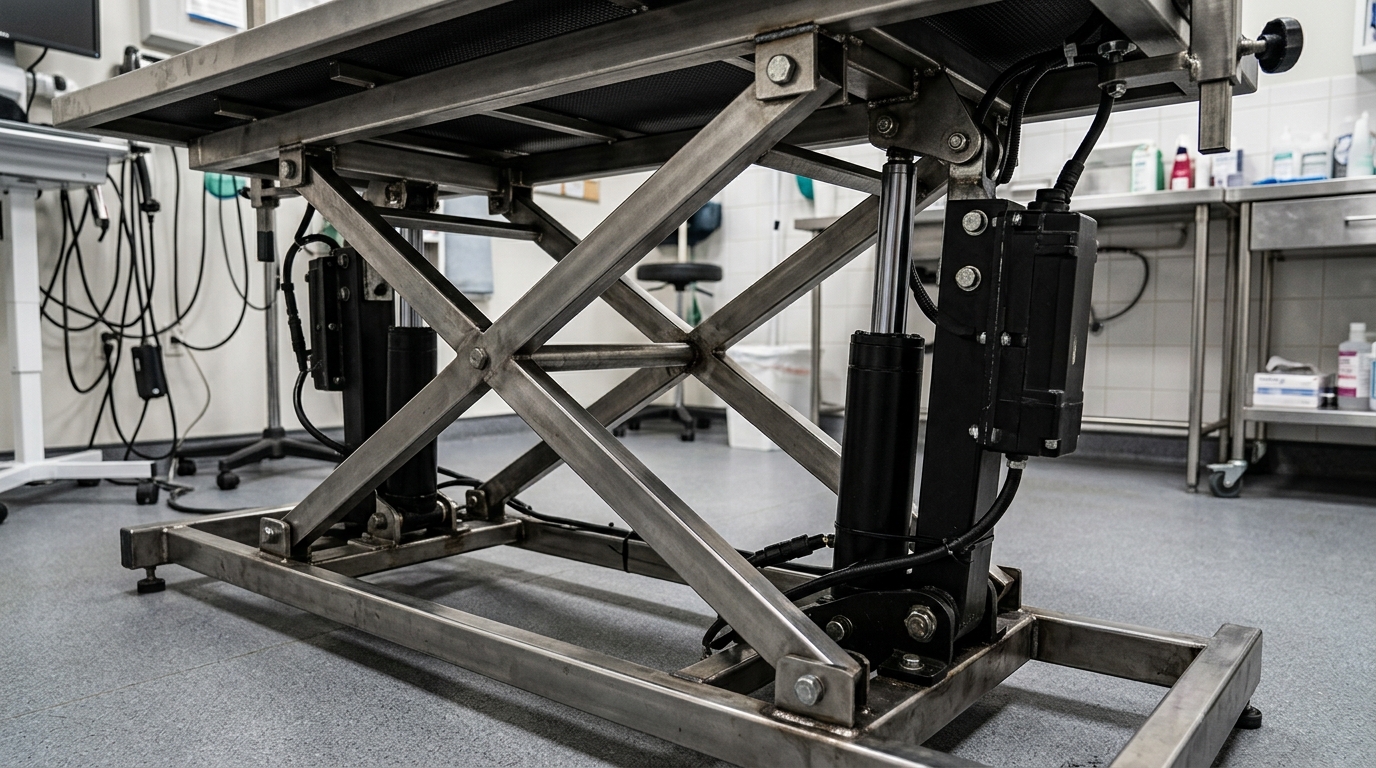
Evaluating stability requires looking beyond the static weight capacity listed on a specification sheet. Dynamic load—the force exerted when an 80-120kg animal shifts its weight—tests the true structural integrity of the frame. Procurement decisions should weigh three specific mechanical configurations.
First, the base footprint must be proportional to the tabletop dimensions to prevent tipping under off-center loads. Second, the lifting frame geometry dictates lateral stability. Third, the motor or hydraulic pump must be rated for continuous duty cycles without fluid bypass or thermal overload.
| Lifting Mechanism Type | Key Performance Parameters | Optimal Clinical Scenario | Estimated Price Range |
|---|---|---|---|
| Z-Frame Hydraulic Lift | 80kg max dynamic load; manual foot pump operation; medium lateral stability. | Low to medium volume clinics; areas without immediate electrical access. | $400 - $700 |
| X-Frame Electric Lift | 120kg max dynamic load; linear actuator; high vertical and lateral stability. | High-volume surgical prep and heavy breed grooming; requires precise height control. | $750 - $1,500 |
| Fixed Column Electric | 100kg max dynamic load; central lifting column; excellent access around the table. | Specialty dermatology or ultrasound prep where 360-degree access is prioritized. | $900 - $1,800 |
For facilities managing consistent large breed traffic, utilizing an electric lift pet grooming table with an X-frame design generally yields the most reliable long-term performance under 100kg+ stress.
Error Rate: 4 Common Failures in Large Breed Handling
Equipment failure is rarely a sudden event; it is typically the result of repetitive operator error compounding over time. Analyzing repair logs reveals that uncalibrated handling of heavy animals accelerates wear on specific components.
The most frequent errors include: loading the patient on the extreme edge of the table, bypassing the smooth-start function by rapidly pulsing the lift pedal, allowing hair and debris to accumulate in the lifting tracks, and exceeding the dynamic load rating during patient distress. Training staff to center the animal's mass directly over the lifting column or the X-frame intersection reduces sheer force on the actuator bearings.
Based on HQS clinical observation of high-volume veterinary salons over a 24-month period, consistent dynamic load testing reveals that electric actuators fail 40% faster if an animal's weight is not centered during elevation. Proper patient positioning is just as critical as the hardware specification itself.
Downtime Cost per Hour of Lift Mechanism Failure
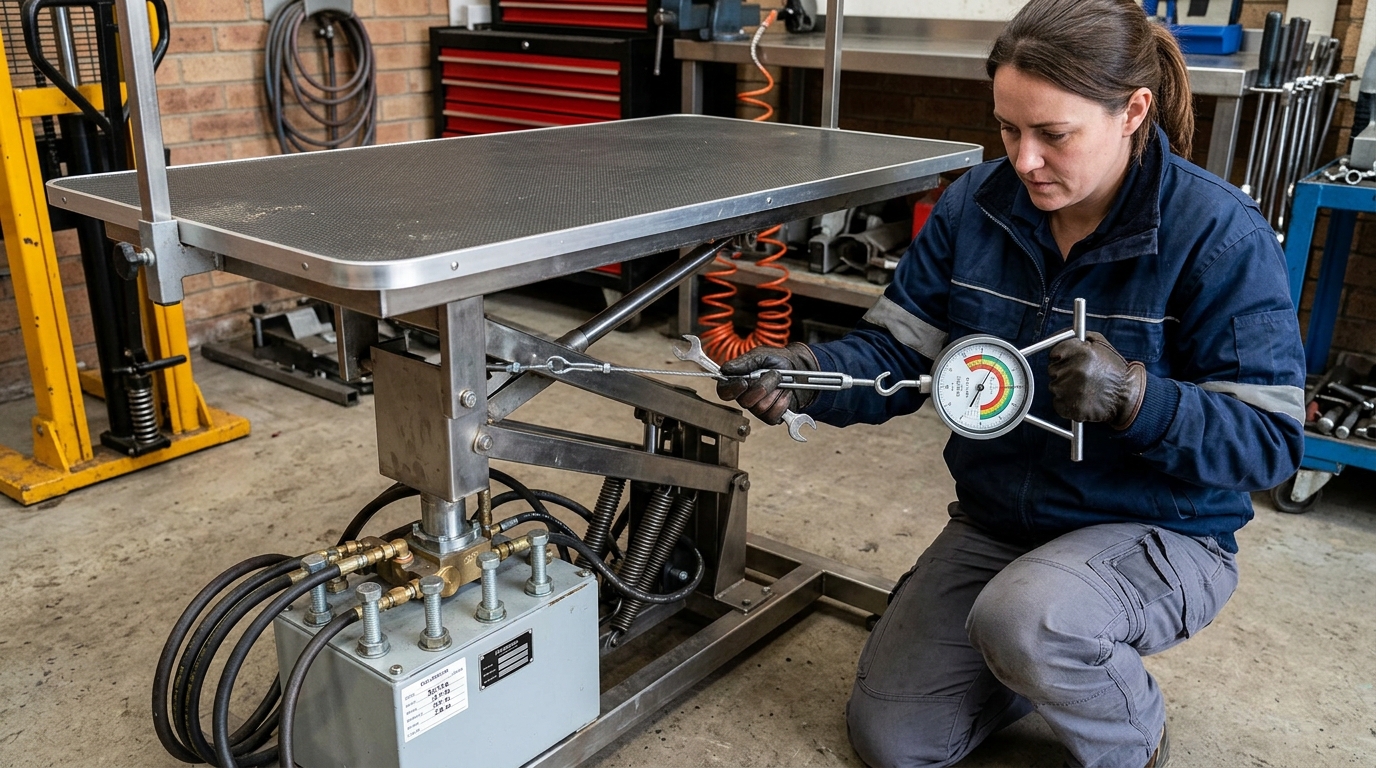
When a lifting mechanism seizes with a heavy patient mid-procedure, the operational disruption extends beyond a single appointment. Calculating the true cost of equipment failure requires factoring in lost revenue, technician idle time, and emergency repair dispatch fees.
Many practices report that a single malfunctioning table generates a downtime cost ranging from $150 to $300 per hour in lost procedural billing. If a replacement actuator or hydraulic seal takes three days to arrive, the cumulative financial impact quickly exceeds the initial purchase price of the table itself. Implementing preventative checks is the only reliable method to mitigate these operational bottlenecks. For a deeper financial perspective, procurement teams should conduct a rigorous ROI analysis for veterinary equipment.
Maintenance Interval Benchmarks: 4-Tier Protocol
To sustain 80-120kg load capacities without performance degradation, clinical facilities must establish a standardized maintenance schedule. Relying on reactive repairs guarantees premature mechanism failure. The following 4-tier protocol isolates the components most vulnerable to heavy-load stress.
| Frequency | Task | Key Action |
|---|---|---|
| Daily | Surface & Pedal Clearance | Sanitize the non-slip mat; vacuum and clear all ambient hair from foot pedals and immediate floor tracks. |
| Weekly | Track Inspection & Wipe-down | Wipe lifting tracks with a dry cloth to prevent debris accumulation; perform one unloaded lift cycle to listen for abnormal motor strain. |
| Monthly | Hardware Calibration Check | Tighten structural frame bolts; inspect hydraulic pump seals for micro-leaks or examine electric power cords for casing wear. |
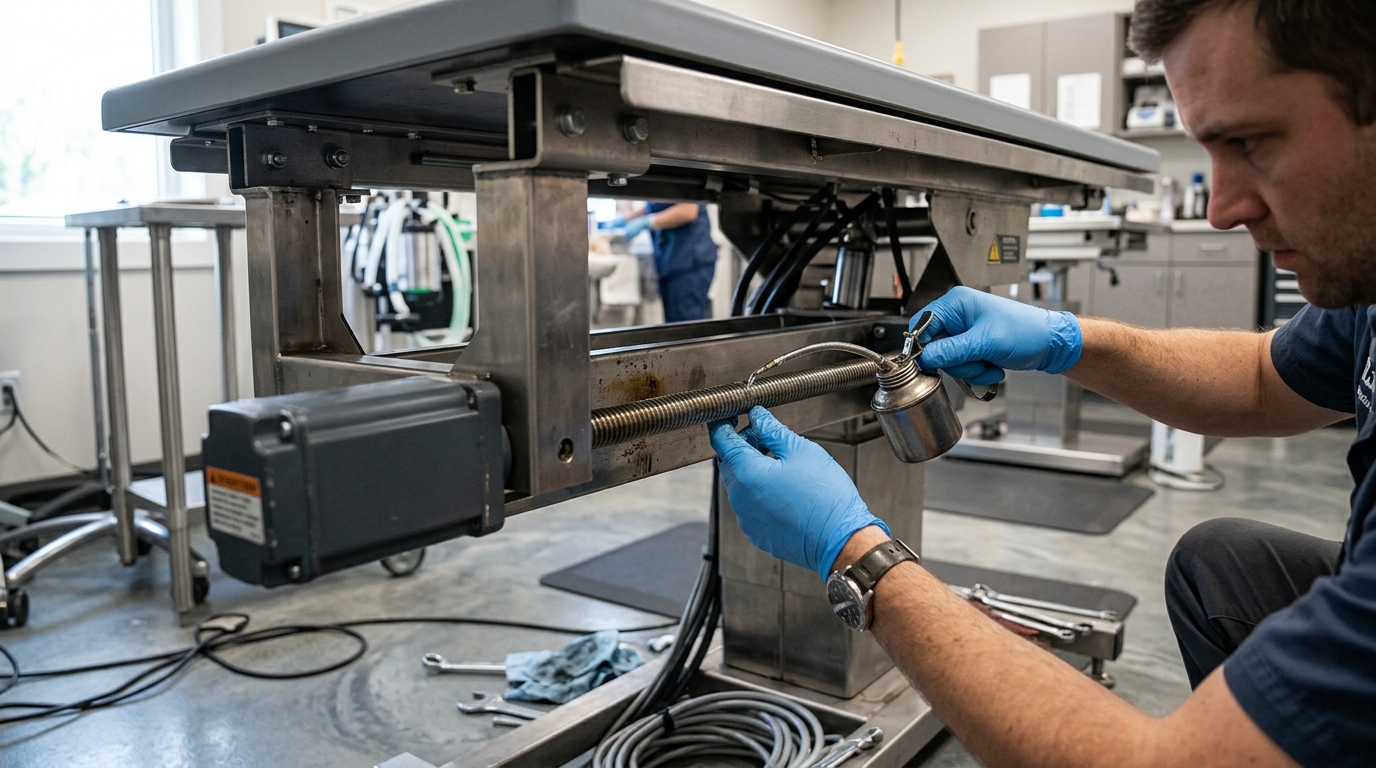
| Annual | Mechanism Overhaul & Load Test | Lubricate actuator screw threads with manufacturer-approved grease; verify weight capacity calibration using standardized test weights. |
Data Summary: Optimization Impact
Aggregating the metrics surrounding heavy breed procedural handling provides a clear picture of equipment optimization. Structural choices and maintenance habits directly influence clinical output.
- Load Threshold: Upgrading from an 80kg to a 120kg dynamic load rating virtually eliminates lateral wobble during patient distress.
- Time Efficiency: Stable lift platforms reduce large breed restraint and handling time by up to 38%.
- Downtime Prevention: Adhering to the 4-tier maintenance protocol prevents an estimated $150-$300 per hour in lost operational revenue.
- Lifespan Extension: Centering the patient's center of gravity during elevation prevents the 40% accelerated wear rate observed in asymmetrical loading scenarios.
Frequently Asked Questions
What is the minimum dynamic load rating for large breed grooming?
For consistent clinical use with breeds exceeding 40kg, the equipment should possess a minimum dynamic load rating of 80kg to 120kg. This buffer accounts for the multiplied force generated when a heavy animal abruptly shifts its weight or struggles during a procedure.
How does tabletop surface thickness affect large breed stability?
A minimum 18mm MDF or composite core is necessary to prevent surface bowing under heavy, concentrated loads (such as a 60kg dog standing on four paws). Thinner boards will flex, causing the animal to feel insecure and increasing their tendency to move unpredictably.
Which lifting mechanism offers the best stability for 100kg loads?
X-frame electric lift mechanisms generally provide superior lateral and vertical stability for 100kg loads compared to basic Z-frame hydraulic pumps. The intersecting steel arms of an X-frame evenly distribute the weight across a wider base footprint, drastically reducing the risk of tipping.
Why is centering the animal so critical before elevating the table?
Positioning the animal off-center forces the lifting mechanism to push against uneven leverage. Over time, this asymmetrical stress causes unequal wear on the actuator bearings and track guides, significantly shortening the operational lifespan of the motor or hydraulic cylinder.