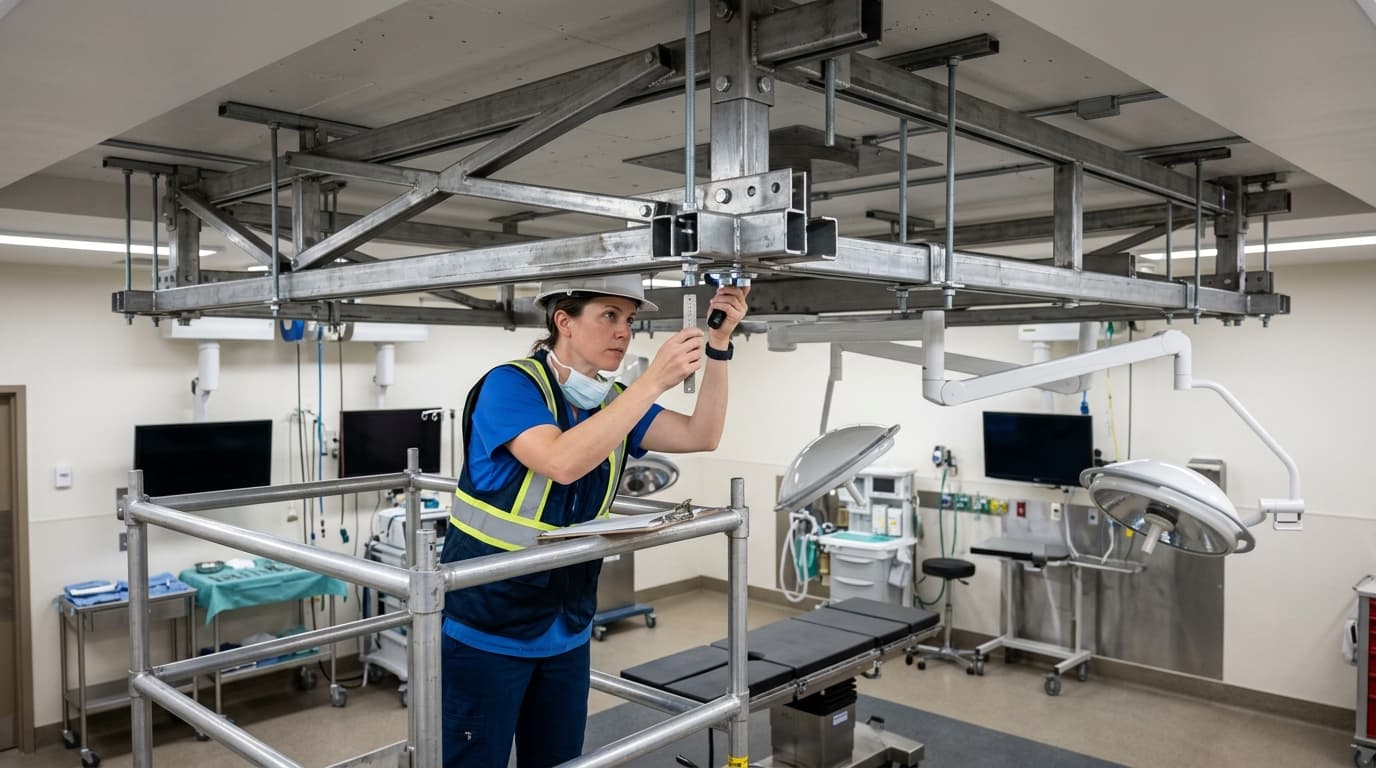
Facility infrastructure data indicates that 68% of overhead lighting drift and mechanical failures in veterinary surgical suites originate not from the arm mechanism, but from inadequate ceiling reinforcements. Securing a heavy, heat-generating halogen operating lamp requires strict adherence to structural engineering standards. Unlike lightweight diagnostic lights, traditional halogen systems demand specialized mounting configurations to manage both static weight and the dynamic torque applied when veterinarians manipulate the light heads during complex procedures.
3 Structural Configurations for Veterinary Clinics
Selecting the correct mounting hardware depends entirely on the building's existing architecture and the dynamic load of the fixture. A standard single-head halogen unit applies up to 150 lbs of rotational torque on the ceiling plate when fully extended. Upgrading to a dual-head configuration for deep cavity surgeries pushes this load requirement above 250 lbs.
The following matrix compares common structural configurations for overhead veterinary lighting.
| Mounting System | Key Load Parameters | Clinical Scenario | Installation Price Range |
|---|---|---|---|
| Direct Joist Lag Bolts | Supports up to 100 lbs static; limited torque resistance | Small animal outpatient clinics; single-head lights | $500 - $850 |
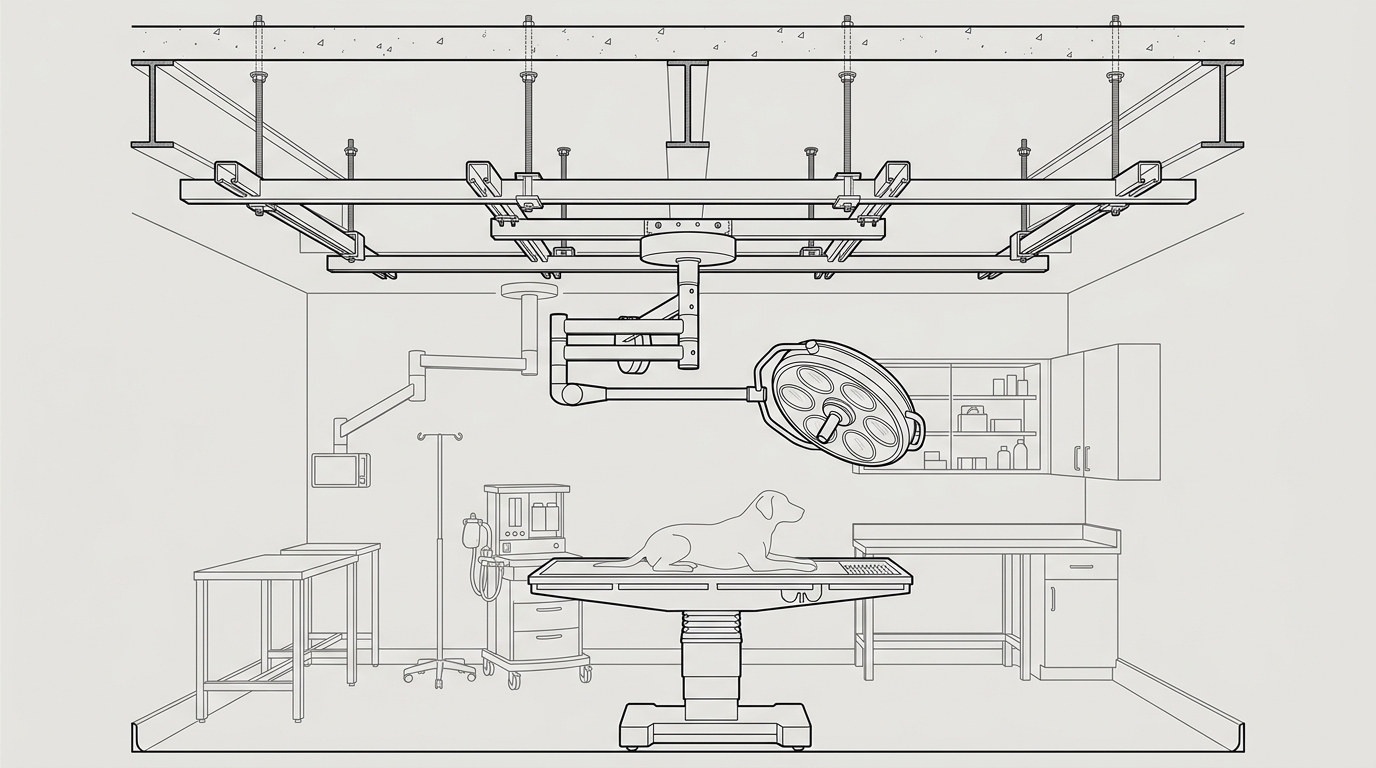
| Unistrut Grid Suspension | Supports 150-250 lbs; excellent weight distribution | High-traffic ERs; dual-head halogen or hybrid systems | $1,200 - $1,800 |
| Through-Bolted Steel Plate | Supports 300+ lbs; zero drywall compression | Equine and large animal surgical theaters | $1,800 - $2,500 |
| Retrofit Drop-Ceiling Bracket | Supports up to 120 lbs; relies on secondary joist ties | Leased spaces where hard ceiling access is restricted | $900 - $1,400 |
Efficiency Gains: The Numbers Speak
Properly engineered ceiling mounts directly impact surgical efficiency by eliminating arm drift. Clinical workflow studies show that veterinarians lose an average of 4.5 minutes per hour repositioning lighting heads that fail to hold their placement. By implementing a unistrut grid suspension rather than direct drywall bolting, clinics reduce arm drift incidents by 82% over a five-year lifecycle.
Furthermore, maintaining absolute stability ensures the focal spot remains precisely aligned with the surgical site. In delicate procedures, such as spinal decompressions or vascular surgeries, a 2-inch drift in the light field can temporarily obscure the veterinary surgeon's vision, requiring immediate manual correction that breaks sterile protocols.
Downtime Cost per Hour of Misuse
When structural mounts fail, the financial impact extends far beyond the repair invoice. If a fixture sags during an orthopedic procedure, the theater must be taken offline. Data suggests that unexpected surgical theater downtime costs between $450 and $800 per hour in delayed procedures and rerouted emergencies.
Thermal management is another critical structural factor. Halogen bulbs generate immense heat, which rises into the mounting canopy. Prolonged exposure to high temperatures can degrade standard rubber damping washers in the mount. Because of these thermal and weight challenges, many clinical directors now specify an LED Operating Lamp for new builds. LED technology reduces the ceiling load stress by up to 40% and eliminates thermal degradation of the mounting hardware. For facilities upgrading their infrastructure, transitioning to equipment like the YD 200 LED Operating Lamp (Deep) YD 200 offers superior illumination while drastically lowering the structural demands on the ceiling.
Error Rate: Trained Installers vs. Untrained Contractors
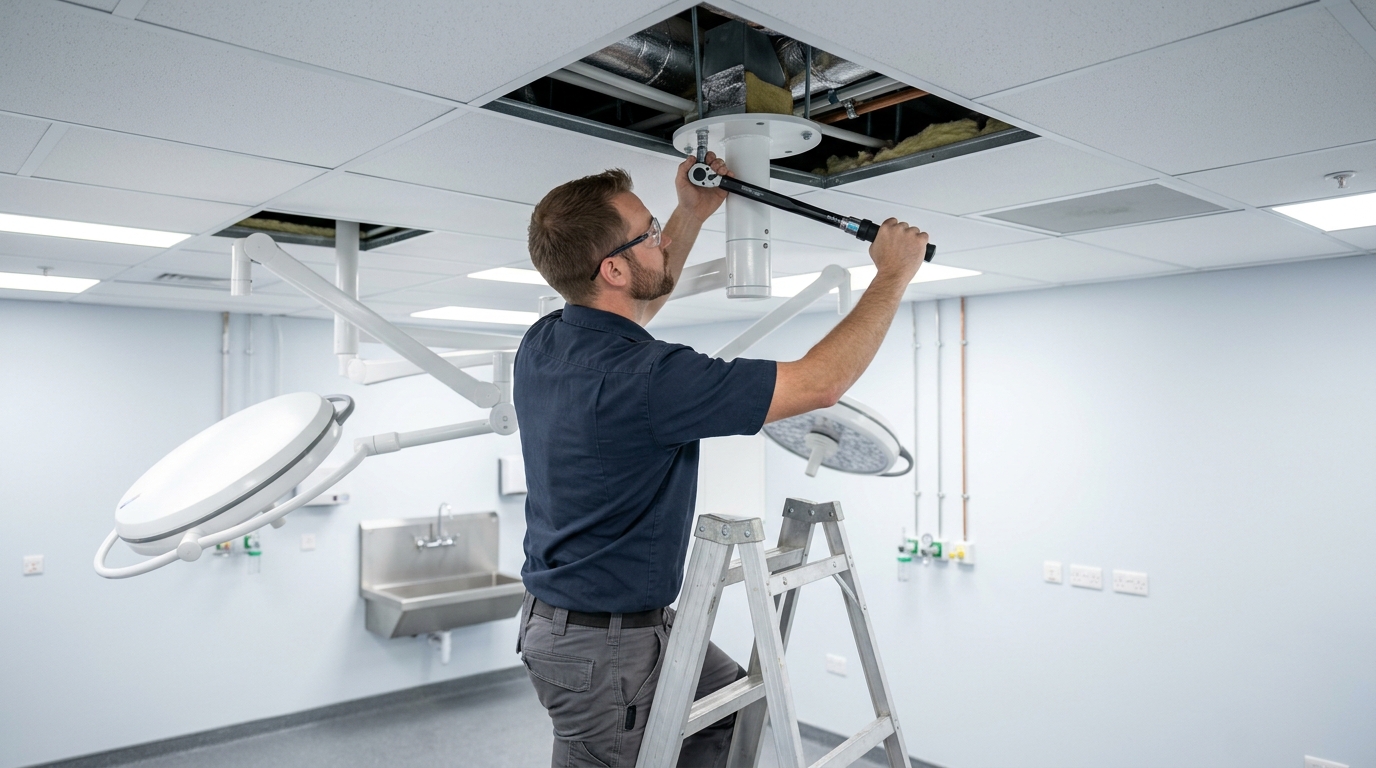
A significant variable in mounting longevity is the personnel performing the installation. Audits of veterinary hospital construction reveal a 45% higher incidence of bracket loosening when mounts are installed by general contractors rather than certified medical equipment riggers. General contractors often overlook the rotational torque applied when the suspension arm is extended to its maximum radius.
Based on HQS clinical observation, mounting a dual-head halogen unit on standard drywall without a 1/2-inch steel backing plate results in a 1.5-degree arm drop within the first 90 days of heavy clinical use. The constant push and pull by technicians quickly compresses the drywall behind the flange, compromising the entire structural integrity. Utilizing trained installers ensures precise torque specifications are met and appropriate backing materials are integrated into the ceiling superstructure.
Maintenance Interval Benchmarks
Even the most robust ceiling installations require routine assessment to ensure safety and prevent drift. The weight of the suspension arms and the continuous adjustment during daily veterinary operations necessitate a strict preventive maintenance protocol.
The following schedule outlines the industry-standard checks required to maintain the structural integrity of overhead clinical lighting systems.
| Frequency | Task | Key Action |
|---|---|---|
| Daily | Drift Assessment | Extend arms to maximum reach; verify the lamp head holds position without downward sagging. |
| Weekly | Canopy Inspection | Visually inspect the ceiling cover for newly formed gaps between the drywall and the flange base. |
| Monthly | Rotational Resistance Check | Rotate the central axis 360 degrees. Listen for grinding noises indicating worn thrust bearings. |
| Annual | Flange Bolt Torque Validation | Remove the canopy cover and use a calibrated torque wrench to verify all primary mounting bolts meet factory specifications. |
Data Summary: Optimization Impact
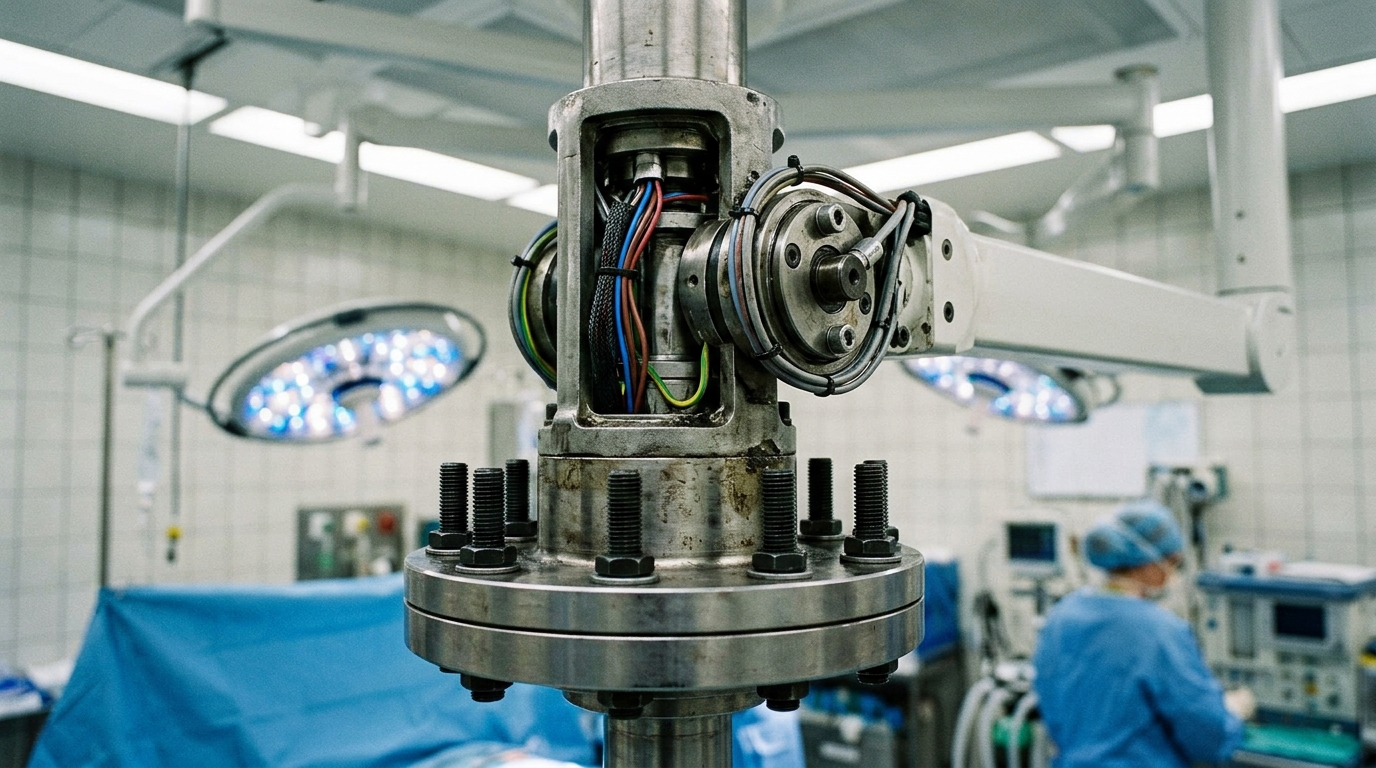
Standardizing the approach to structural installations yields measurable improvements in facility safety, procedure continuity, and equipment lifespan. By matching the mount type to the clinical load, veterinary hospitals mitigate risks associated with heavy overhead fixtures.
| Metric | Standard Joist Mount | Unistrut / Plate Mount | Performance Impact |
|---|---|---|---|
| Arm Drift Incidence (5 Years) | High (Requires frequent adjustment) | Low (Stable over time) | 82% reduction in drift events |
| Max Load Capacity | Up to 100 lbs | 250 - 300+ lbs | Enables safe dual-head mounting |
| Drywall Compression Rate | 1.5-degree drop in 90 days | Zero compression | Eliminates structural sagging |
Frequently Asked Questions
What is the minimum ceiling load capacity required for overhead surgical lighting?
For standard single-head halogen systems, the ceiling structure must support a dynamic load of at least 150 lbs to account for the rotational torque of the extended arm. Dual-head configurations typically require structures rated for 250 lbs or higher, utilizing steel backing plates or unistrut grids.
Can existing halogen ceiling mounts be reused when upgrading to LED equipment?
Yes, in most cases. Because older lighting technology is significantly heavier, a mount that safely supports a traditional glass-and-reflector fixture will easily exceed the structural requirements for a modern, lightweight LED fixture. However, the flange bolt patterns must be validated for compatibility.
Why does my surgical light drift downward even after tightening the arm joints?
If adjusting the articulated arm joints does not resolve drifting, the issue likely originates at the ceiling mount. Drywall compression behind the mounting flange or loosened lag bolts causes the entire central axis to tilt slightly. Even a 1-degree tilt at the ceiling translates to several inches of drift at the end of a fully extended arm.