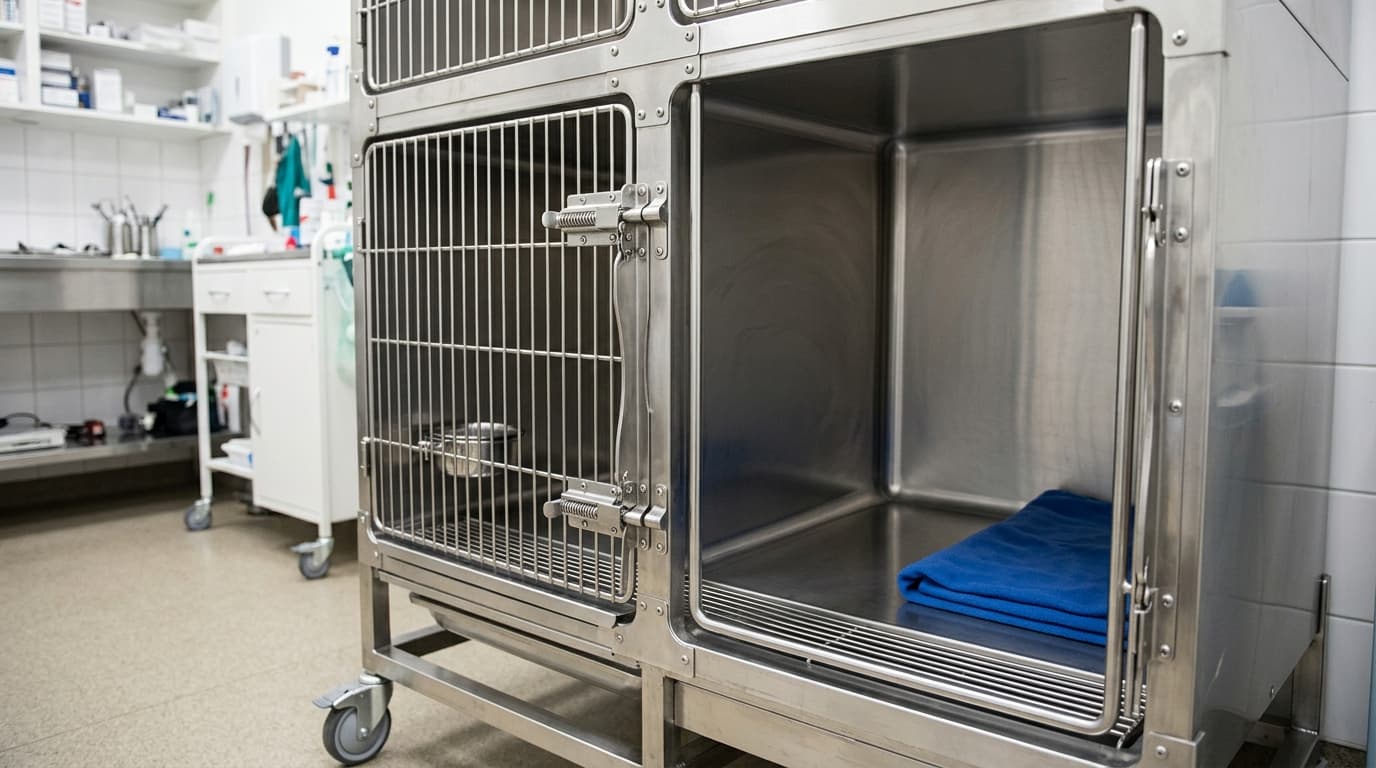
Industry observation indicates that optimized sanitation workflows for a pet cage for dogs can reduce ward turnaround times by up to 25% while mitigating nosocomial outbreaks. In high-volume veterinary clinics, patient containment is not merely about secure housing; it is a critical variable in cross-infection control. Utilizing non-porous materials like a 304-grade stainless steel cage establishes a baseline for hygiene, but actual pathogen reduction relies entirely on standardized operational protocols. This data-driven report evaluates the clinical mechanics, staff procedures, and maintenance benchmarks required to maintain a sterile recovery environment, minimizing equipment downtime and ensuring compliance with veterinary facility standards.
Efficiency Gains: The Numbers Speak
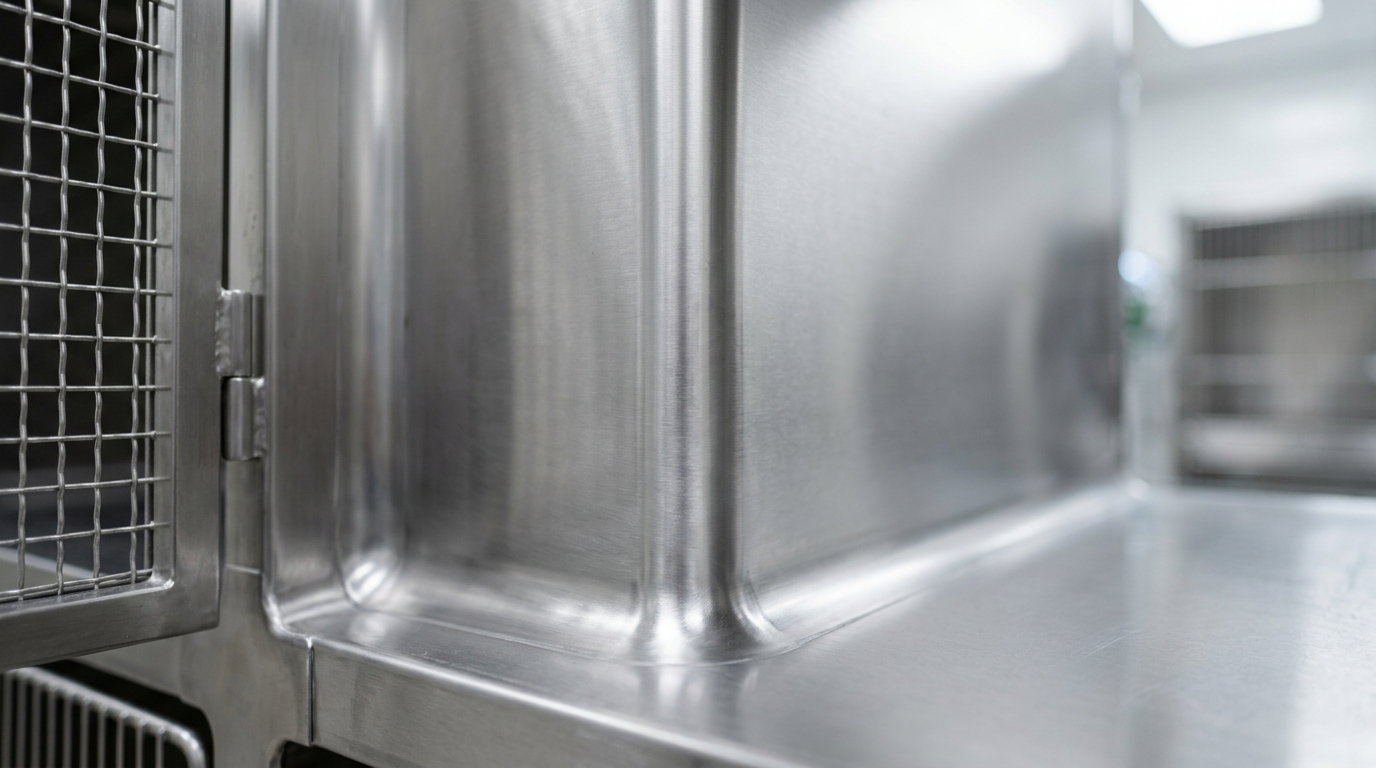
Clinical efficiency in a veterinary ward is measured by the time required to safely transfer a patient, sanitize the enclosure, and admit the next case. Facilities implementing strict mechanical protocols report turnaround time reductions from an average of 22 minutes to just under 14 minutes per enclosure. The structural design of the enclosure heavily influences this metric. Models featuring seamless, continuously welded interior corners eliminate the microscopic crevices where organic matter and bacteria typically accumulate. When evaluating isolation wards compared to general outpatient recovery, the elimination of 90-degree internal joints directly correlates with a lower incidence of residual ATP (adenosine triphosphate) bioluminescence after standard cleaning protocols.
Furthermore, maintaining specialized equipment, such as the Pet Hospital Cage (For Dogs) PCG - A04, demonstrates that ergonomic access points reduce technician fatigue. By minimizing the physical strain of reaching into deep corners, staff compliance with rigorous chemical application times improves, ensuring disinfectants achieve their required contact duration before being wiped down.
3 Configurations That Cut Procedure Time
While containment units lack digital settings, their mechanical configurations dictate workflow speed. Optimizing these three physical configurations provides measurable reductions in daily procedure times:
- Modular Partition Dividers: The ability to insert a central divider reduces patient transfer stress. Technicians can confine a reactive dog to one side while safely cleaning the other, reducing sanitation time by roughly 30% per soiled enclosure and minimizing escape risks.
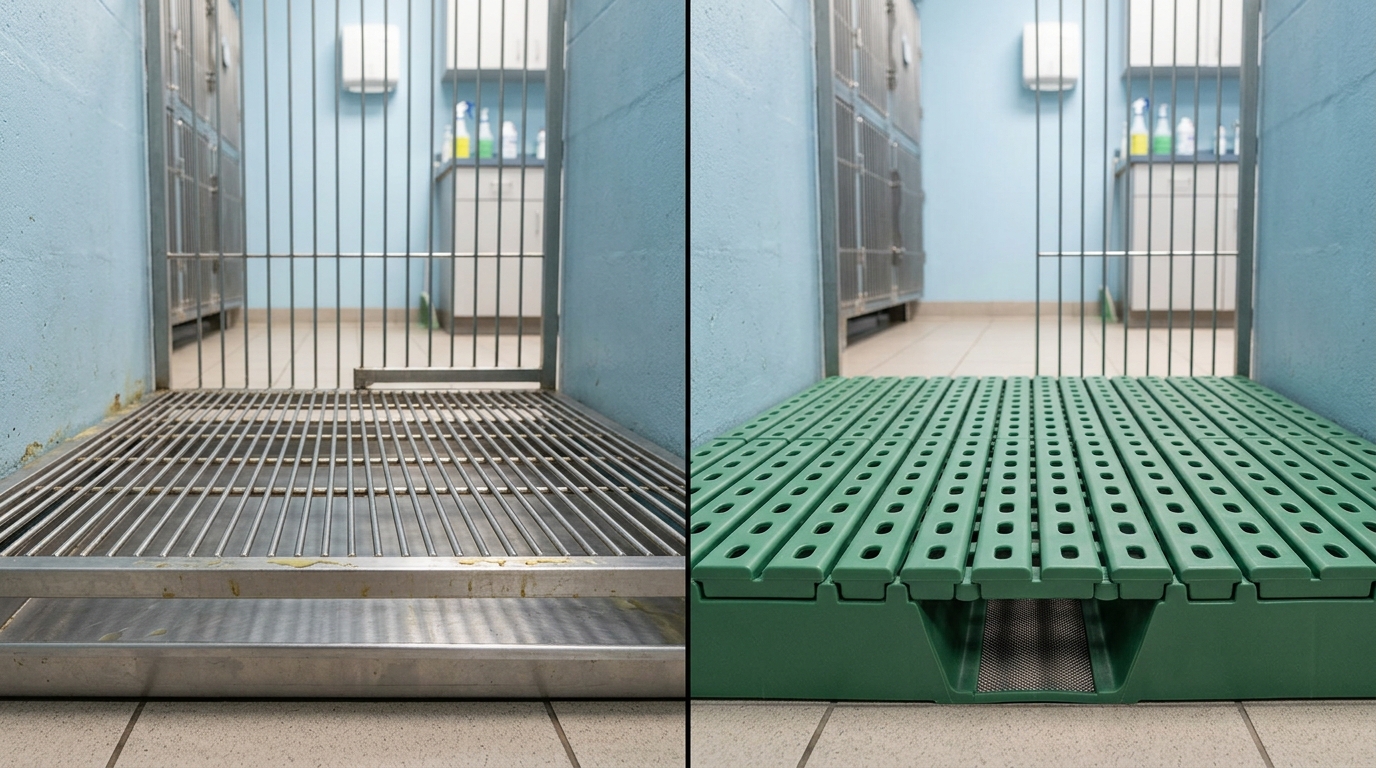
- Suspended Drainage Grating: In large breed recovery or orthopedic wards, utilizing heavy-duty elevated floor grates prevents the patient from resting in fluids. This configuration separates biological waste from the primary resting surface, cutting active bathing and secondary cleanup times significantly.
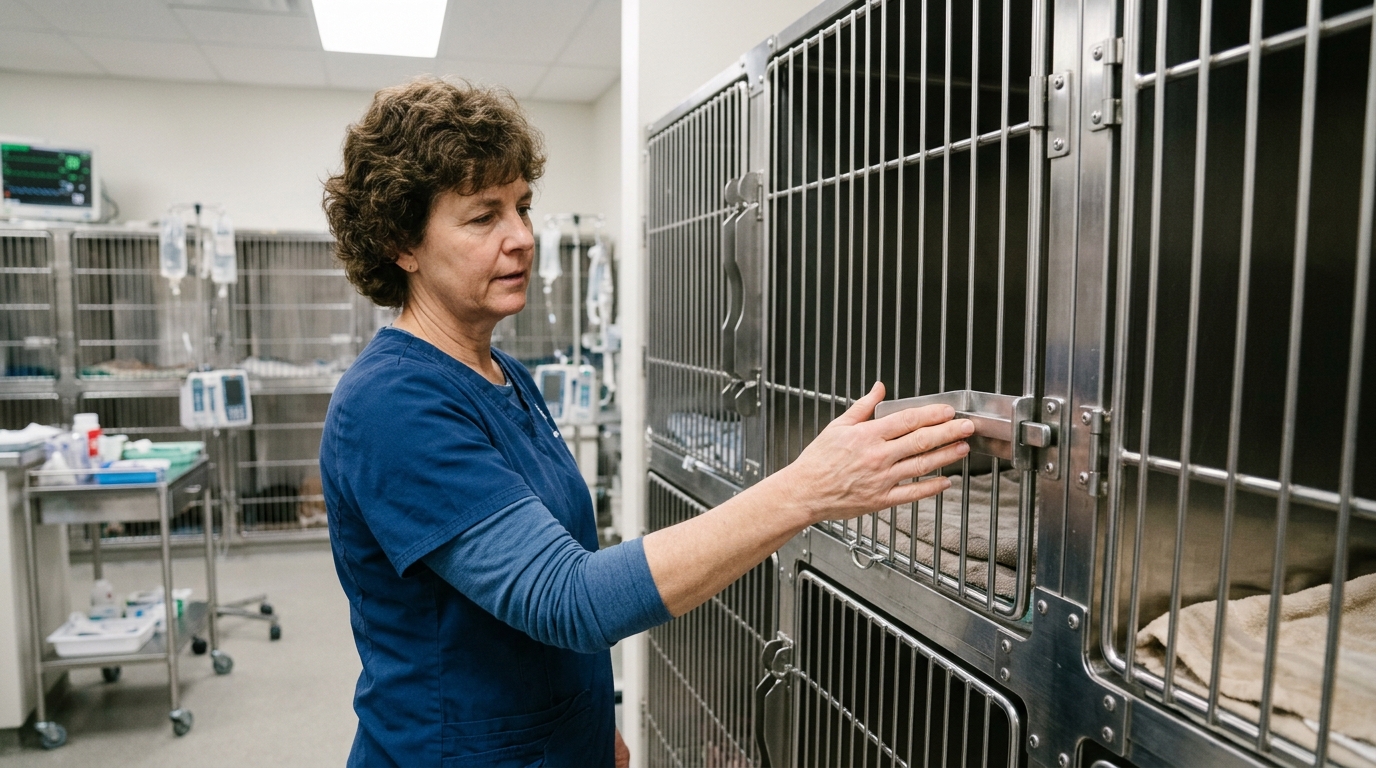
- Single-Hand Latch Mechanisms: Dual-point, single-hand operational latches allow technicians to secure the door while maintaining physical control of the animal with the other hand. This mechanical advantage saves an estimated 15 to 20 seconds per entry and exit, compounding into hours of saved labor over a month.
Error Rate: Trained vs. Untrained Staff
Equipment degradation and cross-contamination frequently stem from human error rather than material failure. Based on HQS clinical observation, continuous exposure to undiluted sodium hypochlorite (bleach) accelerates micro-pitting in 304-grade stainless steel by up to 40% over a 12-month period. Untrained staff often apply harsh abrasives or improperly diluted quaternary ammonium compounds, creating microscopic reservoirs for nosocomial pathogens to colonize.
Additionally, mechanical misuse by untrained personnel—such as slamming heavy tempered glass doors or forcing misaligned latches—accounts for the majority of structural failures. Clinics that integrate hardware operation into their formal onboarding observe a stark contrast: trained wards document fewer than 2 latch replacements per year, whereas untrained facilities may face constant hinge sagging and locking mechanism bypasses by larger, determined breeds.
Downtime Cost per Hour of Misuse
When a primary containment unit is quarantined due to suspected viral persistence (such as Canine Parvovirus) or structural failure, the financial impact extends beyond repair costs. A single out-of-service large run can represent a $150 to $300 daily revenue loss in boarding, observation, or ICU fees. If a faulty latch requires a door replacement, the unit may remain offline for several days pending parts delivery.
To mitigate these losses, procurement managers must evaluate total cost of ownership rather than initial acquisition price. Regular audit schedules and preventive maintenance prevent sudden failures. For an extensive breakdown of procurement strategies and lifecycle calculations, reviewing a Professional Dog Cage Procurement Guide provides baseline metrics for forecasting long-term operational expenditures.
Stainless Steel Cage Type Comparison
Selecting the appropriate enclosure depends on the clinical scenario. The following matrix compares standard industry configurations to aid in capacity planning and procurement.
| Cage Configuration / Type | Key Parameter Focus | Primary Clinical Scenario | Estimated Price Range |
|---|---|---|---|
| Single-Tier Recovery Unit | 304-grade, seamless rounded interior | General post-op for small/medium breeds | $400 - $800 |
| ICU / Oxygen Therapy Bank | Sealed tempered glass, integrated O2 ports | Critical care, respiratory distress | $1,200 - $2,500 |
| Large Breed Walk-in Run | 8mm reinforced grating, sloped sub-floor | Orthopedic recovery, giant breed housing | $2,000 - $4,500 |
| Isolation Therapy Unit | Infrared heating, active exhaust ventilation | Infectious disease ward (e.g., Parvovirus) | $3,000 - $5,500 |
Maintenance Interval Benchmarks
Consistent maintenance prevents the degradation of the passive oxide layer on stainless surfaces, which is critical for rust prevention and sanitation efficacy. Implementing the following protocol ensures compliance with clinical hygiene standards and extends the functional life of the hardware.
| Frequency | Maintenance Task | Key Action / Standard Requirement |
|---|---|---|
| Daily | Chemical Sanitation & Wipe Down | Apply properly diluted enzymatic cleaners; ensure 10-minute contact time. Rinse and dry completely to prevent chemical residue pitting. |
| Weekly | Mechanical Latch Inspection | Test all spring-loaded mechanisms and dual-point latches for smooth operation. Check for any tension loss or alignment sagging. |
| Monthly | Hinge & Grate Deep Audit | Remove all suspended grates; power wash sub-floors. Lubricate door hinges with food-grade, non-toxic silicone spray. |
| Annual | Structural Integrity Review | Assess structural welds for micro-fractures. Re-level banks to ensure proper drainage flow. Replace any worn modular partition seals. |
Frequently Asked Questions
What is the most effective chemical agent for sanitizing a pet cage for dogs without causing corrosion?
Accelerated hydrogen peroxide (AHP) or properly diluted quaternary ammonium compounds are highly effective for veterinary pathogen control. It is critical to avoid prolonged exposure to undiluted sodium hypochlorite (bleach) or abrasive chloride-based cleaners, as these strip the protective chromium oxide layer from the steel, leading to micro-pitting and rust.
How does 304 stainless steel differ from 316 stainless steel in clinical housing?
Type 304 is the industry standard for general veterinary enclosures, offering excellent durability and resistance to common animal fluids and standard cleaning agents. Type 316 contains added molybdenum, providing superior resistance to harsh chlorides and saline environments, making it necessary only in specialized hydrotherapy areas or highly corrosive coastal environments.
How often should the latch alignment on a heavily used dog enclosure be checked?
Latch alignment should undergo a functional test daily during routine opening, but a formal alignment inspection should occur monthly. Large, active dogs leaning against doors can cause millimeter-level hinge sag over time. Addressing a 2mm sag early prevents complete lock failure and subsequent patient escape risks.
Can modular dividers be retrofitted into standard recovery banks?
Retrofitting depends entirely on the initial design of the unit. Enclosures manufactured with pre-integrated tracking channels can accept modular dividers. However, attempting to weld or drill aftermarket channels into a sealed cage compromises its structural integrity and creates inaccessible crevices where bacteria will breed.
Data Summary: Optimization Impact
Consolidating these workflow protocols and maintenance standards yields clear operational advantages. The final data summary outlines the projected impact of implementing standardized structural and procedural guidelines in a veterinary ward.
| Optimization Metric | Pre-Implementation Baseline | Post-Implementation Projection |
|---|---|---|
| Ward Turnaround Time | 22 minutes per unit | 14 minutes per unit |
| Latch / Hinge Failure Rate | 5-7 incidents annually | Less than 2 incidents annually |
| Chemical Wear / Pitting Incidence | High (due to improper dilution) | Negligible (standardized training) |
| Escape / Misalignment Risks | Occasional (large breed force) | Eliminated (dual-point verification) |