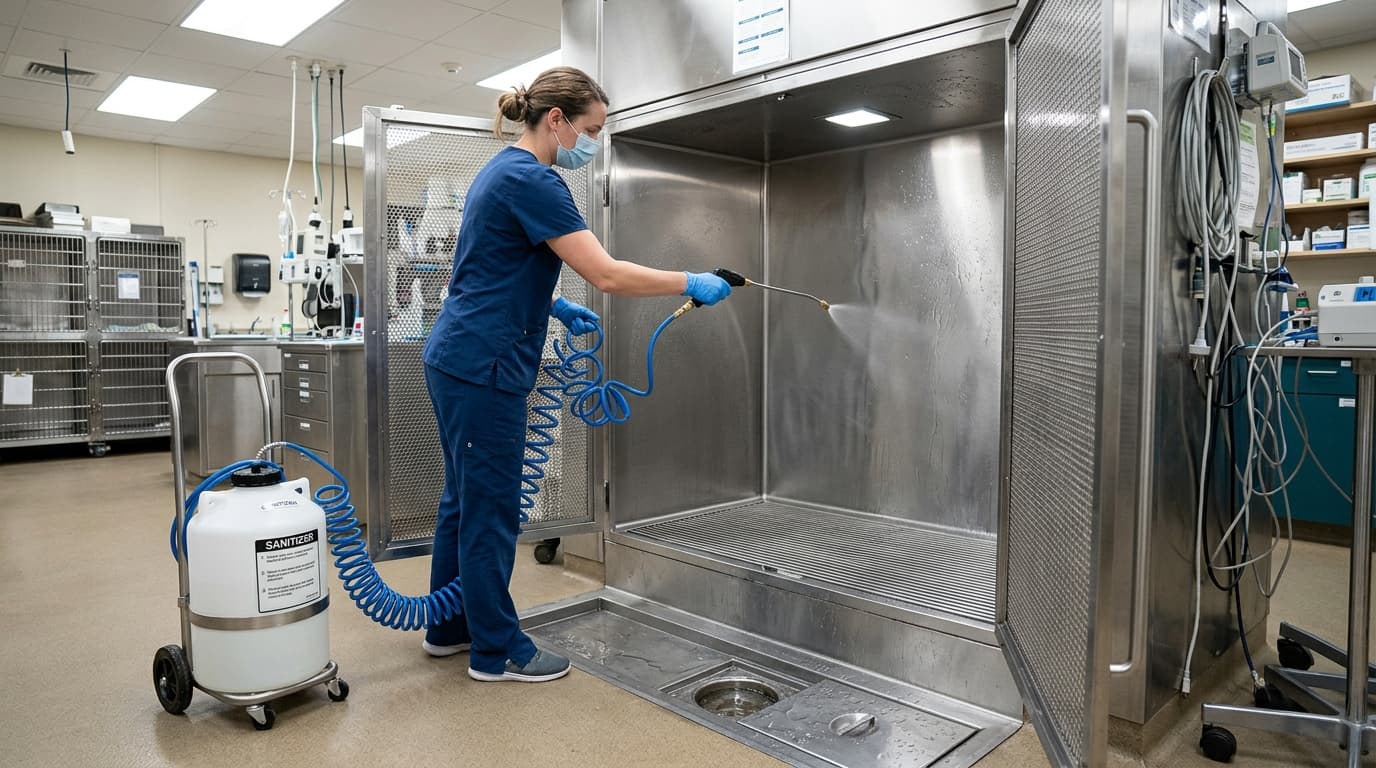
Industry guidance suggests that veterinary facilities transitioning to high-acuity enclosures with integrated drainage systems observe measurable shifts in operational efficiency. While standard flat-bottom units require manual extraction of fluids and organic matter, units engineered with pitched floors and direct drain access fundamentally alter daily sanitation protocols. This report examines the specific workflow impacts, baseline efficiency metrics, and standardization procedures necessary to maximize the utility of these enclosures in clinical settings.
When assessing a primary recovery ward, the structural design of a pet cage (for dogs) dictates the labor burden placed on technical staff. By transitioning from absorbent pad dependency and manual wiping to flush-and-drain methodologies, clinical directors can reallocate significant labor hours to direct patient care. However, realizing these gains requires strict adherence to chemical dilution ratios, mechanical clearing practices, and structured maintenance intervals.
Efficiency Gains: 40 Minutes Saved Daily
Based on HQS clinical observation, wards managing high-volume canine recovery report an average 40-minute reduction in daily sanitation labor per 10-unit bank when utilizing proper flushing protocols. This metric primarily stems from the elimination of repeated manual fluid absorption and the reduction of transfer times between the enclosure and separate sluice rooms.
In high-output scenarios—such as isolation wards treating parvovirus or intensive care units managing gastrointestinal distress—the time differential becomes even more pronounced. Standard enclosures often require staff to physically enter the unit or lean awkwardly to retrieve soiled materials, followed by a multi-step chemical wipe-down. Conversely, a drain-equipped stainless steel cage allows operators to flush heavy organic loads directly into the facility's waste line, applying chemical disinfectants via automated foamers or pressurized sprayers. This streamlined sequence directly reduces the physical strain on personnel and accelerates the turnover rate of critical holding spaces.
3 Protocol Adjustments That Cut Sanitation Time
To capture the projected efficiency gains, technical teams must adjust their baseline cleaning procedures. Applying legacy manual-wipe methods to a drain-equipped enclosure negates the structural advantages of the equipment.
- Pre-Rinse Volume over Pressure: Utilize high-volume, low-pressure water application to move organic material toward the central grate. High-pressure sprayers aerosolize pathogens and drive debris into the microscopic grain of the stainless steel, increasing cross-contamination risks.
- Optimized Enzymatic Contact Time: Apply foaming enzymatic cleaners rather than liquid sprays. Foam adheres to the vertical walls and the pitched floor, ensuring the required 5-to-10-minute contact time before being rinsed down the drain.
- Isolating the Drain Trap: Establish a rigid sequence where the primary drain grate is cleared of macroscopic debris (hair, surgical swabs) prior to the final chemical flush. Relying on the internal plumbing trap to catch large solids leads to inevitable flow restriction.
Contamination Rates: Trained vs. Untrained Staff
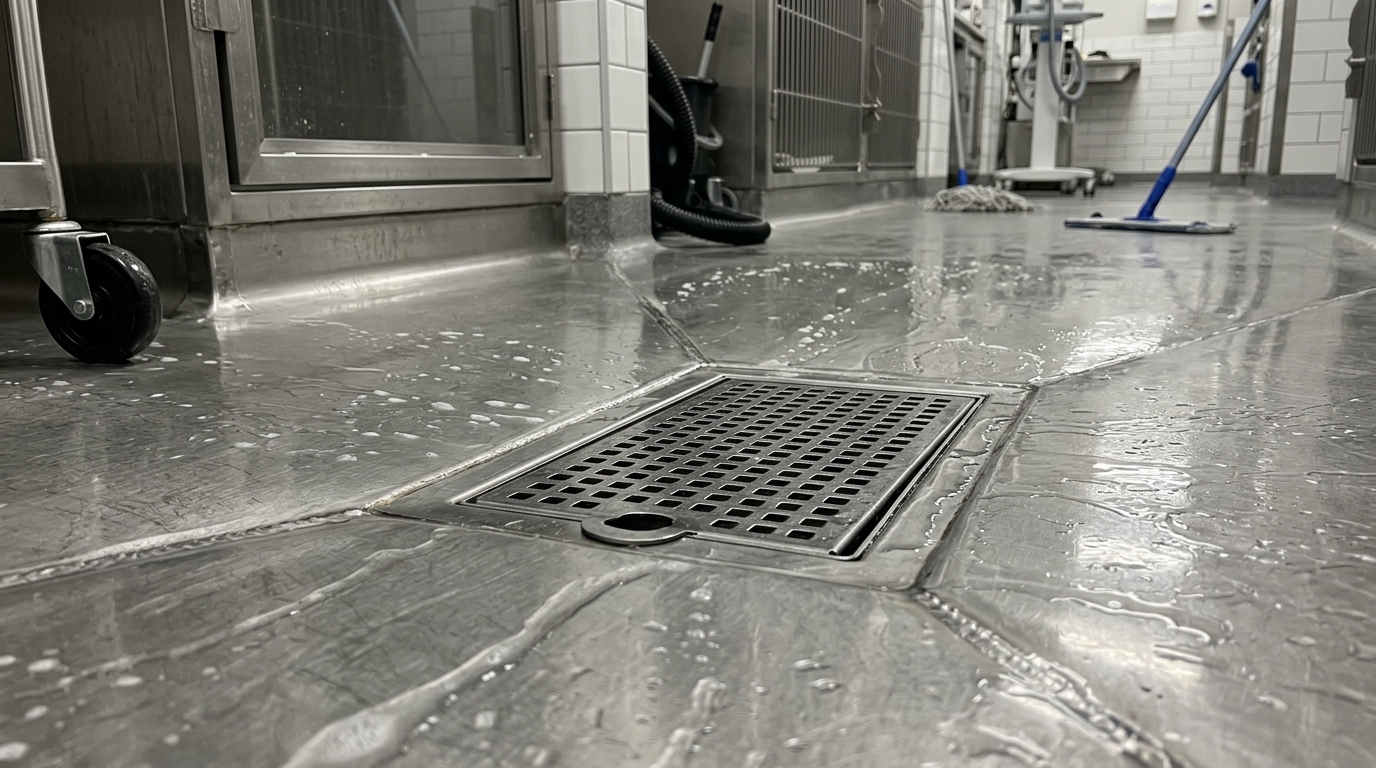
Data indicates that standard operating procedure (SOP) compliance variations directly correlate with residual pathogen loads in veterinary environments. When comparing environmental swab results across different facilities, the effectiveness of drain-equipped units is heavily dependent on operator training.
Trained technicians utilizing specific dilution ratios and structured top-to-bottom flushing techniques consistently achieve hospital-grade sanitization. They understand that the drain itself is a potential vector if not properly treated. Untrained operators frequently use excessive mechanical force with abrasive pads, which damages the passive oxide layer of the stainless steel, creating micro-fissures where bacteria colonize. Furthermore, improper flushing sequences by uncertified staff often leave a residual ring of biofilm directly around the drain perimeter, negating the primary clinical benefit of the system.
Water Usage and Chemical Dilution Metrics
Transitioning to flush-and-drain workflows inherently alters a facility's resource consumption. While manual labor decreases, water utilization typically increases. Facilities must calibrate their chemical dilution systems to accommodate this shift, ensuring that disinfectants remain efficacious when introduced to higher volumes of water.
Industry benchmarks suggest that cleaning a large pet cage (for dogs) using a hose-and-drain method consumes approximately 1.5 to 2.5 gallons of water per intensive cleaning cycle. To maintain proper biocidal activity without corroding the enclosure, precise dosing equipment is mandatory. Pouring concentrated quaternary ammonium or sodium hypochlorite directly onto the floor and washing it down the drain not only constitutes an environmental hazard but also rapidly degrades the rubber gaskets and sealant used in the drainage assembly.
Downtime Cost per Hour of Misuse
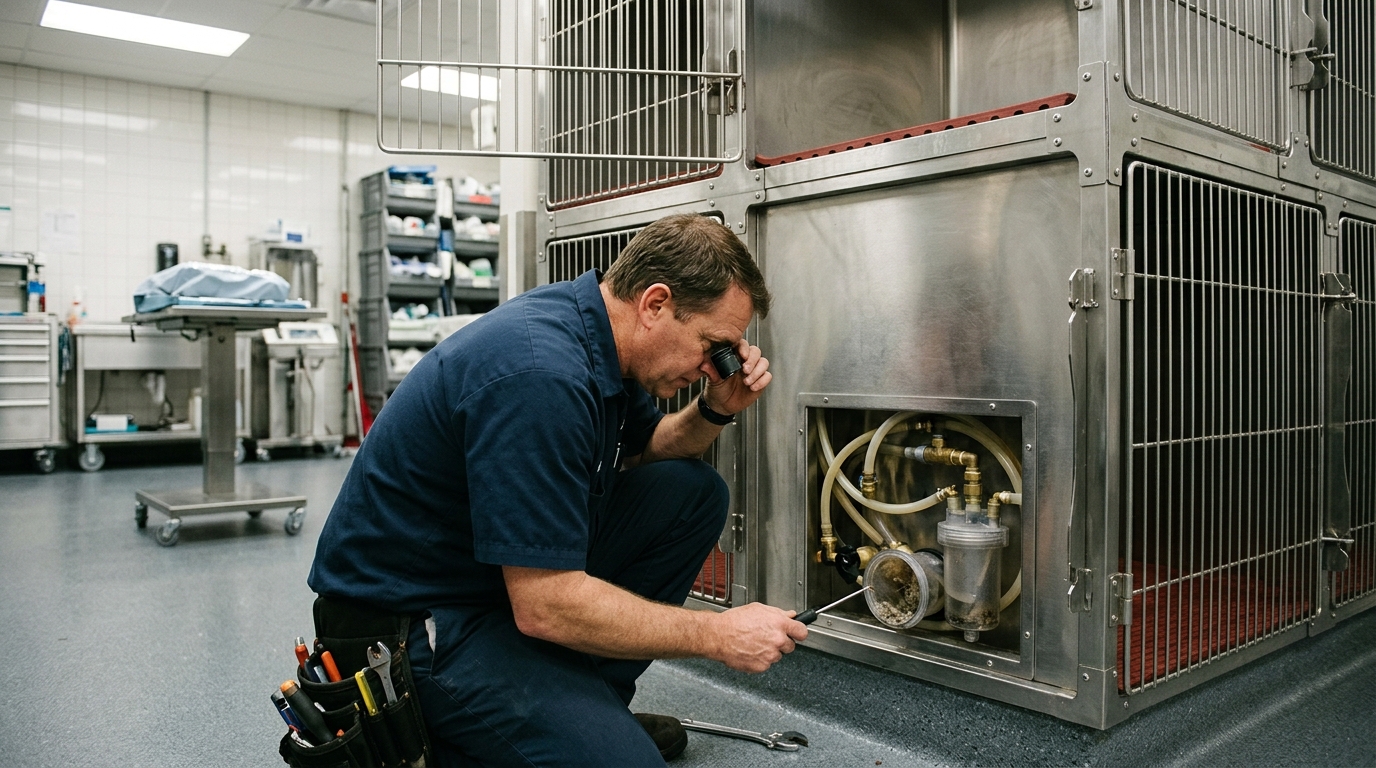
Equipment downtime in a high-capacity veterinary hospital carries severe financial and operational penalties. When a built-in drain becomes obstructed due to improper use, the affected enclosure is immediately rendered non-compliant for patient housing.
If a primary recovery kennel remains offline for a 6-hour surgical block while maintenance clears a plumbing obstruction, the lost admission capacity can exceed $300 to $600 depending on the clinic's regional pricing model. Common failures include allowing cohesive materials like barium contrast or heavy clay-based litters to enter the drain, or failing to rinse corrosive chemicals which subsequently eat through the plumbing connections. Facilities often integrate heavy-duty models like the Pet Hospital Cage (For Dogs) PCG - A04, which feature specialized hair traps and accessible cleanouts to mitigate these exact bottlenecks.
Maintenance Interval Benchmarks
To sustain optimal performance and prevent structural degradation, clinical directors must implement strict maintenance schedules. The following table outlines the minimum required frequency for assessing and servicing drain-equipped veterinary enclosures.
| Frequency | Task | Key Action |
|---|---|---|
| Daily | Grate Clearing | Remove and manually clear the primary stainless steel drain cover of all hair, lint, and macroscopic debris before end-of-shift chemical flushing. |
| Weekly | Trap Flushing | Apply a veterinary-approved enzymatic drain maintainer into the plumbing line to digest accumulating organic biofilm and prevent slow drainage. |
| Monthly | Sealant Inspection | Assess the silicone or rubber seals connecting the stainless steel floor basin to the PVC/metal plumbing infrastructure for signs of cracking or chemical erosion. |
| Annual | Hardware Audit | Conduct a comprehensive review of the leveling feet, structural welds, and internal pipe integrity to ensure the pitch remains optimal and no subsurface pooling occurs. |
Workflow Comparison: Standard vs. Drain-Equipped Units
Understanding the distinct operational requirements between traditional and modernized enclosures assists procurement teams in calculating true return on investment. The following comparison highlights the fundamental workflow differences.
| Metric | Standard Flat-Bottom Unit | Drain-Equipped Unit | Clinical Impact |
|---|---|---|---|
| Fluid Management | Manual extraction via absorbent pads and physical wiping. | Direct directional flushing into facility waste lines. | Reduces technician exposure to biological hazards and limits cross-contamination. |
| Average Turnaround Time | 8–12 minutes per large enclosure. | 3–5 minutes per large enclosure. | Accelerates patient placement during high-volume surgical or emergency intake periods. |
| Chemical Application | Trigger spray bottles, requiring heavy manual scrubbing. | Foaming applicators or low-pressure localized sprayers. | Ensures uniform contact time on vertical and horizontal surfaces with less physical exertion. |
| Infrastructure Dependency | Standalone; can be placed anywhere in the ward. | Requires connection to main plumbing and floor trenching. | Demands higher initial installation planning but yields long-term operational savings. |
For practices planning facility upgrades, consulting a Professional Dog Cage Procurement Guide Maximizing ROI for Veterinary Clinics provides additional frameworks for calculating installation costs against projected labor savings.
Data Summary: Optimization Impact
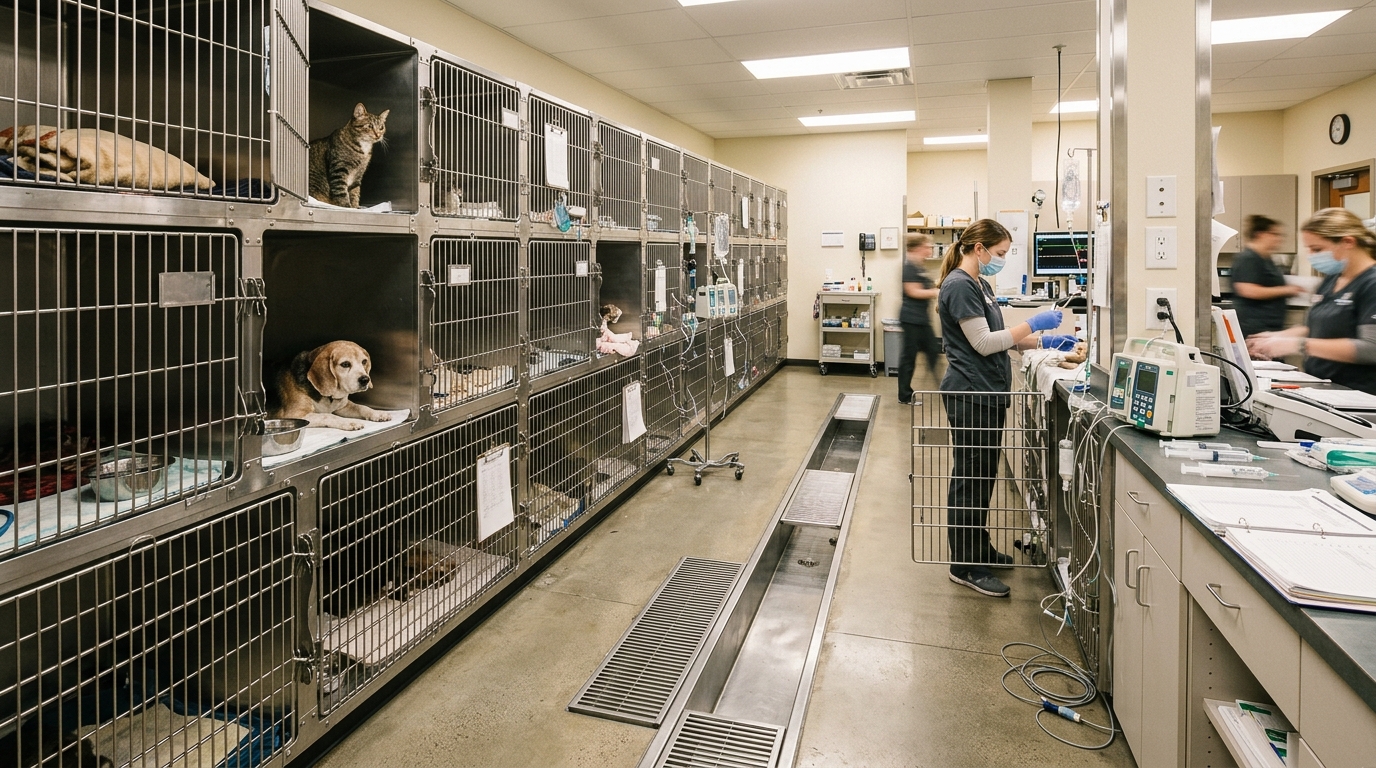
Reviewing the core metrics reveals that while drain-equipped enclosures require precise plumbing integration, the resulting operational stability justifies the structural requirements. Proper implementation directly influences both staff allocation and patient throughput.
| Performance Metric | Pre-Optimization (Untrained/Standard) | Post-Optimization (Trained/Drain-Equipped) |
|---|---|---|
| Sanitation Labor per 10 Units | Approx. 90 minutes daily | Approx. 50 minutes daily |
| Chemical Waste/Overuse | High (manual pouring) | Low (metered application) |
| Drain Blockage Incidence | 3-4 per quarter (improper use) | Less than 1 per year (with daily grate clearing) |
Frequently Asked Questions
How do integrated drains affect the risk of cross-contamination?
When maintained correctly, built-in drains significantly lower cross-contamination risks by allowing technicians to wash infectious materials directly out of the environment without carrying soiled pads or fluids through the ward. However, if the drain traps are not cleared and sanitized, they can aerosolize bacteria back into the enclosure during subsequent flushing.
What is the recommended chemical for cleaning a pet cage (for dogs) with stainless components?
Accelerated hydrogen peroxide or quaternary ammonium compounds at precise dilution ratios are generally recommended. Sodium hypochlorite (bleach) should be avoided or strictly limited, as prolonged contact or improper rinsing will strip the protective chromium oxide layer from the stainless steel, leading to irreversible pitting and rust.
Why does biofilm form around the drain grate?
Biofilm develops when organic matter (like saliva, blood, and feces) combines with water and adheres to microscopic imperfections in the metal. This occurs rapidly if technicians use inadequate contact times for their disinfectants or fail to apply mechanical friction to the immediate perimeter of the drain during the daily sanitation cycle.
Can a standard enclosure be retrofitted with a drainage system?
Modifying a standard flat-bottom unit to include a drain is highly discouraged. Drain-equipped units are engineered with precise floor pitches (usually a 1-to-2-degree slope) to prevent fluid pooling. Retrofitting a flat floor creates stagnant zones where urine and cleaning fluids accumulate, worsening hygiene conditions.