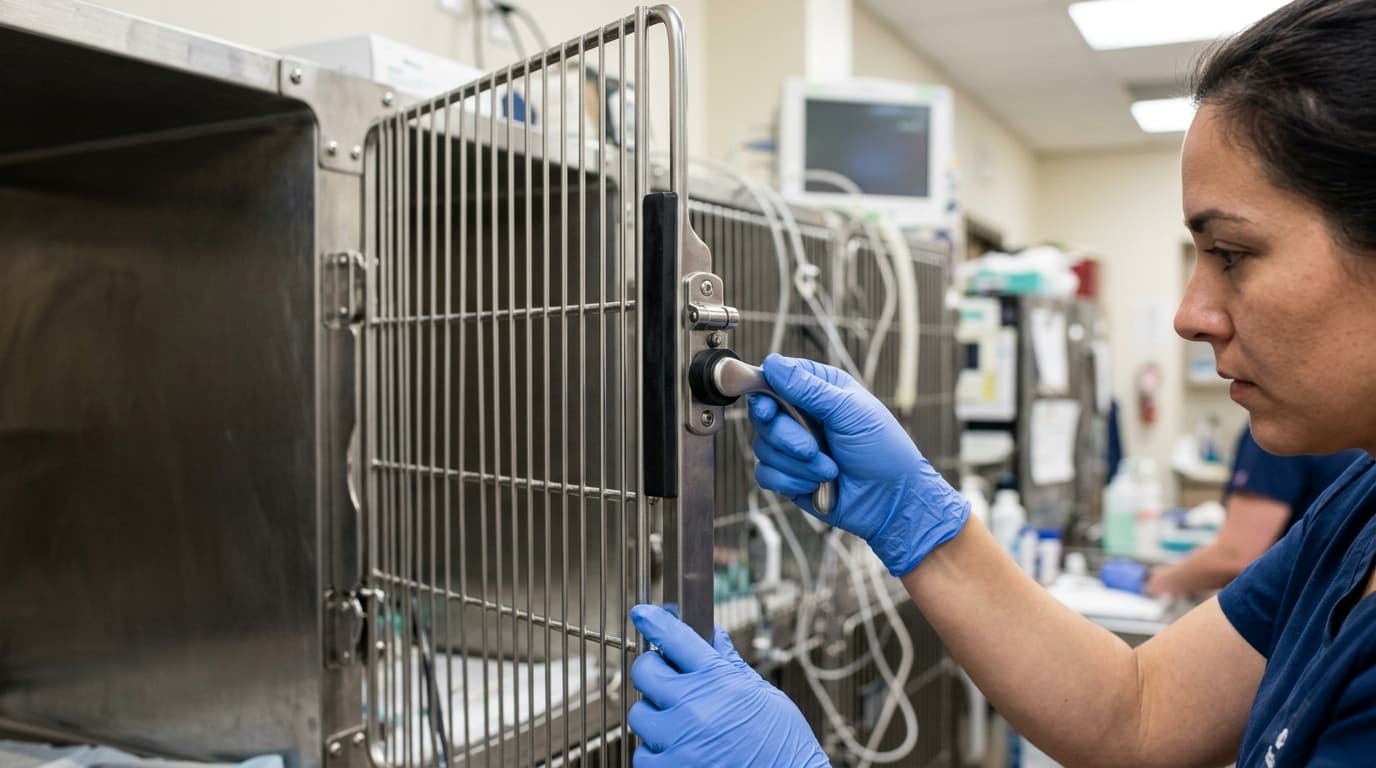
Many veterinary practices report that acoustic startle responses extend feline patient handling times by an average of 4 minutes per clinical exam. In high-turnover feline wards, the sharp metallic click of a traditional enclosure door closing is a primary trigger for stress-induced catecholamine release. This sudden acoustic spike not only induces behavioral resistance but also temporarily alters critical diagnostic baselines, including blood pressure, heart rate, and blood glucose levels. To mitigate these physiological reactions, clinical facility audits indicate that upgrading to acoustically dampened latches is one of the most effective facility improvements a hospital can implement.
Based on HQS clinical observation, standard uncoated latches create an acoustic spike of 82 decibels upon closure—well above the feline comfort threshold. By integrating vibration-absorbing materials and modifying the striker plate geometry, this impact noise can be reduced to under 55 decibels. When evaluating a professional stainless steel cage for feline patients, prioritizing acoustic management directly influences patient outcomes and staff efficiency. The following data-driven analysis examines the operational impact of acoustic dampening systems in veterinary environments.
Efficiency Gains: The Numbers Speak
Integrating acoustic dampening materials into enclosure latches yields measurable improvements in clinical workflow. Acoustic audits of feline recovery wards demonstrate that reducing latch impact noise from >80 dB to <55 dB correlates with a drop in observed defensive behaviors, such as hissing or retreating to the back of the enclosure. Consequently, technicians spend less time coaxing or safely restraining startled patients, reducing the average handling time prior to examination.
To understand the hardware options available, facility managers must assess different dampening materials. The table below compares 4 common latch mechanisms used in veterinary enclosures, detailing their acoustic performance and financial implications.
| Latch Mechanism Type | Key Acoustic Specifications | Optimal Clinical Scenario | Estimated Price Premium (Per Unit) |
|---|---|---|---|
| Standard Stainless Steel | >80 dB peak impact noise; high resonance | General canine wards; non-sensitive environments | Baseline Cost |
| Polymer-Coated Striker | 65–70 dB peak impact noise; moderate wear | Mixed-ward recovery and short-term holding | $15 – $25 |
| Silicone-Dampened Latch | <55 dB peak impact noise; low friction | Feline-only ICUs; long-term boarding | $35 – $50 |
| Magnetic Closure System | <45 dB peak impact noise; near-silent operation | Critical care and neurological isolation units | $80 – $120 |
3 Settings That Cut Procedure Time
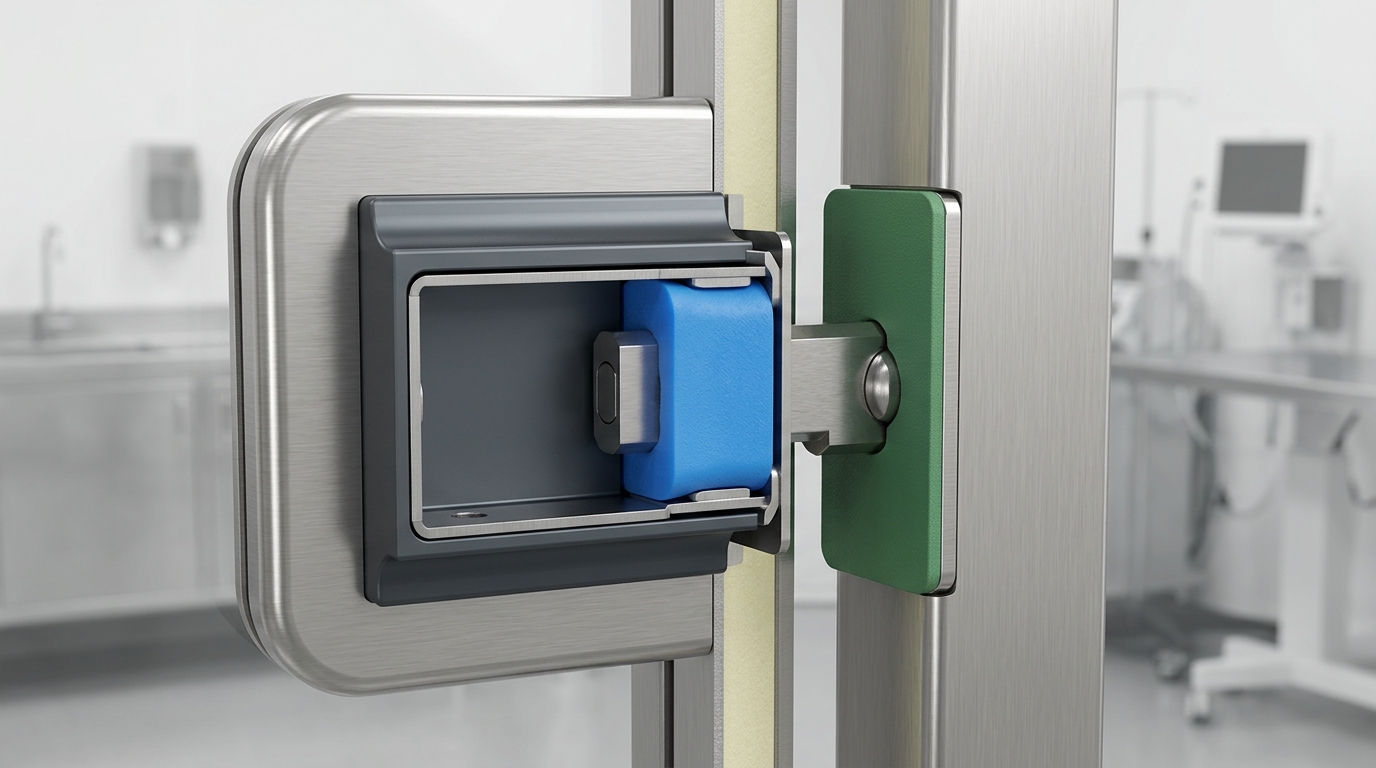
While the hardware itself provides the foundation for noise reduction, the mechanical configuration of the latch determines its long-term acoustic performance. Implementing three specific mechanical adjustments can consistently maintain decibel levels below the 55 dB threshold, thereby stabilizing patient heart rates and cutting overall procedure times.
First, tension calibration is critical. The spring mechanism inside a Cat Cage PCG - 08 or similar enclosure must be adjusted to allow a firm hold without requiring excessive force to lock, preventing the door from rattling against the frame. Second, striker plate alignment ensures the latch bolt glides smoothly into the receptacle. A misalignment of just 2 millimeters can cause metal-on-metal grinding, entirely negating the dampener's effect. Third, the buffer pad thickness must be matched to the door's mass. Heavy-gauge doors require a denser silicone matrix to absorb kinetic energy without bottoming out. For a comprehensive overview of enclosure hardware configurations, consult our Professional Cat Cage Selection Criteria.
Error Rate: Trained vs. Untrained Staff
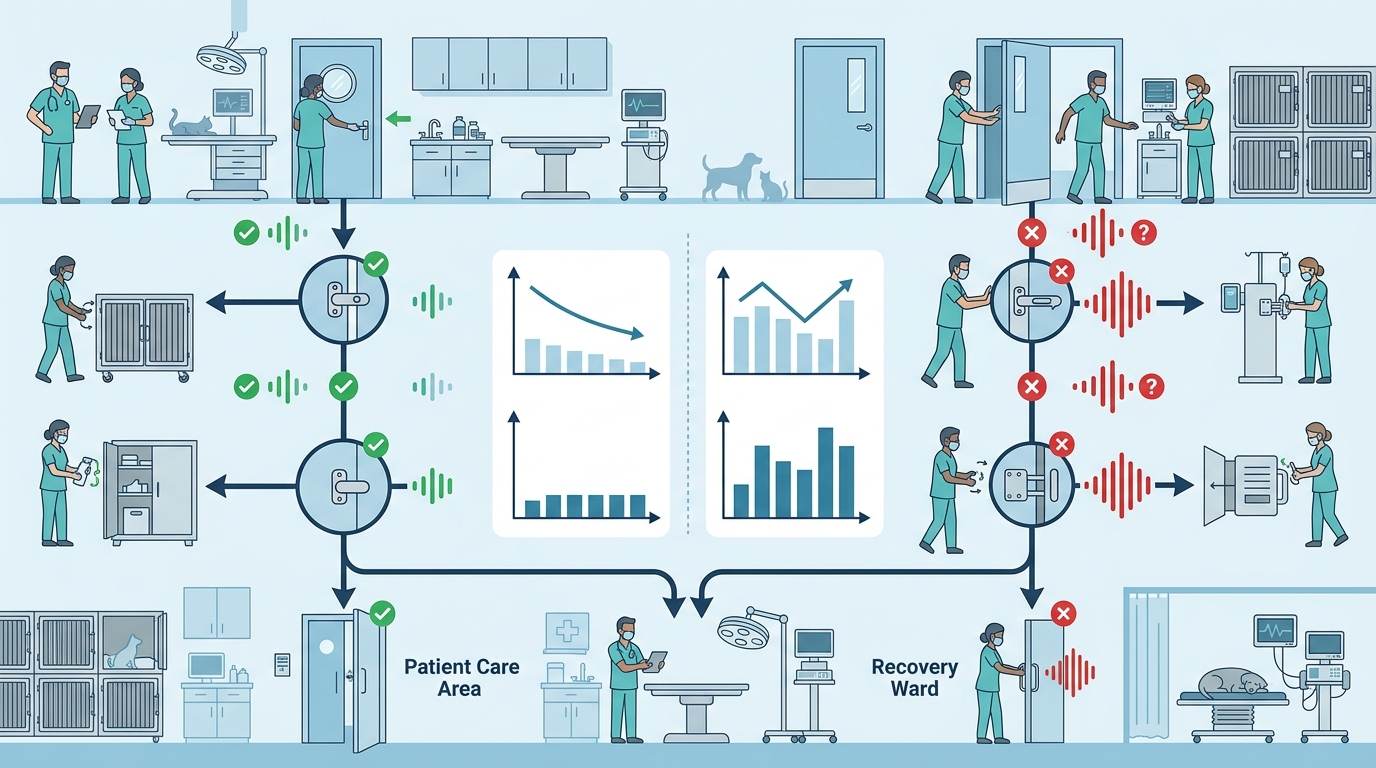
The operational effectiveness of an acoustically dampened latch is heavily dependent on user technique. Clinical workflow analyses show a stark contrast in latch longevity and acoustic output between trained and untrained personnel. When staff bypass the handle mechanism and slam the door shut, the kinetic force compresses the silicone dampener beyond its elastic limit, causing premature material fatigue.
In monitored environments, facilities that conducted operational training saw latch failure rates drop from 12% to under 2% over an 18-month period. Untrained staff frequently generate noise spikes of 75 dB even on dampened cages by failing to depress the latch fully before closure. Conversely, trained personnel who utilize the "push-and-release" technique consistently keep closure noise below the optimal 55 dB. Establishing clear standard operating procedures for door handling ensures the hardware functions as intended and prevents unnecessary spikes in feline stress indicators.
Downtime Cost per Hour of Misuse
Improper operation of enclosure latches does more than elevate patient stress; it directly impacts the clinic's bottom line. When a latch mechanism fails due to continuous excessive force, the enclosure becomes an escape risk or cannot be securely locked, rendering the entire unit unusable. In high-turnover feline wards, losing a single recovery unit creates immediate workflow bottlenecks.
Financial models for veterinary facilities estimate the downtime cost of a single specialized recovery unit at $45 to $60 per hour in lost boarding or postoperative observation capacity. Furthermore, if a fractured polymer dampener causes a door to jam, maintenance personnel must extract the animal and repair the hardware, halting surrounding clinical activities. Investing in durable silicone dampeners and enforcing proper handling protocols prevents these mechanical failures, ensuring that the facility's capital equipment maintains a high utilization rate without unexpected maintenance downtime.
Maintenance Interval Benchmarks
To sustain acoustic performance and prevent mechanical degradation, veterinary facilities must establish a rigorous inspection schedule for all enclosure hardware. Dampening materials naturally compress and degrade when subjected to repeated impact and harsh chemical disinfectants. Adhering to structured maintenance benchmarks extends the lifecycle of the latch mechanism and guarantees consistent noise reduction.
The following table outlines the standardized maintenance intervals required to optimize enclosure hardware performance.
| Frequency | Task | Key Action |
|---|---|---|
| Daily | Visual & Auditory Inspection | Listen for metal-on-metal grinding during closure; wipe debris and hair from the striker plate. |
| Weekly | Tension & Alignment Check | Test the latch spring tension for smooth operation; apply food-safe lubricant to hinges if squeaking occurs. |
| Monthly | Dampener Integrity Assessment | Inspect silicone or polymer buffer pads for visible compression wear, cracking, or chemical degradation. |
| Annual | Full Hardware Audit & Calibration | Replace all degraded dampening rings; realign door frames to ensure perfectly flush and silent closure. |
Frequently Asked Questions
What decibel level triggers a stress response in feline patients?
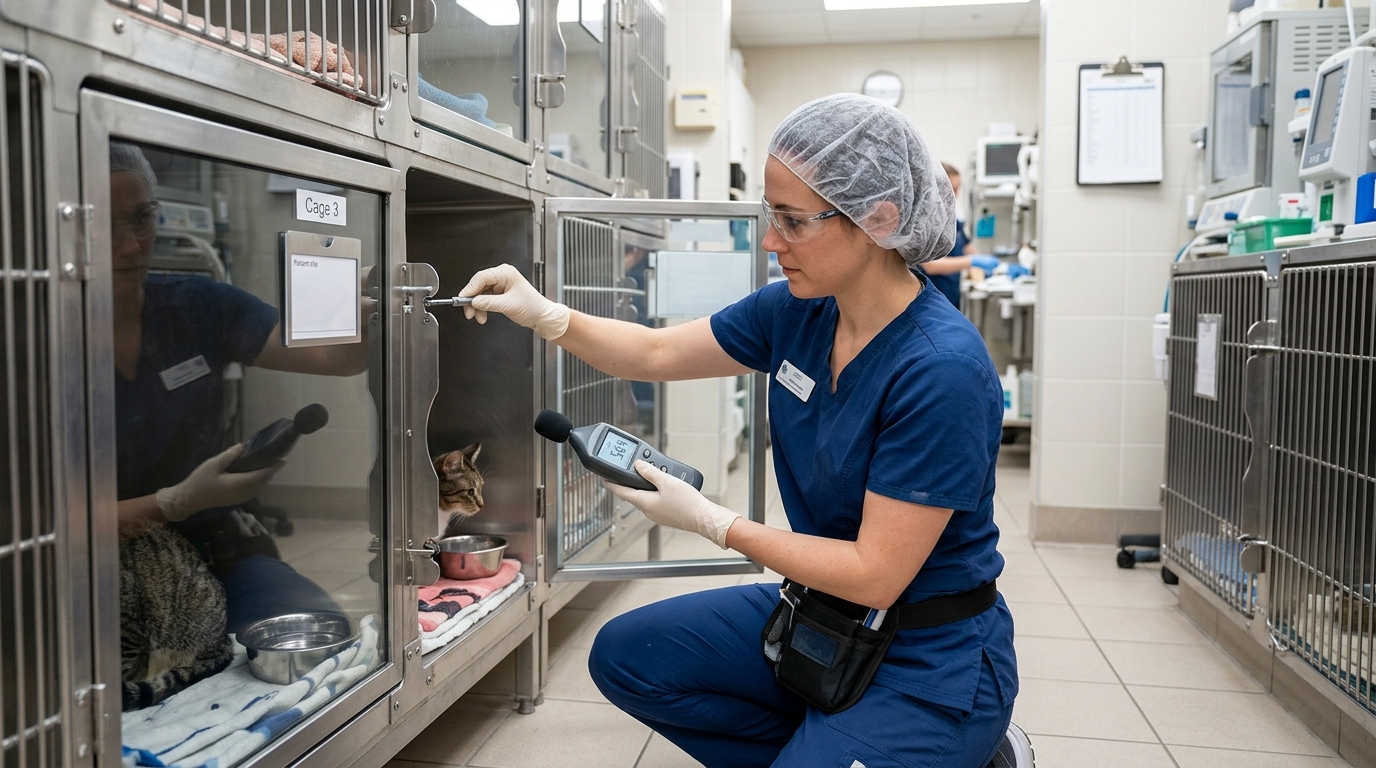
Clinical observations indicate that sudden impact noises exceeding 60 decibels can trigger an acoustic startle response in cats. Standard metal latches often produce spikes between 80 and 85 decibels. Keeping enclosure operation noise consistently below 55 decibels minimizes stress-related physiological changes, such as elevated heart rates or defensive aggression.
How often should silicone dampening pads be replaced?
In a high-volume clinical setting, silicone dampeners typically retain their optimal acoustic properties for 12 to 18 months. However, repeated exposure to harsh accelerated hydrogen peroxide or quaternary ammonium disinfectants can accelerate material breakdown. Monthly visual inspections for cracking or hardening will dictate if earlier replacement is necessary.
Can acoustic dampening hardware be retrofitted to existing enclosures?
Many standard veterinary enclosures can be retrofitted with acoustic dampening components. Facilities can install polymer-coated striker plates and adhere medical-grade silicone bumpers to the door frames. However, tension recalibration is required after retrofitting to ensure the door closes securely against the new material thickness without requiring excessive force.
Data Summary: Optimization Impact
Optimizing enclosure hardware with acoustic dampening technology yields compounding benefits for both patient welfare and clinical efficiency. By systematically reducing closure noise, veterinary facilities can establish a calmer environment that facilitates safer, faster examinations and reduces long-term equipment wear.
| Optimization Metric | Baseline (Standard Hardware) | Optimized (Dampened & Calibrated) | Net Clinical Impact |
|---|---|---|---|
| Peak Closure Noise | 82 dB | <55 dB | Eliminates acoustic startle response in feline patients. |
| Average Patient Handling Time | Standard duration + 4 min | Standard duration | Saves 4 minutes per exam by reducing defensive behaviors. |
| Hardware Failure Rate (Annual) | 12% | <2% (with staff training) | Significantly reduces maintenance costs and unit downtime. |
| Downtime Cost Exposure | High ($45-$60/hr per unit) | Minimal | Maximizes daily ward capacity and revenue generation. |