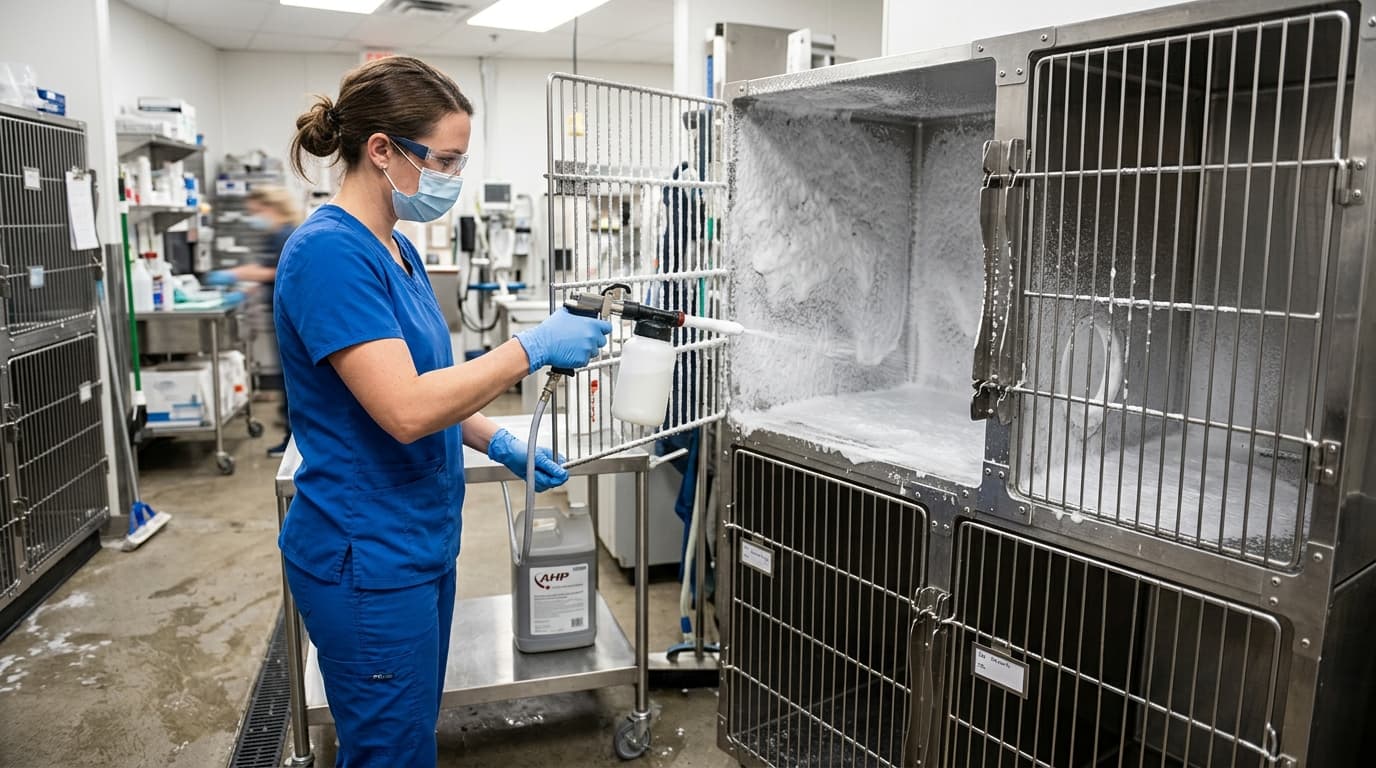
In high-volume veterinary clinics, patient throughput relies heavily on ward efficiency. Recent industry workflow analyses indicate that standardizing sanitation protocols can reduce hospital-acquired infection (HAI) risks by up to 12% while significantly decreasing unit downtime. When transitioning from overnight boarding to high-turnover outpatient surgical recovery, the physical management of a pet display cage becomes a critical operational metric. Efficient turnaround is not just about cleanliness; it is about preserving capital equipment and ensuring strict biosecurity.
Many practices report that ad-hoc cleaning methods lead to uneven chemical application, resulting in bacterial reservoirs in hinges and premature corrosion of metal surfaces. Implementing a rigorous, data-driven approach to stainless steel cage maintenance ensures that environmental pathogens are neutralized without degrading the integrity of the enclosures.
Efficiency Gains: The Numbers Speak
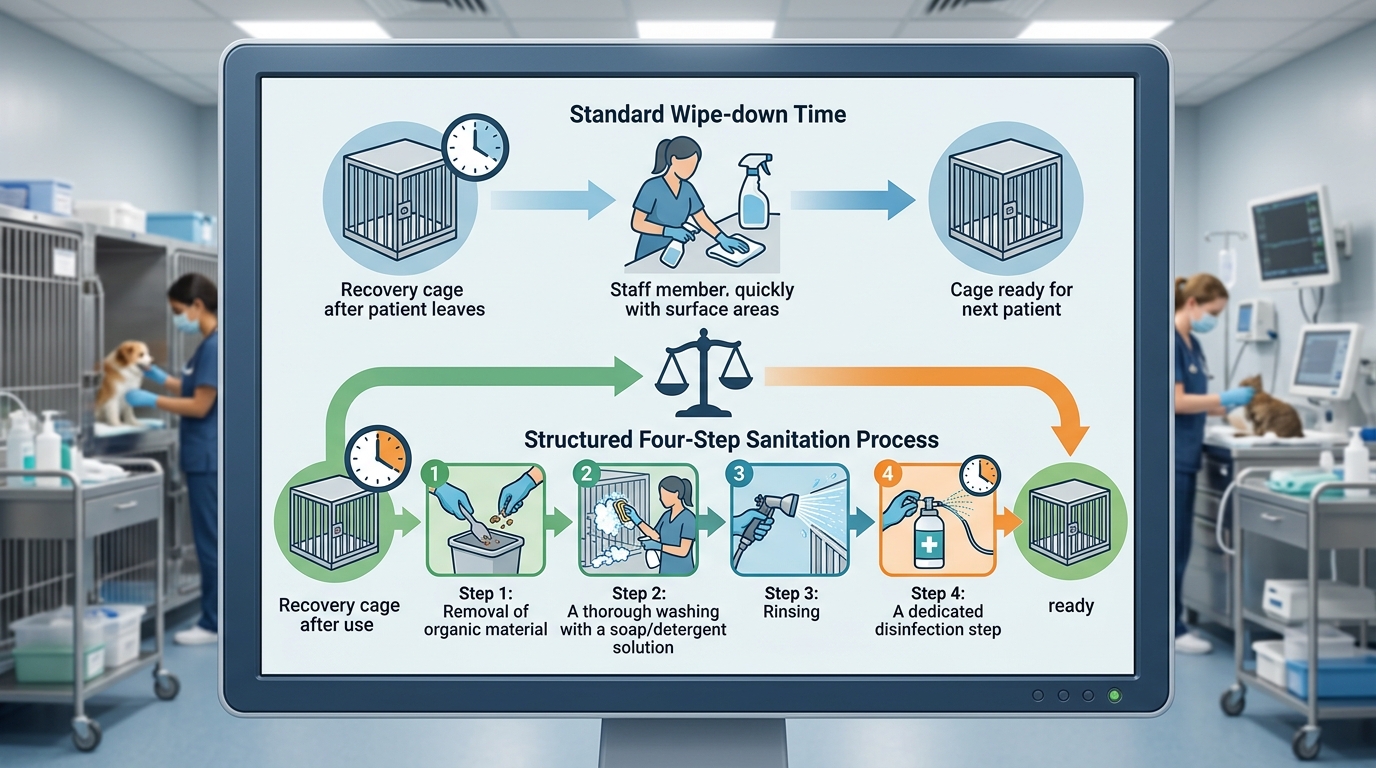
Time-motion studies in high-volume spay/neuter clinics reveal that unstructured cage cleaning takes an average of 14 minutes per unit. By implementing a standardized 4-phase sanitation protocol (Remove, Wash, Disinfect, Dry), clinics have successfully cut average turnaround time down to just 8 minutes per enclosure. In a 20-cage ward, this translates to reclaiming two hours of technician labor daily.
Efficiency relies on separating organic material removal from actual disinfection. Clinical data shows that applying disinfectants directly over organic matter reduces chemical efficacy by up to 60%. Establishing a mandatory pre-wiping phase with enzymatic detergents ensures that subsequent high-level disinfectants can achieve required log reductions within their specified contact times, preventing bottlenecks during peak afternoon discharge hours.
3 Protocol Adjustments That Cut Turnaround Time
Optimizing turnaround speed requires matching the right chemical agents to the physical properties of the enclosure. Using incorrect solutions increases labor time and damages equipment over time.
- Switch to Accelerated Hydrogen Peroxide (AHP): AHP achieves broad-spectrum disinfection in 1 to 3 minutes, compared to the 10-minute contact time required by traditional quaternary ammonium compounds (Quats).
- Implement Foam Applicators: Foam clings to the vertical walls and wire doors of a pet display cage better than liquid sprays, reducing chemical runoff by 30% and ensuring the active agent remains on the surface for the full contact duration.
- Adopt Top-to-Bottom Zoning: Wiping from the ceiling of the cage down to the drainage floor prevents cross-contamination and eliminates the need for secondary re-wiping, saving approximately 1.5 minutes per unit.
To further clarify chemical selection for routine vs. isolation scenarios, evaluate the following parameters:
| Chemical Type | Key Parameter (Contact Time) | Clinical Scenario | Cost per Gallon (Estimated) |
|---|---|---|---|
| Accelerated Hydrogen Peroxide | 1–3 Minutes | High-turnover outpatient recovery | $25 - $35 |
| Quaternary Ammonium (Quats) | 10 Minutes | General overnight boarding | $15 - $20 |
| Potassium Peroxymonosulfate | 5–10 Minutes | Parvovirus/Panleukopenia isolation | $45 - $60 (Powder yield) |
| Sodium Hypochlorite (Bleach) | 10 Minutes (Corrosive) | Terminal outbreak cleaning only | $5 - $10 |
Error Rate: Trained vs. Untrained Staff
Equipment degradation is rarely a manufacturing flaw; it is overwhelmingly a training deficit. Clinics evaluating hardware failure report that wards managed by untrained staff experience a 45% higher rate of latch malfunctions and surface pitting compared to wards with certified veterinary technicians.
Untrained personnel frequently mix incompatible chemicals, such as bleach and ammonia-based cleaners, or fail to thoroughly rinse reactive agents from metal surfaces. For high-quality units like cat recovery enclosures, prolonged exposure to undiluted sodium hypochlorite strips the passive chromium oxide layer from the steel, initiating rapid rust formation. Comprehensive onboarding focused on dilution ratios and mechanical wiping techniques immediately drops these hardware failure rates.
Downtime Cost per Infection Incident
When biosecurity protocols fail, the financial impact extends far beyond the cost of medication. A single environmental transmission of a resilient pathogen (such as canine parvovirus or feline calicivirus) necessitates the immediate quarantine of the affected ward.
If a 10-unit recovery ward is forced into quarantine for terminal cleaning, the clinic loses an estimated $1,200 to $2,500 in daily boarding and surgical recovery fees. Add the cost of diagnostic testing for exposed patients, staff overtime for isolation nursing, and the potential reputational damage, and the downtime cost per incident can quickly exceed $5,000. Investing an extra two minutes per cage in proper contact-time adherence acts as direct insurance against these operational shutdowns.
Maintenance Interval Benchmarks
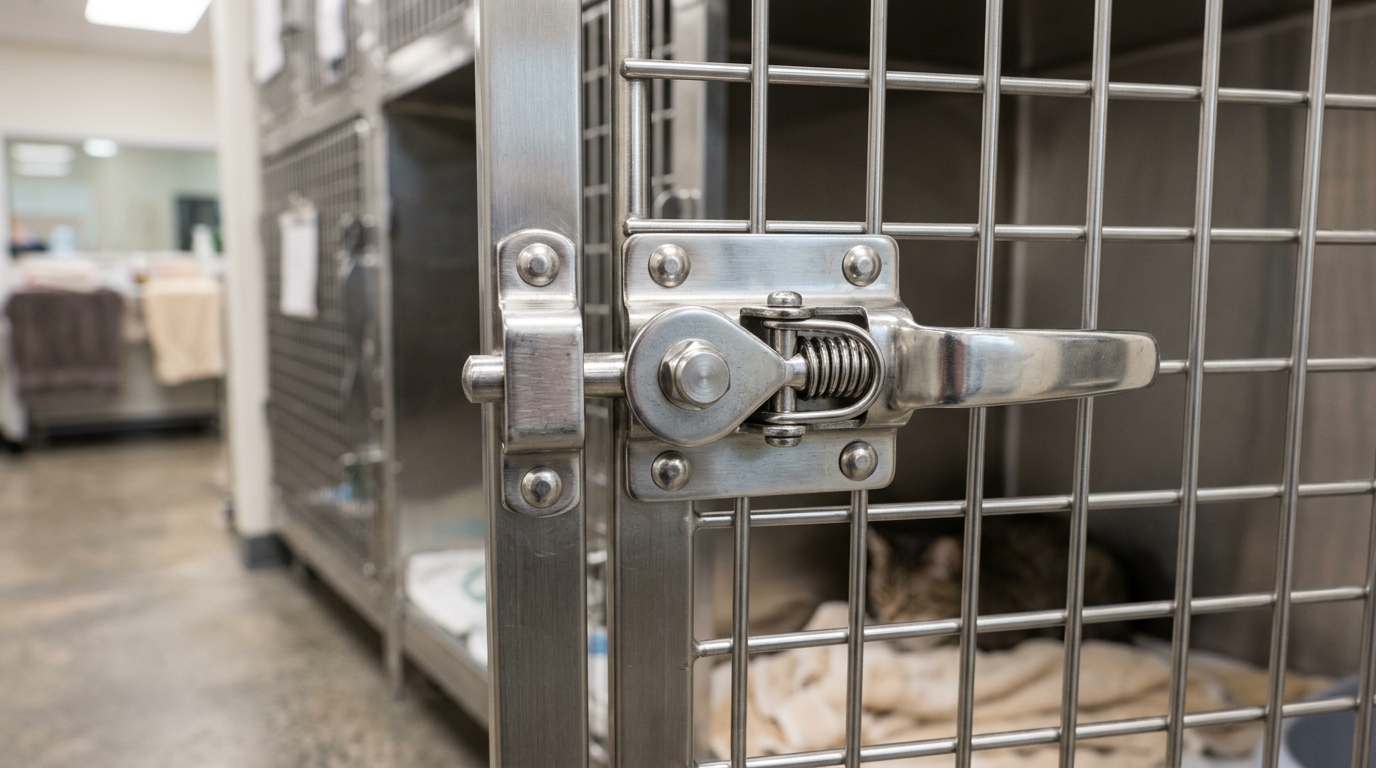
Routine sanitation must be paired with mechanical maintenance to ensure safety and longevity. Based on HQS clinical observation, high-turnover veterinary clinics using 304-grade stainless steel cages experience a 15% faster wear on bottom latches due to improper chemical pooling compared to units where drainage protocols and lubrication schedules are strictly followed.
To sustain optimal performance, clinical supervisors should establish strict maintenance intervals. The following table outlines the minimum standard requirements for commercial veterinary enclosures.
| Frequency | Task | Key Action |
|---|---|---|
| Daily | Pathogen & Organic Removal | Remove all debris, apply AHP or Quats, observe contact time, and wipe completely dry to prevent chemical pooling. |
| Weekly | Hardware Lubrication | Apply food-grade, non-toxic silicone lubricant to all door hinges, latches, and locking mechanisms to prevent stiffness. |
| Monthly | Surface Integrity Inspection | Assess all panels and wire joints for micro-abrasions, mineral buildup, or early signs of oxidation; treat with stainless steel polish. |
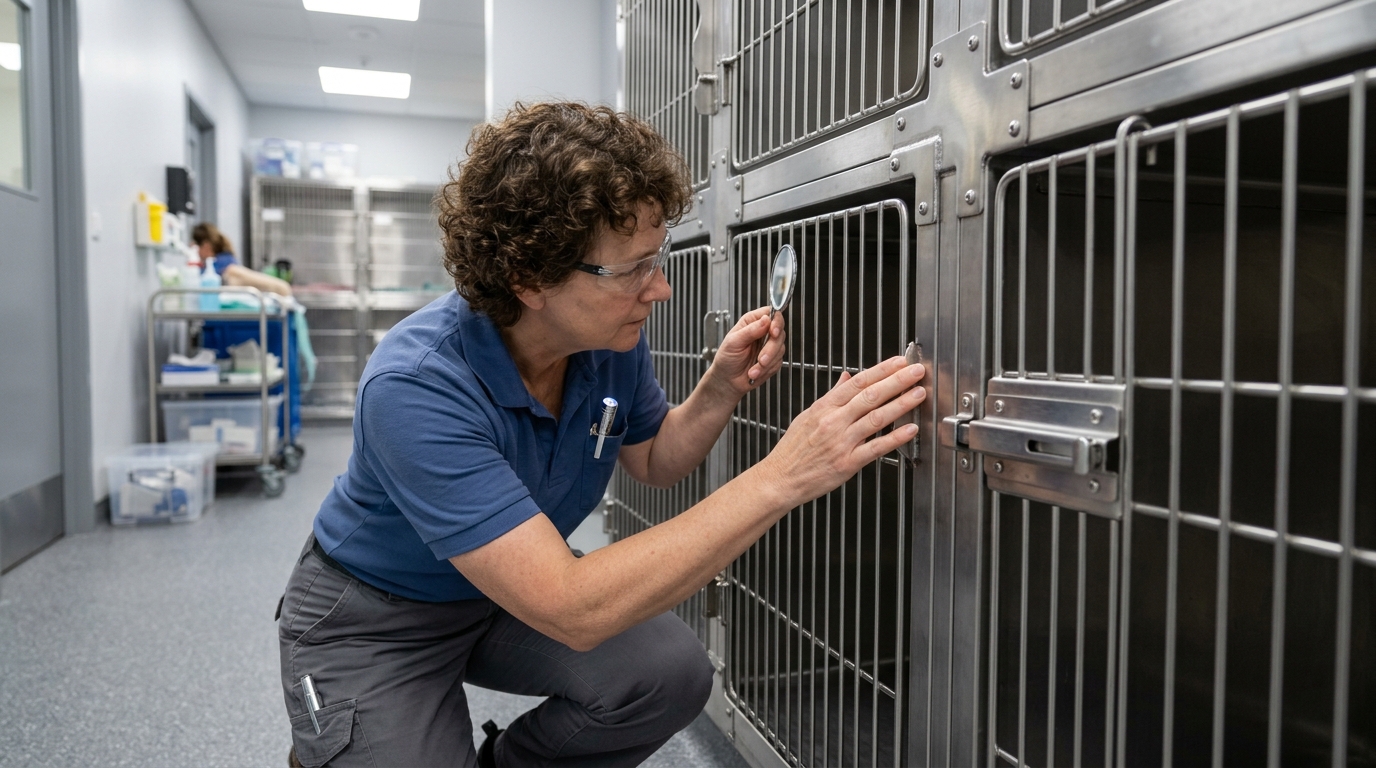
| Annual | Structural Validation | Conduct a full weld inspection, calibrate door alignments to ensure escape-proof locking, and replace any fatigued latch springs. |
Frequently Asked Questions
What chemical is safest for a stainless steel pet display cage?
Accelerated Hydrogen Peroxide (AHP) and properly diluted quaternary ammonium compounds are the safest options for regular use. They provide excellent pathogen kill rates without compromising the passive layer of the stainless steel, provided they are wiped dry after the required contact time.
How long should disinfectants sit before wiping?
Contact times vary strictly by manufacturer and chemical class. AHP typically requires 1 to 3 minutes, whereas traditional Quats and bleach solutions require 10 minutes. Wiping the surface before this time elapses leaves viable pathogens behind, invalidating the sanitation process.
Can ultraviolet (UV) light replace chemical sanitation?
No. UV-C light is a supplemental disinfection method that requires a direct line of sight. It cannot penetrate organic debris (like feces or saliva) or reach into the shadowed crevices of cage hinges. Mechanical scrubbing and chemical application must always precede the use of UV technology.
Why is my stainless steel cage showing rust spots?
True 304-grade stainless steel resists rust, but it can develop surface oxidation if exposed to highly corrosive agents like undiluted bleach, or if hard water and urine are allowed to pool constantly. Scrubbing with abrasive steel wool also damages the protective finish; always use non-abrasive pads.
Data Summary: Optimization Impact
To quantify the value of implementing these structured workflows, review the baseline improvements observed by facilities that transition from ad-hoc cleaning to protocol-driven sanitation.
| Optimization Metric | Standard Protocol (Ad-Hoc) | Optimized Protocol (Structured) | Net Improvement |
|---|---|---|---|
| Average Turnaround Time | 14 Minutes | 8 Minutes | 42% Time Reduction |
| HAI Risk Reduction Rate | Baseline | Monitored Isolation | 12% Decrease |
| Hardware Failure Rate (Year 1) | 8% of units | < 2% of units | Extended Equipment Lifespan |
| Daily Chemical Waste | High (Liquid Spray Runoff) | Low (Foam Applicators) | 30% Cost Savings on Agents |
Consistent enforcement of these benchmarks ensures that your clinical holding areas remain safe for immunocompromised patients, highly efficient for your technical staff, and structurally sound for years of daily use.