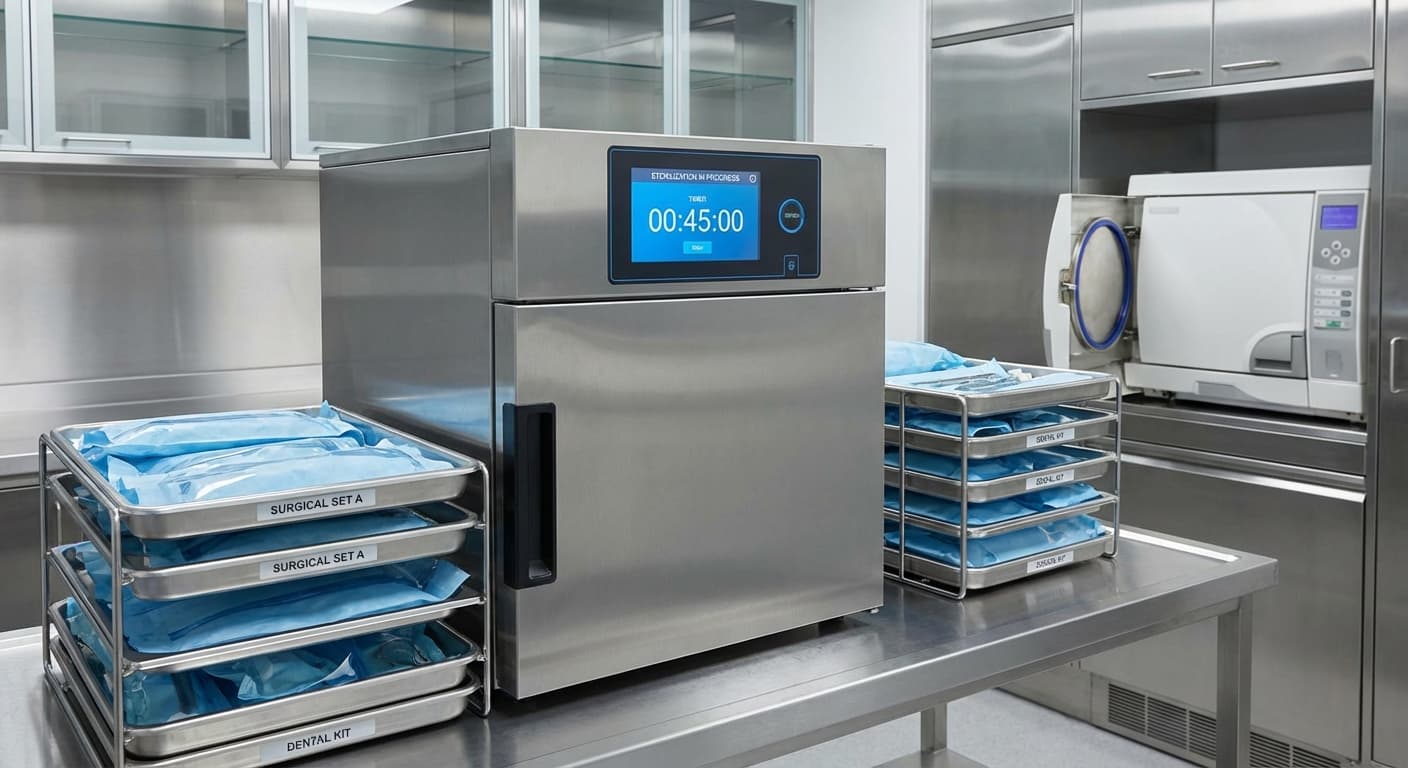
In the high-pressure environment of veterinary medicine, capital equipment procurement is rarely just about purchasing a device; it is an exercise in risk management and operational forecasting. For the last decade and a half, I have watched the industry shift from a "cost-first" mentality to a "lifecycle-value" approach. This evolution is particularly visible when clinics evaluate a Dry Heat Sterilizer (Hot Air Sterilizer). While steam autoclaves often dominate the conversation, the dry heat modality remains the gold standard for depyrogenation and sterilizing moisture-sensitive instruments like carbon steel sharps, anhydrous oils, and powders.
The challenge facing modern clinic owners and procurement managers is not a lack of options, but an oversaturation of specifications that often mask inferior engineering. A unit that looks robust on a brochure may suffer from significant thermal stratification, leading to cold spots that compromise sterility assurance levels (SAL). This guide moves beyond basic product descriptions to analyze the structural and thermal dynamics that dictate the true value of a hot air sterilizer in a clinical setting.
The Evolving Economics of Veterinary Procurement
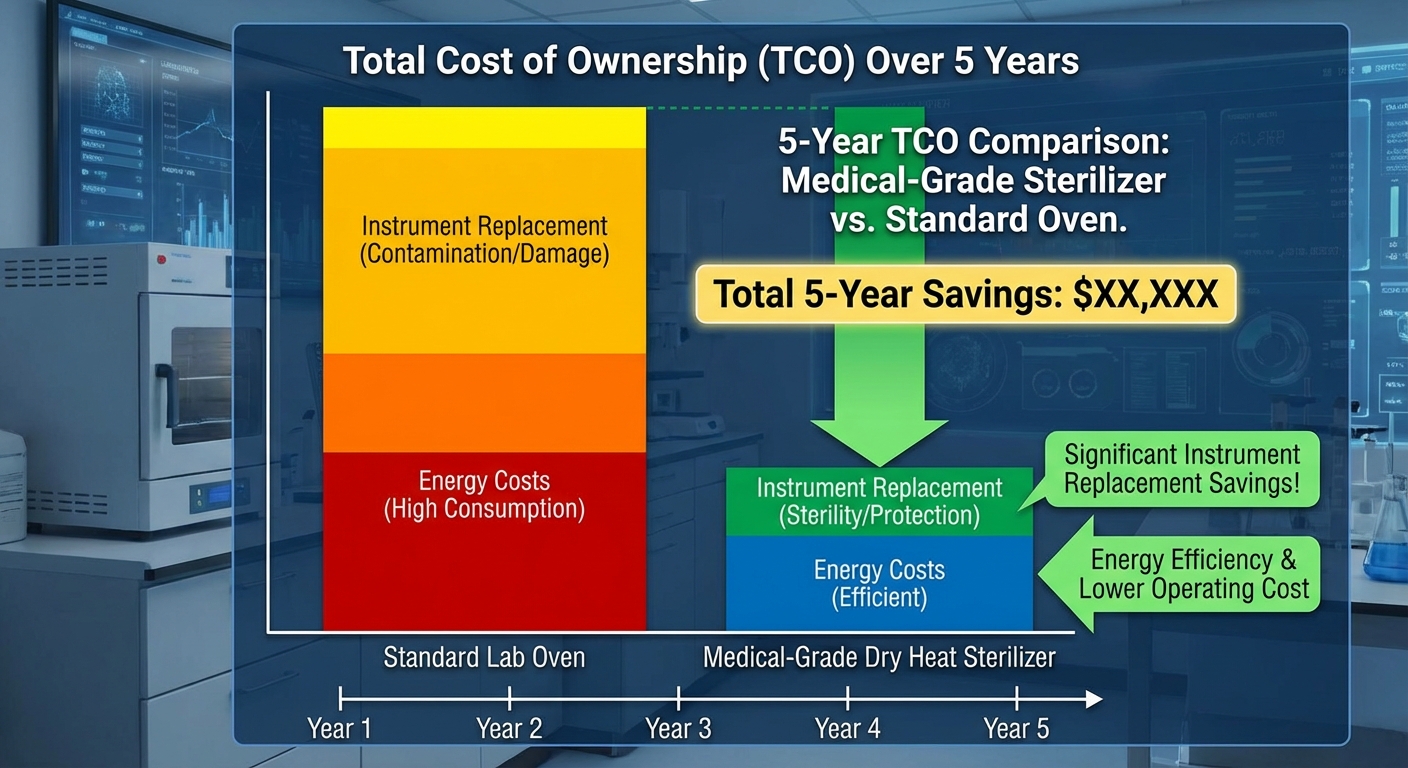
Veterinary margins are under siege from rising pharmaceutical costs and staffing shortages. Consequently, every piece of capital equipment must justify its existence through durability and efficiency. When sourcing a Dry Heat Sterilizer (Hot Air Sterilizer), the calculation involves more than the sticker price. One must consider the energy consumption per cycle, the degradation rate of the heating elements, and the potential liability of non-compliance.
In my experience auditing clinic workflows, I have seen "budget" sterilizers cost practices thousands of dollars in premature instrument replacement. Unlike steam, which can cause corrosion on high-carbon steel orthopedic instruments or burrs, dry heat is non-corrosive. However, this benefit is nullified if the sterilizer creates massive temperature spikes that temper the metal, rendering expensive surgical scissors dull and brittle. Therefore, the economic decision is directly tied to the engineering capability of the unit to maintain a flat thermal profile.
Critical Engineering Standards & Component Quality
The difference between a generic laboratory oven and a medical-grade dry heat sterilizer lies in the convection dynamics. Basic units rely on gravity convection—where heat rises naturally. In a clinical setting filled with dense instrument packs, gravity convection is a recipe for failure. It creates "stratification layers" where the top shelf may be 180°C while the bottom shelf struggles to reach 160°C. For veterinary compliance, this inconsistency is unacceptable.
Procurement managers should prioritize units featuring forced mechanical convection. This involves a motor-driven blower system that actively circulates air, penetrating dense instrument loads and ensuring that the thermal variance within the chamber does not exceed ±1°C to ±2.5°C. During my time consulting for surgical referral centers, we found that switching to forced-air systems reduced cycle failure rates by nearly 90%.
Another often-overlooked component is the insulation architecture. High-quality units utilize high-density ceramic wool rather than standard fiberglass. Ceramic wool provides superior thermal retention, which keeps the exterior of the unit cool to the touch—a critical safety feature in cramped vet prep rooms—and reduces the load on the clinic's HVAC system. Cheaper units bleed heat, essentially acting as uncontrolled radiators that can raise the ambient room temperature by several degrees, impacting the operating parameters of other sensitive equipment like your Chemistry Analyzer.
Comparison Table: Industry Benchmarks vs. Medical-Grade Standards
To assist in your vendor evaluation, use this comparative matrix. It highlights the specifications that separate standard industrial ovens from sterilizers designed for medical efficacy.
Parameter | Standard Industrial Oven | HQS Medical-Grade Standard | Clinical Impact |
|---|---|---|---|
Convection Type | Gravity (Passive) | Forced Air (Mechanical) | Ensures heat penetrates wrapped cassettes; prevents cold spots. |
Temp. Uniformity | ±5°C to ±10°C | ±1°C to ±2.5°C | Prevents damaging delicate instruments due to overheating. |
Controller Type | Hydraulic Thermostat | Microprocessor PID | PID eliminates temperature "overshoot" and hysteresis lag. |
Chamber Material | Galvanized Steel / 304 SS | Polished 316L Stainless Steel | 316L resists chemical corrosion and facilitates easier cleaning. |
Door Gasket | Fiberglass/Asbestos | High-Temp Silicone | Silicone provides a better seal and eliminates particle shedding. |
Recovery Time | Slow (>15 mins after door opening) | Rapid (<5 mins) | Maintains workflow efficiency during busy surgery days. |
Enhancing ROI through Workflow Optimization
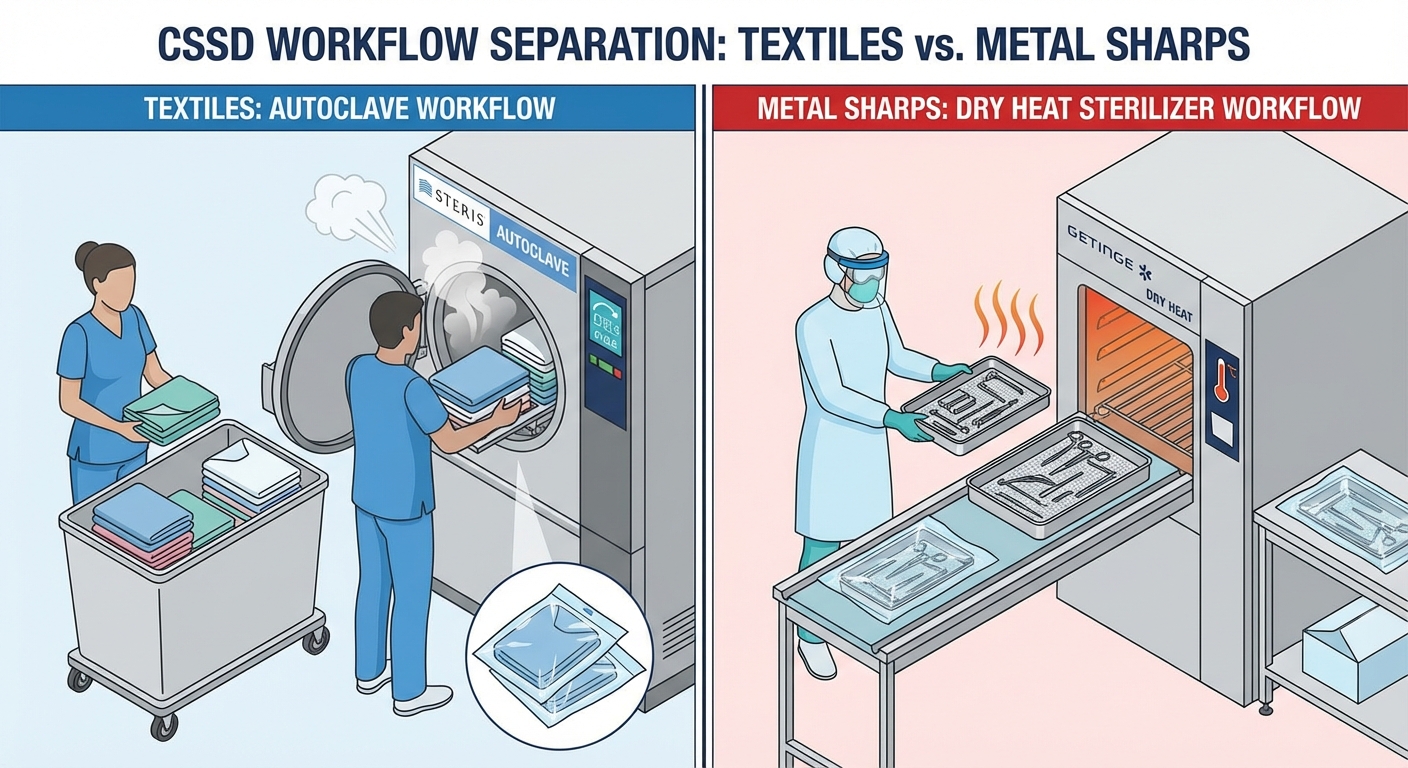
Integrating a Dry heat (Hot air) Type sterilizer into your practice is strategic. It allows you to offload non-textile sterilization from your steam autoclaves. Steam autoclaves, particularly the Pulse Vacuum Table Type, are complex machines with higher cycle costs (water, electricity, gaskets). By routing metal instruments, glassware, and sharps to the dry heat unit, you reduce the cycle count on your autoclave, extending its maintenance intervals and lifespan.
Furthermore, the dry heat process has a distinct advantage in the preservation of sharp edges. Veterinary dentistry and orthopedic surgeries rely heavily on curettes, scalers, and osteotomes. Repeated exposure to moisture and pressure fluctuations in steam sterilization can degrade the honing of these edges at a microscopic level. Dry heat maintains the integrity of the cutting edge for longer periods. I have worked with clinics that reduced their instrument sharpening frequency by 30% simply by segregating their sterilization streams effectively.
Strategic Procurement Checklist for Clinic Managers
When engaging with suppliers, move the conversation beyond price. Ask these specific questions to gauge the validity of the equipment:
Validation Protocols: Does the manufacturer provide Installation Qualification (IQ) and Operation Qualification (OQ) documentation? Even for smaller veterinary practices, having a roadmap for validation ensures you can prove compliance if a post-operative infection case is ever litigated.
The "Overshoot" Protection: Ask specifically about the over-temperature safety cutoff. Is it electronic or hydraulic? A secondary, independent hydraulic safety thermostat is preferred as a fail-safe. If the primary digital controller fails and locks the heater "on," the secondary mechanical switch cuts power, preventing a fire hazard.
Sensor Placement: Where is the temperature sensor located? In cheaper units, it is often placed right next to the heating element, giving a false high reading while the center of the chamber remains cool. Top-tier units place sensors in the airflow path to represent the actual chamber environment.
Spare Parts Availability: Ask for the lead time on a replacement heating element and blower motor. These are the two failure points. If the vendor cannot ship these within 24 hours, your redundancy plan is flawed.
The HQS Medical Value Proposition
At HQS Medical, we approach the manufacturing of the Hot Air Sterilizer with the same rigor applied to our Vet ICU Incubator systems. We understand that in a veterinary context, the "patient" varies from a 2kg kitten to a 50kg Rottweiler, and the instrument loads vary accordingly. Our design philosophy centers on thermal inertia—ensuring that once the target temperature (typically 160°C or 180°C) is reached, the unit holds that plateau with minimal energy input.
We utilize dual-wall construction with an air jacket, which ensures that the heat is radiant and pervasive, rather than direct and scorching. This design nuance is critical when sterilizing mixed loads. Furthermore, our compliance team ensures that our units meet the stringent requirements suitable for both general practice and specialized referral hospitals, bridging the gap between affordability and uncompromising medical performance.
Maintenance Strategies for Equipment Longevity
Acquiring the equipment is step one; keeping it functional for 15 years is step two. Dry heat sterilizers are generally low maintance compared to autoclaves, but they are not "set and forget" machines. The most common point of failure I observe is the door seal. Over time, heat cycles harden the gasket. A compromised seal leaks heat, causing the heating elements to work overtime, eventually leading to burnout.
I recommend the "Paper Test" monthly: close the door on a piece of standard printer paper. If you can pull the paper out with little resistance, your gasket needs replacement. Additionally, calibration is non-negotiable. While the digital display may read 160°C, the internal reality could be 150°C due to sensor drift. An annual calibration using an external thermocouple is essential to ensure you are actually sterilizing, not just heating.
Finally, clean the intake vents. Forced air systems rely on airflow. In a veterinary clinic, hair and dander are ubiquitous. A clogged intake fan reduces convection efficiency, reintroducing the stratification issues we aim to avoid. A simple weekly vacuuming of the rear vents can add years to the blower motor's life.
Final Recommendations for Informed Decision-Making
The decision to purchase a Dry Heat Sterilizer should be viewed as an investment in instrument longevity and risk mitigation. While it does not replace the autoclave for porous loads, it is an indispensable partner in a robust sterilization protocol. By prioritizing forced air convection, PID control, and superior insulation, you protect your instruments and your patients.
As you assess your options, look for transparency in engineering data. A supplier confident in their product will readily share thermal mapping data and recovery time statistics. In the veterinary field, where our patients cannot speak for themselves, the reliability of our equipment speaks for us.