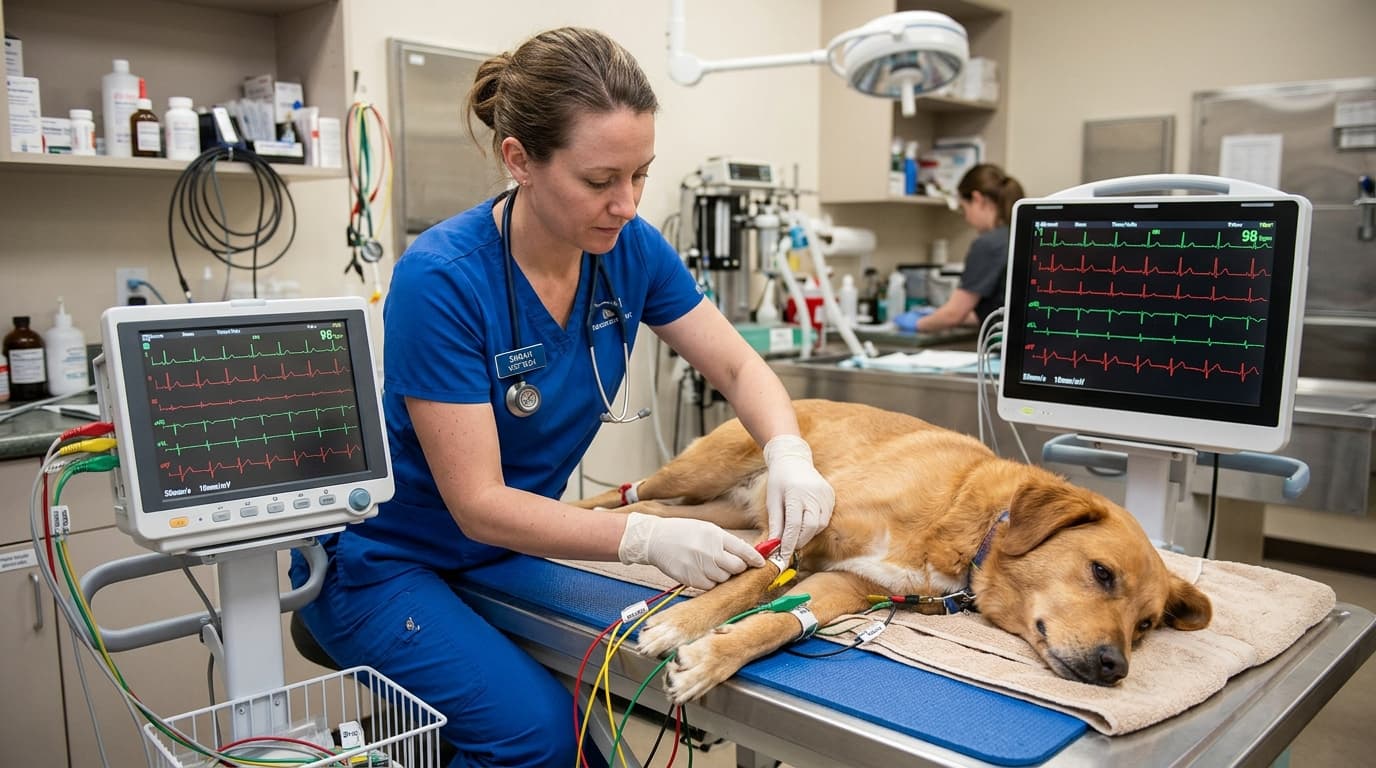
Many busy veterinary practices report up to a 40% reduction in setup and interpretation times when transitioning to a VET ECG Machine (Six Channel). In high-volume clinics and emergency rooms, the ability to visualize six synchronized leads simultaneously fundamentally changes patient workflow. This guide focuses on clinical application, comparing diagnostic speed against traditional setups, and provides practical protocols to optimize equipment performance and longevity.
Efficiency Gains: The Numbers Speak
The primary advantage of a six-channel system lies in its concurrent data processing. Standard three-channel systems require sequential printing or screen toggling to capture all standard limb and augmented leads (I, II, III, aVR, aVL, aVF). This sequential approach extends the time an animal must remain perfectly still—a significant challenge in veterinary medicine.
Based on HQS clinical observation during high-volume canine screenings, simultaneous six-lead printing reduces patient restraint time by an average of 45 seconds per animal. For a clinic processing 10 cardiac workups daily, this translates to over seven hours of saved technician time monthly. Furthermore, viewing six leads on a single vertical axis allows clinicians to immediately cross-reference complex arrhythmias, reducing diagnostic hesitation.
Diagnostic Speed vs 3-Channel Comparison
When assessing equipment upgrades, understanding the operational differences between device tiers is essential. The following table contrasts various ECG configurations, focusing on acquisition speed and clinical appropriateness.
| System Type | Trace Acquisition Time | Ideal Clinical Scenario | Estimated Price Range |
|---|---|---|---|
| Standard 3-channel ECG Machine ECG - 3G3 | 60–90 seconds | Routine physicals, low-volume clinics | $400 – $800 |
| High-Res 3-Channel ECG (with auto-measure) | 45–60 seconds | Pre-anesthetic screening, mobile vets | $800 – $1,200 |
| Standard VET ECG Machine (Six Channel) | 15–30 seconds | High-volume practices, urgent care | $1,200 – $2,000 |
| Advanced 6-Channel (Networked) | 10–20 seconds | Specialty cardiology, ICU wards | $2,000 – $4,500 |
3 Settings That Cut Procedure Time
Proper parameter configuration minimizes the need for repeat testing. Technicians should verify three specific settings before initiating a scan:
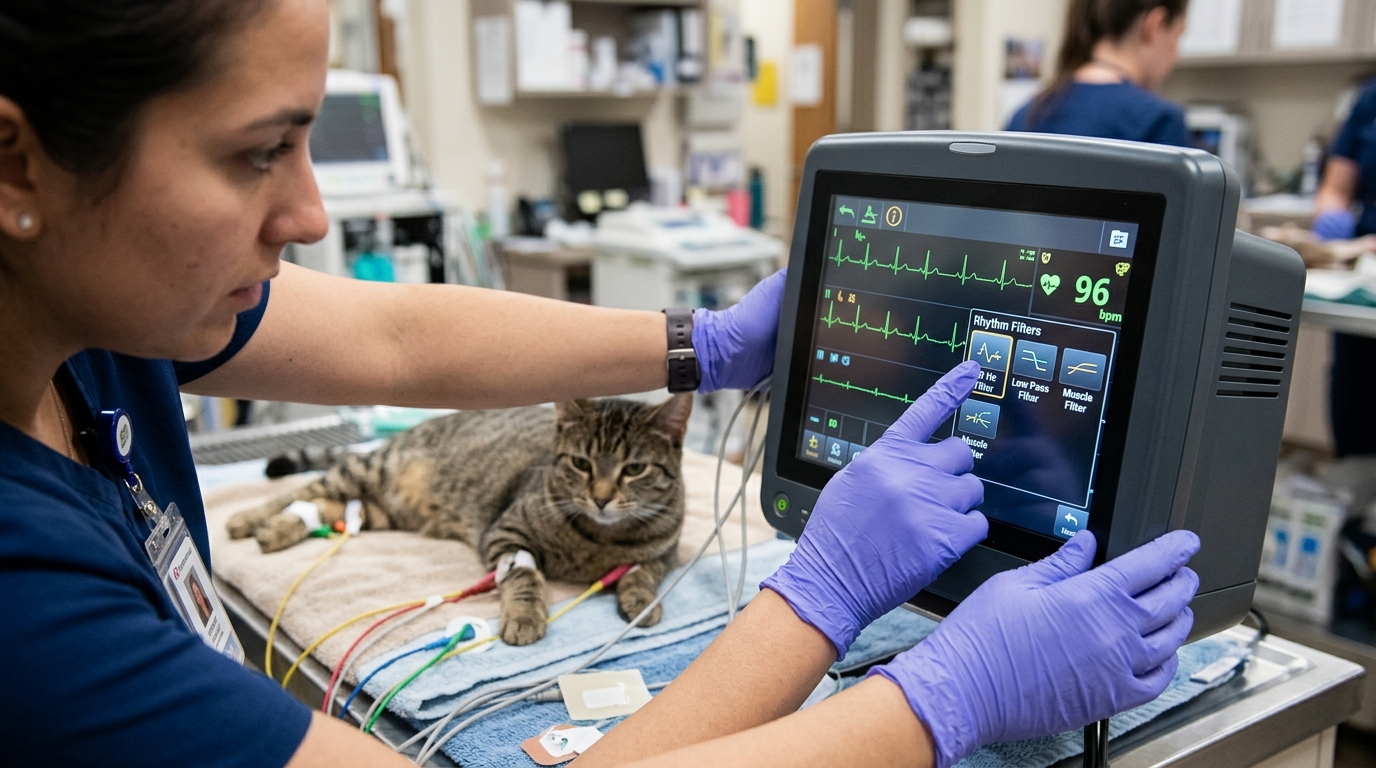
- Filter Application: Muscle tremors are inevitable in conscious veterinary patients. Applying the EMG (Electromyography) filter alongside standard AC (Alternating Current) filters reduces baseline artifact without excessively dampening the QRS complex.
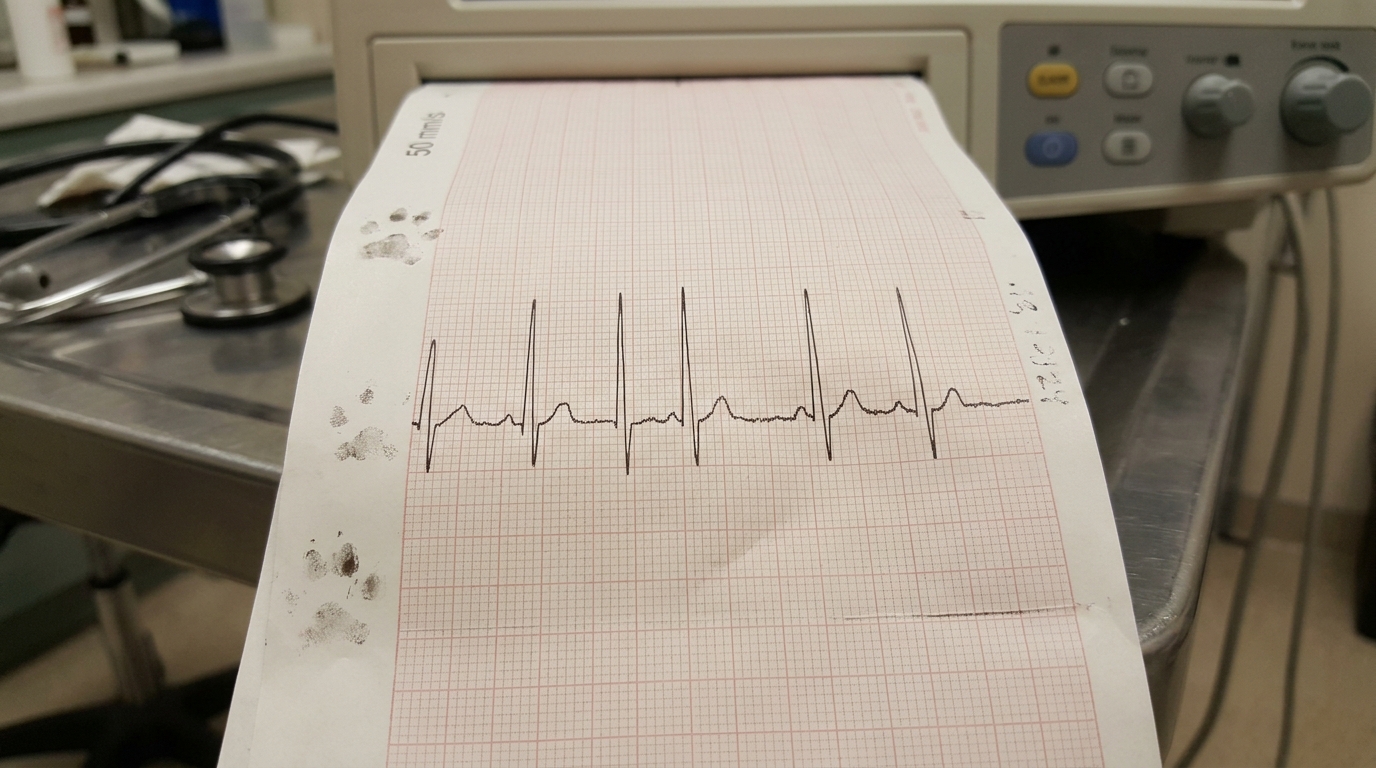
- Paper Speed Adjustments: While 25 mm/s is standard for canine patients, tachycardic felines (often presenting with heart rates exceeding 200 bpm) require a 50 mm/s sweep speed. This stretches the complex, making P-waves discernible from T-waves.
- Data Integration: Utilizing Vet ECG Machine Six-Channel Data Syncing with Software allows direct export to the Patient Information Management System (PIMS), eliminating the time spent scanning thermal paper into digital records.
Error Rate: Trained vs. Untrained Staff
Equipment capability is only as effective as the operator. Industry guidance suggests that clinics without standardized ECG training experience artifact-induced unusable tracings at a rate of 18%. Following structured training on patient positioning (right lateral recumbency) and proper alligator clip application (using alcohol or ECG gel rather than dry contact), this error rate typically drops below 4%.
Untrained staff often misplace limb leads, especially reversing the forelimb connections, which inverses Lead I and heavily distorts aVR. In a six-channel view, these placement errors are immediately obvious because the spatial relationships between the six concurrent vectors fail to align logically, allowing the supervising veterinarian to catch the error before the patient is released.
Downtime Cost per Hour of Misuse
While continuous vitals tracking is typically managed by a veterinary patient monitor during surgery, diagnostic ECG machines handle targeted, high-resolution cardiac investigations. When a diagnostic ECG fails due to poor handling, the financial impact extends beyond repair costs.
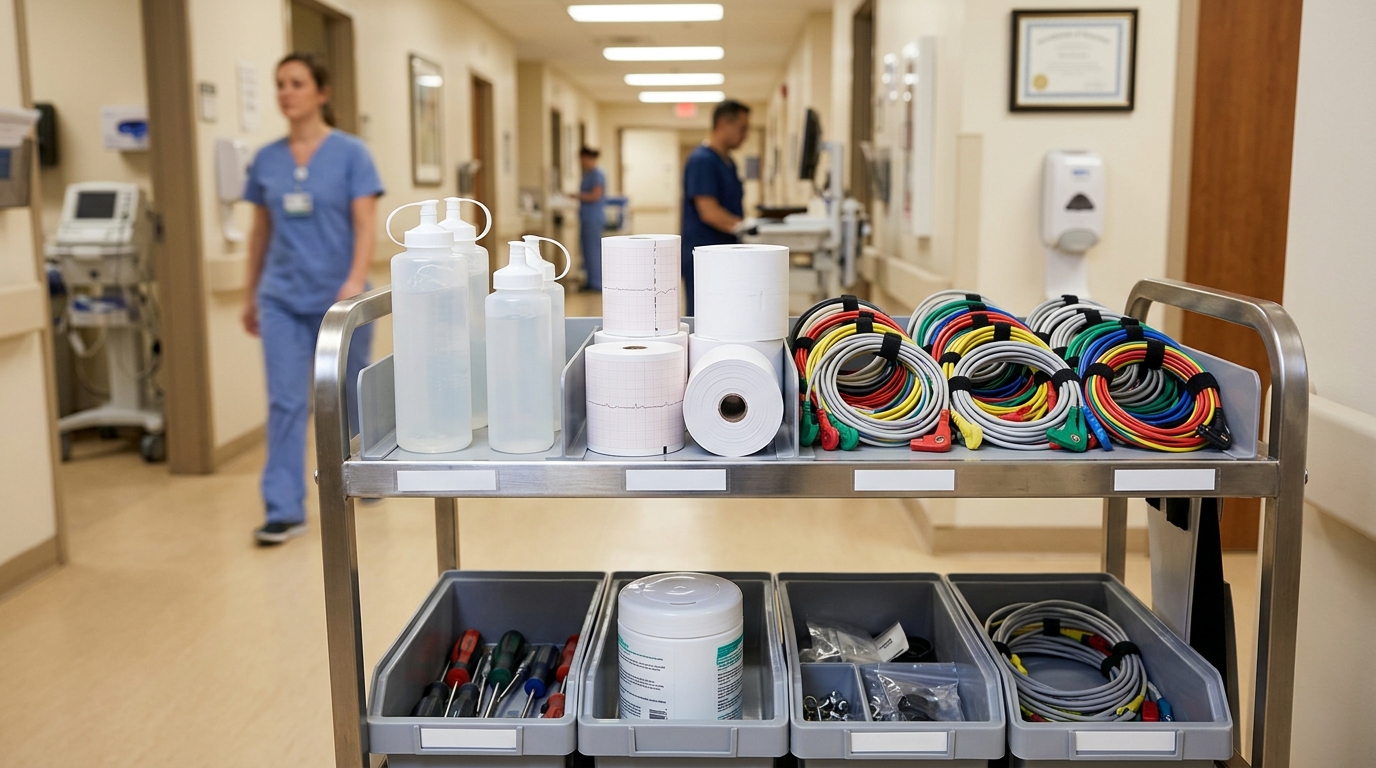
The most common failure points are crushed patient cables (often rolled over by equipment carts) and damaged thermal printer heads (caused by loading incorrect paper). Replacement veterinary-specific ECG cables range from $100 to $250. However, the true cost lies in clinical delays. Postponing a comprehensive cardiac workup or delaying an elective surgery due to a lack of pre-anesthetic ECG clearance can cost a busy practice upwards of $300 per hour in lost operational efficiency.
Maintenance Interval Benchmarks
Implementing a strict maintenance schedule prevents premature equipment failure. Thermal printers, internal batteries, and sensitive data cables require consistent care to maintain the 15-to-30-second trace acquisition speeds expected from a six-channel system.
Maintenance Frequency Summary
| Frequency | Task | Key Action |
|---|---|---|
| Daily | Cable and Clip Inspection | Wipe alligator clips with alcohol to remove gel buildup; check lead wires for kinks or exposed copper. |
| Weekly | Thermal Head Cleaning | Use a manufacturer-approved isopropyl alcohol swab to gently clean the thermal printer head to prevent faded tracings. |
| Monthly | Battery Conditioning | Run the device on battery power until low, then fully recharge to maintain internal lithium-ion cell capacity. |
| Annual | System Calibration & Assessment | Conduct professional electrical safety testing and verify software updates for auto-interpretation algorithms. |
Data Summary: Optimization Impact
Evaluating the transition from three-channel workflows to optimized six-channel protocols reveals clear operational improvements. The data below summarizes the potential impact of proper implementation and maintenance.
| Metric | Baseline (Traditional Setup) | Optimized (Six-Channel + Protocol) |
|---|---|---|
| Restraint Time per Patient | 60–90 seconds | 15–30 seconds |
| Artifact/Repeat Rate | ~18% | <4% |
| Data Entry Time | 5–7 minutes (manual scan) | Instant (software sync) |
Frequently Asked Questions
How does a six-channel ECG improve diagnostic accuracy over three channels?
By presenting six distinct electrical vectors simultaneously, a six-channel machine allows veterinarians to instantly compare waveform morphologies across different axes exactly at the same point in time. This prevents confusion caused by beat-to-beat variations that occur when recording leads sequentially on a three-channel device.
What is the recommended paper speed for feline tachycardia?
For cats presenting with heart rates over 200 beats per minute, a paper speed of 50 mm/s is recommended. This faster sweep speed physically widens the printed waveform, making it easier to distinguish P-waves from the preceding T-waves and accurately measure the PR interval.
Can alligator clips cause baseline wander?
Yes. If alligator clips are attached dry, applied to thick fur without separating the coat, or if previous conductive gel has dried onto the metal teeth, the electrical resistance increases. This poor contact is a primary cause of baseline wander and severe AC interference.
How often should the thermal printer paper be replaced?
Thermal paper should only be replaced when the roll is near empty, indicated by a colored stripe on the paper edge. However, it is vital to use only the specific grid size and paper weight recommended by the manufacturer, as generic paper can cause excessive wear on the printer head and result in dimensional inaccuracies during interpretation.