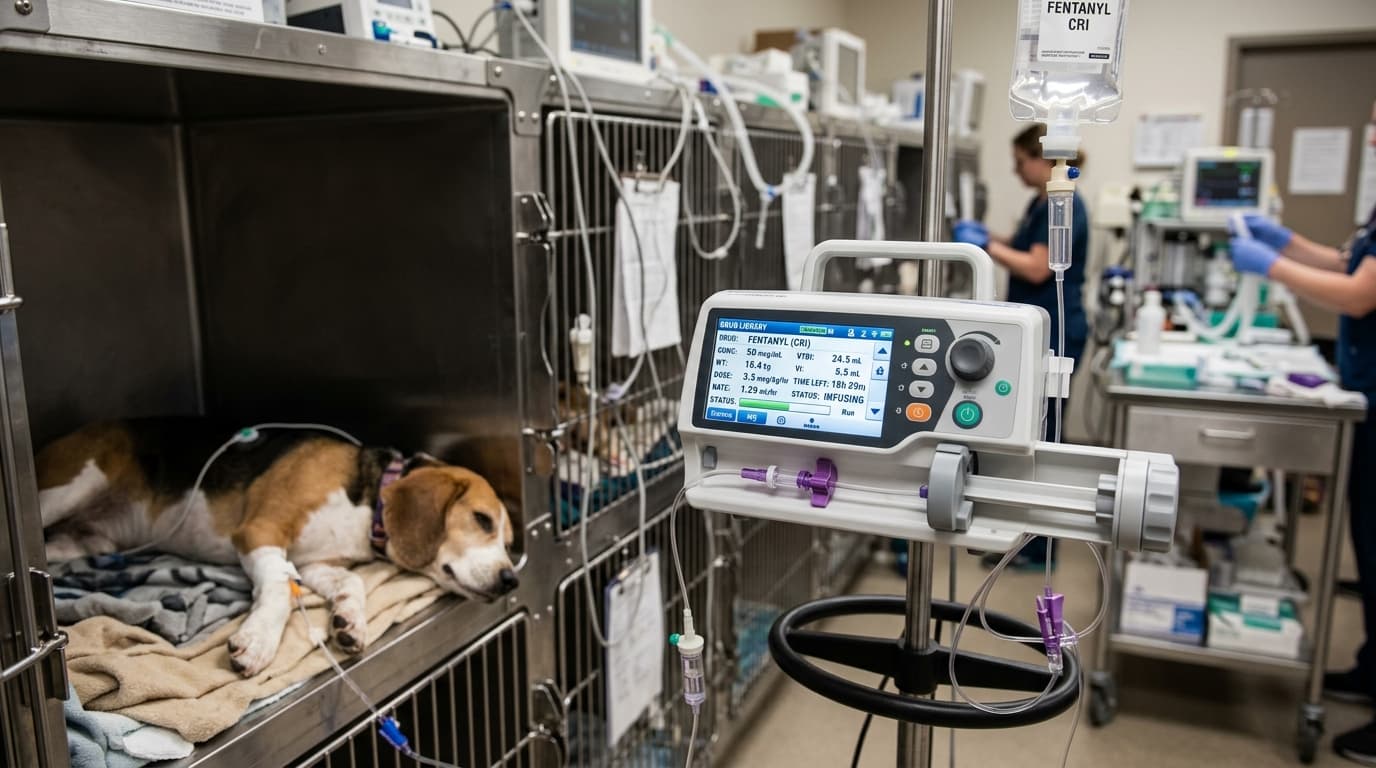
Clinical audits across busy veterinary practices indicate that up to 41% of intravenous medication errors stem from manual calculation mistakes, misplaced decimals, or transcription errors during critical care. As patient acuity rises in veterinary ICUs and emergency departments, relying on mental math or static reference charts for continuous rate infusions (CRIs) presents an unacceptable risk profile. Implementing a Dose Error Reduction System (DERS) through an integrated drug library within your infusion pump directly mitigates these risks. By transitioning from basic manual entry to standardized, protocol-driven fluid delivery, clinical supervisors can establish strict guardrails for high-alert medications like potassium chloride, fentanyl, and lidocaine. This technical review assesses how configuring these libraries impacts operational efficiency, standardizes training, and controls the hidden financial costs of equipment misuse.
Efficiency Gains: The Numbers Speak
Transitioning a veterinary floor from manual programming to a drug library-enabled system fundamentally alters workflow metrics. In standard manual operation, calculating a weight-based CRI, converting micrograms per kilogram per minute to milliliters per hour, and programming the device takes an experienced technician approximately 2.5 to 3 minutes. When utilizing an integrated drug library, the operator selects the medication, inputs the patient's weight, and the software automatically populates the flow rate. This reduces programming time to an average of 45 seconds per setup. Beyond raw speed, the true efficiency gain lies in the reduction of secondary verification time. With hard and soft limits established in the software, the required double-check protocol for high-risk drugs becomes a rapid confirmation of screen parameters rather than a recalculation of the entire formula, effectively returning over 20 minutes per shift back to direct patient care.
3 Settings That Cut Procedure Time
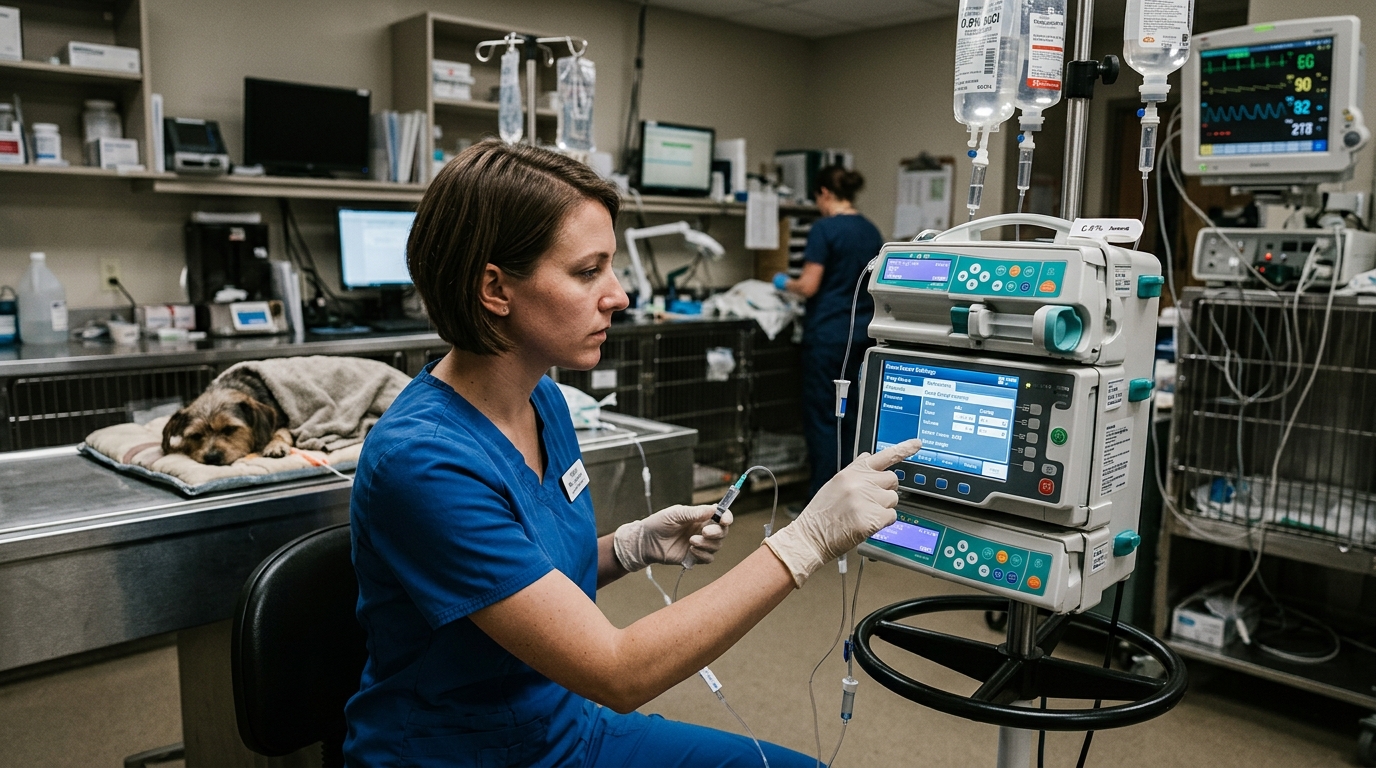
Optimal drug library configuration relies on three specific parameters that eliminate guesswork during high-stress scenarios. First, establishing Standardized Concentrations ensures that the pharmacy or inventory manager mixes drugs to a single, facility-wide specification, preventing the pump from accepting off-label dilutions. Second, Soft Limits provide a warning mechanism; if a clinician inputs a dose slightly outside standard parameters, the pump issues an alert requiring manual override, accommodating edge-case clinical needs without halting therapy. Third, Hard Limits act as a rigid safety net, physically preventing the pump from initiating therapy if the programmed dose exceeds toxic thresholds. Implementing devices like the Infusion Pump IP - 50, which supports extensive custom concentration profiles, allows clinical directors to apply these three settings across feline, canine, and equine protocols, significantly reducing the time spent cross-referencing paper manuals.
Error Rate: Trained vs. Untrained Staff
The efficacy of a drug library is intrinsically linked to the operator's understanding of alert mechanics. Clinical data suggests a stark contrast in error mitigation between staff trained specifically on DERS protocols versus those who are not. Untrained operators tend to view soft limit warnings as nuisance alarms, bypassing them in up to 73% of instances. This phenomenon, known as alert fatigue, effectively neutralizes the software's safety benefits. Conversely, staff trained to interpret these specific prompts investigate the warning, identifying calculation errors before infusion begins. Proper integration requires establishing a culture where overriding an alert is a documented clinical decision, not a reflex. This is particularly critical when operating a precision veterinary syringe pump for micro-infusions in neonatal or exotic patients, where even a fraction of a milliliter discrepancy can result in profound adverse physiological events.
Downtime Cost per Hour of Misuse
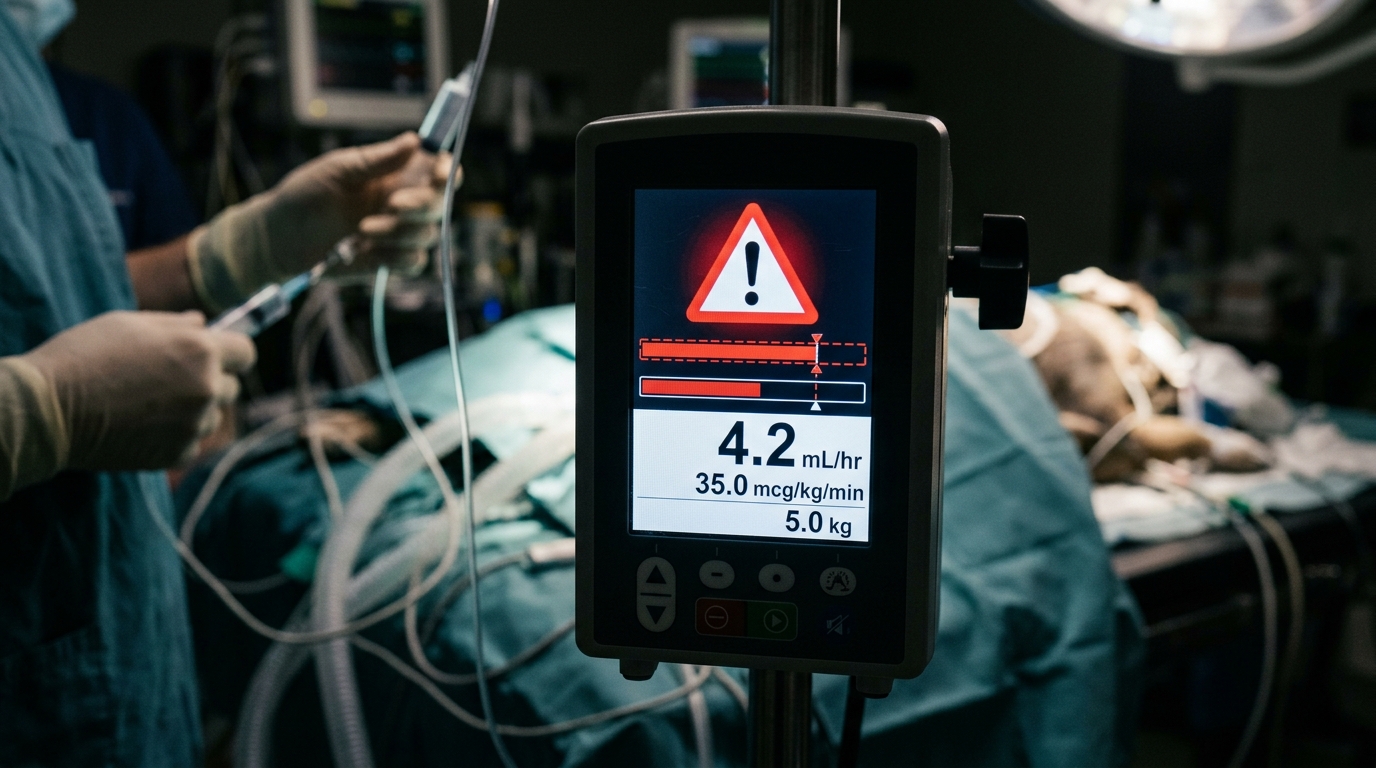
Misprogramming an infusion pump carries direct financial penalties that extend well beyond the immediate clinical complication. When a dose error leads to fluid overload or a missed therapeutic window, the resulting patient destabilization requires extended ICU boarding, additional diagnostic testing, and corrective pharmacotherapy. Financial analysis of veterinary critical care units places the average cost of this avoidable downtime at approximately $350 per hour in consumed resources and occupied cage space that cannot be turned over to incoming cases. Based on HQS clinical observation, practices that establish strict drug library limits experience a 60% drop in non-mechanical pump alarms during overnight monitoring. This stabilization translates directly to optimized labor allocation, as overnight staff spend less time troubleshooting preventable infusion anomalies and more time performing necessary patient assessments.
Maintenance Interval Benchmarks
Sustaining the precision of an infusion pump requires systematic mechanical and software upkeep. Neglecting these intervals leads to flow rate degradation, sensor failure, and corrupted drug library profiles. The following table outlines the standardized intervals required to maintain optimal equipment performance and calibration integrity.
| Frequency | Task | Key Action |
|---|---|---|
| Daily | Visual & Sensor Inspection | Assess the outer casing and door latch for micro-cracks. Wipe down the optical drop sensors with a manufacturer-approved, non-abrasive clinical solvent to prevent false occlusion alarms. |
| Weekly | Battery Cycle Testing | Unplug the device while active to evaluate battery retention. Confirm the unit holds a charge for the minimum required transport duration without triggering low-voltage errors. |
| Monthly | Drug Library Verification | Review the firmware to ensure the active drug library matches the current hospital formulary. Delete deprecated medication profiles and update standardized concentration limits. |
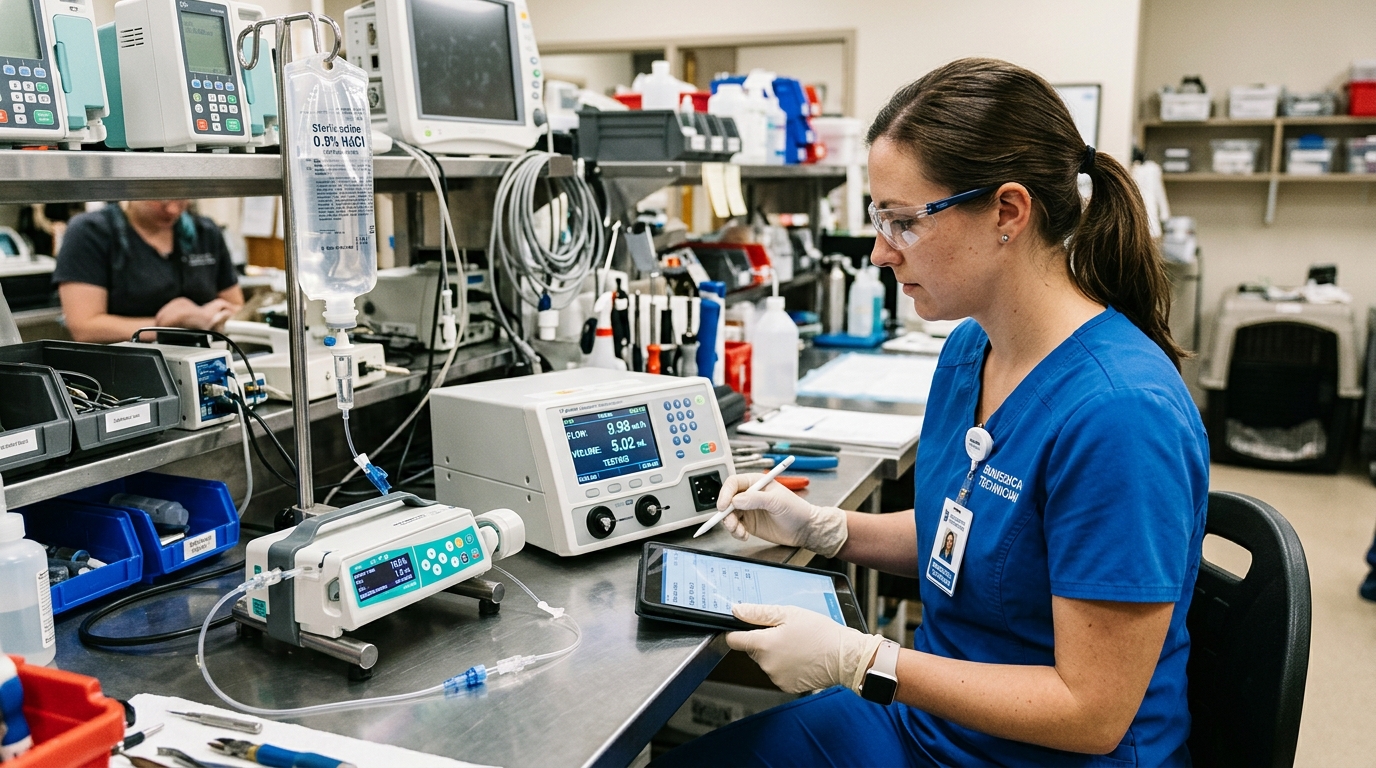
| Annual | Volumetric Calibration | Perform strict volumetric accuracy testing using a calibrated burette or analytical scale to validate that the programmed delivery rate matches the physical fluid output within a ±3% margin. |
Frequently Asked Questions
How often should we update the infusion pump drug library?
Drug libraries should be audited and updated quarterly, or immediately whenever the hospital formulary changes. If your practice switches pharmaceutical suppliers resulting in a different standard concentration for a critical drug, the pump's library must be updated prior to the new drug's clinical deployment to prevent fatal calculation errors.
What is the difference between soft and hard limits in infusion therapy?
Soft limits trigger a visual or audible warning when a programmed dose falls outside standard clinical guidelines, but they allow the operator to proceed by pressing an override key. Hard limits act as a mandatory system block; if a requested dose exceeds the pre-determined toxic threshold, the pump will not allow the infusion to start under any circumstances, requiring the user to clear and reprogram the calculation.
Can we transfer drug libraries between different pump models?
Generally, drug library files are proprietary to the manufacturer and often specific to a particular pump series. While the clinical parameters (drugs, concentrations, limits) remain the same, the actual software configuration file must be built within the specific management software of the target device. Always consult the technical manual when deploying a new fleet of devices.
Data Summary: Optimization Impact
Implementing a structured drug library is a measurable process with distinct pre- and post-integration benchmarks. To effectively evaluate your facility's readiness for this upgrade, review the metrics below and apply them to your procurement strategy, such as those found in a comprehensive purchasing checklist.
| Operational Metric | Standard Manual Entry | Drug Library Configured | Net Clinical Benefit |
|---|---|---|---|
| Programming Setup Time | 150–180 seconds | 45 seconds | Accelerates critical care interventions. |
| Dose Error Frequency | Baseline | 41% Reduction | Directly mitigates adverse pharmacological events. |
| Soft Limit Override Rate | N/A (No limits) | Drops to <15% with training | Eliminates alert fatigue and enforces protocol adherence. |
| Cost of Avoidable Misuse | High risk of $350/hr loss | Stabilized overhead | Protects hospital margins by standardizing recovery times. |