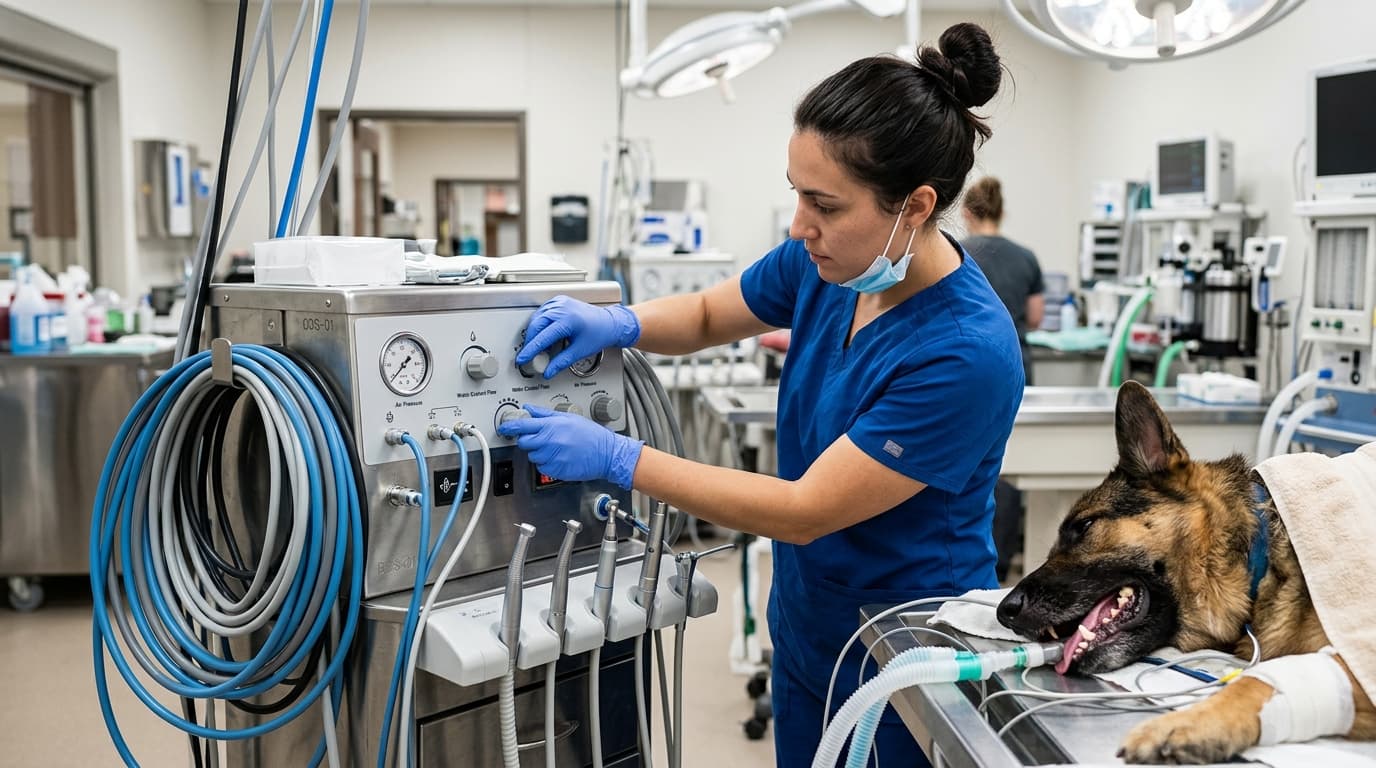
Veterinary dental audits indicate that inadequate equipment specifications routinely prolong surgical time. For multi-rooted teeth in dogs over 30kg, such as the maxillary fourth premolar or mandibular first molar, structural density demands sustained mechanical force. Industry guidance suggests that attempting these procedures with low-torque equipment can add up to a 45-minute delay to the workflow, increasing anesthesia time and operational overhead. Selecting a High Speed Handpiece S13 with appropriate torque specifications is a clinical necessity for managing dense alveolar bone without inducing thermal necrosis or stalling the turbine.
This technical report evaluates the metrics required to optimize large breed extractions, analyzing torque ratings, failure rates, and structured maintenance protocols to improve clinical efficiency.
Efficiency Gains: The Numbers Speak
When comparing extraction times for large breed carnassials, the difference between standard and torque-optimized turbines is measurable. Standard dental turbines often prioritize free-running speed (upwards of 400,000 RPM) over sustained cutting power. While this is sufficient for feline periodontal treatments or small breed single-root extractions, these devices frequently stall under the lateral pressure required to section a large canine tooth.
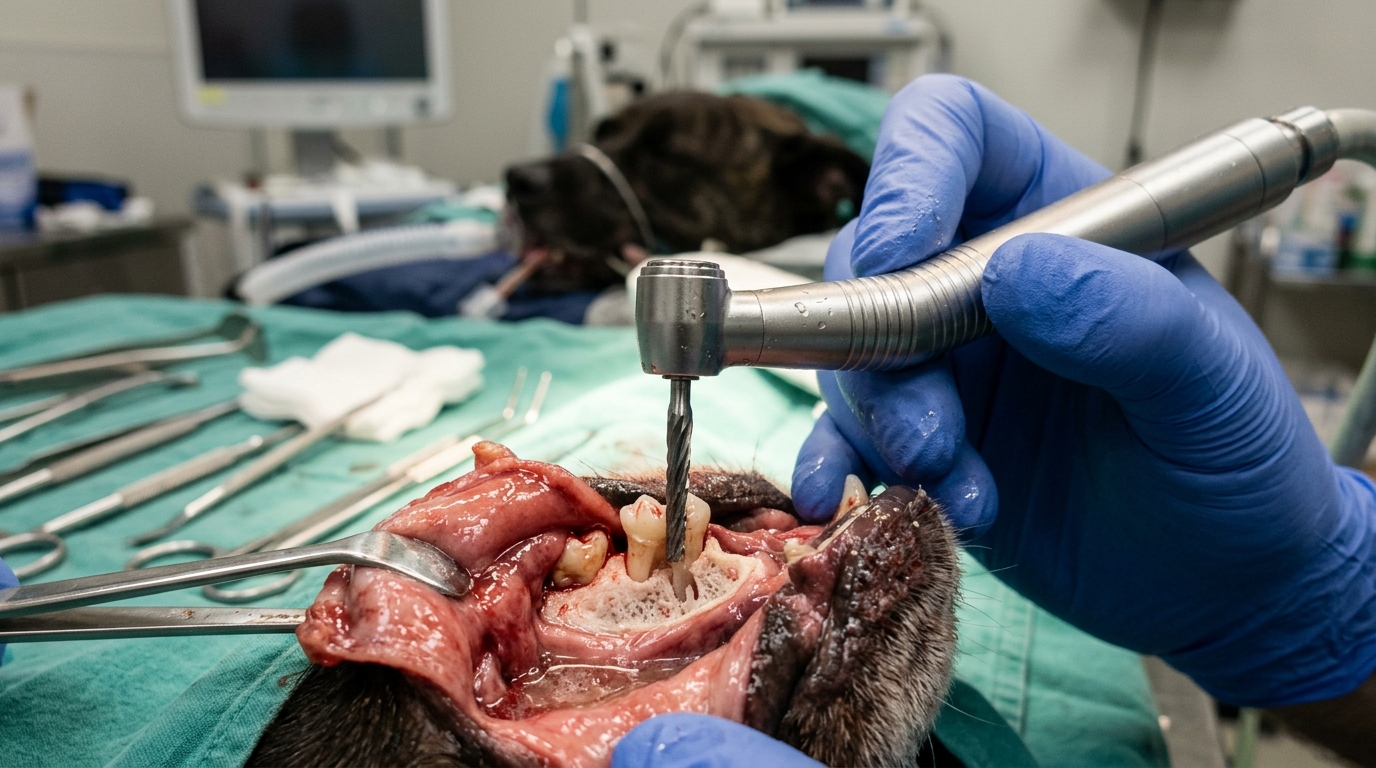
Clinical workflows utilizing a high speed handpiece with a minimum 20W power output demonstrate significant time reductions. Moving from a standard 15W turbine to a torque-optimized model reduces the average sectioning and bone removal time by mitigating bur stall. Practitioners report fewer interruptions to reposition or restart the turbine, maintaining a continuous, controlled cut through thick enamel and dentin.
3 Settings That Cut Procedure Time
Optimizing the hardware requires precise calibration of the delivery system. Implementing the correct parameters prevents equipment wear and ensures consistent torque delivery during demanding extractions.
- Air Pressure Calibration (PSI): Operating strictly within the manufacturer's specified dynamic air pressure (typically 32-40 PSI). Excess pressure does not increase torque; it prematurely destroys ceramic bearings, while insufficient pressure causes immediate stalling during bone contact.
- Coolant Flow Rate: Maintaining a minimum of 30-50 mL/min of water flow. High-torque sectioning generates rapid friction. Insufficient coolant leads to thermal bone necrosis, complicating post-operative healing.
- Bur Concentricity: Utilizing cross-cut taper fissure burs that match the chuck depth precisely. A bur that is not fully seated creates micro-vibrations, reducing effective cutting power and increasing the risk of turbine failure under lateral load.
Comparison: Torque Specifications by Extraction Type
Veterinary practices must evaluate equipment based on specific anatomical challenges. The following table compares 3 high speed handpiece torque ratings alongside lower-speed alternatives to clarify appropriate clinical applications and expected pricing models.
| Equipment Category | Power / Torque Rating | Primary Clinical Application | Estimated Price Range |
|---|---|---|---|
| Standard High Speed | 14W - 16W | Feline extractions, small breed periodontal work | $300 - $600 |
| Torque-Optimized High Speed | 20W-25W | Large breed carnassial sectioning, dense bone removal | $700 - $1,200 |
| Low Speed Contra Angle | High Torque (Gearing dependent) | Prophylaxis polishing, delicate endodontic access | $400 - $800 |
| Electric Surgical Motor | Constant Max Torque | Complex maxillofacial trauma, osteotomies | $2,500 - $4,500 |
Integrating a specialized device, or keeping a versatile Low Speed Handpiece Set S08 for complementary tasks, allows clinicians to match the mechanical output directly to the tissue density.
Error Rate: Trained vs. Untrained Staff
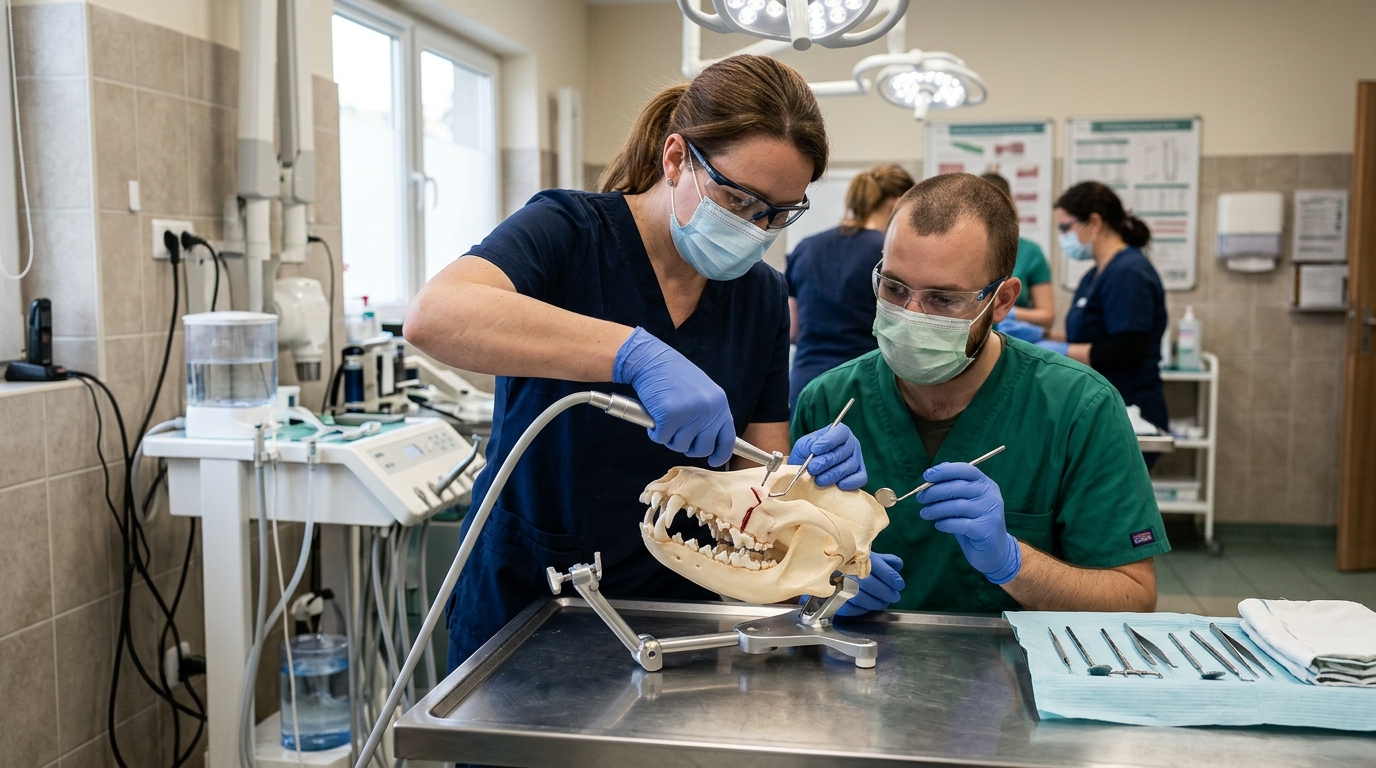
Iatrogenic trauma and equipment failure often stem from improper technique rather than hardware malfunction. A common operator error during heavy extractions is applying excessive lateral pressure ("heavy-handedness") to compensate for perceived slow cutting. This forces the high speed handpiece to exceed its stall torque threshold.
Trained operators utilize a light, sweeping motion, allowing the RPMs and the bur's flute design to perform the tissue removal. Audits of equipment repair logs show that untrained staff account for a notably higher volume of snapped burs and stripped chuck mechanisms. In high-volume environments, standardizing technique through wet-lab training reduces bur breakage incidents and extends the operational lifespan of the turbine cartridge.
Downtime Cost per Hour of Misuse
Based on HQS clinical observation during field testing in high-volume shelter hospitals, exceeding the manufacturer's recommended PSI by just 10% to compensate for low torque accelerates turbine bearing degradation, reducing lifespan from an expected 12 months to under 4 months. The economic impact extends beyond repair costs.
Veterinary operating room time is a premium resource. If a handpiece fails mid-procedure due to neglected maintenance or improper use, the resulting 45-minute delay to troubleshoot, swap equipment, or struggle with inadequate backup tools incurs significant costs. Calculating the lost baseline revenue of the surgical suite alongside the extended anesthesia risk for the patient underscores the necessity of reliable veterinary dental equipment and proper parameter management.
Maintenance Interval Benchmarks
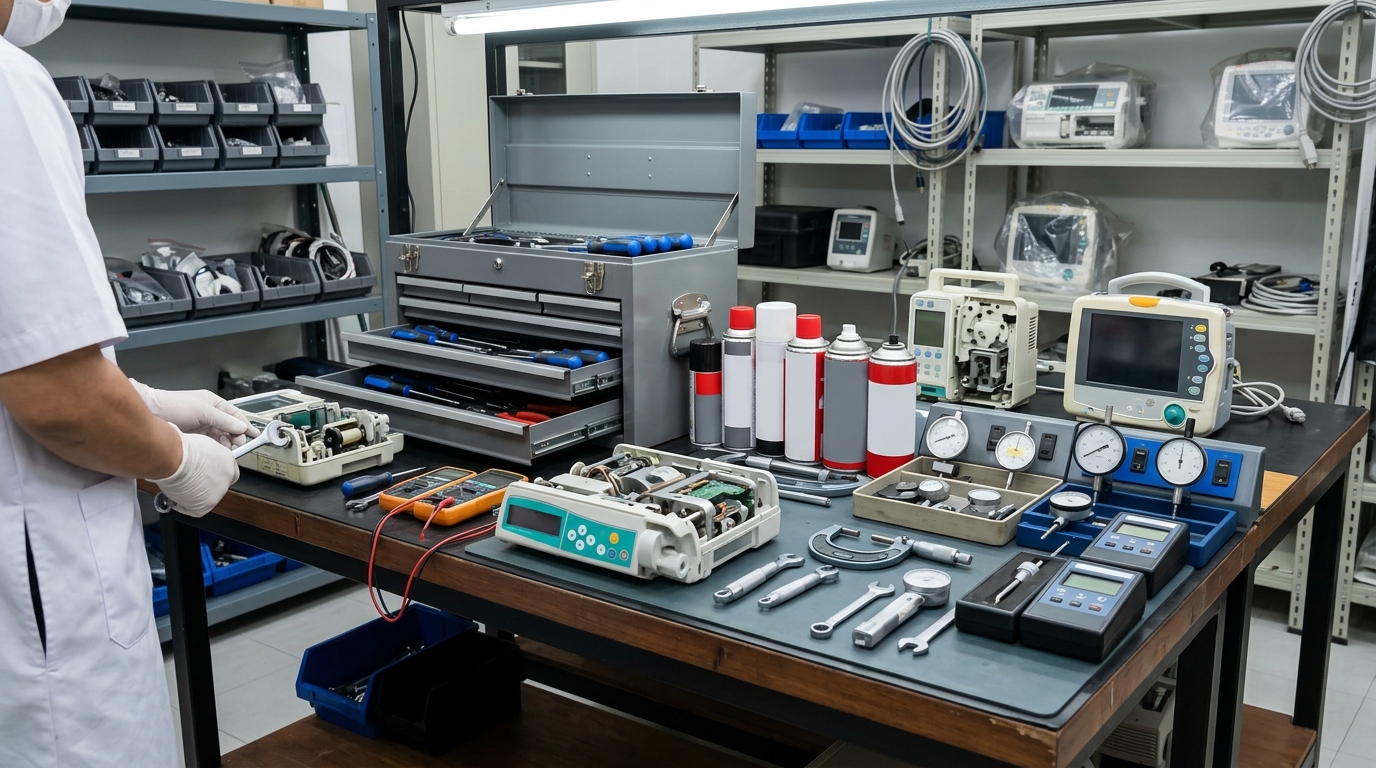
The internal components of a dental turbine rotate at extreme velocities. Blood, saline, and dentin dust aerosolize during extractions, migrating into the head housing. Implementing a strict 4-step maintenance schedule is the only defense against premature bearing seizure.
| Frequency | Maintenance Task | Key Action / Clinical Requirement |
|---|---|---|
| Daily | Lubrication & Purging | Apply aerosol lubricant into the drive air tube; purge by running the handpiece for 20 seconds before sterilization to expel debris. |
| Weekly | Chuck Tension Check | Insert a standardized test bur and apply lateral pull pressure. Ensure the chuck holds the bur securely without micro-slippage. |
| Monthly | Waterline Flushing & Gasket Inspection | Flush internal waterlines with an approved enzymatic cleaner. Inspect the rear coupling O-rings for cracking or hardening. |
| Annual | Turbine Cartridge Assessment | Perform a professional RPM and concentricity test. Replace the internal turbine cartridge if bearing noise exceeds baseline acoustic levels. |
Frequently Asked Questions
What is the optimal dynamic air pressure for large breed extractions?
Optimal dynamic air pressure usually falls between 32 and 40 PSI, depending on the specific handpiece model. Pressure must be measured at the coupling while the device is actively running (dynamic), not while at rest (static), to ensure accurate torque delivery without overloading the ceramic bearings.
How does higher wattage prevent bur stalling in dense alveolar bone?
Wattage in a high speed handpiece is a function of torque and rotational speed. A higher rating (20W-25W) indicates the turbine can maintain rotational momentum even when the bur encounters resistance from dense structures like canine maxillary bone, preventing the stall that occurs in weaker, 15W models.
Should I use a separate device for feline patients and large canine patients?
While a high-torque handpiece can be used on feline patients if the operator employs excellent tactile control, the risk of rapid, unintended tissue removal is higher. Many practices optimize safety by using a standard-torque model for delicate feline mandibular bone and reserving the high-torque model specifically for large breed canine extractions.
Data Summary: Optimization Impact
Tracking the integration of correct torque specifications and maintenance protocols reveals a clear operational advantage for veterinary dental suites handling diverse patient sizes.
| Optimization Metric | Standard Protocol (Low Torque) | Optimized Protocol (20W-25W) |
|---|---|---|
| Average Time: Carnassial Sectioning | Extended (Frequent Stalls) | Reduced via Continuous Cutting |
| Bearing Lifespan Expectancy | Shortened by Excessive Load | Maximized via Proper Application |
| Thermal Necrosis Risk | Higher (Friction from Stalling) | Lowered (Efficient Tissue Removal) |
| Required Maintenance Frequency | Reactive (Post-Failure) | Proactive (4-Step Schedule) |