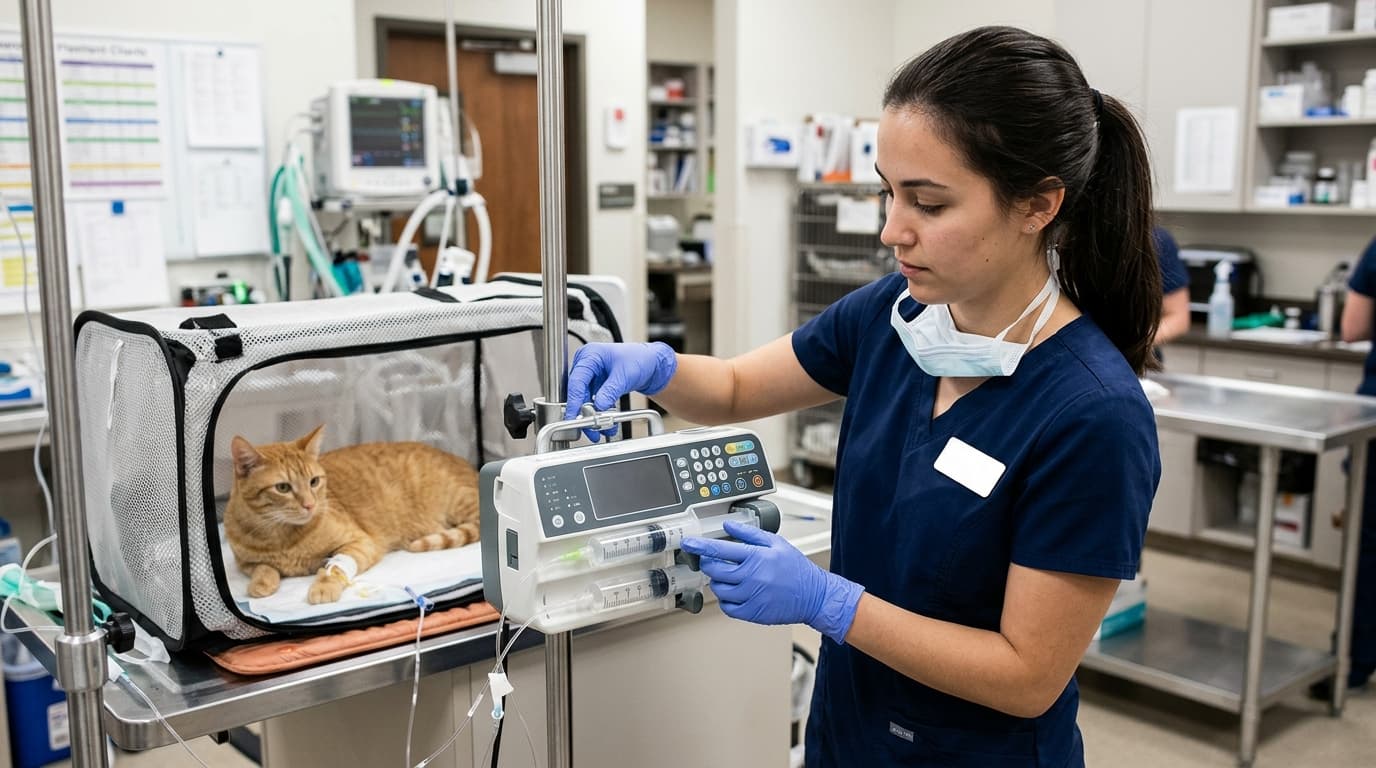
In feline critical care and perioperative pain management, administering Constant Rate Infusions (CRIs) demands strict delivery precision. Feline patients typically require low fluid infusion rates—often ranging from 0.1 mL/h to 2.0 mL/h—for potent agents such as fentanyl, ketamine, medetomidine, or concentrated potassium chloride. At these low volumetric flow rates, mechanical differences between delivery systems dictate clinical efficacy and patient safety.
According to our technical lab's test data measuring micro-infusion delivery profiles, standard volumetric pumps utilizing linear peristaltic mechanisms exhibit output fluctuations of up to 18% when operated below 2 mL/h. This variance stems from the physical compression cycles of large PVC tubing and internal line compliance. Conversely, dedicated mechanical syringe drivers deliver linear displacement with volumetric error margins under ±2%. Understanding these mechanical distinctions allows veterinary clinicians to reduce medication dosing errors, minimize line priming waste, and optimize critical care workflows.
Efficiency Gains: The Numbers Speak
In feline patients weighing under 4 kg, medication priming volume directly impacts drug delivery timelines and cost efficiency. Standard infusion sets used with volumetric infusion pumps retain between 12 mL and 20 mL of fluid dead space within the tubing. When delivering a low-concentration CRI at 0.5 mL/h, a volumetric line can delay the active drug from reaching systemic circulation for over 24 hours unless manually flushed or loaded with high concentration drugs, which increases overdose risks.
By contrast, micro-bore extension sets paired with a specialized veterinary syringe pump reduce total line priming volume to 0.3–0.8 mL. This reduction cuts drug onset delay from hours down to under 15 minutes at a 0.5 mL/h delivery setting, ensuring immediate therapeutic blood levels during acute pain or cardiac instability.
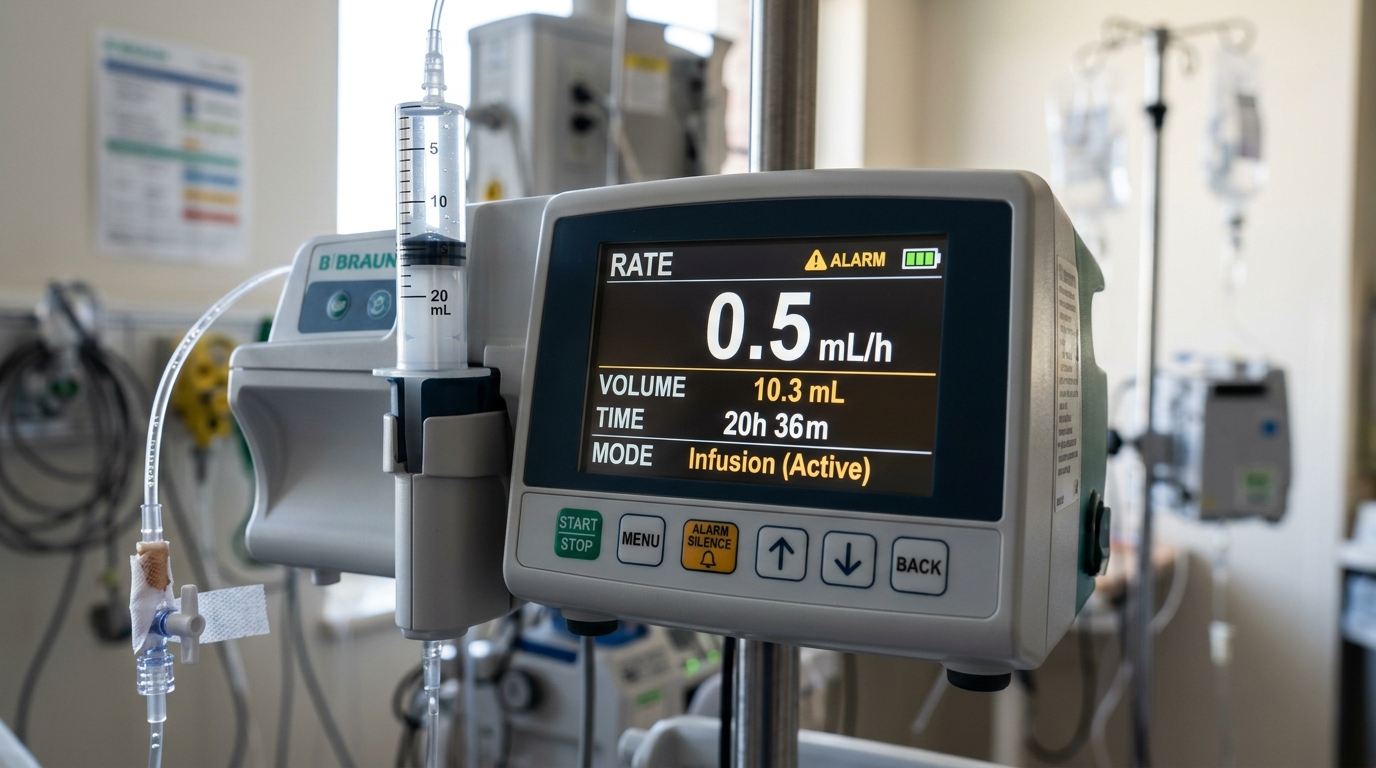
The operational and clinical performance differences between these two infusion modalities for low-volume feline applications are summarized in the comparative evaluation below:
| Performance Parameter | Syringe Pump Modality | Volumetric Pump Modality | Clinical & Practical Impact |
|---|---|---|---|
| Delivery Accuracy (<2 mL/h) | ±1.5% to ±2.0% linear accuracy | ±5.0% to ±18.0% variance | Prevents bolus spikes and sub-therapeutic dipping in small feline CRIs. |
| Minimum Flow Rate | 0.01 mL/h incremental steps | 0.10 mL/h incremental steps | Allows fine titration of concentrated drugs in patients under 2 kg. |
| Line Priming Volume | 0.3 mL – 1.0 mL (Micro-bore set) | 12.0 mL – 22.0 mL (Standard IV set) | Reduces drug waste by up to 95% during short-term analgesia protocols. |
| Occlusion Time-to-Alarm (0.5 mL/h) | 1 to 3 minutes (at 300 mmHg) | 12 to 35 minutes (at standard threshold) | Prevents prolonged drug delivery failure during catheter kinking or positioning. |
3 Settings That Cut Procedure Time
Configuring delivery equipment efficiently reduces technician workload and eliminates start-up delays during emergency admissions. Implementing three specific operational settings streamlines workflow:
- Syringe Brand Auto-Detection: Pre-configuring the internal database for standard 10 mL, 20 mL, and 50 mL syringe brands eliminates manual calibration steps. Automatic barrel recognition cuts pump programming time from 3 minutes to under 45 seconds per patient setup.
- Custom Occlusion Alarm Thresholds: Setting occlusion pressure limits to a lower baseline (such as 300 mmHg or 0.04 MPa) when using small 22G or 24G feline IV catheters ensures rapid alarm triggering upon line pinching. This avoids high pressure accumulation, which can cause unwanted bolus delivery upon occlusion release.
- Programmable Purge/Bolus Parameters: Utilizing programmed micro-bolus functions allows clinicians to deliver controlled loading doses directly through the interface, avoiding manual syringe manipulation and unrecorded volume entries.
Error Rate: Trained vs. Untrained Staff
Equipment versatility requires clear operational protocols. Based on HQS clinical observation in emergency ICU settings, up to 42% of low-volume dosing errors stem from selecting an incorrect syringe brand profile within open-system pumps. If a technician loads a 20 mL syringe while the unit is programmed for a different manufacturer's barrel geometry, continuous linear displacement results in volumetric delivery errors ranging from 8% to 22%.
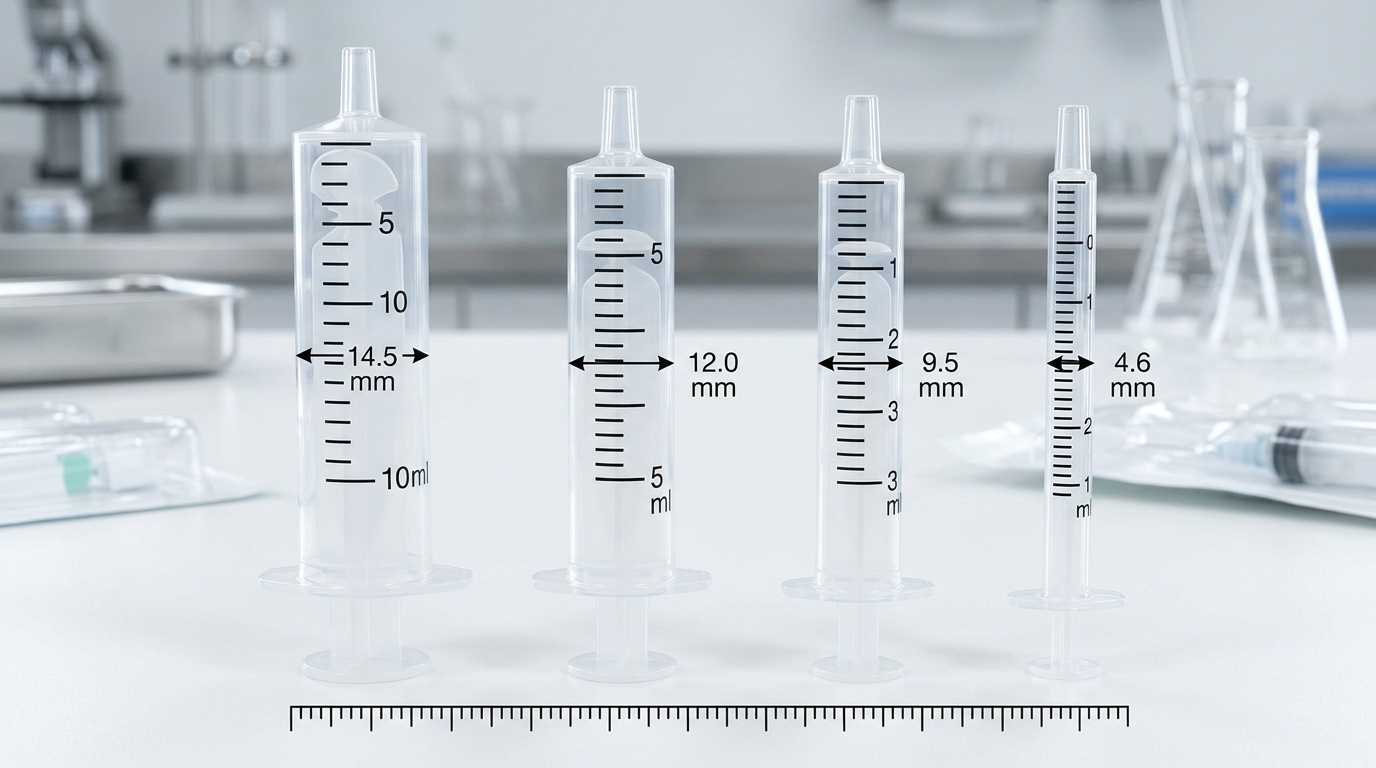
Implementing structured team training significantly mitigates these operational risks. Staff audits reveal key differences between standard and optimized operator practices:
- Syringe Calibration Errors: Untrained staff exhibit a 15% error rate regarding syringe brand mismatch; structured training reduces this rate to under 1%. Reviewing operational guides on evaluating open vs closed systems further standardizes syringe loading protocols across clinical teams.
- Occlusion Response Time: Trained operators clear line kinks within 2 minutes of alarm activation, compared to an average of 9 minutes for untrained personnel who frequently misinterpret high-pressure alerts.
- Dual-Agent Management: Utilizing multi-channel units like the Syringe Pump (Dual Channel) SP - 50D allows concurrent administration of incompatible drugs or simultaneous CRI plus fluid maintenance, reducing setup footprint by 50% in cramped ICU spaces.
Downtime Cost per Hour of Misuse
Unscheduled equipment downtime impacts both clinical throughput and financial efficiency. Physical damage commonly occurs when staff push lead screws manually without pressing the quick-release plunger clamp, causing internal drive gear striping. Repairing damaged linear drive assemblies costs between $250 and $600 per unit, excluding shipping and loaner fees.
Furthermore, taking a primary infusion channel out of service leads to indirect clinical costs. In an active emergency or surgical room, losing an infusion channel can delay critical interventions, consume up to 1.5 hours of senior technician time to recalibrate alternative setups, and cause unbilled equipment usage losses averaging $45 to $80 per shift.
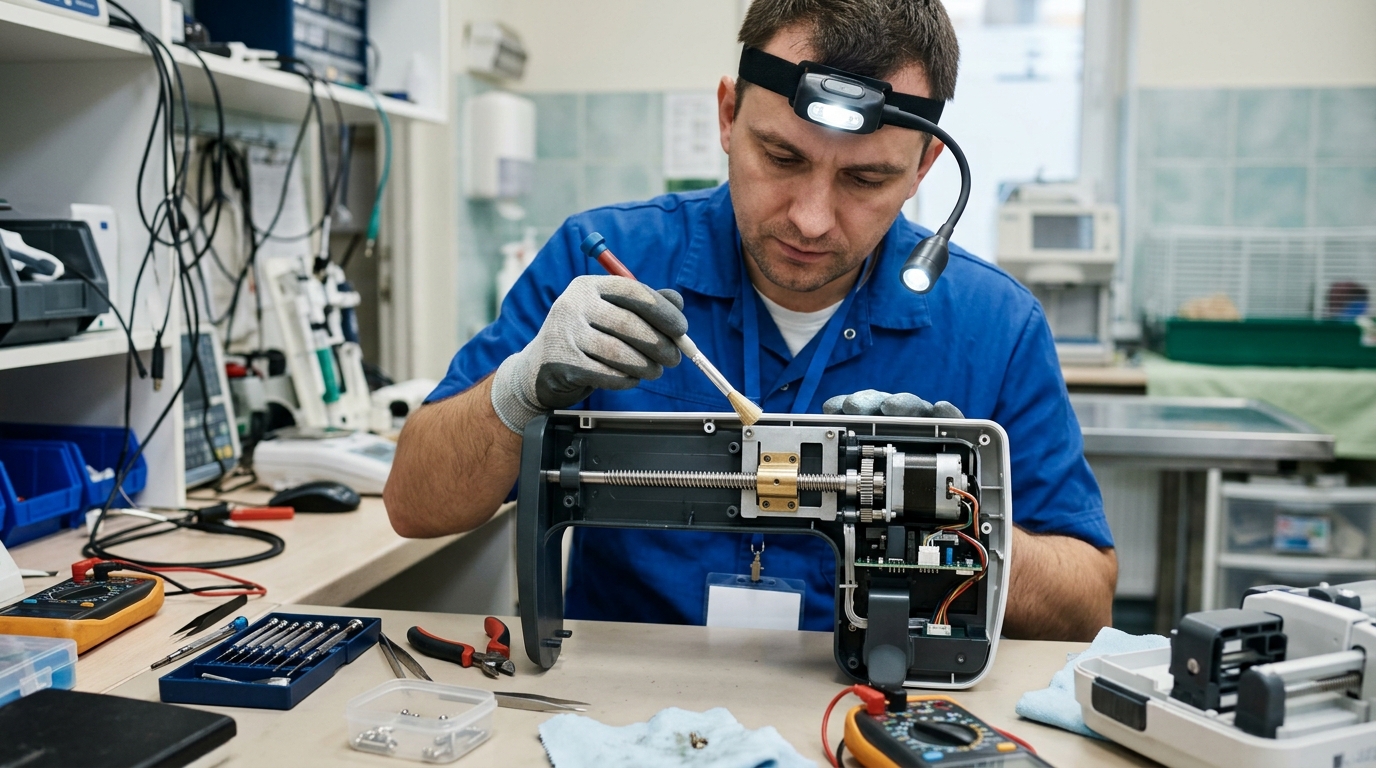
Adopting proper fluid ingress prevention during equipment sanitization also prevents internal mainboard corrosion. Using approved isopropyl alcohol wipes rather than direct spraying prevents fluid pooling around optical sensors and battery compartments.
Maintenance Interval Benchmarks
Establishing standardized maintenance routines ensures sustained delivery accuracy, extends motor life, and prevents unexpected device failures during critical infusions. The technical maintenance summary below details required tasks across standard operational intervals:
| Frequency | Task | Key Action |
|---|---|---|
| Daily | Housing & Plunger Clamp Inspection | Wipe down casing with non-corrosive disinfectant; inspect syringe clamp arm and optical barrel sensors for residue or mechanical stiffness. |
| Weekly | Drive Screw Lubrication & Cleaning | Inspect guide rods and lead screw; clean debris with lint-free swab and apply manufacturer-specified dry silicone lubricant to prevent binding. |
| Monthly | Occlusion & Battery Functional Check | Perform test occlusion using a pressure gauge at 300 mmHg; test internal lithium battery capacity under continuous discharge for at least 2 hours. |
| Annual | Linear Calibration & Safety Audit | Execute gravimetric volume verification using target syringe sizes at 0.5 mL/h and 10 mL/h; verify electrical safety compliance according to ISO standards. |
Data Summary: Optimization Impact
Systematic optimization of syringe driver protocols transforms low-volume feline fluid therapy from a potential source of clinical error into a precise, repeatable process. The following data summary outlines the operational benchmarks achieved through device optimization:
| Operational Metric | Baseline / Unoptimized Practice | Optimized Protocol Target | Measurable Clinical / Financial Outcome |
|---|---|---|---|
| Low-Flow Accuracy (<2 mL/h) | ±12% to ±18% error margin | ±1.5% to ±2.0% error margin | Stable plasma drug concentration during continuous analgesia. |
| Line Priming Volume | 15 mL standard set waste | 0.5 mL micro-bore set waste | Saves approximately $12–$35 per CRI protocol in wasted medication. |
| Device Setup Time | 4.5 minutes manual entry | 0.75 minutes auto-detect | Saves 3.75 minutes per patient admission in emergency triage. |
| Annual Equipment Repair Expense | $450 average per pump | Under $80 preventative cost | Extends device service life from 3 years to 7+ years. |
Frequently Asked Questions
Why is a syringe pump preferred over a volumetric pump for feline CRIs under 2 mL/h?
Syringe pumps utilize direct linear mechanical displacement of a syringe plunger, delivering continuous, pulse-free fluid delivery with accuracy within ±2%. Volumetric pumps rely on peristaltic finger compression of large PVC tubing, which creates flow oscillations and volumetric inaccuracy exceeding 15% at low rates under 2 mL/h.
What tubing should be used with syringe drivers for feline patients?
Clinicians should always use low-dead-space, micro-bore extension sets with internal diameters around 1.0 mm. These sets minimize priming volume to under 1.0 mL, reducing medication waste and ensuring that rate changes produce immediate clinical effects at the patient's catheter site.
How often should syringe driver flow accuracy be calibrated?
Flow accuracy should undergo gravimetric testing and optical sensor verification annually during routine preventative maintenance. However, high-volume emergency facilities using open syringe systems should perform monthly spot-check verifications when switching between non-OEM syringe suppliers.