Before ordering an Illumination Incubator, confirm who handles installation, staff training, routine cleaning, replacement lighting, and repairs at your location. For this Laboratory Incubator configuration, the purchase decision should connect the intended veterinary laboratory workflow to written support terms—not rely on chamber capacity or a general promise of after-sales service alone.
An illumination incubator is a laboratory incubator that combines controlled temperature with lighting for applications that require defined light exposure. In veterinary laboratory work, a Laboratory Incubator supports incubation tasks specified by the laboratory’s method; illumination is useful only when that method requires it.
Does your veterinary laboratory need an Illumination Incubator?
An Illumination Incubator should be specified around a documented need for light exposure, rather than selected as an upgrade to a temperature-controlled incubator.
Consider two purchasing scenarios. A dog-and-cat clinic planning in-house diagnostic incubation should first establish the equipment requirements of its intended methods. If those methods require temperature control but do not specify illumination, ask whether a biochemical incubator meets the need before accepting the additional lighting configuration.
A veterinary teaching or research laboratory planning a light-dependent incubation protocol has a different purchasing question: can the supplier document the quoted lighting configuration and support its replacement components? That laboratory should request the method-relevant lighting specifications and the conditions under which performance is stated.
For either setting, ask the supplier to distinguish application lighting from a lamp intended only for viewing the chamber. A product name or a photograph of an illuminated interior does not resolve that distinction.
Illumination Incubator installation and training responsibilities
Illumination Incubator installation should have a named responsible party and model-specific site requirements agreed before shipment.
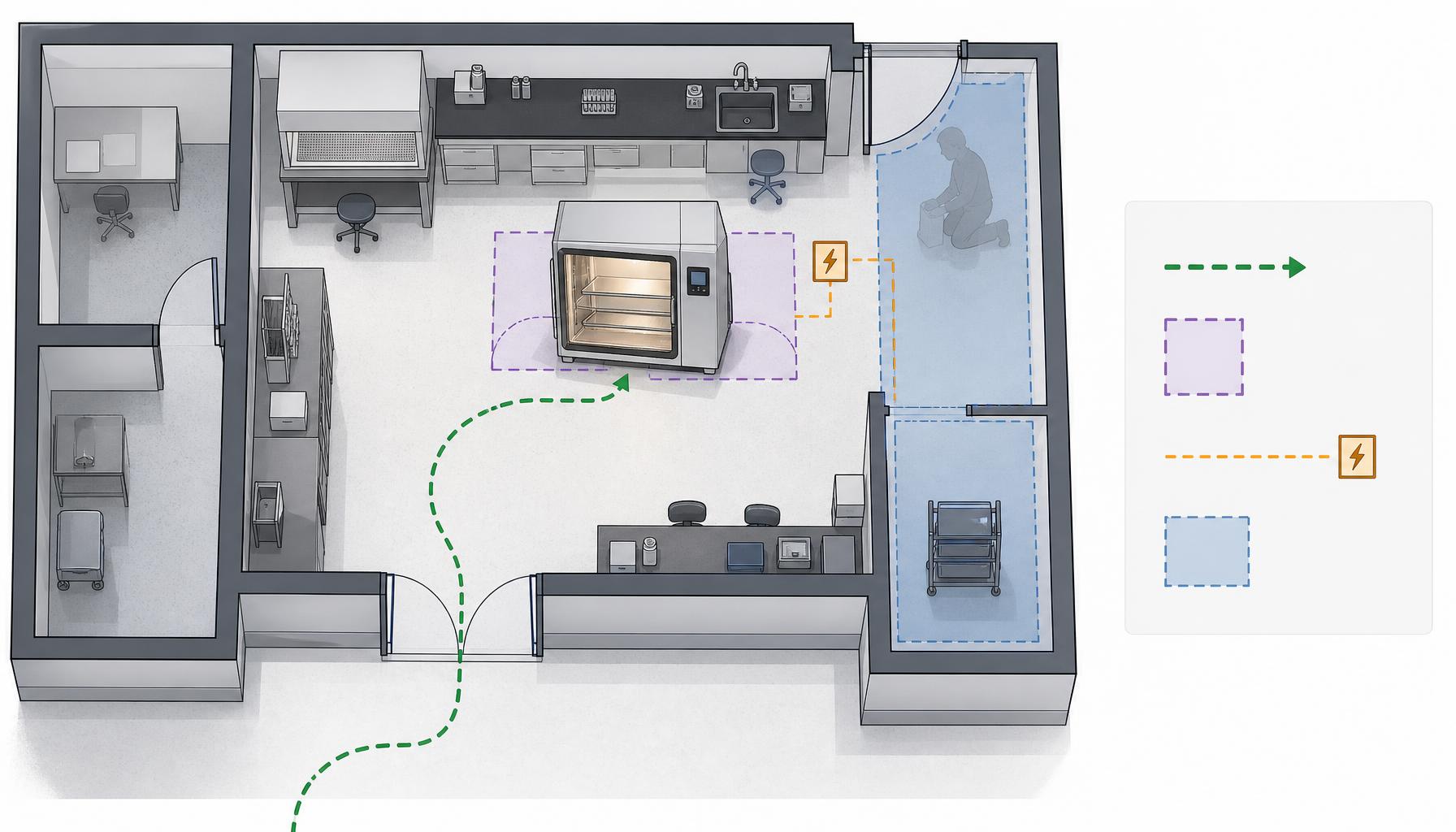
Request the installation documentation for the quoted configuration. Use it to confirm the electrical supply, placement restrictions, ventilation clearance, ambient operating conditions, door-opening space, and access needed for servicing. Shipping dimensions and cabinet dimensions answer different questions: the delivery route must accommodate the packed unit, while the final location must accommodate the installed equipment and its required clearances.
- Define delivery scope: unloading, movement into the laboratory, unpacking, placement, and removal of packaging.
- Identify who checks site readiness and completes installation acceptance, including the records provided at handover.
- Specify training coverage: model documentation, routine care responsibilities, service-contact routes, and which tasks require authorized personnel.
- Confirm whether installation and training are on-site or remote, the working language, and whether repeat training carries a separate charge.
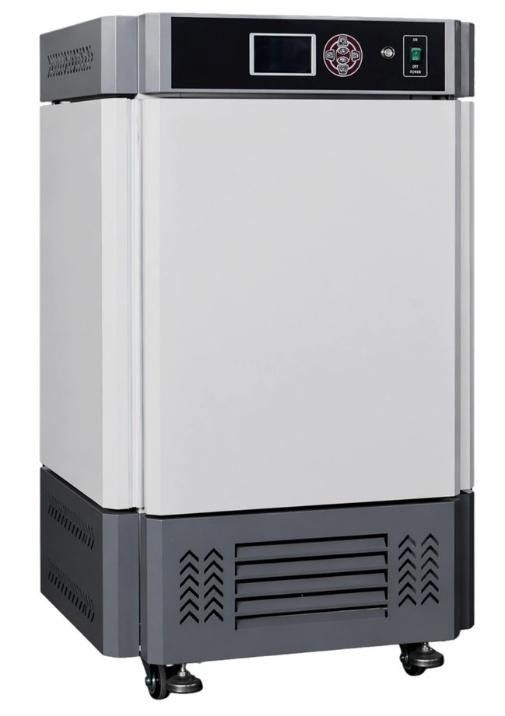
HQS biochemical incubator models for a temperature-control comparison
HQS biochemical incubator specifications provide a temperature-control comparison, not evidence that those models include programmable illumination.
The SPX-50B/80B Biochemical Incubator product page lists the following values. Buyers considering these models alongside an illumination incubator should ask HQS to confirm application suitability and the exact configuration being quoted.
| Model and equipment | Capacity (L) | Temperature range (°C) | Listed temperature accuracy (°C) | Electrical supply (V, Hz) | Confirm with HQS |
| SPX-50B Biochemical Incubator | 50 | 5–60 | ±0.5 | 220 V, 50 Hz | Suitability for the intended method, site requirements, and support scope |
| SPX-80B Biochemical Incubator | 80 | 5–60 | ±0.5 | 220 V, 50 Hz | Usable loading arrangement, quoted options, and support scope |
HQS lists a stainless steel interior, a glass observation door, and an optional interior socket for biochemical oxygen demand (BOD) culture on this product page. An observation door and an optional socket should not be interpreted as confirmation of controlled illumination.
For an illumination configuration, request its own specification sheet. Ask for the lighting source, control capabilities, replacement assembly identification, and any documented effect of lighting operation on temperature performance. Keep these requirements separate from the biochemical incubator comparison.
Illumination Incubator cleaning, maintenance, and consumables
Illumination Incubator cleaning and maintenance responsibilities should be based on the model’s instructions and included in the handover agreement.
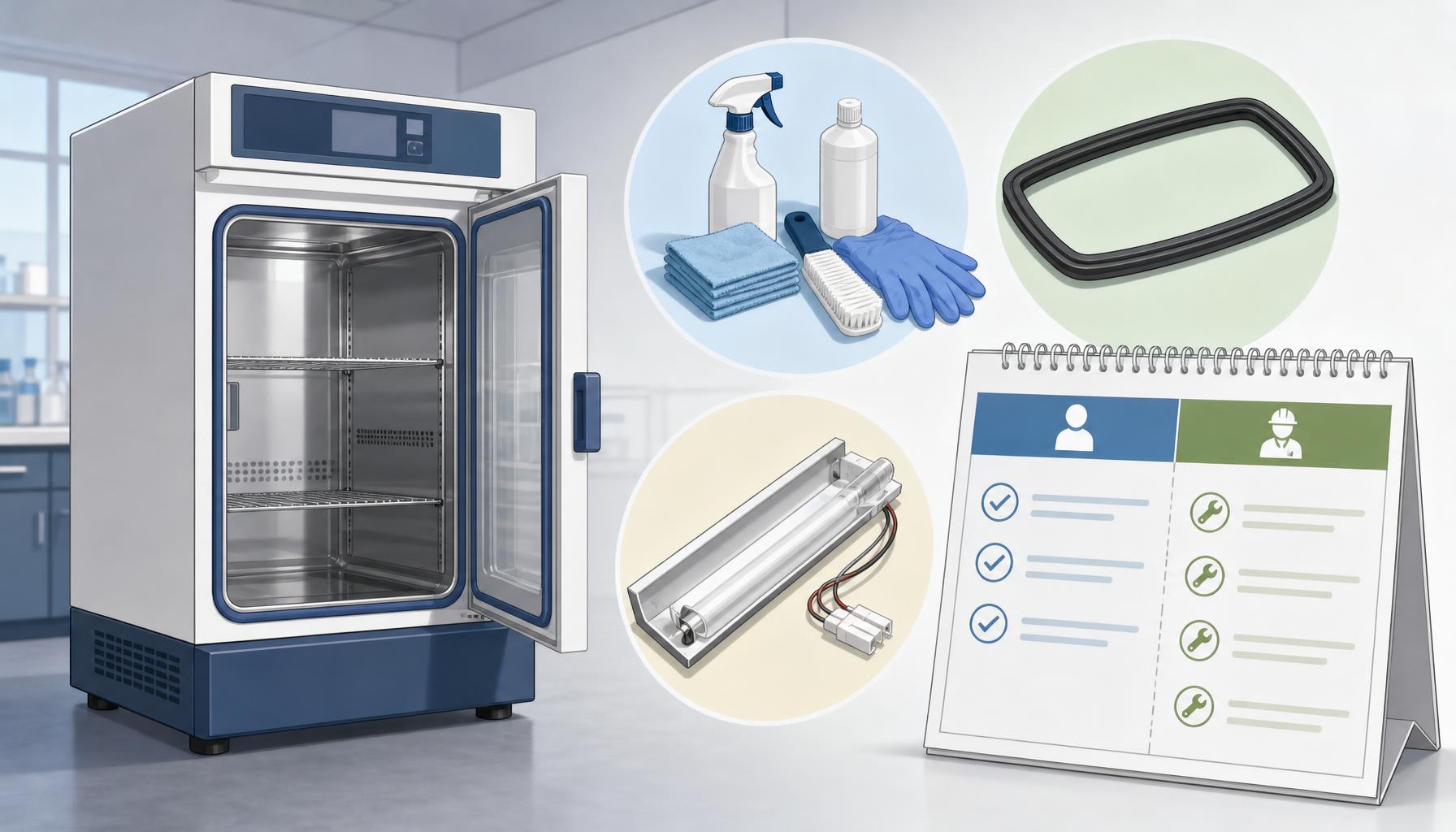
Before purchase, request the approved cleaning agents, material-compatibility restrictions, and any limits on cleaning access around lighting components. A stainless steel chamber description alone does not establish which products are suitable for seals, transparent surfaces, or electrical assemblies.
Ask HQS to identify which routine tasks laboratory staff may perform and which require an authorized service provider. The quotation should also identify any scheduled maintenance, inspection, or performance-verification services recommended for the quoted configuration, together with their scope and charging basis.
- Request a model-specific list of consumables and wear parts rather than assuming every incubator needs the same replacements.
- Confirm whether the lighting assembly is user-replaceable or service-only, and whether replacement requires subsequent performance verification.
- Separate equipment maintenance costs from laboratory media, vessels, and other workflow consumables.
- Clarify responsibility for cleaning or decontamination before a technician visit or return shipment.
Illumination Incubator spare parts and local service coverage
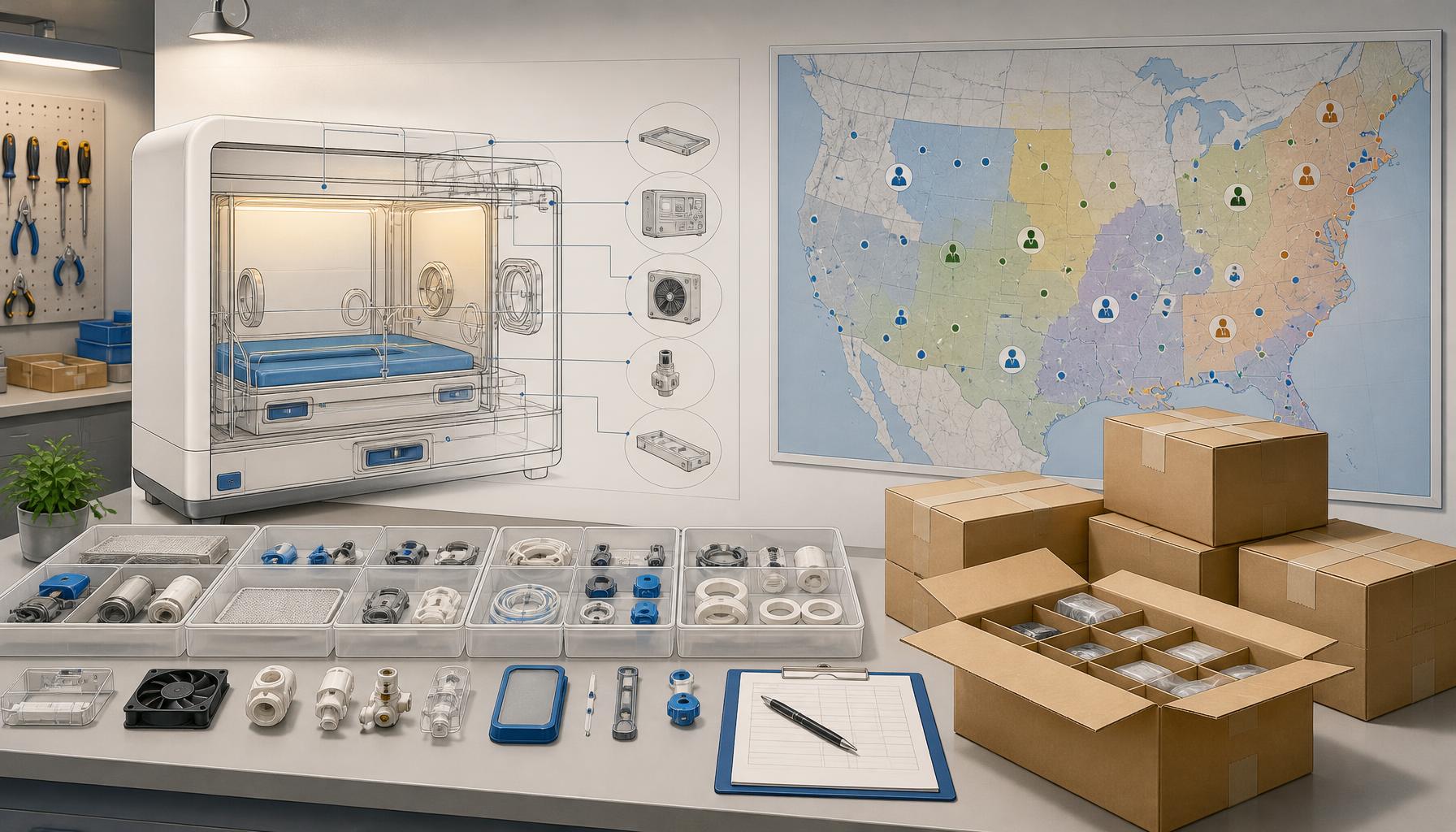
Illumination Incubator support is more useful when the quotation identifies compatible parts, service coverage, and cost responsibility in writing.
Request a parts list tied to the exact model and configuration. Where applicable, ask about replacement lighting assemblies, door seals, sensors, controllers, and other supplier-designated service parts. Establish whether components are stocked locally or shipped internationally, who installs them, and how compatibility is checked against the equipment’s serial number.
A promised response time is not the same as a repair completion time. Ask the supplier to distinguish initial technical response, fault assessment, parts dispatch, and on-site attendance. For a laboratory whose incubation work cannot readily be interrupted, also discuss whether backup equipment or a documented alternative workflow is needed.
The commercial terms should distinguish warranty coverage from paid service. Confirm responsibility for labor, travel, freight, return shipping, and post-repair verification, including any exclusions or approval requirements. Ask how discontinued components and replacement alternatives will be handled.
Illumination Incubator quotation and import documentation
An Illumination Incubator quotation should make installation, recurring costs, and destination-market documentation identifiable before an order is approved.
Ask HQS to confirm the applicable conformity documents, labeling, electrical configuration, and import documentation for the quoted unit and destination market. Have the importer or purchasing organization check that the documents match the model and intended use; a general company certificate should not substitute for model-specific documentation where that is required.
Request separate quotation lines for equipment, options, freight, installation, training, scheduled service, replacement parts, and any performance-verification work. Confirm which items are included and which are charged separately. This makes offers comparable without relying on unsupported price estimates.
Proceed when the intended method justifies illumination, the site can meet the model-specific installation requirements, and the support agreement assigns clear responsibilities. If temperature control alone meets the laboratory’s needs, compare the relevant biochemical incubator configuration instead of paying for lighting that has no defined role in the workflow.