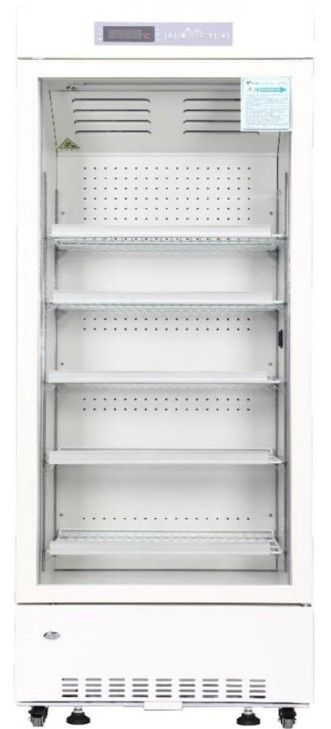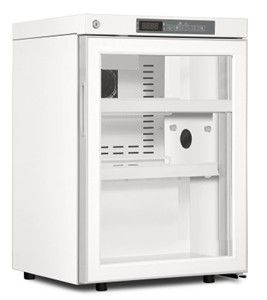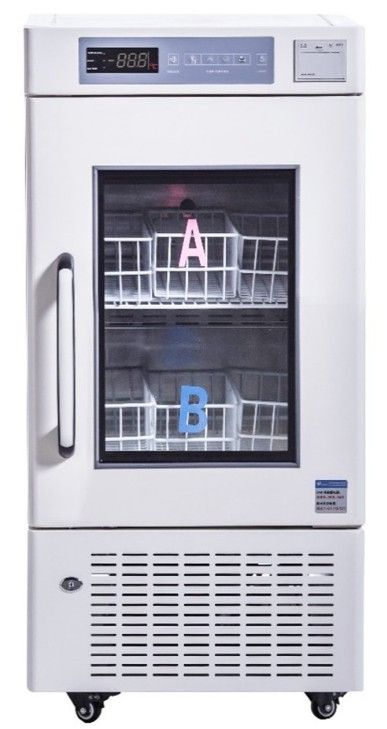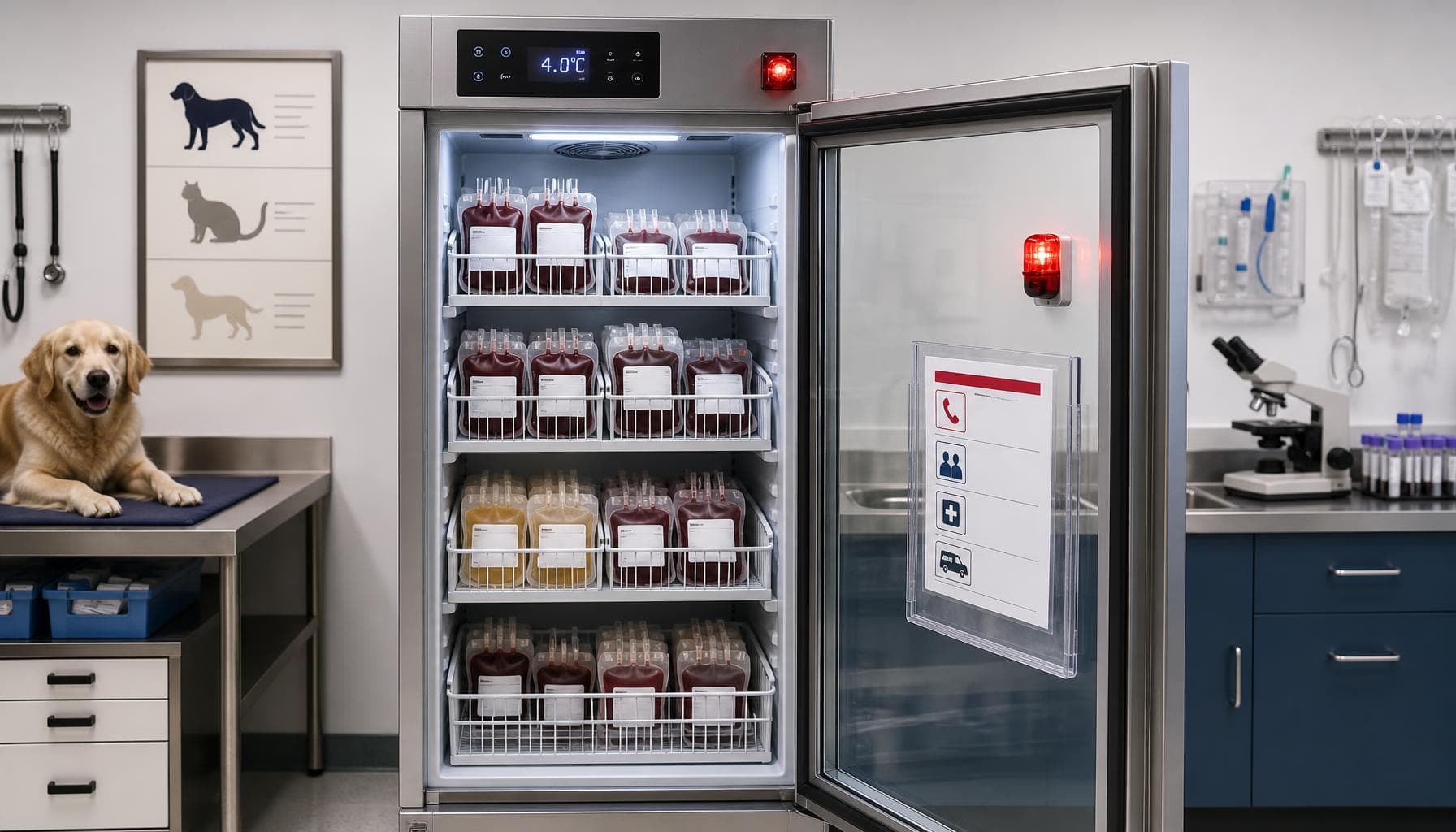
Blood products intended for refrigerated storage are commonly managed within a 2–6°C range, but the refrigerator alone does not protect inventory. Reliability depends on three linked controls: stable temperature performance, controlled door access, and staff response when an alarm occurs. For veterinary practices, a Blood Bank Refrigerator is not simply a larger clinical refrigerator; it is an inventory-control point for whole blood, packed red blood cells, cross-match samples, and temperature-sensitive emergency stock.
In a high-volume emergency hospital, the main risk is frequent door opening during trauma, surgery, and transfusion preparation. In a smaller general practice, the larger risk may be infrequent use, unclear responsibility, and missed maintenance. The workflow should reflect that difference. A dedicated unit from the Refrigerator category gives clinical teams clearer temperature accountability than a shared medication or food-storage appliance.
Efficiency Gains: The Numbers Speak
The most useful performance numbers are not generic “efficiency” claims. They are the measurements a clinic can review: 2–6°C storage range, daily minimum/maximum temperature records, alarm response time, door-open events, and inventory age. A unit that stays within range but has no usable alarm history or staff ownership is not fully controlled.
Set a practical baseline during the first 30 days after installation. Record the number of temperature excursions, time from alarm to acknowledgement, and number of expired or discarded units. These figures give the clinical manager a defensible starting point before changing workflow. For an emergency ICU, review alarm acknowledgement by shift. For a daytime surgery clinic, review whether blood is removed and returned promptly during scheduled procedures.
- Use a continuously readable temperature display plus an independent data logger when blood inventory value justifies it.
- Assign one owner per shift for alarm acknowledgement and escalation.
- Track product age, storage location, and disposition in the same inventory record.
3 Settings That Cut Procedure Time
Three settings have direct workflow value: a controlled setpoint, an appropriately timed door alarm, and defined access permissions. For refrigerated blood products, many clinics set the cabinet near 4°C so normal cycling remains inside the 2–6°C working range. The exact setting should follow the blood supplier’s instructions and the product label, not a generic preference.
A door-open alarm set too quickly can create nuisance alarms during legitimate retrieval; set too late, it misses the behavior that drives warming. A 30–60 second trial window is a reasonable starting point for evaluation, followed by adjustment based on observed retrieval time. Finally, limit access to trained personnel during busy periods. This prevents unlabeled returns and avoids prolonged searching inside the cabinet.
| Configuration | Useful Technical Specification | Appropriate Clinical Setting | Planning Budget Range |
| Compact 60–100 L unit | Digital display, door alarm, 2–6°C capability | Low-volume practice holding limited emergency stock | Approximately $1,500–$3,500 |
| 100–200 L blood bank unit | Forced-air circulation, lock, min/max history | General hospital with surgery and occasional transfusion cases | Approximately $2,500–$5,500 |
| 200–400 L unit | Multiple shelves or baskets, remote alarm option | Referral hospital or 24-hour emergency service | Approximately $4,000–$8,000 |
| 400 L or larger unit | High-capacity organization, remote monitoring, backup planning | Blood donor program or multi-service specialty center | Approximately $7,000–$12,000 |
These are planning allowances rather than a market price survey. Freight, installation, remote monitoring, voltage configuration, local import duties, and service coverage can materially change the final quote. Models such as the Blood Bank Refrigerator BBR - V108 should be assessed against actual stock volume and alarm requirements rather than cabinet capacity alone.
Error Rate: Trained vs. Untrained Staff
A clinic should not assume that trained staff make “fewer errors” without measuring what counts as an error. Define three auditable events: blood returned to the wrong shelf, an alarm without documented acknowledgement, and a unit left outside controlled storage beyond the clinic’s approved handling time. Compare the 30 days before and after training using the same definitions.
Training should take 20–30 minutes for most staff members, followed by a documented competency check. The goal is not to teach refrigeration engineering. It is to make every person able to identify the acceptable temperature range, distinguish a door alarm from a temperature alarm, document a response, and move inventory during a confirmed failure.
- Use a short orientation for veterinarians, technicians, assistants, and overnight staff.
- Run one alarm-response drill after installation and repeat it when protocols change.
- Keep the alternate-storage location and emergency contacts on or beside the unit.

Downtime Cost per Hour of Misuse
Downtime has two cost categories: interruption of clinical work and possible loss of blood inventory. The first can be calculated locally. For example, if two employees spend one hour managing an alarm at a loaded labor cost of $55 per hour each, while a treatment area loses $200 of scheduled capacity, the immediate operational impact is $310 for that hour. This example is illustrative, not a universal veterinary benchmark.
The larger exposure is inventory disposition. If temperature history cannot show whether stored blood remained within the approved range, the practice may need supplier guidance before releasing that product. A $30 door gasket, a failed probe, or an overloaded outlet can therefore create a cost far beyond the repair invoice.
Based on HQS clinical observation, recurring door-open alarms are often treated as staff-behavior issues when the underlying cause is shelving layout. If labels are hard to read or products are mixed by species, blood type, or expiry date, staff spend longer searching. Clear zones for canine, feline, donor, and reserved products reduce unnecessary door-open time without changing clinical protocols.
Maintenance Interval Benchmarks
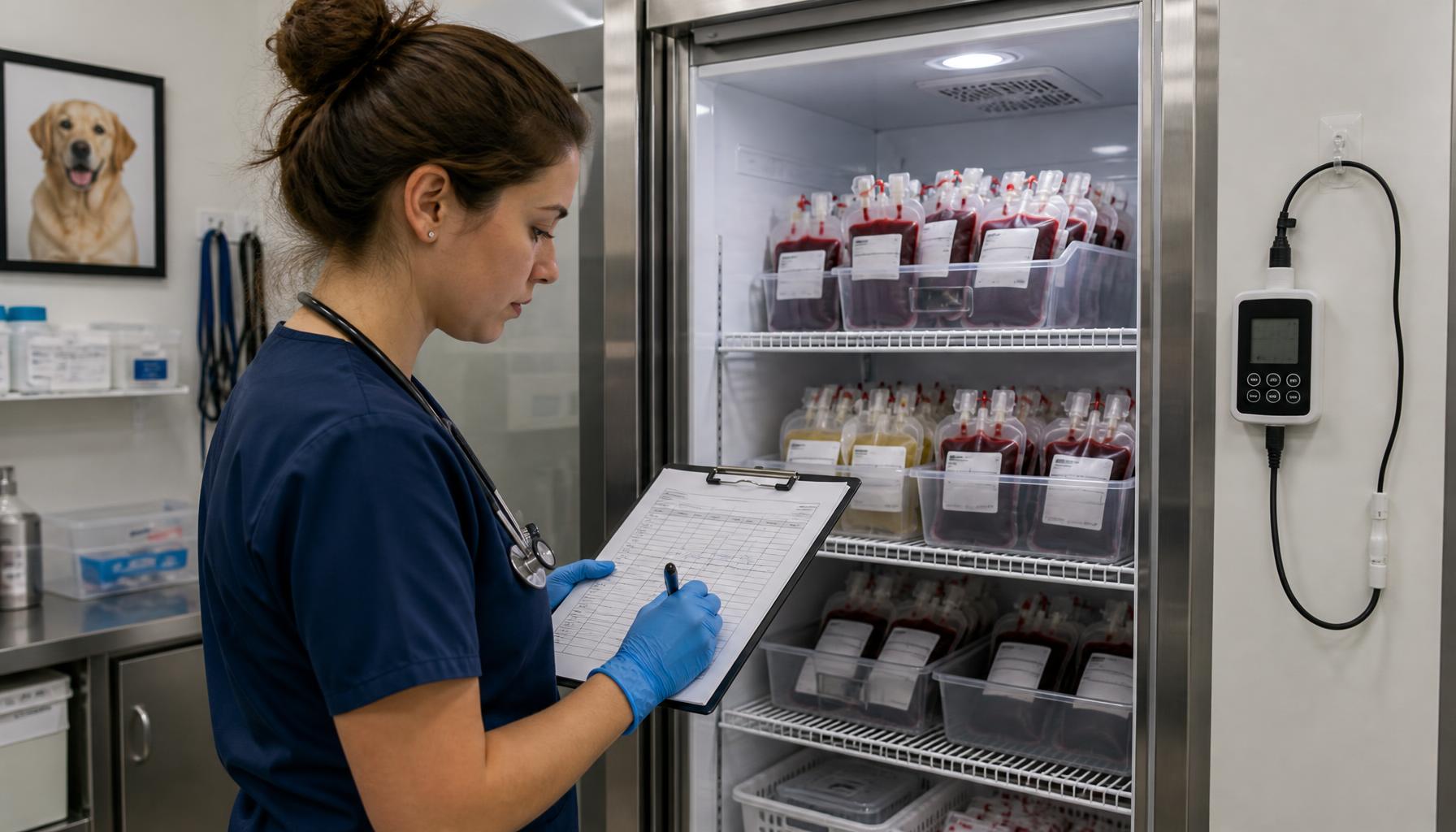
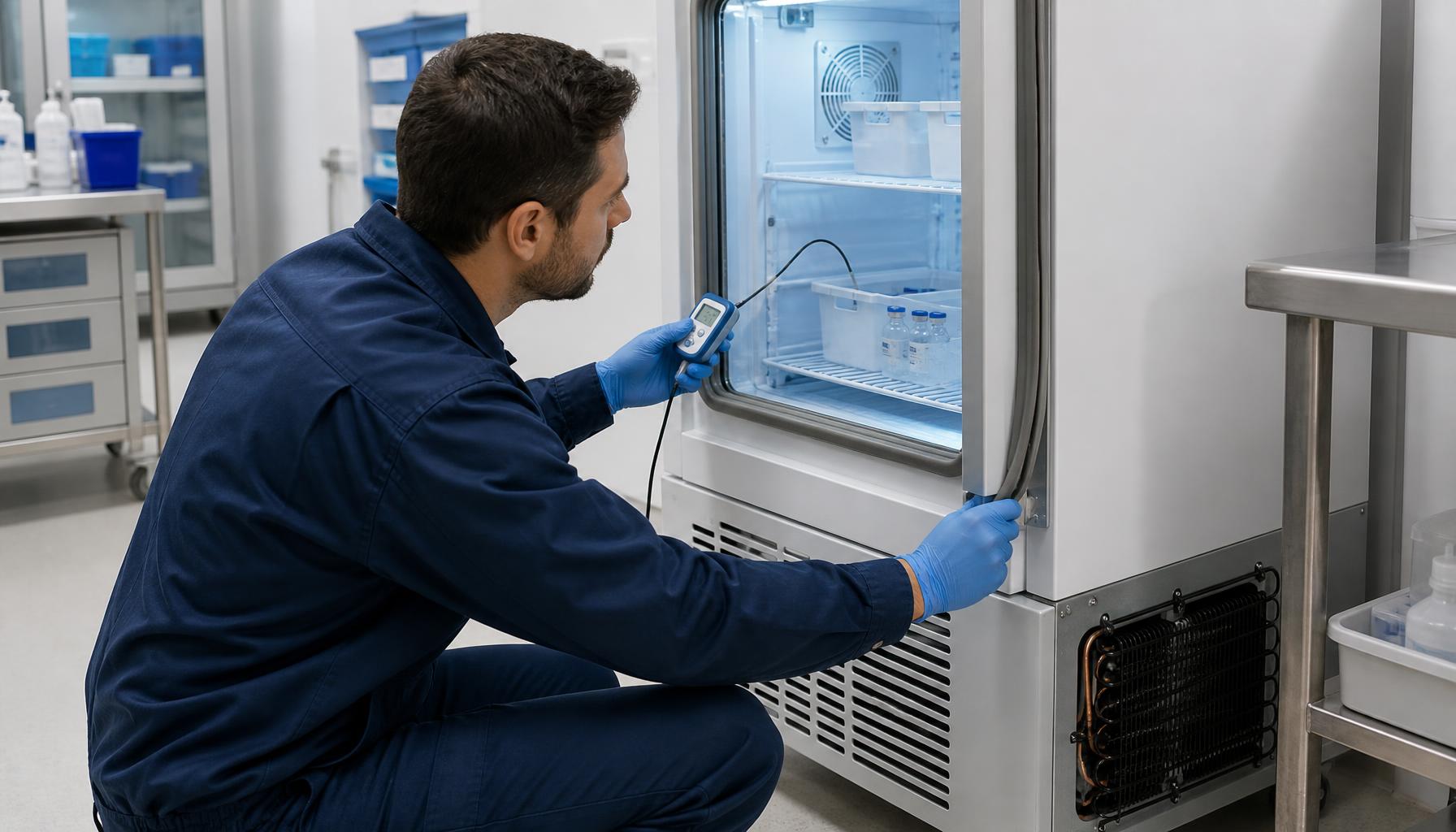
Maintenance should be divided into routine checks, which staff can document, and technical verification, which should be performed by qualified service personnel. Daily review catches alarms and blocked doors. Annual verification addresses sensor accuracy, condenser performance, electrical safety, and calibration records. Do not rely on an internal display alone when stored inventory has clinical and financial value.
Before purchase, ask whether replacement probes, controllers, door gaskets, shelves, locks, and alarm batteries are stocked locally. Also confirm voltage, plug type, grounding requirements, heat-clearance requirements, and the service response process. For imported equipment, request the manufacturer’s electrical documentation, temperature-performance information, warranty terms, and evidence needed for local medical-device or electrical compliance. A CE mark or similar document is not automatic authorization in every market.
Maintenance Frequency Summary
| Frequency | Task | Key Action |
| Daily | Temperature and alarm review | Record current, minimum, and maximum temperature; investigate any excursion or active alarm before using inventory. |
| Weekly | Door, gasket, and shelving check | Inspect gasket contact, confirm the door closes fully, remove packaging that blocks airflow, and verify labels remain legible. |
| Monthly | Cleaning and log audit | Clean approved exterior and interior surfaces, review alarm-response records, and reconcile stock against expiry dates. |
| Annual | Technical service and calibration review | Arrange sensor verification, inspect condenser and electrical components, test alarm functions, and update service documentation. |
According to our technical lab's test observations, heavily loaded cabinets recover more slowly after repeated door openings than evenly loaded cabinets with clear airflow paths. Do not pack products against rear vents or fill every shelf edge-to-edge. For larger hospitals, remote notification may be more valuable than additional liters of capacity because overnight alarm visibility is often the limiting control.
4 Integration Checks for Emergency and Surgery Workflows
Blood storage decisions affect other equipment and room planning. In an emergency hospital, place the refrigerator near treatment or ICU access while avoiding direct heat from autoclaves, sunlight, or crowded equipment bays. In a planned surgery setting, locate it where staff can retrieve blood without crossing a sterile preparation route. The cabinet should not share a circuit with high-load equipment unless an electrician confirms the circuit capacity.
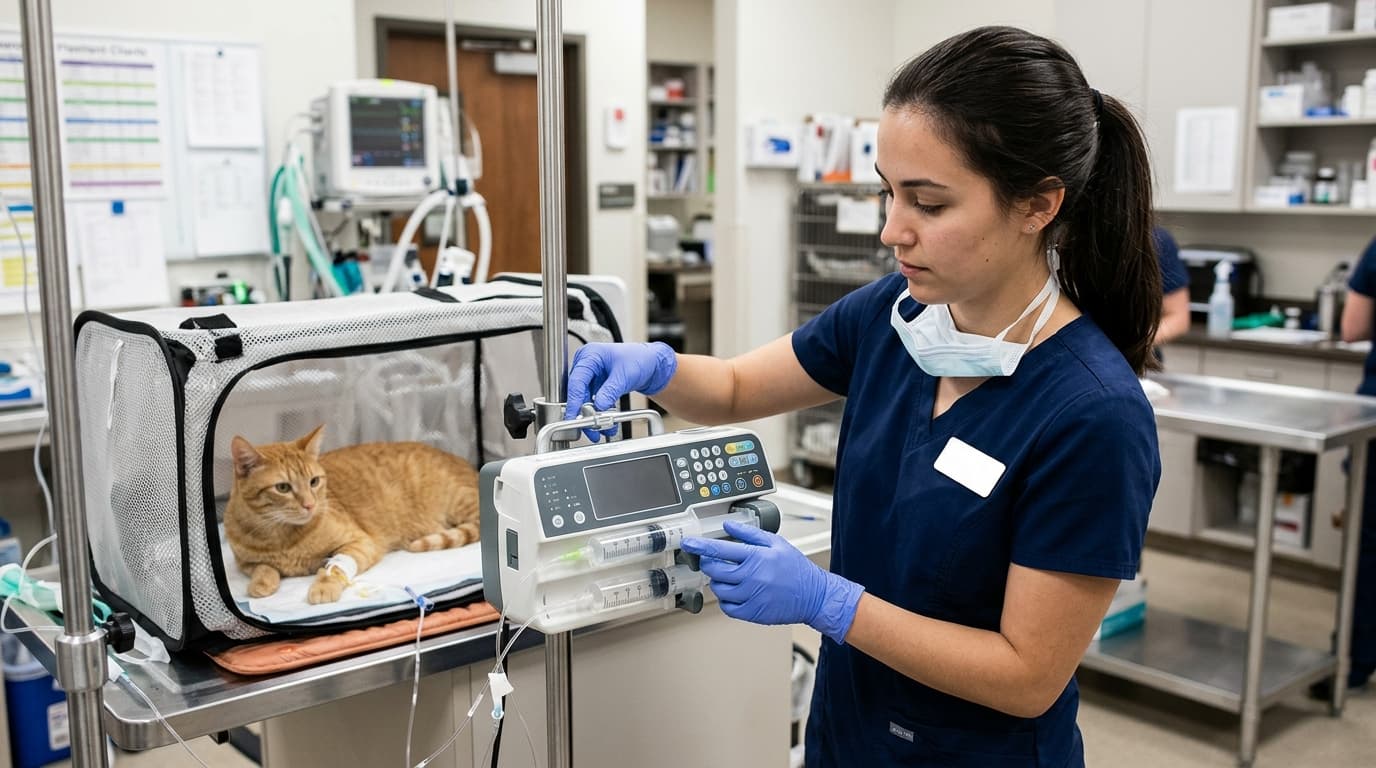
Review these four checks during installation: outlet location, backup power policy, clear floor space for door swing, and the pathway to validated backup storage. If transfusion cases are monitored in treatment, coordinate refrigerator access with the workflow around a veterinary patient monitor so one technician is not repeatedly leaving an unstable patient to retrieve supplies. Practices using timed infusions should similarly align blood retrieval with infusion pump setup and verification.
Frequently Asked Questions
What temperature should a Blood Bank Refrigerator maintain?
Many refrigerated blood-product programs work within 2–6°C and set the cabinet near 4°C to allow normal cycling margin. The final requirement should follow the supplier’s product label, the blood bank’s handling instructions, and the clinic’s written protocol.
Can a pharmacy refrigerator be used for veterinary blood products?
A pharmacy refrigerator may be suitable only if its temperature range, alarm capability, monitoring method, access control, and documentation meet the blood product’s storage requirements. A dedicated blood bank unit is usually easier to manage because it separates blood inventory from medications, food, and general clinical supplies.
How much refrigerator capacity does a veterinary clinic need?
Capacity should be based on the maximum number of units held during an emergency period, not average weekly use. Include room for organized airflow, quarantine or reserved units, and a clear expiry-date system. Overfilling reduces access speed and can interfere with air circulation.
What should staff do after a temperature alarm?
First confirm whether the alarm is caused by an open door, power interruption, or true temperature deviation. Record the time, current temperature, and action taken. Keep the door closed while the issue is assessed, then follow the clinic’s escalation and alternate-storage procedure before releasing affected inventory.
Data Summary: Optimization Impact
| Decision Area | Useful Measurement | Recommended Control | Operational Impact |
| Storage temperature | 2–6°C working range | Set near 4°C when consistent with product instructions | Provides margin for normal cycling |
| Staff training | 20–30 minute orientation | Competency check plus alarm drill | Creates consistent response documentation |
| Door management | 30–60 second trial alarm setting | Adjust after observing actual retrieval time | Reduces nuisance alarms and extended access |
| Maintenance | Daily, weekly, monthly, annual intervals | Separate staff checks from technical verification | Improves traceability and reduces avoidable downtime |
| Downtime planning | $310 illustrative one-hour disruption | Calculate labor and lost clinical capacity locally | Makes backup-storage investment easier to justify |
The strongest refrigerator workflow is measurable rather than elaborate: controlled storage, clear ownership, documented alarms, realistic backup planning, and maintenance records that show what was checked and when. Those controls protect both the blood inventory and the clinical decisions that depend on it.