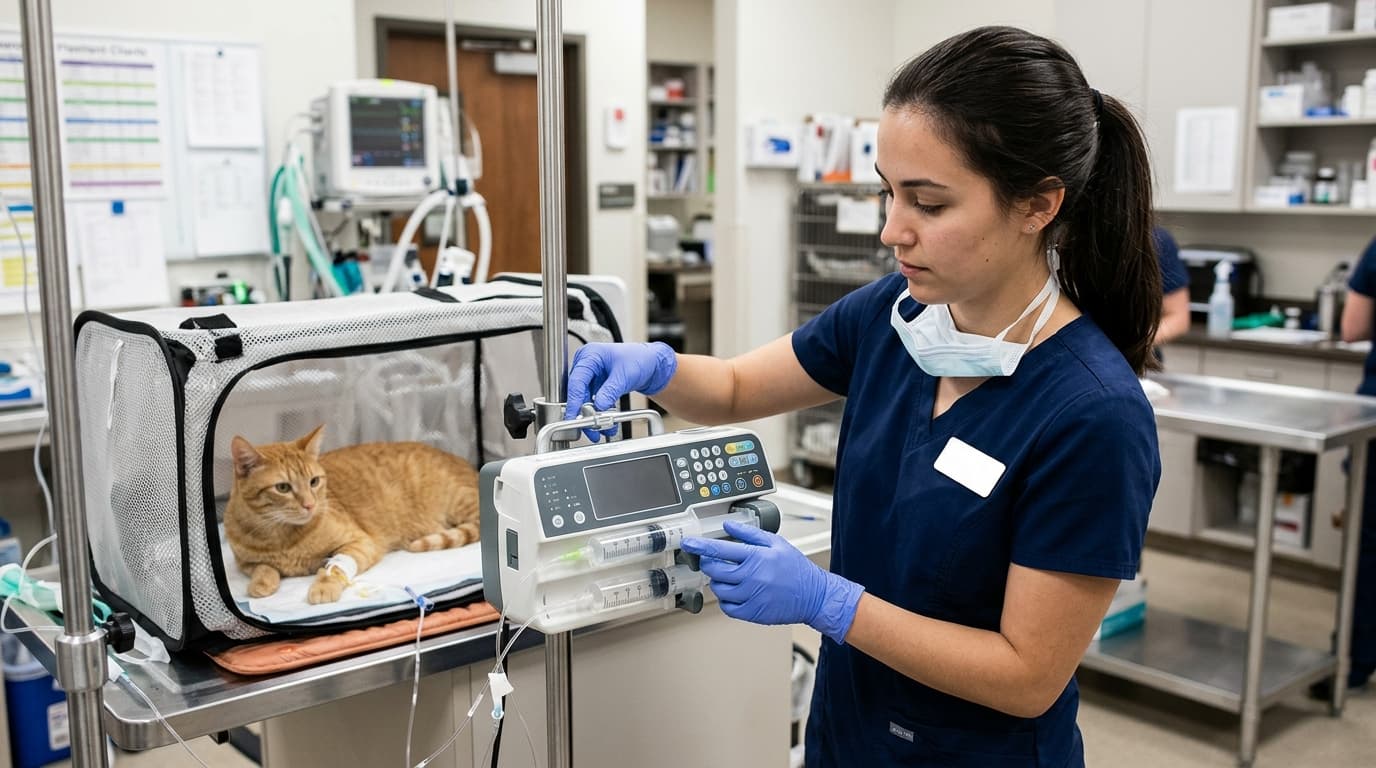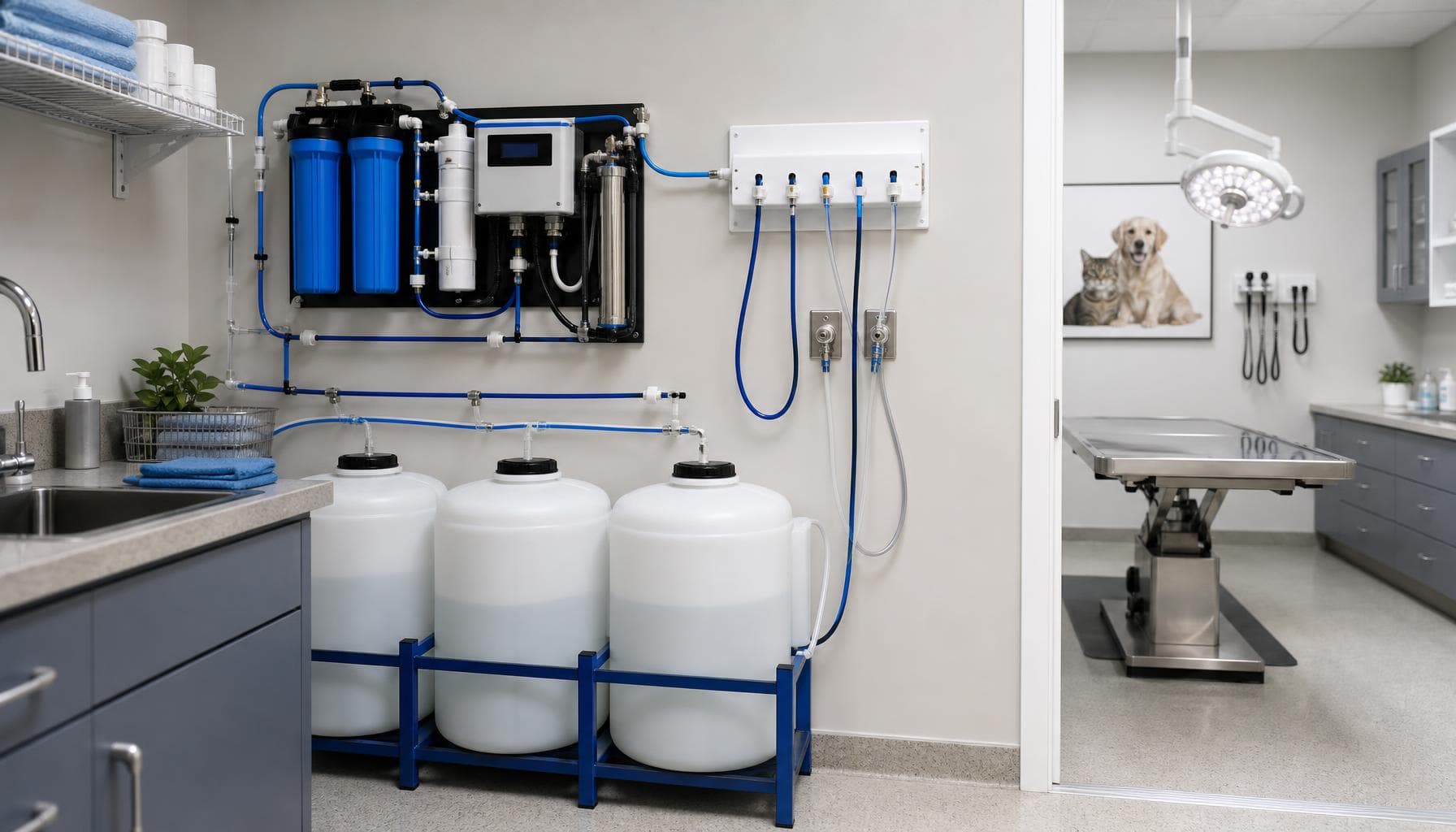
Planning demand in 15–60 L/day bands is more useful than choosing a Water Purifier by its maximum advertised output. In a multi-room veterinary clinic, purified water demand usually comes from laboratory analyzers, dental equipment, autoclaves, humidification, instrument rinsing, and reserve storage. The correct system is the one that supplies peak-day demand without excessive storage age, unnecessary filter expense, or a production rate that cannot recover between busy periods.
Efficiency Gains: The Numbers Speak
For procurement planning, start with a daily demand estimate rather than room count alone. A small three-room clinic may use 15–25 L/day of purified water when laboratory testing is limited and sterilization volume is modest. A five- to eight-room general practice with dental and surgery services may require 30–45 L/day. A referral, emergency, or equine facility with higher sterilization and laboratory demand may need 45–60 L/day or more.
The operational target is not to consume 100% of rated production. A practical sizing margin is 25–50% above estimated average daily use, especially where incoming water quality varies seasonally. This allows the unit to recover after a dental block, surgery day, or heavy analyzer use without relying on stagnant reserve water.
| Demand Profile | Planning Output | Useful Storage Range | Typical Clinical Fit |
| Low-volume outpatient | 15–25 L/day | 10–20 L | Consult rooms, limited in-house testing |
| General practice | 30–45 L/day | 20–40 L | Routine surgery, dental unit, chemistry testing |
| High-throughput hospital | 45–60 L/day | 40–80 L | Multiple treatment rooms and daily sterilization |
| Referral or emergency service | 60 L/day or more | 80 L or distributed tanks | ICU, laboratory-heavy, extended operating hours |
For clinics connecting purified water to sterilization workflows, confirm the water specification required by the selected veterinary autoclave. A purifier sized only for drinking-water volume may not meet the conductivity or replenishment requirements of steam-generating equipment.
3 Settings That Cut Procedure Time
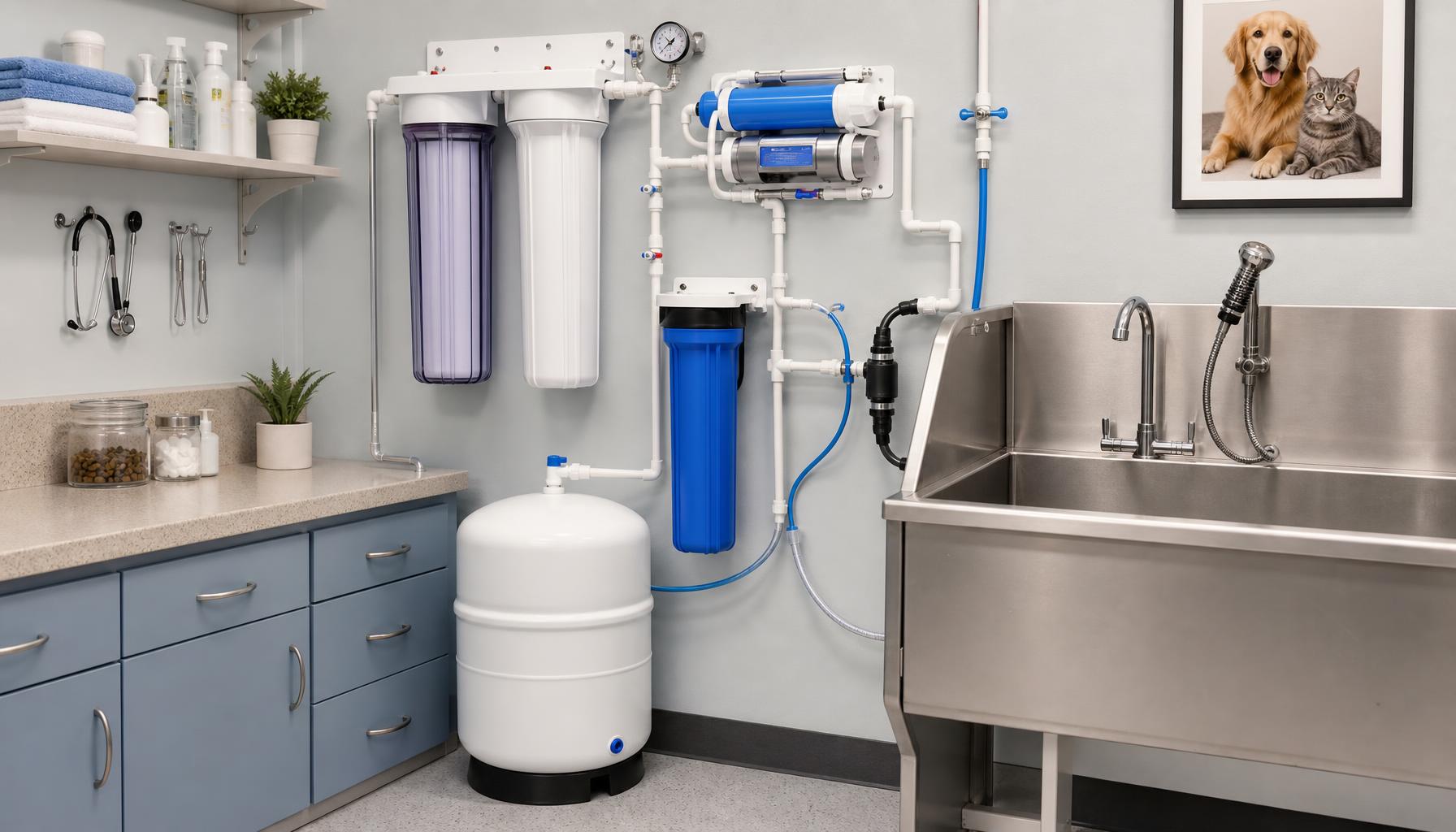
Three configuration choices determine whether a Water Purifier supports workflow or creates bottlenecks: production rate, storage capacity, and distribution method. Production rate should cover expected drawdown during the busiest clinical block. Storage should cover short peaks but remain small enough to turn over frequently. Distribution should match the distance between the unit and points of use.
Set production capacity 25–50% above average estimated demand to accommodate peak loads and slower output caused by cold feed water.
Size storage for approximately one busy block, not several days of routine consumption, unless an emergency reserve is formally required.
Use direct plumbing only where line flushing, backflow protection, and access for service are practical; otherwise, use sealed transport containers with a documented cleaning routine.
In a routine surgery and dental clinic, a 20–40 L reserve can avoid delays while an autoclave and dental unit draw water close together. In a 24-hour emergency hospital, distributed storage or a larger recovery margin may be justified because demand is less predictable and staff cannot wait for a small tank to refill.
Based on HQS clinical observation, undersized storage is more often the cause of mid-shift disruption than nominal membrane output. Sites with intermittent high demand benefit from recording tank level at opening, after the main procedure block, and at closing for two weeks before finalizing capacity.
Error Rate: Trained vs. Untrained Staff
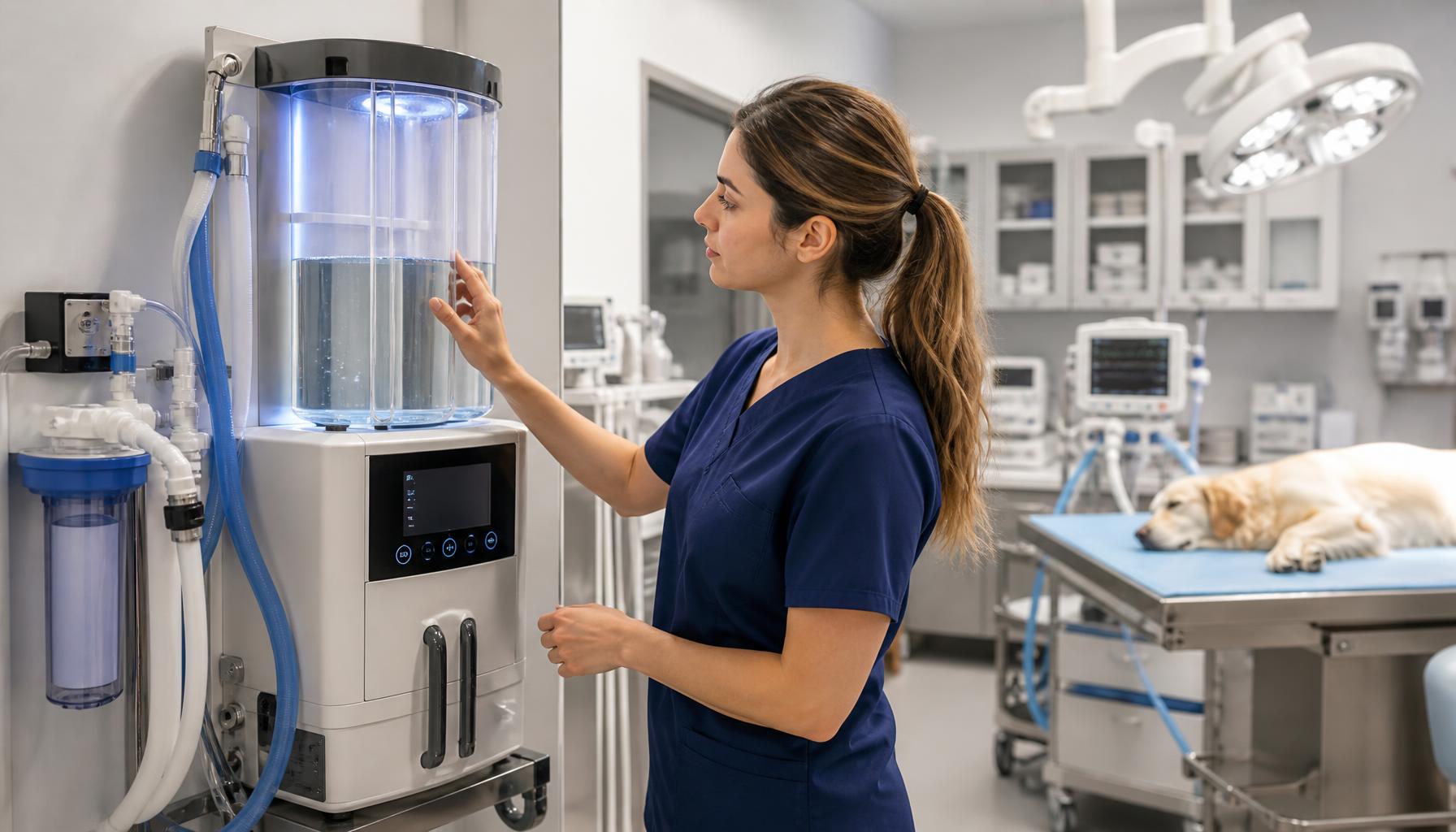
Training should be evaluated through observable checks rather than assumed from job title. The relevant comparison is whether staff can complete three actions consistently: verify inlet pressure or warning indicators, recognize a low-water or high-conductivity alarm, and document filter changes. A brief competency check reduces preventable errors such as bypassing alarms, fitting an incorrect replacement cartridge, or leaving a storage tank uncleaned.
For a multi-room clinic, assign one owner for maintenance records and train at least two backup staff members. This prevents a system from becoming unavailable when the primary technician is absent. The training requirement is modest, but it needs to be repeated when filter housing, controller layout, or consumable format changes.
| Control Point | Unstructured Practice Risk | Trained Staff Standard | Purchasing Implication |
| Alarm response | Alarm may be silenced without investigation | Cause and corrective action logged | Select clear visible and audible alarms |
| Cartridge replacement | Change based on memory or appearance | Change recorded by date and water quality | Confirm cartridge coding and supply lead time |
| Tank sanitation | Performed inconsistently | Scheduled and documented | Choose accessible tank ports and drain points |
| Water-quality verification | Checked only after equipment problems | Reviewed at defined intervals | Specify conductivity or TDS indication where needed |
A chemistry analyzer may require a tighter water-quality specification than general rinsing tasks. Confirm the analyzer manufacturer’s requirement before purchasing; purified water that is adequate for one device is not automatically acceptable for every laboratory process. Clinics upgrading analyzers should review the water requirement alongside the veterinary chemistry analyzer purchase.
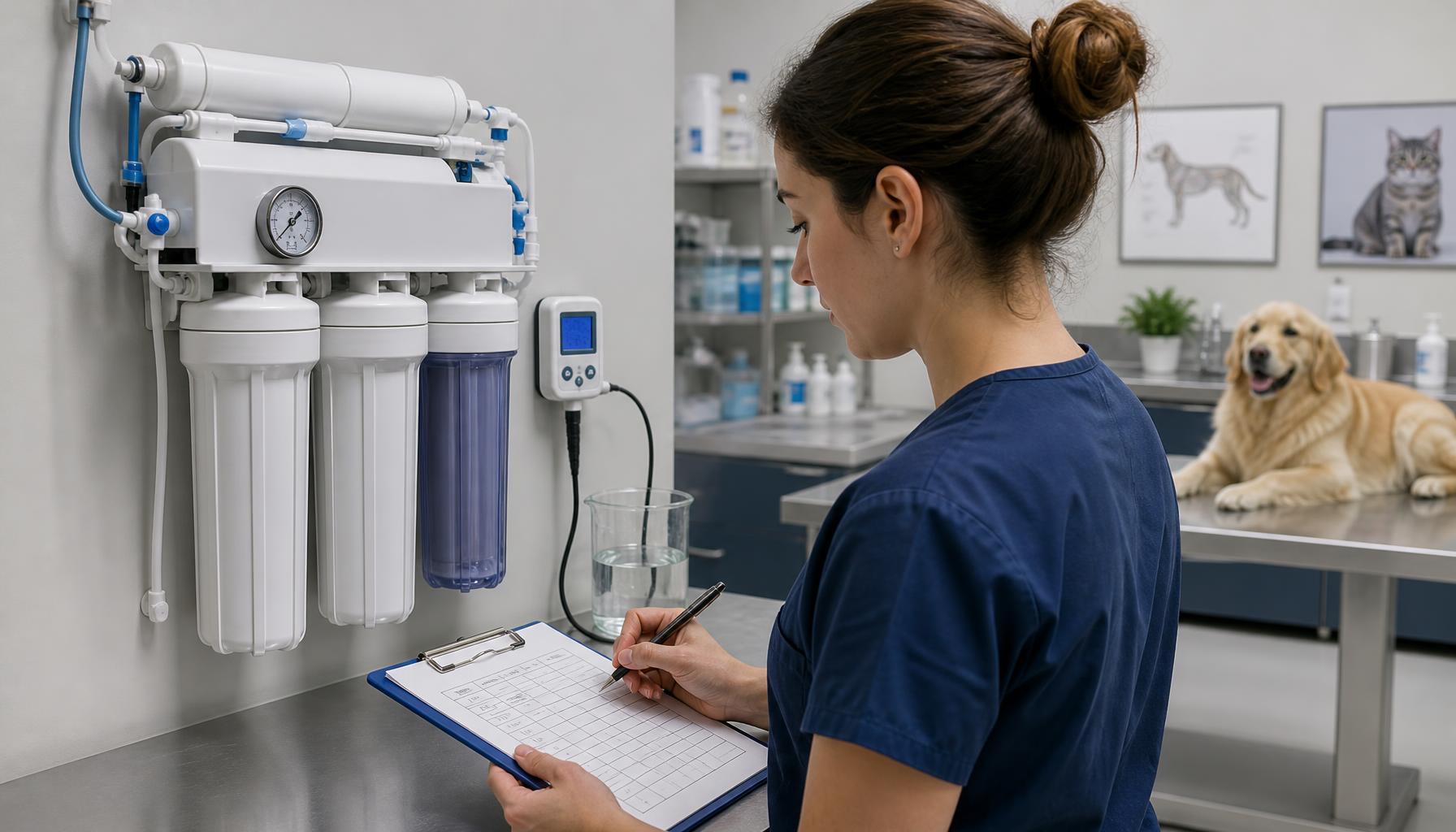
Downtime Cost per Hour of Misuse
Downtime cost is best calculated locally because appointment value, staff coverage, and backup equipment differ widely. Use a simple planning formula: lost clinical revenue per hour plus idle labor cost plus emergency consumable or service cost. For example, if delayed procedures and staff time represent $300 per hour, a four-hour interruption represents $1,200 before considering expedited service or canceled diagnostics.
Misuse-related downtime usually follows predictable patterns: depleted prefilters reduce flow, a saturated membrane fails quality targets, a full reject-water drain triggers alarms, or a neglected tank requires unscheduled sanitation. These are maintenance failures, not necessarily product failures.
Ask suppliers for local lead times on prefilters, membranes, pumps, solenoids, and controller boards.
Keep one approved prefilter set on site when water quality is hard or sediment-heavy.
Confirm whether telephone troubleshooting, field service, and loan equipment are available in your region.
Imported equipment should also be reviewed for electrical compatibility, local plumbing connections, replacement-part availability, and documentation required by the destination market. The device may be CE marked or supplied with other documentation, but import acceptance and facility installation requirements remain jurisdiction-specific.
Maintenance Interval Benchmarks
Maintenance intervals should be based on feed-water quality, output volume, and the required final-water specification. A clinic on municipal water with moderate hardness may have a different replacement schedule from an equine hospital on well water with sediment and seasonal variation. Ask the supplier what readings trigger service rather than accepting a calendar-only replacement interval.
The following schedule is a practical operating baseline. It does not replace the manufacturer’s instructions or the water requirements of connected equipment.
| Frequency | Task | Key Action |
| Daily | Check output, alarms, and tank level | Confirm normal production, adequate reserve volume, and no leaks or warning indicators. |
| Weekly | Inspect fittings and prefilter condition | Check hose connections, drain flow, pressure readings, and visible sediment accumulation. |
| Monthly | Review water-quality trend and usage log | Record conductivity or TDS where applicable, compare output volume with demand, and clean external surfaces. |
| Annual | Perform planned service and sanitation review | Replace components according to condition and manufacturer guidance, sanitize storage where required, and inspect electrical and plumbing connections. |
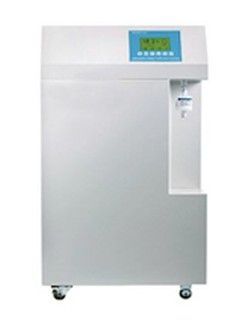
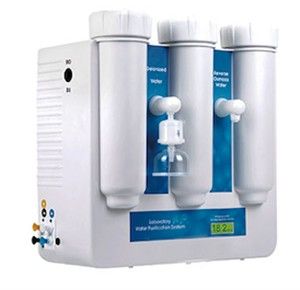
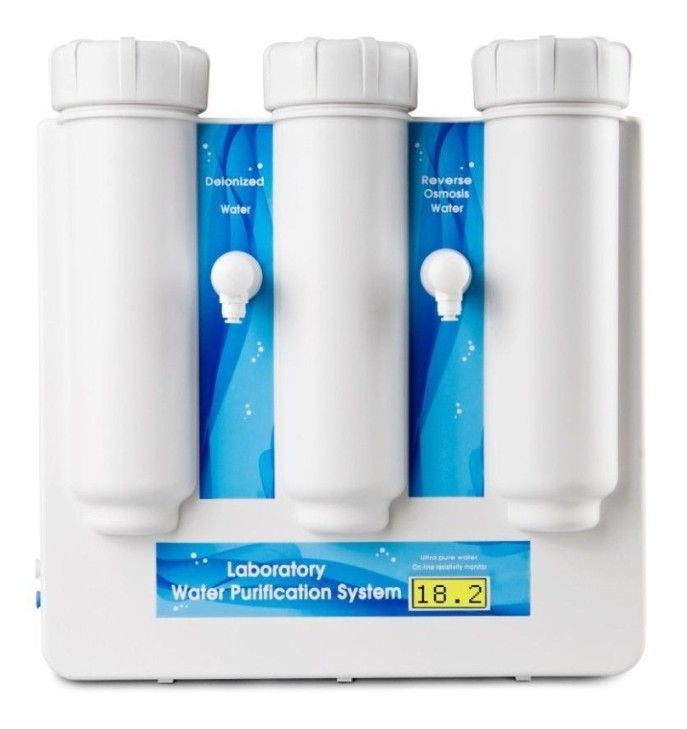
For higher-demand installations, ask whether the selected configuration supports staged filtration, replaceable prefilters, and an accessible membrane housing. A system such as Water Purifier HWP - II should be assessed not only on output specification but also on the practical time needed to access consumables during a normal clinic day.
Frequently Asked Questions
How much Water Purifier capacity does a five-room veterinary clinic need?
A five-room general practice commonly falls in the 30–45 L/day planning range when it performs routine surgery, dental procedures, and in-house laboratory work. Add a 25–50% capacity margin if several departments draw water during the same period or if feed-water temperature and pressure fluctuate.
Should a veterinary clinic use a storage tank or direct-feed purification?
A storage tank is useful where short, high-demand periods exceed the purifier’s immediate production rate. Direct feed can work for steady, low-volume demand, but it requires reliable inlet pressure and a clear understanding of what happens when several devices request water at once.
What consumables should be priced before purchasing a Water Purifier?
Request annual pricing and lead times for sediment and carbon prefilters, deionization cartridges where used, reverse-osmosis membranes, sanitizing materials, pump components, solenoids, and conductivity probes. Consumable availability can matter more than the initial equipment price.
Can one purifier serve the laboratory, dental room, and sterilization area?
It can, provided its output, storage, plumbing layout, and final-water quality meet the strictest connected device requirement. Separate outlets or reserve tanks may be preferable when an autoclave demand spike could interrupt laboratory or dental workflows.
Data Summary: Optimization Impact
| Decision Area | Working Benchmark | Operational Result |
| Daily sizing | 15–60 L/day planning bands | Matches output to actual clinical demand |
| Capacity margin | 25–50% above average use | Reduces peak-period shortages and refill delays |
| Storage sizing | One busy block of demand | Supports workflow without holding excessive stagnant water |
| Maintenance control | Daily, weekly, monthly, annual tasks | Improves reliability and preserves connected equipment |
| Supplier assessment | Consumables, parts, service, compliance | Reduces avoidable downtime and import risk |
The purchasing decision should end with a site-specific demand sheet: connected devices, liters used per day, peak draw periods, feed-water condition, storage requirement, drain availability, power supply, and local service coverage. That record makes it easier to compare Water Purifier configurations on operational fit rather than headline output alone.