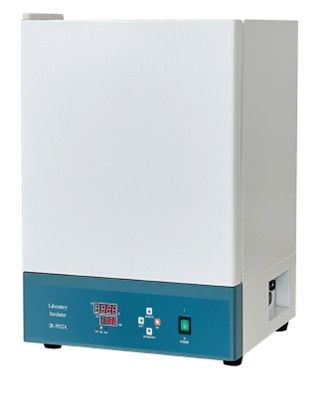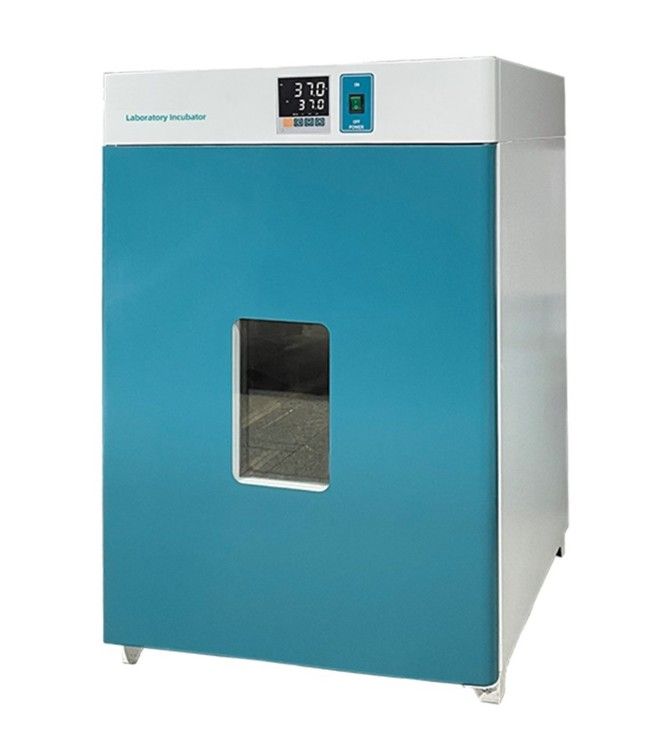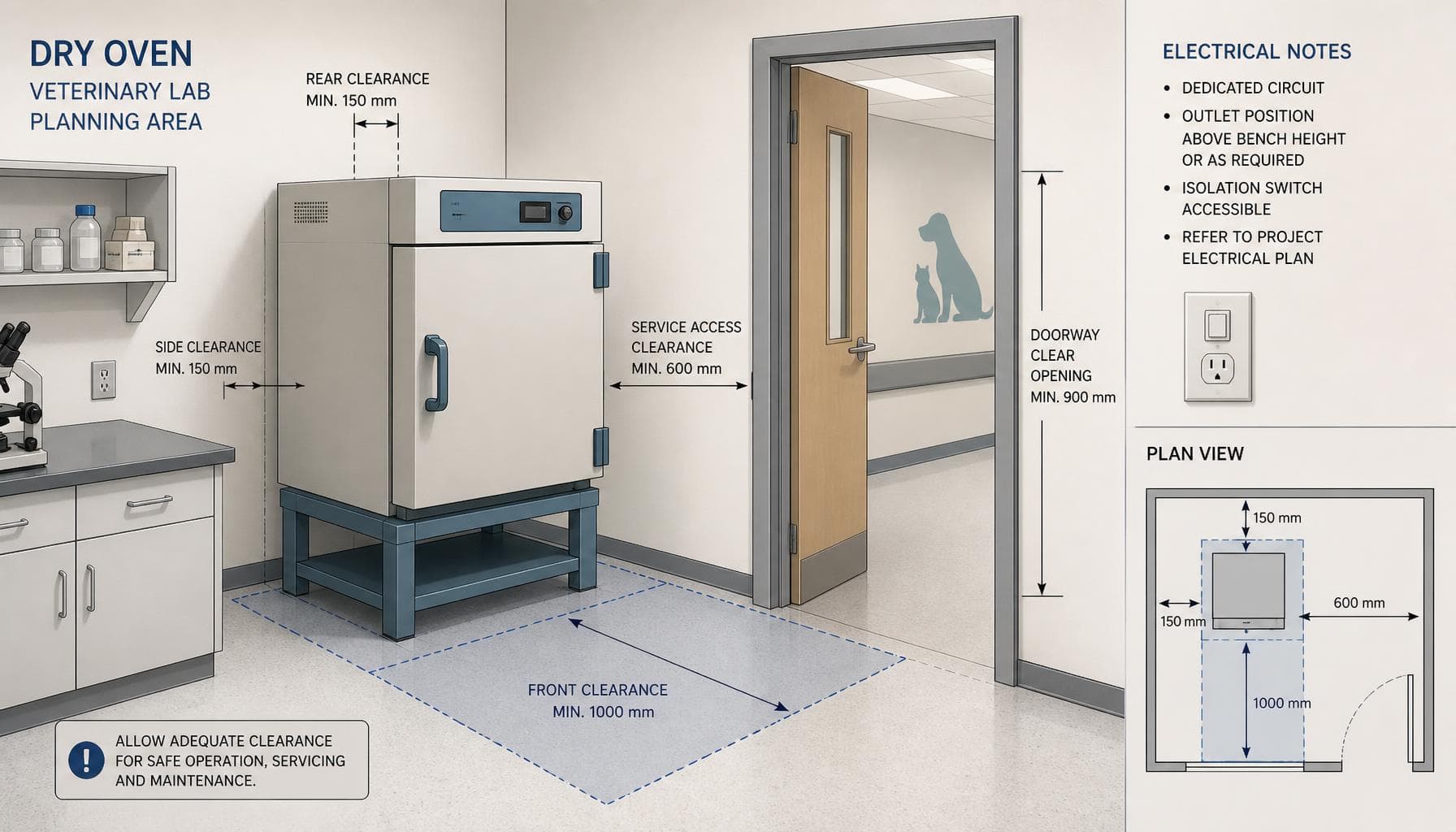
A DHG Series Dry Oven purchase should begin with infrastructure and supplier accountability rather than temperature settings. The supplied product data identifies eight models with chamber capacities from 25 L to 420 L, power ratings from 500 W to 4,000 W, and either 110 V 60 Hz or 220 V 50 Hz supply options. Those differences affect circuit planning, room access, bench or floor placement, and freight handling.
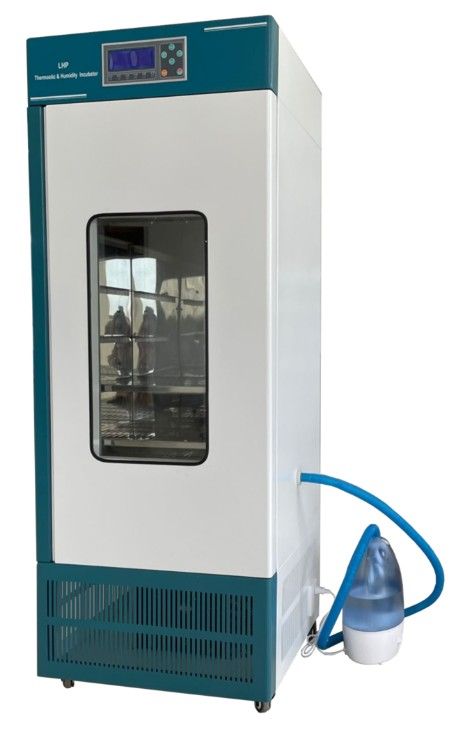
For veterinary laboratories, a dry oven may be considered for laboratory drying, baking, or heat-treatment workflows when those workflows are defined by the clinic’s own procedures. It should not be treated as interchangeable with a biochemical incubator, which is documented for a 5–60°C temperature range and incubation applications. A laboratory incubator has clinical value where a controlled-temperature environment is needed for laboratory workflows; the procurement team should therefore establish whether the intended work actually calls for incubation or for dry heat before comparing cabinet volume.
Evidence Available for This Decision
The configuration data discussed here comes from the manufacturer-supplied listing for the DHG Series Dry Oven. It documents model names, capacities, working-chamber dimensions, power ratings, temperature ranges, display resolution, stated temperature fluctuation, timer range, voltage options, external dimensions, package dimensions, and shipping weights.
The supplied record describes microprocessor control, a double glass observation window, digital displays for set and actual temperature, a running timer, a stainless-steel interior with semicircular chamber corners, PID self-tuning, an over-temperature alarm, and an automatic alarm after operation.
It does not provide a price, destination-specific import documentation, certification records, an installation manual, a preventive-maintenance schedule, a cleaning protocol, parts lists, warranty terms, service response terms, or training scope. These items need to be requested for the exact model and destination before issuing a purchase order.
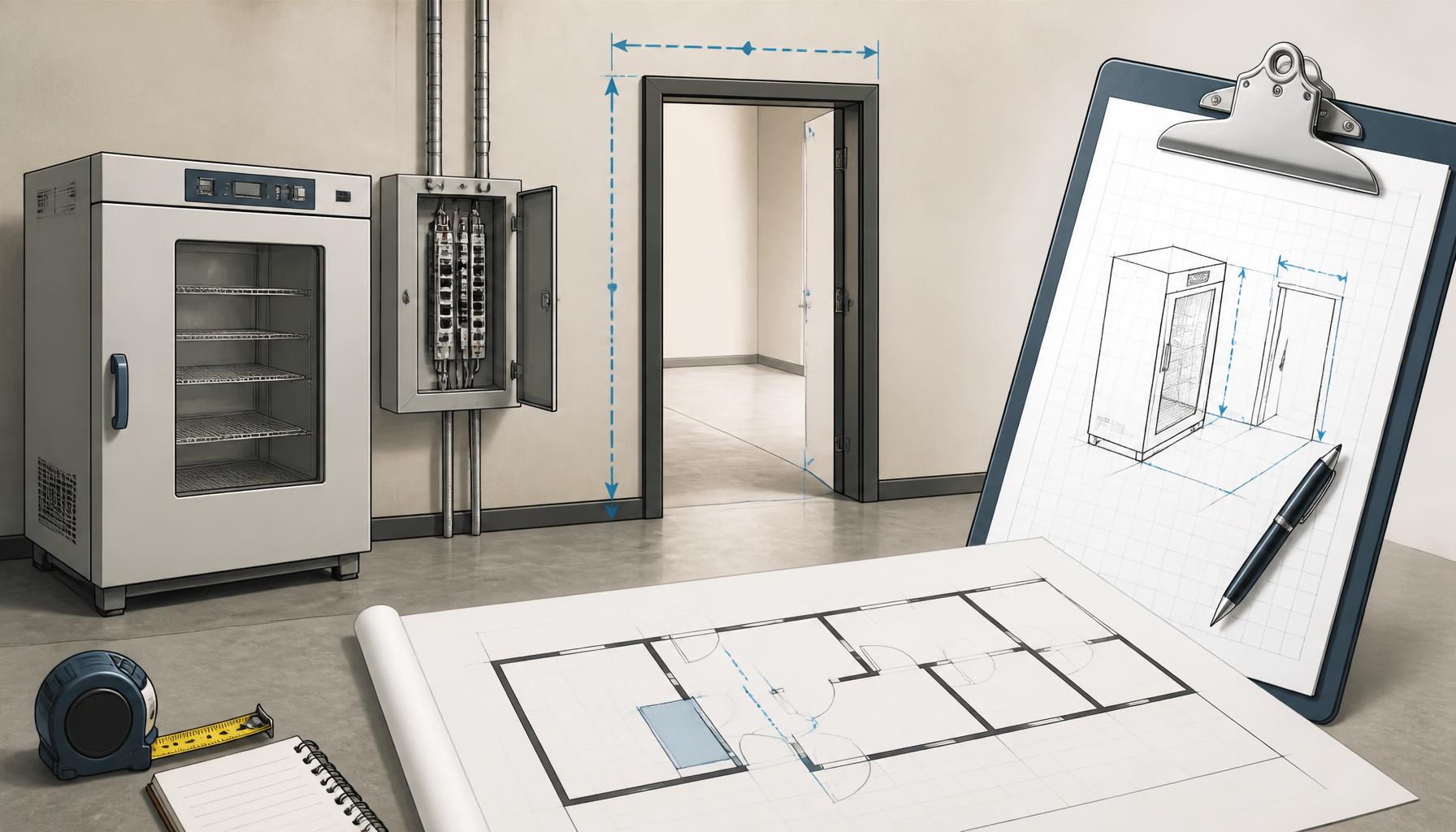
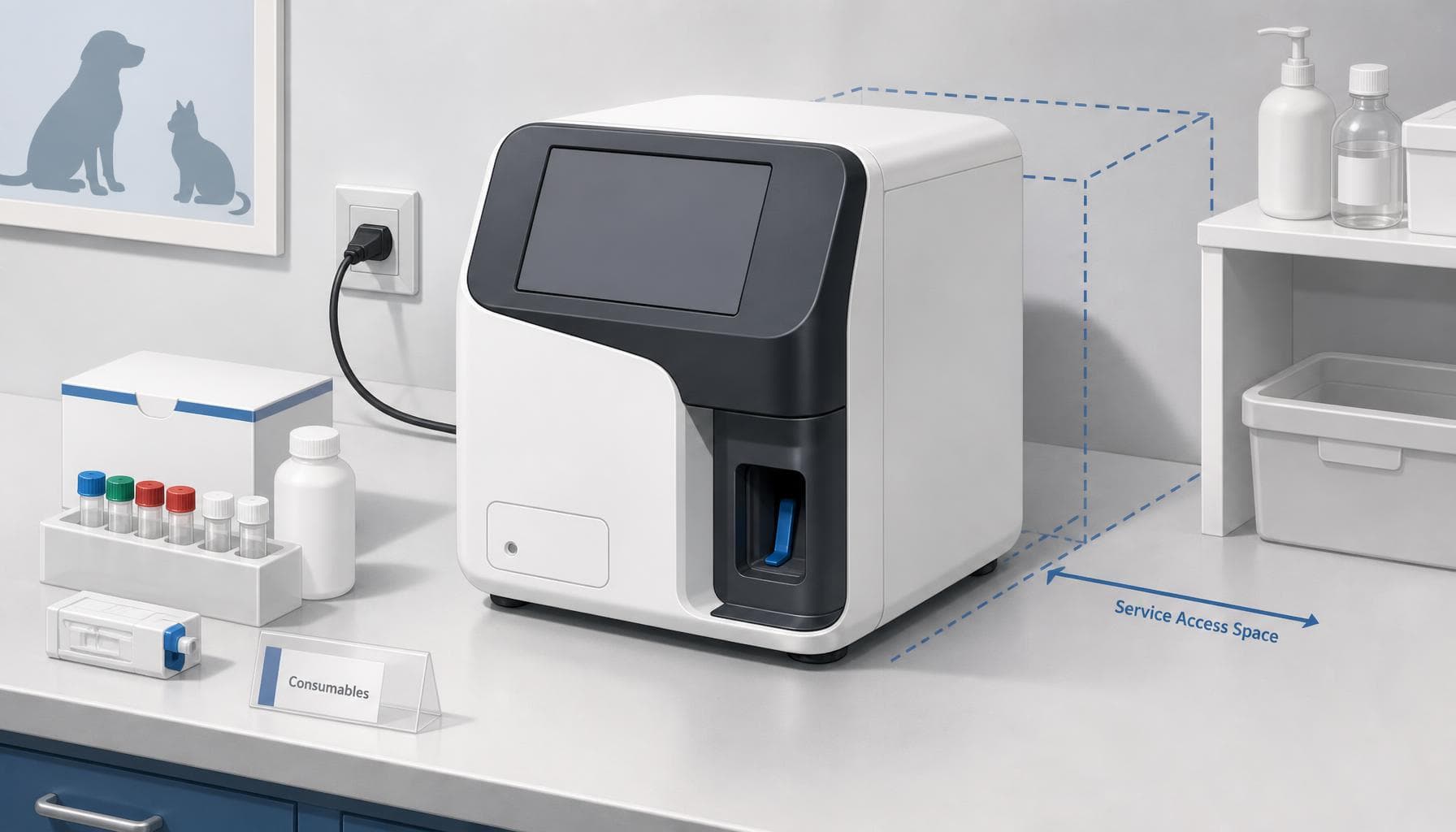
AI-generated illustration for procurement planning; it does not depict an installed unit or a verified site requirement.
What the Specifications Support
The documented capacity is useful only when considered alongside usable chamber geometry. A 25 L DHG-9023A lists a 300 × 300 × 275 mm working space, while the 420 L DHG-9423A lists 600 × 550 × 1,300 mm. The larger cabinet offers substantially more vertical internal space, but it also has a stated external size of 870 × 1,000 × 1,500 mm and a gross weight of 210 kg. Procurement should review delivery paths, lift access, floor location, and final-position access before selecting on capacity alone.
Power is the other early filter. The DHG listings range from 500 W for the 25 L DHG-9023A and 40 L DHG-9030A to 4,000 W for the 420 L DHG-9423A. The listing gives 110 V 60 Hz or 220 V 50 Hz as voltage options, but it does not specify plug type, branch-circuit requirements, local connector configuration, or whether a unit is supplied for one voltage or convertible between them. Those are not details to leave to a freight forwarder or local electrician after arrival.
The listed 50–200°C models are DHG-9023A, DHG-9053A, DHG-9123A, and DHG-9423A. The listing assigns a 50–300°C range to DHG-9030A, DHG-9070A, DHG-9140A, and DHG-9240A. All listed models show 0.1°C resolution, ±1°C temperature fluctuation, and a 0–9,999 minute timer. These values describe the product listing; they do not replace model-specific documentation needed for a clinic’s quality system or intended laboratory procedure.
Compare the Documented Configurations
| Model | Capacity | Working size | Rated power | Listed temperature range | External dimensions |
| DHG-9023A | 25 L | 300 × 300 × 275 mm | 500 W | 50–200°C | 570 × 530 × 460 mm |
| DHG-9053A | 50 L | 415 × 375 × 345 mm | 1,000 W | 50–200°C | 690 × 610 × 530 mm |
| DHG-9123A | 105 L | 550 × 370 × 520 mm | 1,500 W | 50–200°C | 720 × 700 × 720 mm |
| DHG-9423A | 420 L | 600 × 550 × 1,300 mm | 4,000 W | 50–200°C | 870 × 1,000 × 1,500 mm |
| DHG-9030A | 40 L | 350 × 350 × 350 mm | 500 W | 50–300°C | 620 × 630 × 520 mm |
| DHG-9070A | 70 L | 450 × 350 × 450 mm | 1,000 W | 50–300°C | 620 × 710 × 620 mm |
| DHG-9140A | 140 L | 550 × 450 × 550 mm | 1,500 W | 50–300°C | 720 × 780 × 750 mm |
| DHG-9240A | 225 L | 500 × 600 × 750 mm | 2,000 W | 50–300°C | 770 × 840 × 980 mm |
For a small companion-animal practice with intermittent laboratory demand, the lower-capacity models may reduce the burden of finding space and matching electrical supply. That conclusion should be checked against the actual physical dimensions of trays, containers, or laboratory items the practice expects to place in the chamber.
A referral hospital, equine hospital, or mixed-animal facility may need more internal volume or vertical clearance for its planned laboratory workload. In that setting, the larger DHG-9423A deserves separate facilities review because its 4,000 W rating, 1,500 mm height, and 210 kg gross shipping weight create different installation and receiving questions from the smaller bench-scale units.
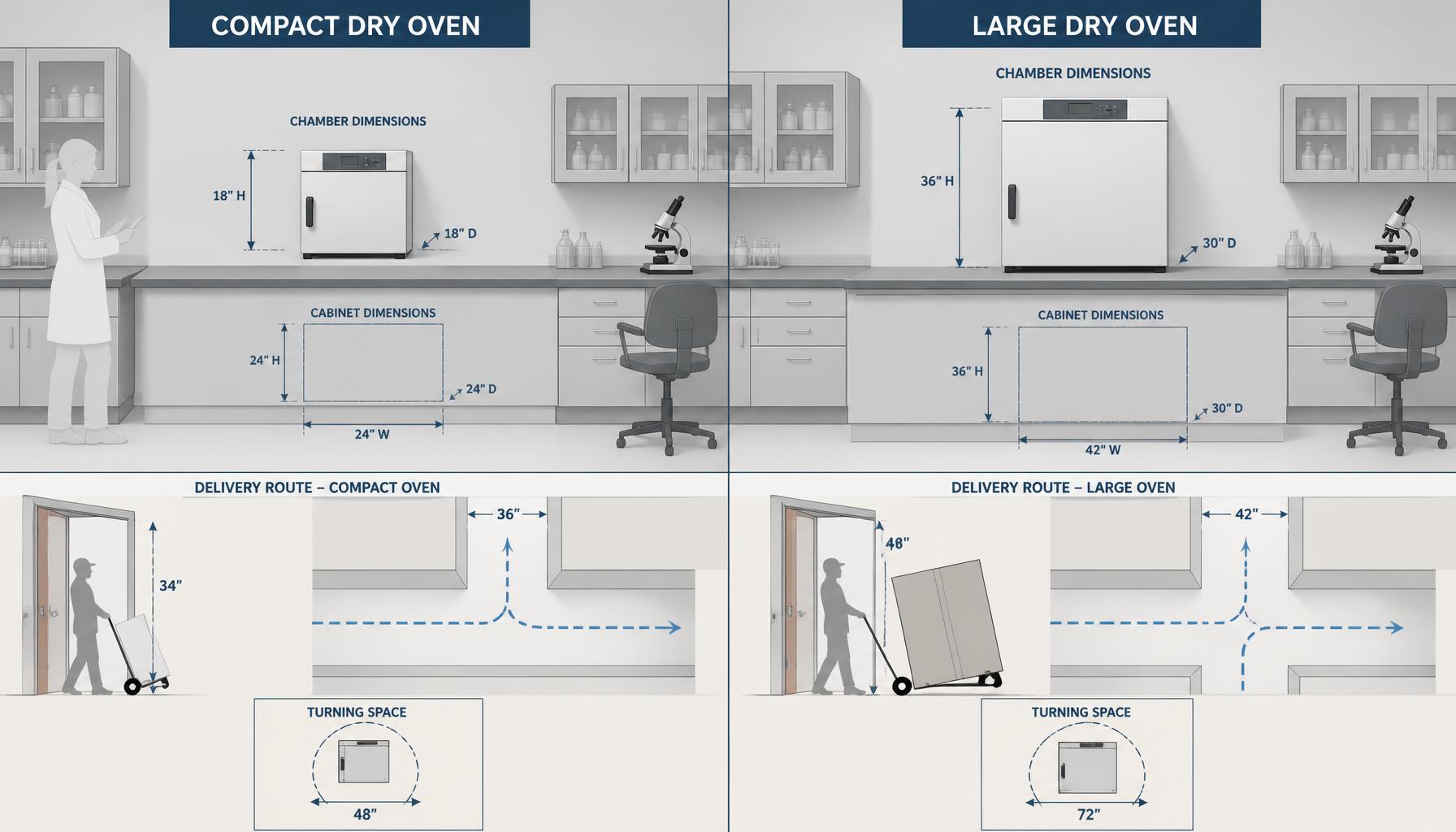
AI-generated illustration showing a configuration comparison concept, not a performance test or a recommendation for a specific model.
Prepare a Model-Specific Enquiry
A usable quotation request should identify the exact DHG model, destination country, intended voltage and frequency, and the party responsible for site readiness. Asking only for “a dry oven” creates too much room for assumptions about electrical configuration, accessories, and after-sales support.
- Confirm the exact voltage, frequency, plug type, supplied power cord, circuit requirement, and any grounding requirement for the quoted model.
- Request the external dimensions, packed dimensions, gross weight, delivery orientation, unloading requirements, and any manufacturer-stated installation clearances.
- Ask which shelves, racks, probes, fuses, door seals, heating components, controllers, display components, and glass-door parts are included, optional, or available as replacement parts.
- Request lead times and ordering identifiers for consumable or wear-related components, as well as the stocking location and expected availability of critical spare parts.
- Clarify who provides commissioning, user orientation, preventive-maintenance support, warranty assessment, remote technical support, and on-site repair in the destination market.
- Request the cleaning materials and cleaning restrictions specified for the stainless-steel chamber, glass window, seals, and exterior surfaces.
- Ask for the documents available with the shipment, including commercial invoice, packing list, electrical documentation, certificate records if available, warranty terms, and model-specific manuals.
Training should be defined as a deliverable, not assumed from the presence of a digital controller. The supplier should state whether training covers receiving inspection, placement, permitted use, routine cleaning responsibilities, documentation, and escalation routes for service. If training is remote, the purchaser should establish who within the clinic will own the records and coordinate with the importer or service provider.
Procurement Implications
The DHG series listing supports a practical first comparison: choose between the 50–200°C and 50–300°C model groups, then filter by chamber geometry, cabinet footprint, power rating, and destination electrical supply. It does not support conclusions about local regulatory acceptance, service quality, replacement-part availability, or total ownership cost.
For a clinic importing one unit, the decisive question may be whether the supplier can document a correct electrical build and provide a credible route to service parts after delivery. For a hospital purchasing a larger model, receiving access and room infrastructure may be equally important. Neither issue is resolved by a capacity figure alone.
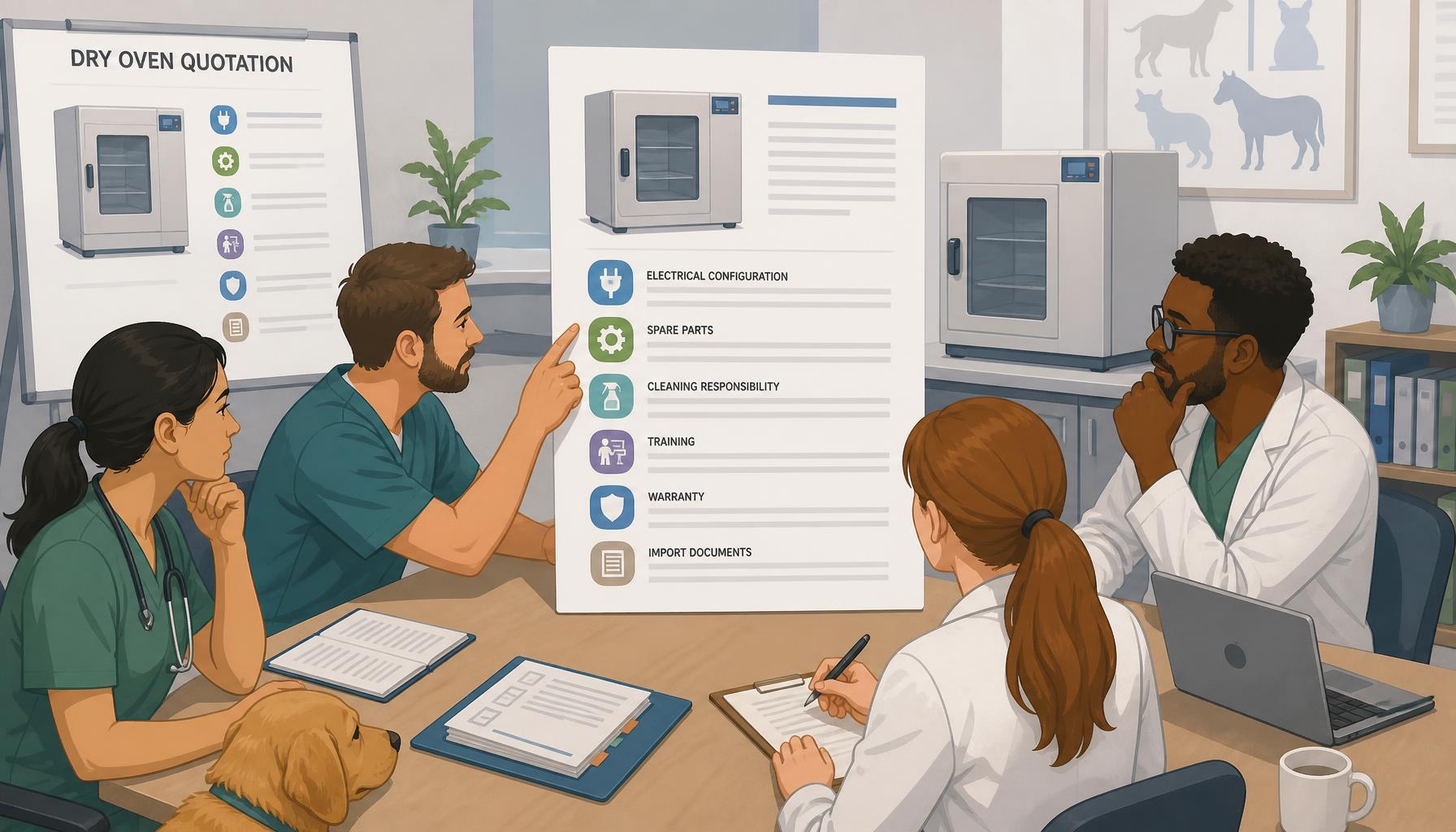
AI-generated illustration of a procurement review process; it does not represent a supplier quotation or a clinical installation.
When dry heat is not the actual laboratory requirement, compare the intended workflow with the operating range and purpose of available biochemical incubator models before committing floor space and import budget. The right decision is the one supported by the clinic’s laboratory need, site infrastructure, and written service commitments—not by cabinet size alone.