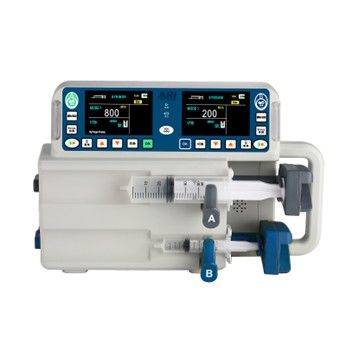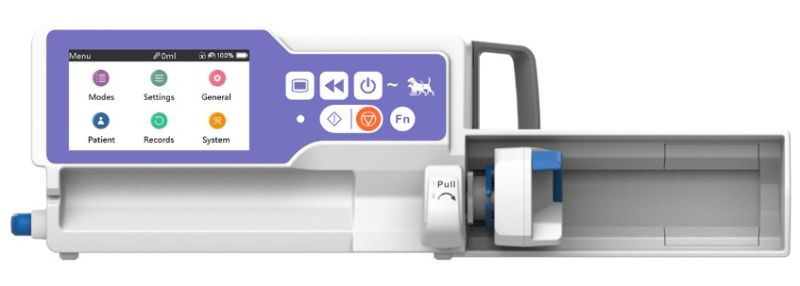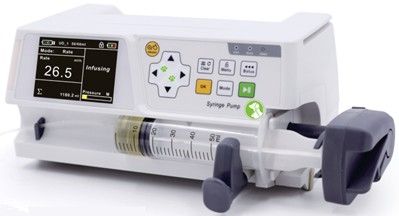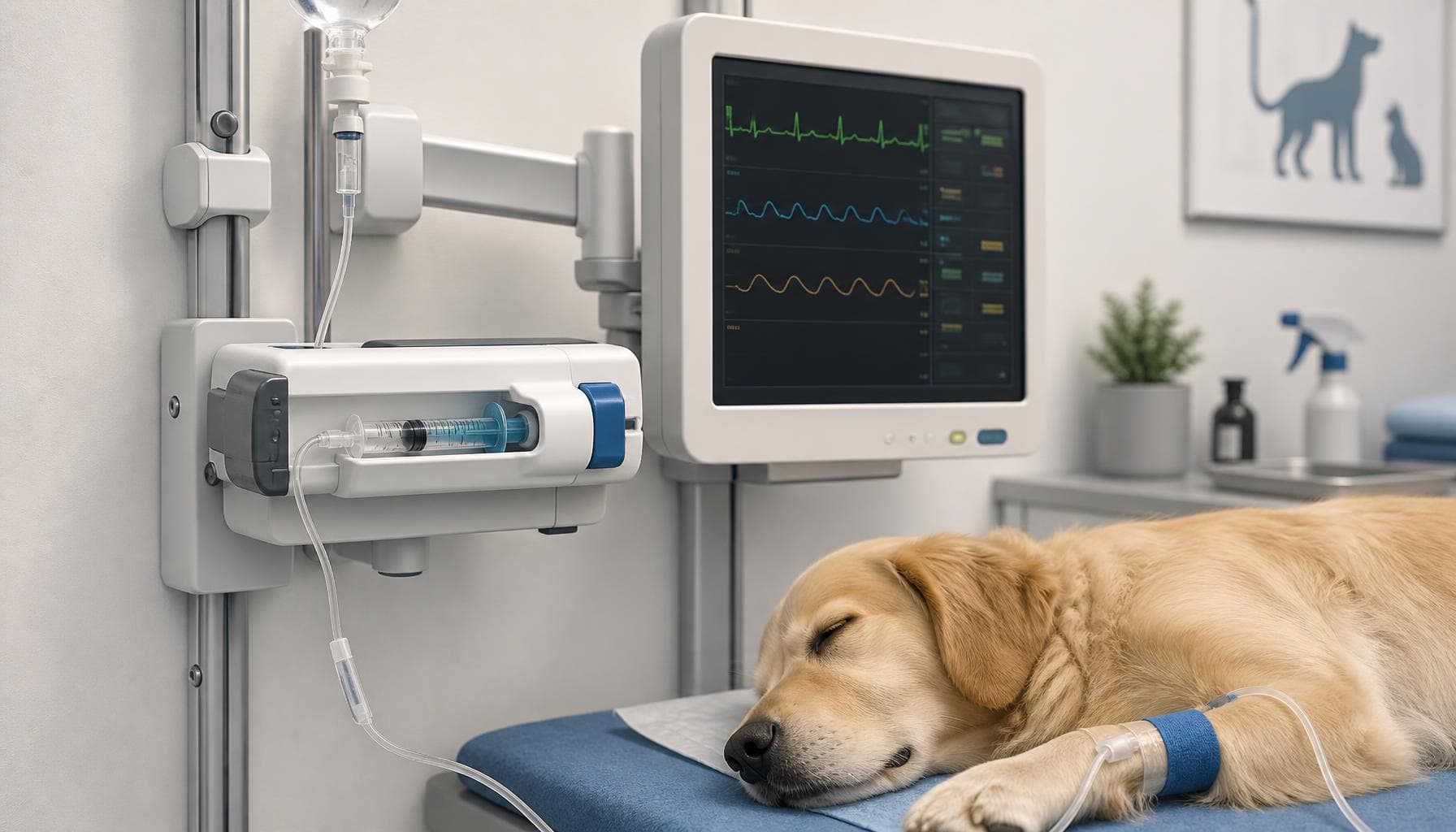
For veterinary practices, a syringe pump is primarily a controlled-delivery device for small-volume fluid therapy, anesthetic adjuncts, analgesia, critical-care infusions, and other treatments where a gravity set may not provide sufficient control. Its clinical value depends not only on the stated accuracy or rate range, but also on whether the clinic can support the required syringe calibration, mounting, battery management, cleaning process, staff training, and long-term service arrangements.
When comparing equipment in the Syringe Pump category, published specifications should be treated as a starting point for procurement review. A model may state broad syringe compatibility, multiple infusion modes, or pressure alarms, but the purchaser still needs written confirmation of the syringe brands supported, included accessories, service responsibilities, and documentation supplied for the destination market.
Evidence Available for This Decision
The configuration information discussed below comes from manufacturer-supplied product data for the SP-30, SP-50, SP-70, and dual-channel SP-50D syringe pumps. These materials provide specifications for selected rate ranges, battery claims, alarm functions, physical dimensions, ingress-protection classifications, and stated accuracy conditions.
No independent clinical testing, veterinary case studies, pricing, certification documents, import registrations, service-level agreements, spare-parts lists, or destination-specific regulatory approvals were supplied with the product information. The product data also does not establish whether a given syringe brand is locally available, whether batteries are field-replaceable, or which party is responsible for installation, acceptance checks, preventive maintenance, and repairs.
That distinction matters. A published accuracy claim is meaningful only under the manufacturer’s stated condition of correct syringe calibration. It should not be read as confirmation that every locally purchased syringe will deliver the same result without documented compatibility and calibration support.
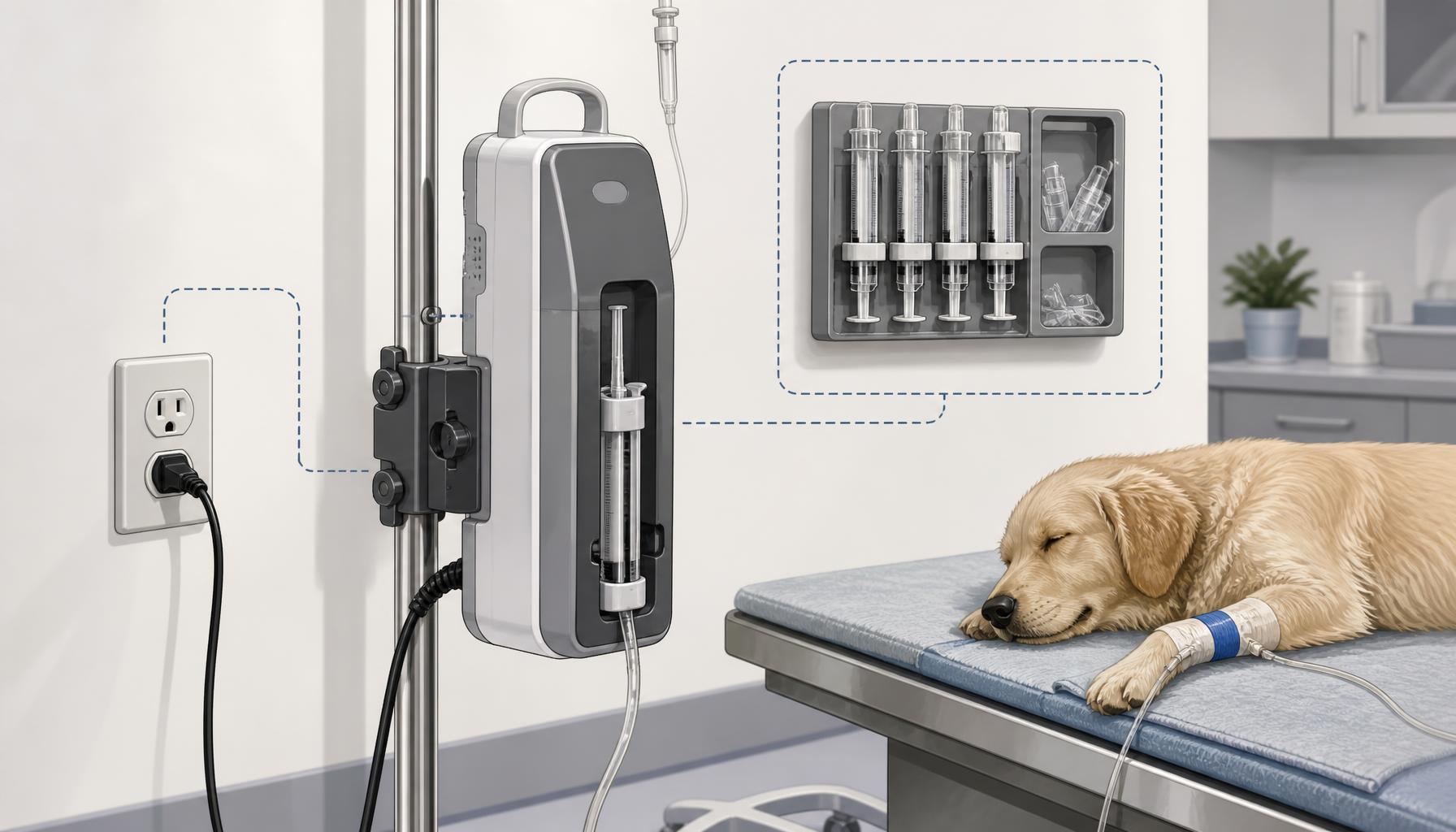
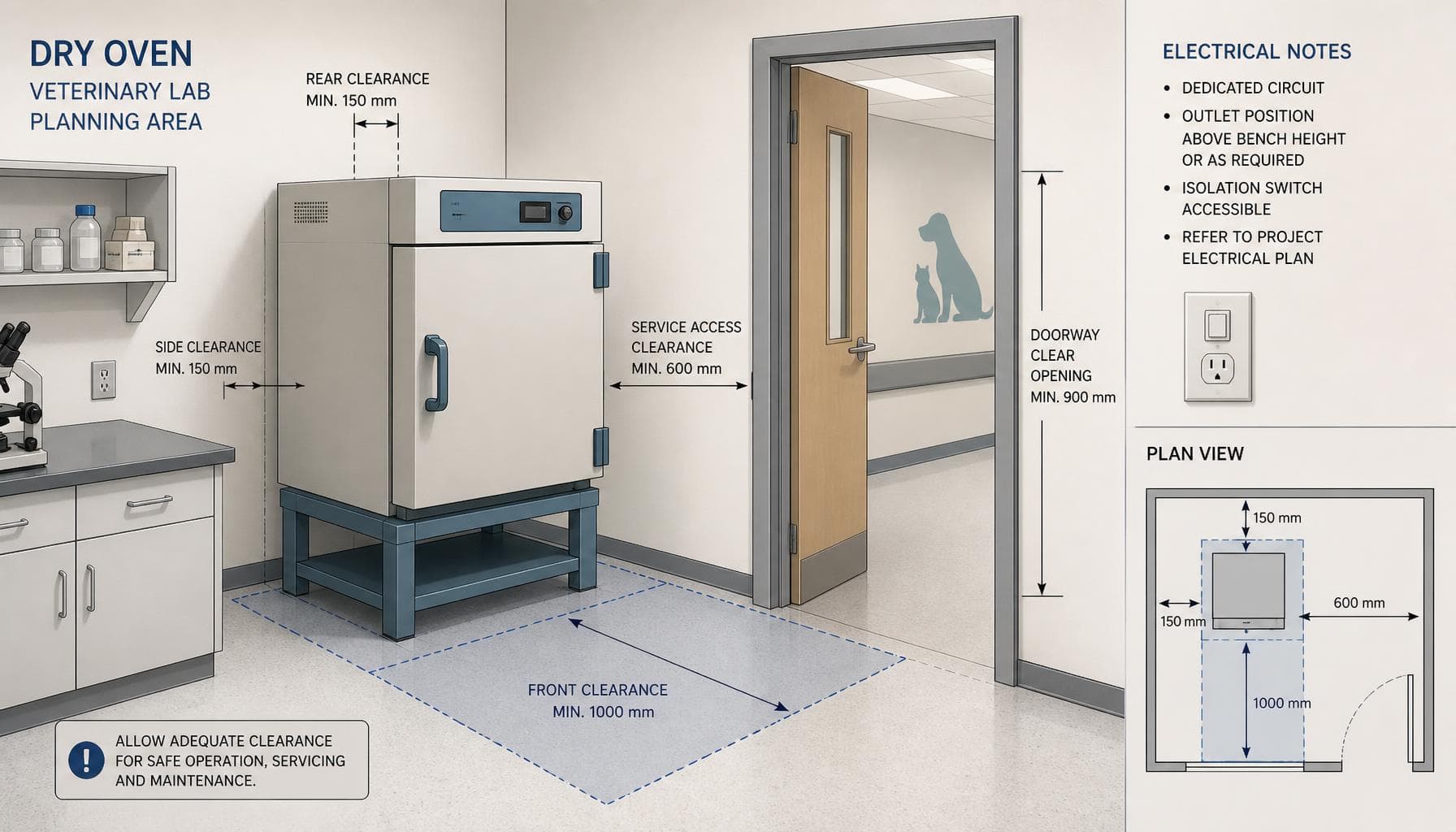
AI-generated illustration for planning purposes; it is not a photograph of a supplied model, installation, or clinical test.
What the Specifications Support
The supplied data supports several practical comparisons. The SP-30 is documented for calibrated 5, 10, 20, 30, 50, and 60 mL syringes. Its published delivery accuracy is ±2% with correct calibration. The model has audible and visual alarms for syringe position, occlusion, completion, near-empty status, battery condition, and other operating states. It is listed with three occlusion-pressure settings, a rechargeable battery with an 8–10 hour stated operating time, and vertical or horizontal mounting options.
The SP-50 is also described as accepting 5, 10, 20, 30, 50, and 60 mL standard syringes and states ±2% accuracy with correct calibration. Its supplied information lists alarms for loose syringe status, occlusion, empty and near-empty conditions, abnormal rate, battery conditions, infusion completion, inactivity, and syringe-plunger disengagement. The manufacturer also lists dynamic pressure display, adjustable alarm volume, and storage of up to 2,000 events for review or download.
The SP-70 differs in the supplied data by listing a 4.3-inch color touch screen, rate, body-weight, TIVA, and drug-library modes, real-time pressure display, history records of more than 5,000 entries, and optional Wi-Fi. Its documented flow-rate range is 0.01–1500 mL/h, with a minimum increment of 0.01 mL/h. However, the supplied SP-70 material does not state supported syringe sizes. That omission should be resolved before it is considered for a clinic that relies on specific syringe volumes or brands.
The dual-channel SP-50D is relevant where two independent syringe infusions may be required at one patient location. The supplied data describes independent channels, a 3.5-inch color display, adjustable KVO rate, anti-bolus and anti-siphon functions, and a 360-degree rotatable mounting clamp. It also lists 5–60 mL syringe compatibility, ±2% accuracy with correct calibration, and dose-mode parameters including patient weight and dose units. Purchasers should separately confirm whether each channel has independent calibration records, alarm behavior, battery support, and service coverage.
Accuracy is a procurement question, not a standalone number
All four documented configurations state or describe ±2% accuracy, but the qualification is important: the SP-30, SP-50, and SP-50D materials explicitly condition that figure on correct syringe calibration. Before ordering, provide the supplier with the exact syringe brands, product lines, and sizes the practice intends to buy. The SP-30 configuration notes specifically request this information before delivery.
For a small-animal referral hospital using multiple syringe sizes in ICU and anesthesia, syringe-brand compatibility and the process for documenting calibration may have greater procurement importance than a broad maximum rate. For an ambulatory equine service or a compact procedure room, physical mounting, battery runtime, available DC power options, and protection against moisture may be more consequential.
Alarm listings need to be matched to the clinic’s monitoring model
Alarm lists can indicate the conditions a pump is designed to detect, but a longer list does not establish how the alarm will be heard, seen, escalated, recorded, or responded to in a particular facility. The SP-30 is described with audible and visual alarms. The SP-50 adds adjustable alarm-volume information and documented event records. The SP-50D is described with large color alarm lights, while the SP-70 lists adjustable alarm volume and extensive history records.
For emergency and ICU areas where several pumps may be positioned near monitored patients, alarm audibility, sight lines, mounting density, and event-history access deserve direct evaluation. In a lower-throughput outpatient surgical area, the more immediate questions may be whether the pump can be securely mounted, whether staff can receive model-specific training, and whether one-channel capacity is sufficient for the expected caseload. A veterinary patient monitor may be part of the same treatment-space plan, but the pump’s alarm system should not be assumed to integrate with it unless the supplier documents that capability.
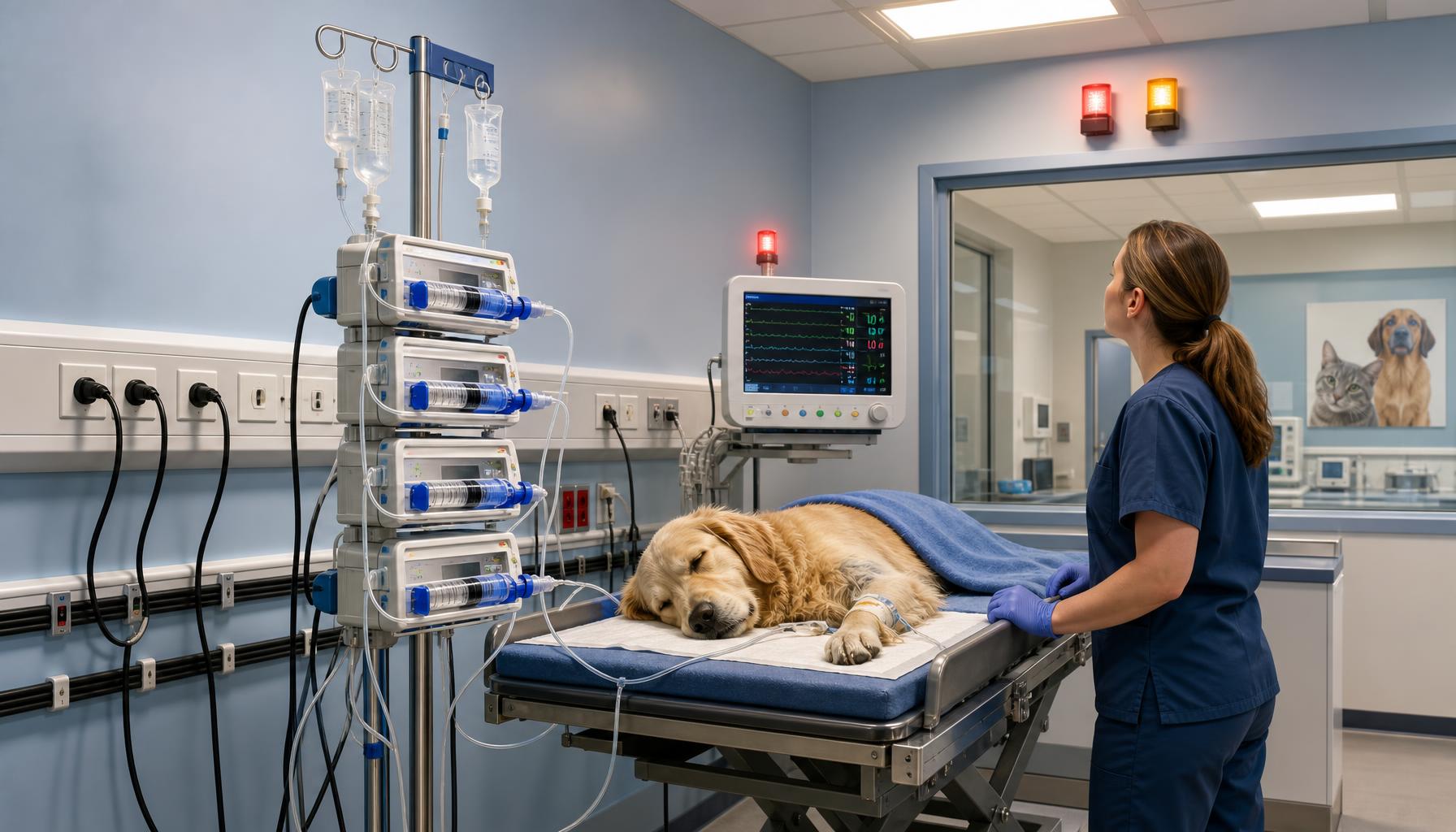
AI-generated illustration for procurement planning; it does not represent a validated workflow, connected-system compatibility, or actual alarm performance.
Compare the Documented Configurations
| Decision point | SP-30 | SP-50 | SP-70 | SP-50D dual channel |
| Documented syringe sizes | 5, 10, 20, 30, 50, 60 mL after correct calibration | 5, 10, 20, 30, 50, 60 mL standard syringes | Not stated in supplied data | 5, 10, 20, 30, 50, 60 mL standard syringes |
| Published accuracy | ±2% with correct calibration | ±2% with correct calibration | ±2% | ±2% with correct calibration |
| Documented flow-rate information | 0.1–2000 mL/h, depending on syringe size | 0.1–2000.0 mL/h | 0.01–1500 mL/h | 0.1–2000.0 mL/h by listed syringe size; programmable rate mode also listed |
| Battery claim | 8–10 hours listed | 12 hours of continuous operation listed | More than 12 hours at 5 mL/h listed | Battery operating time not stated in supplied data |
| Power information | AC 100–240 V; DC 12–15 V | AC 100–240 V, ±10%, 50/60 Hz | AC 110–240 V; external DC 12 V | Not stated in supplied data |
| Pressure or occlusion information | Three settings: 60 ±15, 90 ±15, and 120 ±15 kPa | Three settings: 60 ±15, 90 ±15, and 120 ±15 kPa | Real-time pressure display stated; pressure thresholds not supplied | Dynamic pressure display stated; threshold data not supplied in provided excerpt |
| Documented data or history function | Power-loss memory; RS-232 interface | Up to 2,000 stored events, with review and download stated | More than 5,000 history entries; Mini USB; optional Wi-Fi | More than 2,000 historical records stated |
| Ingress-protection classification | IP34 | IPX4 | IP24 | IP44 |
The table is not a performance ranking. It shows what is documented in the supplied information and where a written supplier response is still needed. For example, the SP-70’s lower stated rate increment may be relevant to practices that require very low-rate infusion planning, but its syringe-size compatibility must be confirmed. Likewise, a dual-channel unit can reduce the number of housings at a treatment station, but it also raises questions about channel-specific training, cleaning access, servicing, and contingency planning if one channel requires repair.
Prepare a Model-Specific Enquiry
A useful enquiry separates included equipment from optional accessories and separates manufacturer claims from commitments that apply to the purchaser’s location. Ask for a response tied to the exact model, configuration, and intended syringe range rather than a generic brochure.
- Provide the complete list of approved syringe manufacturers, product lines, and sizes for the exact pump configuration, and state how compatibility or calibration information will be delivered and maintained.
- List all items included in the quoted package: AC lead, battery, pole clamp, rail mount, DC lead, protective cover, communications cable, manuals, calibration documentation, and software or data-download accessories where applicable.
- State who performs installation, incoming inspection, user orientation, preventive maintenance, battery replacement, repair, and post-repair functional checks.
- Provide the recommended cleaning and disinfection materials, surfaces that must not be exposed to particular agents, and the party responsible for training staff on those instructions.
- Identify consumable and replaceable items, including batteries, clamps, power leads, labels, fuses if applicable, and any model-specific accessories, together with lead times and warranty terms.
- Confirm local service options, turnaround expectations, loan-unit availability if offered, remote technical-support channels, and whether the facility must return the pump internationally for repair.
- Supply applicable certificates, declarations, labeling, manuals, electrical requirements, and import documentation required for the intended destination before shipment.
For a facility importing equipment, the procurement team should also establish who bears responsibility for customs documentation, local electrical-plug configuration, language requirements for manuals, and replacement parts held after the warranty period. None of these points can be inferred from a stated AC input range or an ingress-protection rating.
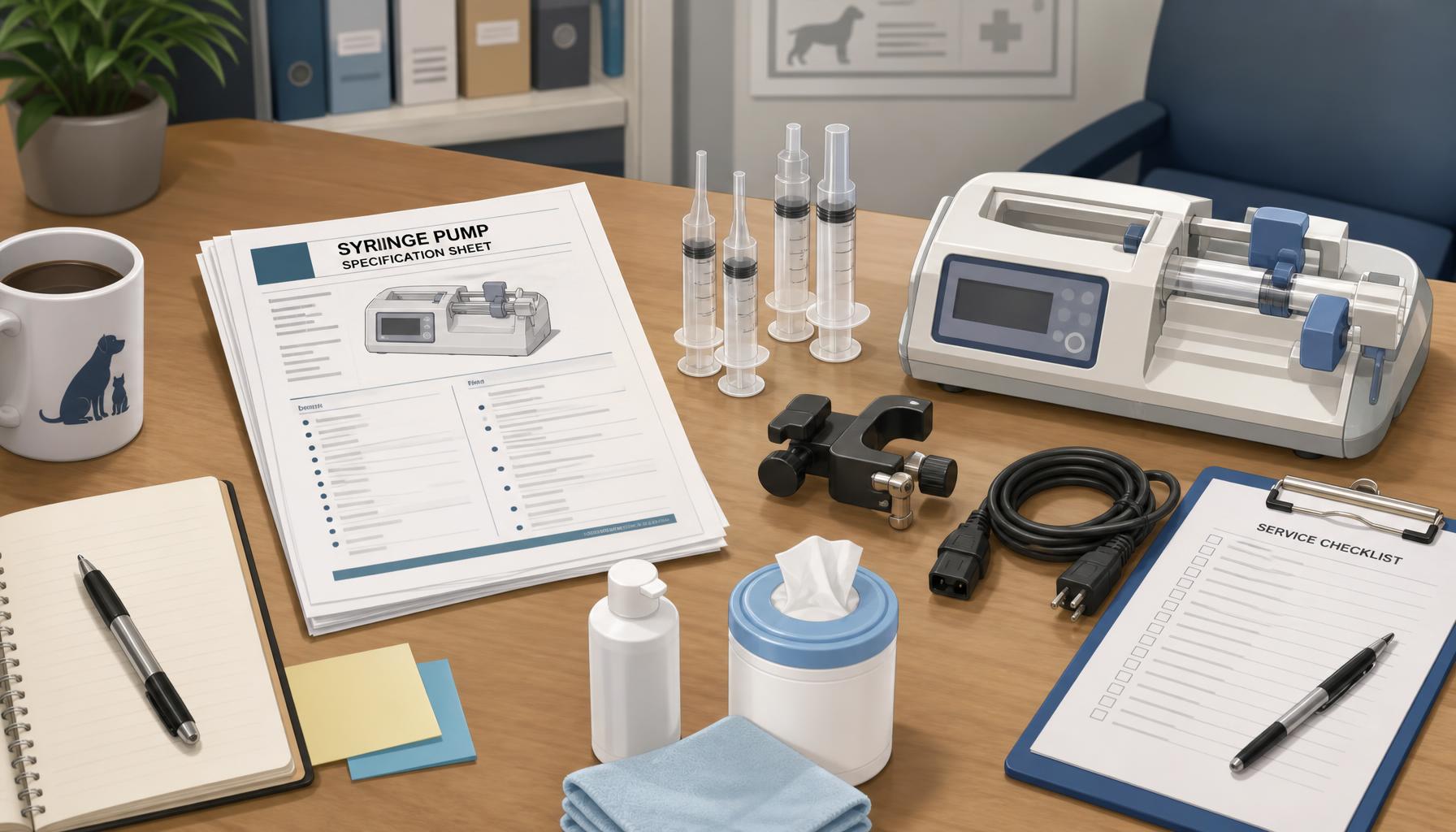
AI-generated illustration for procurement discussion; it does not depict a supplier-approved kit, completed installation, or verified service arrangement.
Procurement Implications
For clinics that primarily need a conventional single-channel syringe pump using established 5–60 mL syringe sizes, the SP-30 and SP-50 documentation provides a relatively direct starting point. Both list compatible syringe sizes, a stated ±2% accuracy condition tied to correct calibration, multiple occlusion settings, and AC input suited to a broad voltage range. The purchase decision should then turn on syringe-brand approval, included mounting hardware, battery support, alarm visibility in the intended area, and access to service.
Where low stated rate increments, a drug library, body-weight mode, larger history capacity, or optional connectivity are decision drivers, the SP-70 may warrant further review. Its supplied specifications document these functions, but its syringe compatibility, local connectivity requirements, and support for optional Wi-Fi need written confirmation before selection.
For ICU, anesthesia, or referral settings where two simultaneous syringe infusions at one station are routinely anticipated, the SP-50D may reduce equipment crowding compared with separate single-channel housings. That potential benefit should be weighed against the clinic’s ability to train staff on a dual-channel interface, maintain both channels, manage cleaning between patients, and obtain timely repair support.
Pricing was not supplied for any configuration. A meaningful quotation should therefore include not only the pump body, but all required mounting components, power accessories, batteries, approved syringe-calibration support, training, documentation, warranty coverage, spare-parts availability, and service arrangements. Those items often determine whether a syringe pump remains usable throughout its expected service life.