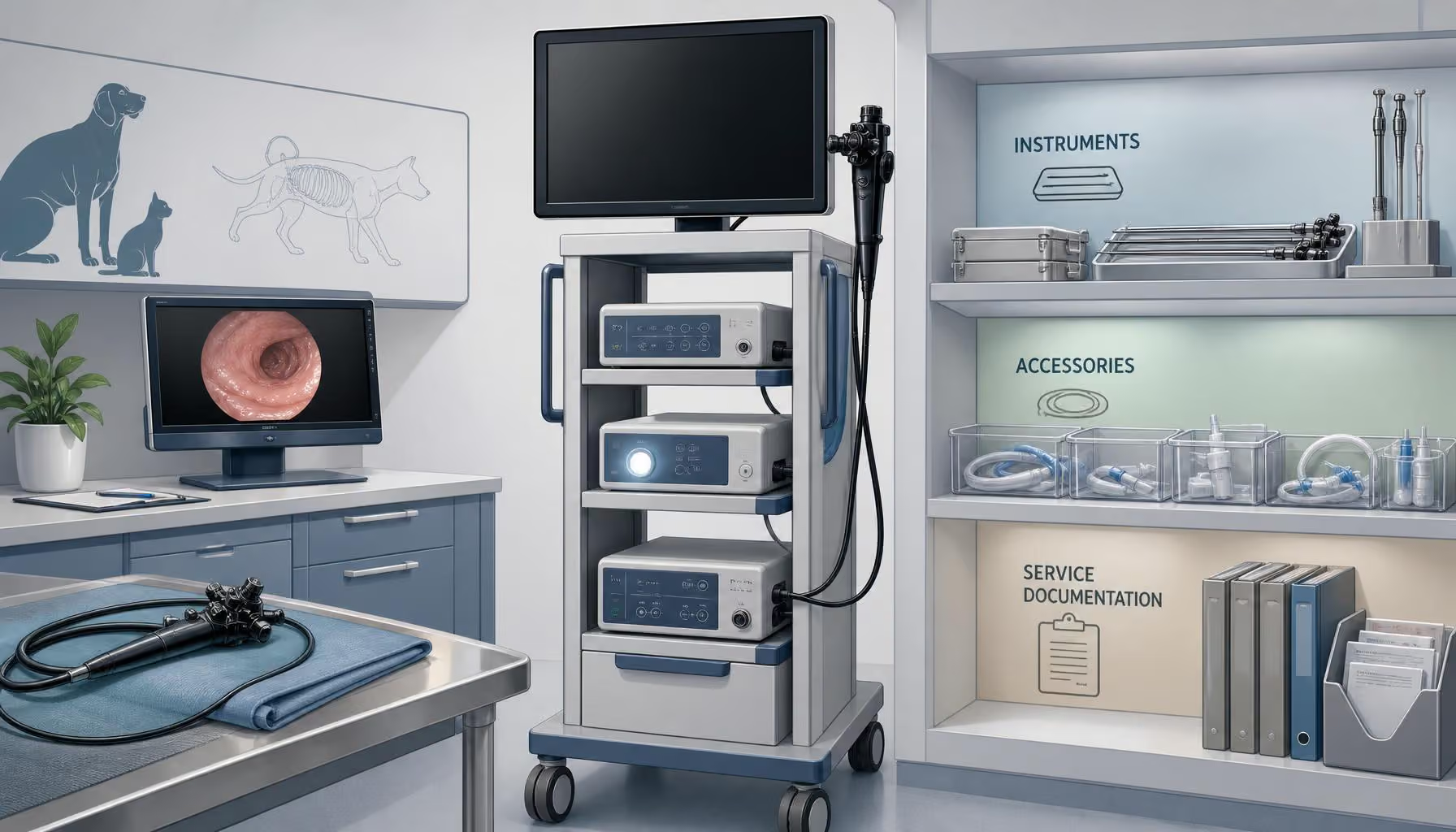
Before approving a VET Laparoscope Endoscope System, clinics should confirm what is installed, who is responsible for reprocessing, which consumables and spare parts are included, and how service support will work after delivery. A Rigid Endoscopy System can support minimally invasive veterinary surgery, but its procurement value depends on a documented equipment scope and realistic support plan.
A veterinary laparoscope endoscope system is a group of imaging, illumination, insufflation, and surgical-support components used to provide visual access during minimally invasive procedures in animal patients.
What should a VET Laparoscope Endoscope System quotation document?
A VET Laparoscope Endoscope System quotation should identify every included component, its model code, its accessory scope, and the service terms that apply to each item.
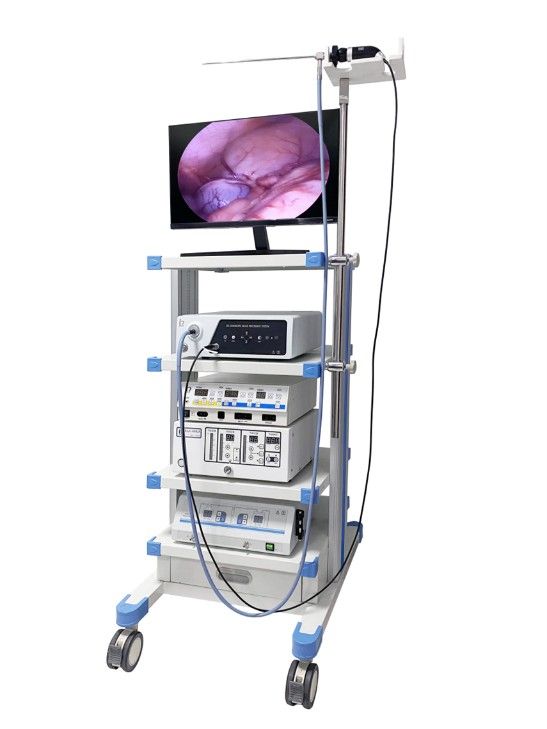
The product-page information for the VET Laparoscope Endoscope System REC-4000 describes an integrated veterinary laparoscopic setup with a Full HD 1080P video processor, LED cold light source, electrosurgical unit, CO2 insufflator, suction pump, irrigation pump, and LCD monitor. That component list is useful as a starting point, not as a substitute for a configuration-specific quotation.
- Ask for a line-item packing list that distinguishes capital equipment, reusable instruments, single-use accessories, cables, tubing, adapters, and installation materials.
- Ask whether the quoted scope includes laparoscopes, camera heads, light guides, trocar sets, insufflation tubing, irrigation and suction tubing, electrosurgical accessories, or only the tower components.
- Ask for serial-number handling, warranty start date, remote-support process, and the party responsible for field service in the destination market.
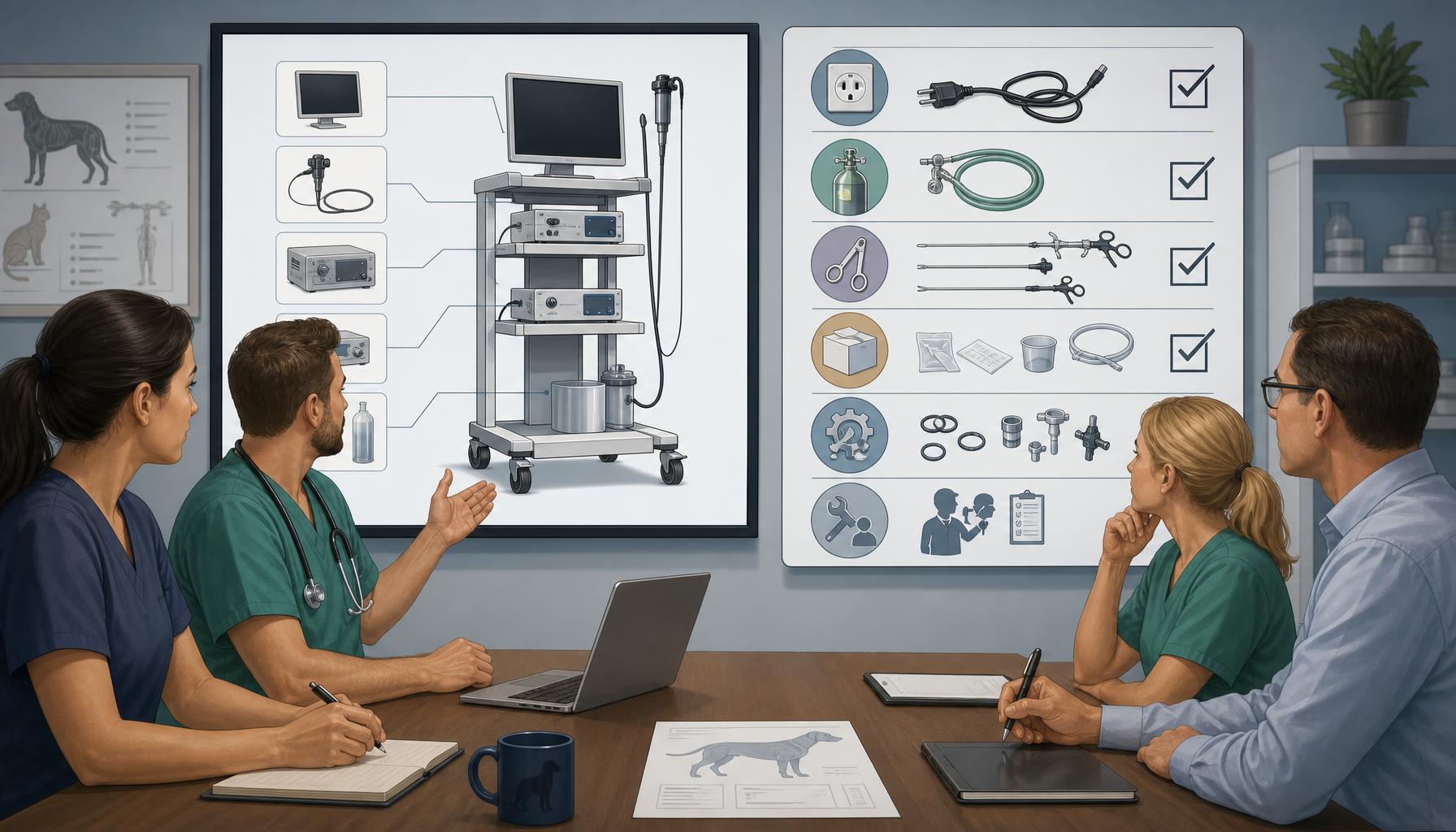
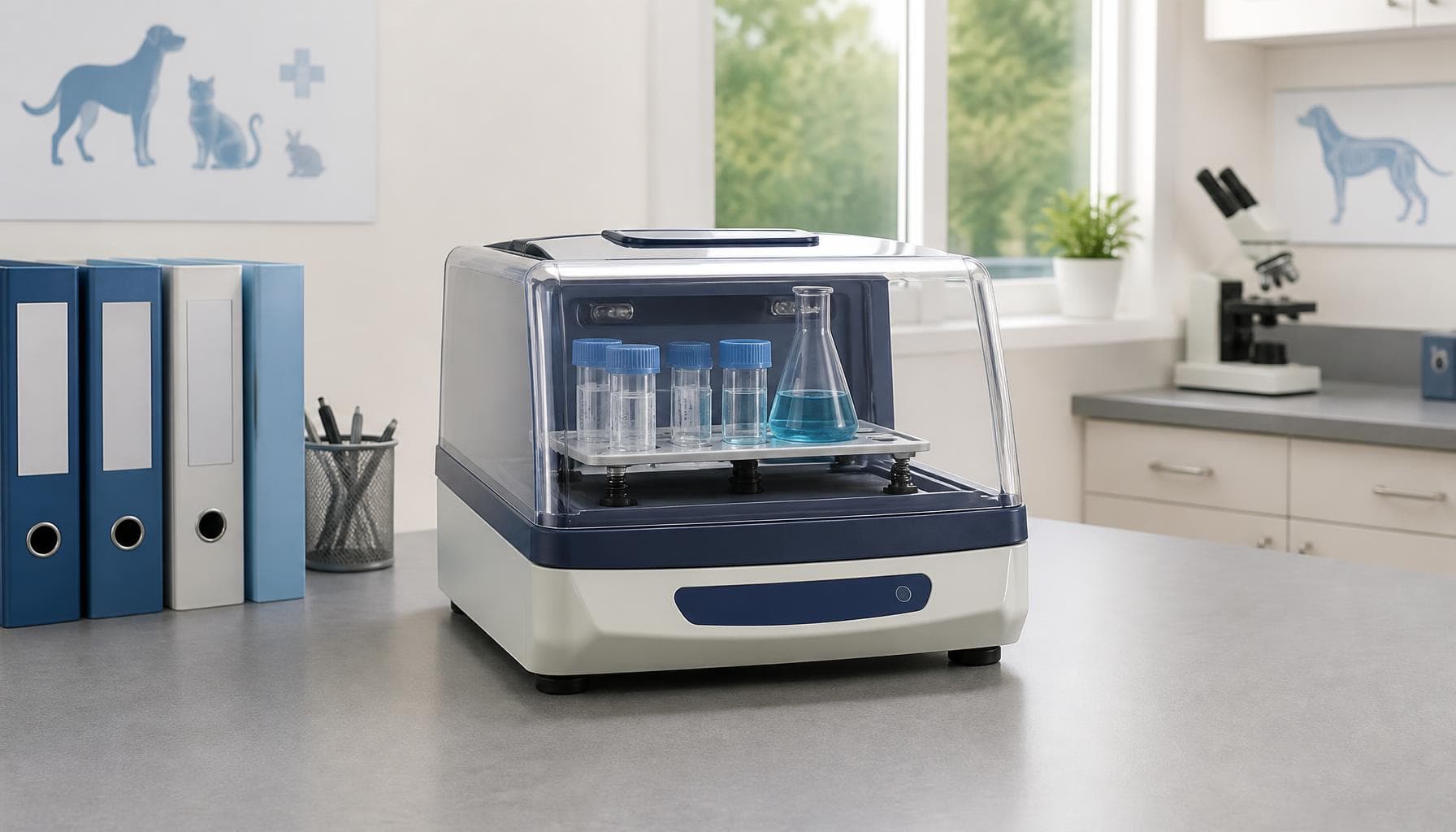
For a clinic comparing several suppliers, an equipment comparison worksheet is most useful when it records included accessories and service exclusions alongside the headline imaging specifications.
Which REC-4000 configuration details affect installation?
The REC-4000 configuration requires the clinic to assess electrical compatibility and equipment placement for individual system components rather than assume one shared utility requirement.
HQS lists a 100–240 V, 50–60 Hz power range for the video processor and light cold source. The same product page lists AC220 V at 50 Hz for the CO2 insufflator and 110/220 V at 50/60 Hz for the electrosurgical unit. The clinic should ask HQS to confirm the electrical requirement for the exact quoted configuration and destination market before preparing outlets, voltage conversion, or protective power equipment.
| REC-4000 component | Documented parameter (unit) | Installation relevance | Need to confirm with HQS |
| Video processor and light cold source | 100–240 V; 50–60 Hz | Electrical supply planning for the integrated imaging and illumination unit | Plug type, supplied power cord, circuit recommendation, and total installed load |
| LED light source | 100 W white LED | Supports planning for the integrated light-source component | Replacement light-source service arrangement and covered parts |
| CO2 insufflator | AC220 V; 50 Hz; 40 VA | Requires destination-market electrical confirmation and CO2 supply planning | Gas-cylinder interface, regulator requirements, tubing scope, and local gas-supply responsibilities |
| Electrosurgical unit | 110/220 V; 50/60 Hz; 1100 VA | May affect electrical circuit planning and operating-room equipment layout | Supplied accessories, compatible instruments, service coverage, and destination-market documentation |
| Video outputs | CVBS, HD-SDI, VGA, DVI-D, HDMI | Allows the clinic to match the system to the intended monitor and recording workflow | Which output cable, monitor, recorder, and display accessories are included in the quotation |
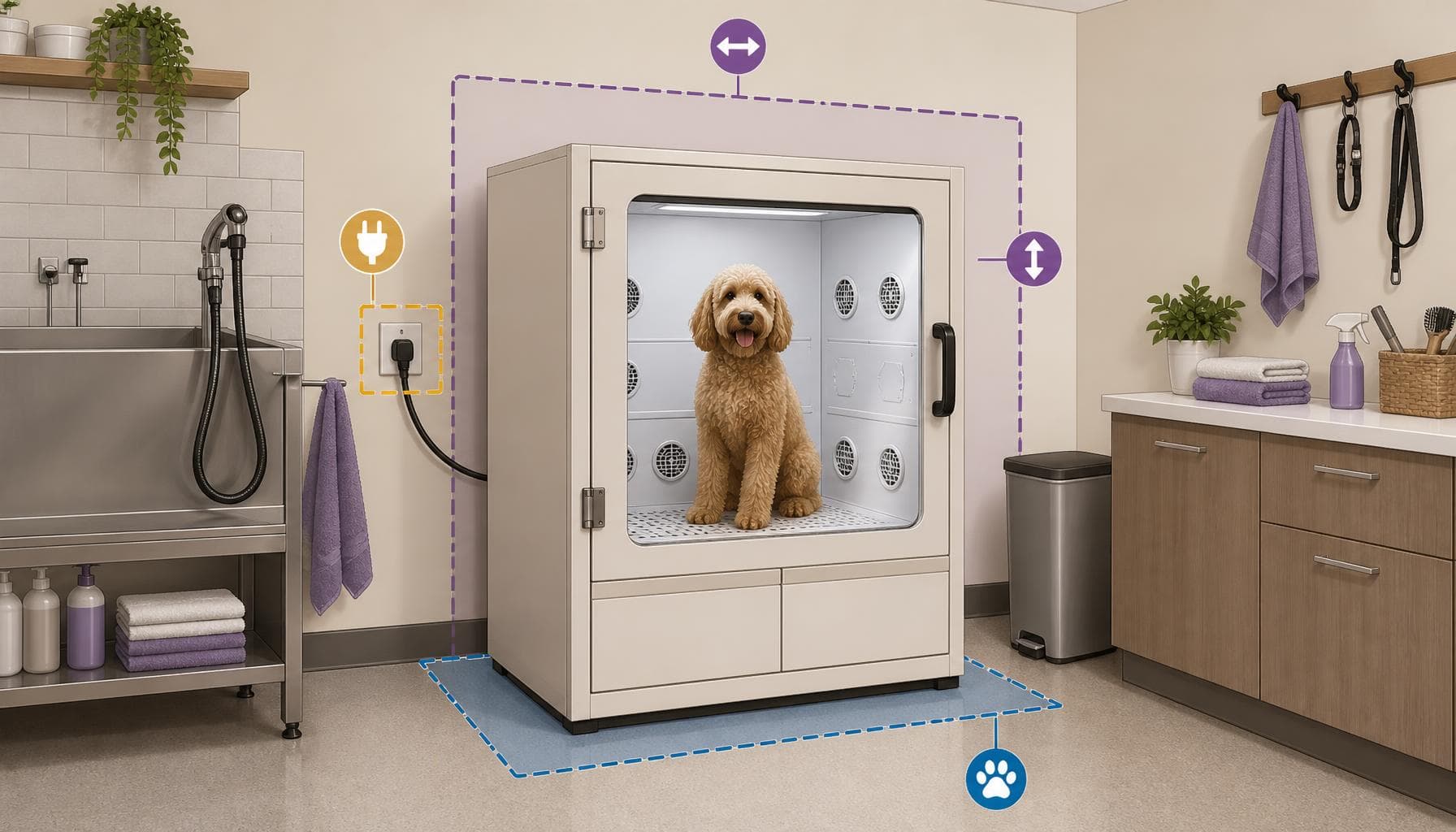
Room planning should also account for where the monitor, insufflator, suction pump, irrigation pump, and electrosurgical unit will be positioned during procedures, as well as where the system will be stored between cases. The published configuration includes suction and irrigation pumps with intermittent loading and continuous-duty capability; ask which hoses, collection components, and replacement parts are included for the intended workflow.
Who is responsible for VET Laparoscope Endoscope System cleaning and training?
A VET Laparoscope Endoscope System purchase should assign reprocessing, training, and documentation responsibilities before the equipment is delivered.
The clinical value of a rigid endoscopy system depends on the surgical team having compatible instruments, an approved reprocessing route, and clear ownership across surgery, nursing, central sterilization, and biomedical support. Procurement teams should request model-specific instructions for every reusable component that will enter the clinical workflow, rather than rely on a general cleaning policy.
- Identify which items are reusable, which are single-use, and which require separate handling because they are optical, electrical, or gas-delivery components.
- Ask HQS to confirm the approved reprocessing documentation for the quoted scopes, camera-related components, light-delivery components, and accessories.
- Confirm whether the available automatic pressure sterilization equipment applies to the specific instruments and accessories included in the quoted configuration.
- Define who trains surgeons, veterinary nurses, and equipment-support staff, including whether training covers system setup, accessory identification, reprocessing documentation, and escalation to service support.
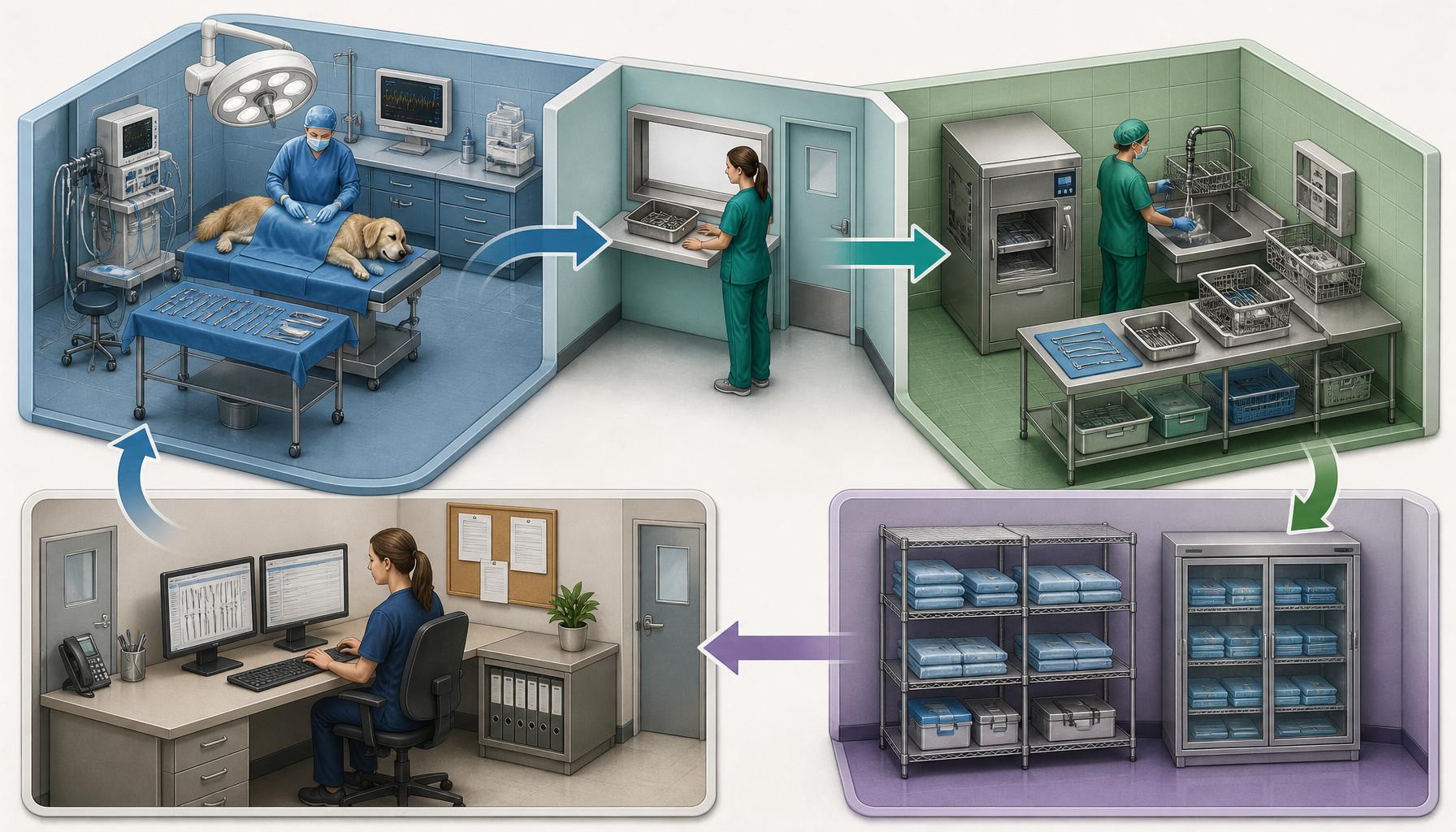
Training needs differ by clinical setting. A companion-animal hospital adding scheduled laparoscopic procedures may prioritize initial team training and a manageable instrument inventory. A referral practice with multiple surgeons and a heavier surgical schedule may place greater weight on backup accessories, documented handover procedures, and service response during periods of high case volume. Equine and mobile veterinary services may additionally need to review transport protection, stable power availability, and the location of qualified service support.
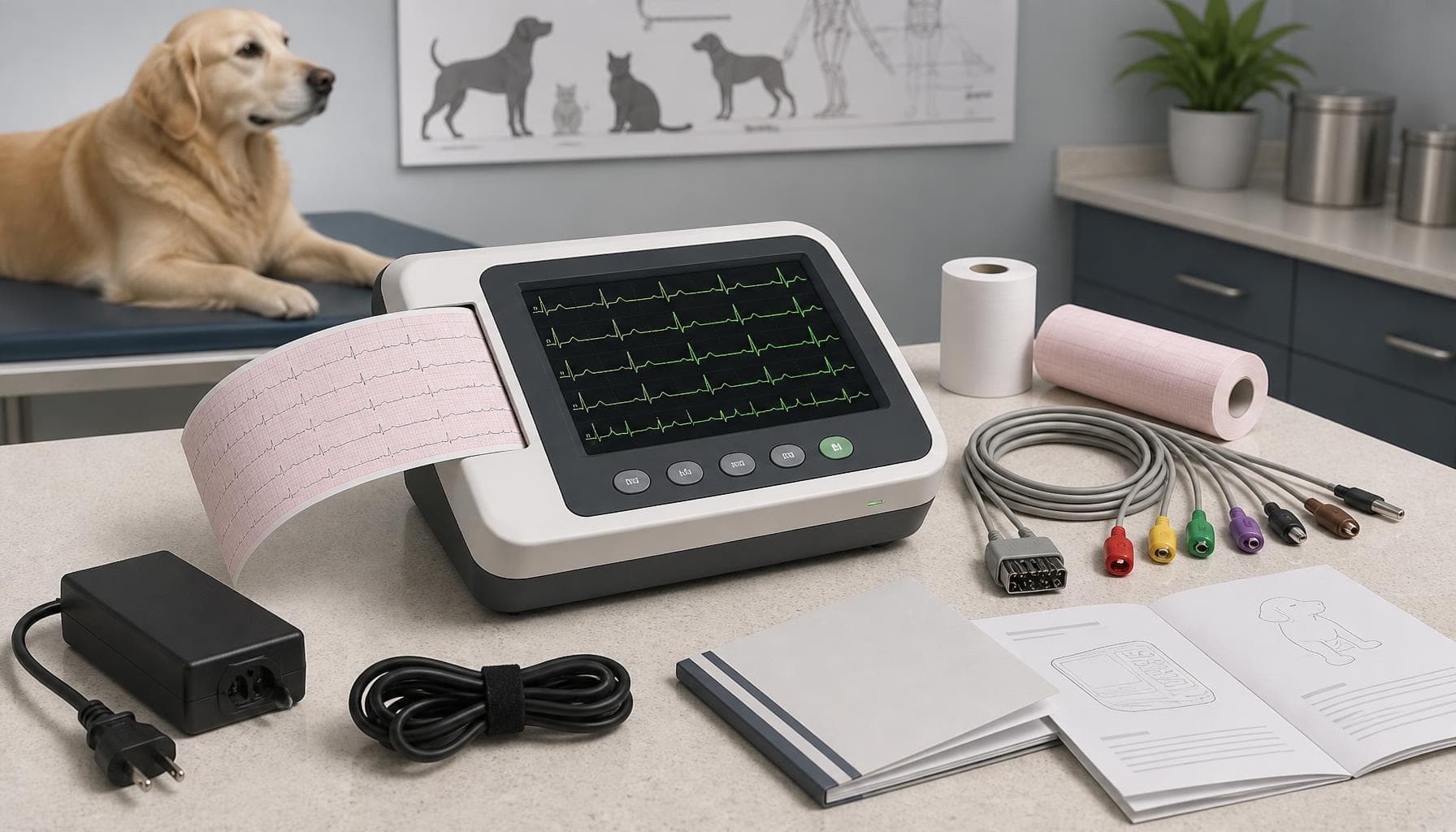
Because laparoscopic surgery is performed under anesthesia, the endoscopy procurement plan should also consider physical layout and cable routing around the veterinary anesthesia machine, patient monitoring equipment, and surgical table. These adjacent systems should be reviewed together to avoid a tower layout that obstructs anesthesia access or instrument movement.
Which VET Laparoscope Endoscope System spares and consumables should be quoted?
VET Laparoscope Endoscope System spare-part planning should separate routine consumables from components whose failure could interrupt a surgical list.
A useful quotation does not merely list “spares available.” It identifies part numbers, compatibility boundaries, expected supply route, replacement lead-time commitments where offered, and whether the clinic can keep selected parts locally. The components most important to stock will depend on the final configuration and the clinic’s case schedule.
- Ask for the consumable list associated with the CO2 insufflator, suction pump, irrigation pump, and electrosurgical unit, including any tubing, connectors, electrodes, filters, seals, or collection components applicable to the quoted setup.
- Ask which cables, adapters, camera-related accessories, light-delivery components, and fuses are user-replaceable under the service arrangement and which require authorized service.
- Request part numbers for items the clinic may reorder, together with the ordering channel, minimum order conditions, and destination-market availability.
- Clarify whether a loan unit, replacement module, or advance spare is available if a key imaging, illumination, insufflation, or electrosurgical component requires service.
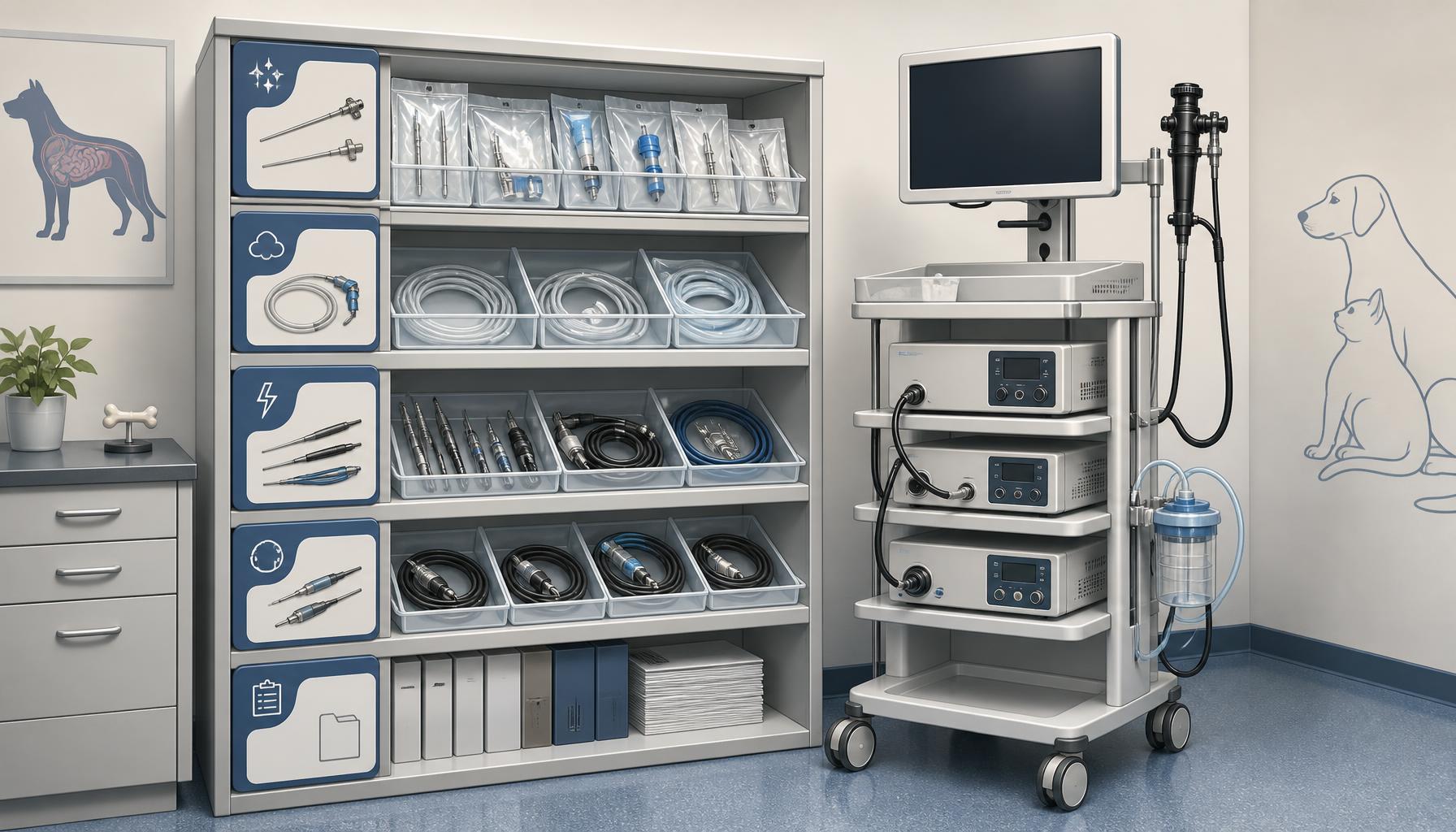
For an occasional surgical program, a supplier-held replacement arrangement may be more practical than holding many local spares. For a busy referral service, the financial impact of an unavailable camera, light source, insufflator, or critical cable may justify a more formal downtime plan. The right decision is based on the clinic’s scheduling exposure and service commitments, not on a generic spare-parts list.
What service and import questions should clinics ask before ordering REC-4000?
REC-4000 buyers should obtain written confirmation of service coverage, destination-market documentation, shipping responsibilities, and installation scope before issuing a purchase order.
Ask HQS to confirm the documents available for the exact REC-4000 configuration and destination market, including electrical documentation, product identification, import paperwork, and any records required by the purchaser, distributor, or local authority. Requirements can vary by market and by whether the equipment is imported directly or through a local distributor.
- Who will install the equipment, confirm the delivered configuration, and document acceptance after installation?
- Who provides first-line support, remote troubleshooting, on-site service, and replacement parts in the destination market?
- What warranty terms apply to the integrated video processor and light cold source, CO2 insufflator, electrosurgical unit, pumps, monitor, accessories, and any reusable instruments?
- Which service actions are covered, which are chargeable, and what documentation is needed to request support?
- Which import, customs, electrical, and product-registration documents can be provided for the specified destination?
Is the REC-4000 VET Laparoscope Endoscope System suitable for your clinic?
The REC-4000 VET Laparoscope Endoscope System is worth considering when the clinic wants an integrated veterinary laparoscopic configuration and can confirm the required installation, reprocessing, accessory, and service arrangements in writing.
HQS lists the REC-4000 with a Full HD 1080P video processor, an integrated video processor and LED cold light source, a 100 W white LED light source, a CO2 insufflator, an electrosurgical unit, suction and irrigation pumps, and an LCD monitor. Those documented elements may fit a clinic planning a coordinated minimally invasive surgery setup. The procurement decision should remain conditional on the final quotation resolving included instruments, utility compatibility, training responsibilities, consumable supply, spare-part access, service terms, and destination-market requirements.
Before final approval, keep the signed quotation, equipment list, service contacts, reprocessing documentation, and import records together in the clinic’s equipment file. A structured veterinary equipment procurement checklist can help purchasing, clinical, and technical teams review those items before delivery.