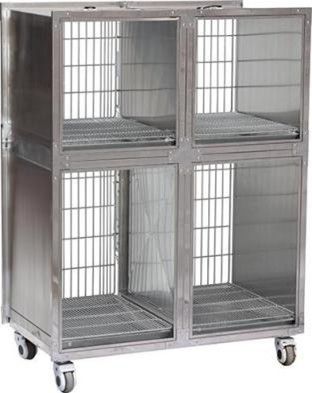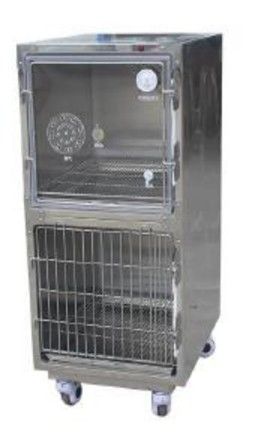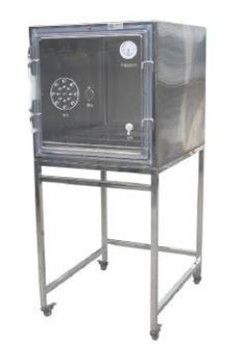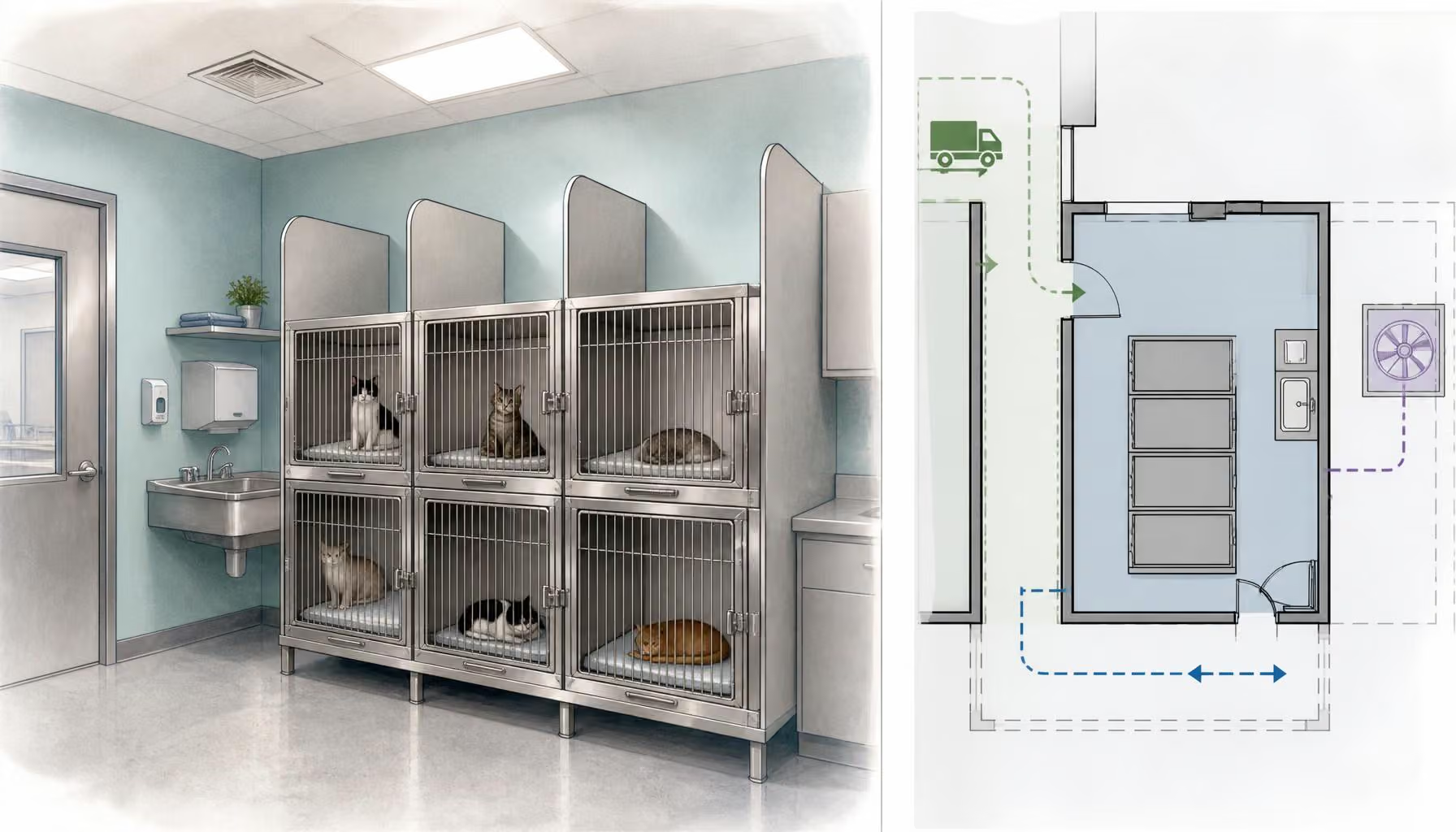
For a Cat Cage intended for isolation, make the divider arrangement, ventilation responsibilities, and cleaning requirements part of the purchase specification—not assumptions based on appearance. A Stainless Steel Cage provides patient housing; approving an isolation installation also requires agreement on the room, the quoted cage configuration, and who will maintain each component.
A cat isolation cage is a patient enclosure selected for use within a clinic’s isolation arrangement, rather than a substitute for that arrangement. Treat solid partitions, cage openings, and room ventilation as separate items requiring documented review.
What should solid cat cage dividers mean in the purchase specification?
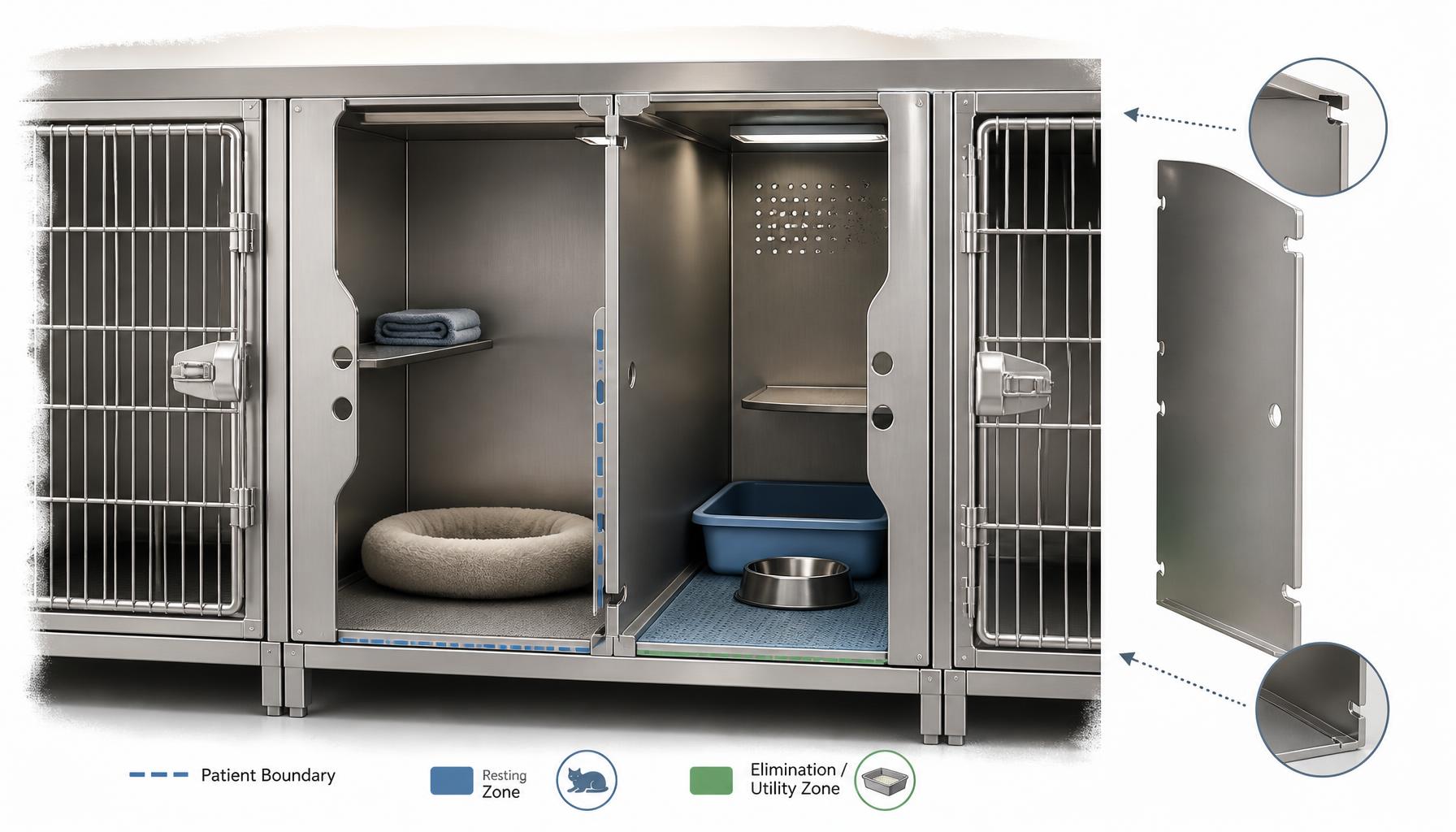
Solid cat cage dividers should be defined by their position, material, attachment, and cleaning access—not simply by the word “isolation.” Ask HQS for a configuration drawing showing which boundaries are solid and which remain open.
Specify whether the intended divider separates neighboring patients, separates functions within one enclosure, or closes part of the cage front. Those are different purchase requirements. A reference to an internal board or partition should not be treated as confirmation of a sealed enclosure or controlled airflow.
- Request drawings showing side panels, rear panels, doors, internal partitions, and any shared openings between compartments.
- Confirm whether dividers are fixed or removable, and whether removal is part of routine cleaning or a service task.
- Ask for the divider material, cleaning compatibility, replacement part identification, and any restrictions on changing the configuration.
What cat cage ventilation information belongs in the quote?
Cat cage ventilation requirements should be reviewed jointly by the clinic, the cage supplier, and the party responsible for the room ventilation system before installation is approved.
Ask HQS to describe the quoted enclosure’s ventilation arrangement and any required connection to building services. Have the clinic’s facilities adviser assess that arrangement against the intended room use. A drawing of cage openings is useful for coordination, but it is not a performance report for the completed isolation room.
Cat cages for a suspected infectious patient
For a cage intended to house a suspected infectious patient, ask the clinical lead to define the isolation requirement before selecting the enclosure. The purchase review should address boundaries between patients, cleaning access, room ventilation responsibilities, and any documentation needed to accept the installation.
Cat cages for routine postoperative recovery
For routine postoperative housing, the purchase brief may instead prioritize observation access, separated housing functions, and turnover cleaning. If the same cage will also be used for infectious isolation, require a separate review of that intended use rather than assuming the recovery configuration covers both needs.
Which HQS cat cage specifications help with installation planning?
HQS cat cage dimensions support an initial layout comparison, while acceptance of the installation requires configuration drawings and site-specific delivery details.
The following values come from the linked HQS product pages. They describe product size and package weight; package weight should not be used as the installed weight or as a floor-loading calculation.
| Model and product | Listed product size, L × W × H (cm) | Listed package weight (kg) | Listed feature relevant to the purchase | Confirm with HQS |
| PCG-06 Cat Cage | 100 × 70 × 170 | 180 | Separate eating, leisure, and sanitation areas on each floor; high-strength acrylic pumping board design | Board arrangement, divider boundaries, cleaning access, and replacement board specification |
| Pet Cage (For Cats) PCG-07 | 122 × 70 × 157 | 190 | 304 stainless steel construction and full round corners for easy cleaning | Compartment layout, panel construction, installation requirements, and cleaning compatibility |
| Cat Cage PCG-08 | 100 × 60 × 180 | 200 | 304 stainless steel construction | Internal layout, divider options, ventilation arrangement, and service access |
PCG-08 has a smaller listed overall depth than PCG-06 and PCG-07, but overall dimensions alone do not establish usable compartment space or required clearance. PCG-06 explicitly lists separated housing functions; ask HQS to show how those areas are arranged before treating them as suitable for the clinic’s intended patients.
Who is responsible for cat cage delivery and installation?
Cat cage delivery and installation responsibilities should be assigned in the quotation before the clinic commits to a model.
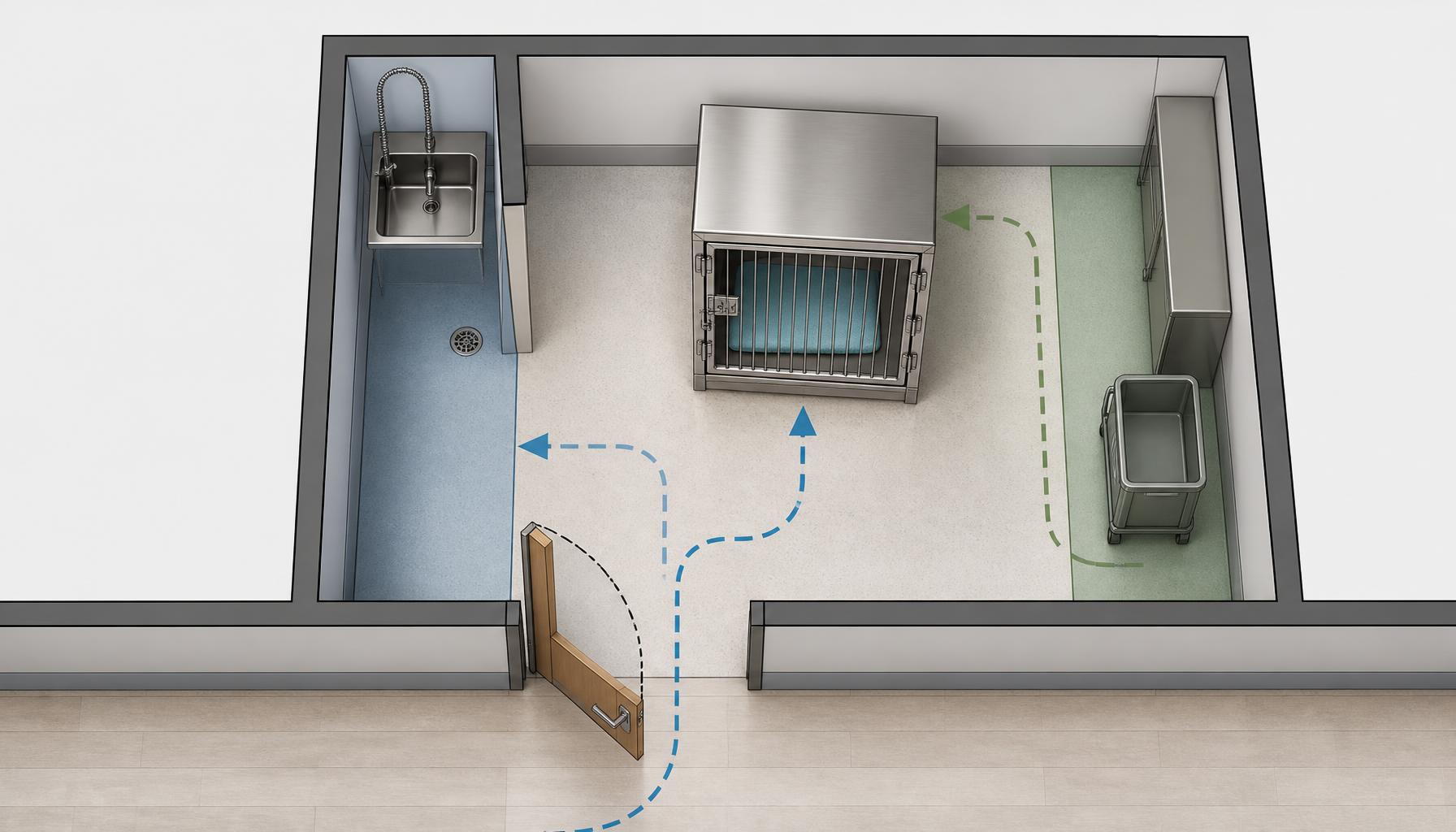
Confirm the packed dimensions, delivery route, unloading arrangements, and whether assembly occurs on site. Ask for installed weight, support or anchoring requirements, and clearances needed for doors, removable components, cleaning, and future service. The clinic should provide the site constraints; HQS should confirm how the quoted configuration fits them.
If the enclosure includes powered equipment or connections to other systems, request the corresponding utility requirements and identify who supplies, connects, and accepts those services. Do not transfer requirements from another cage model.
What cat cage cleaning, training, and spare parts should the quote cover?
Cat cage cleaning and service arrangements should identify approved methods, staff responsibilities, and replaceable components for the exact configuration being purchased.
HQS lists rounded corners for PCG-07 and an acrylic board design for PCG-06. Those details make cleaning access and material compatibility relevant purchasing questions. A stainless steel designation does not establish the cleaning requirements of every component in a mixed-material enclosure.
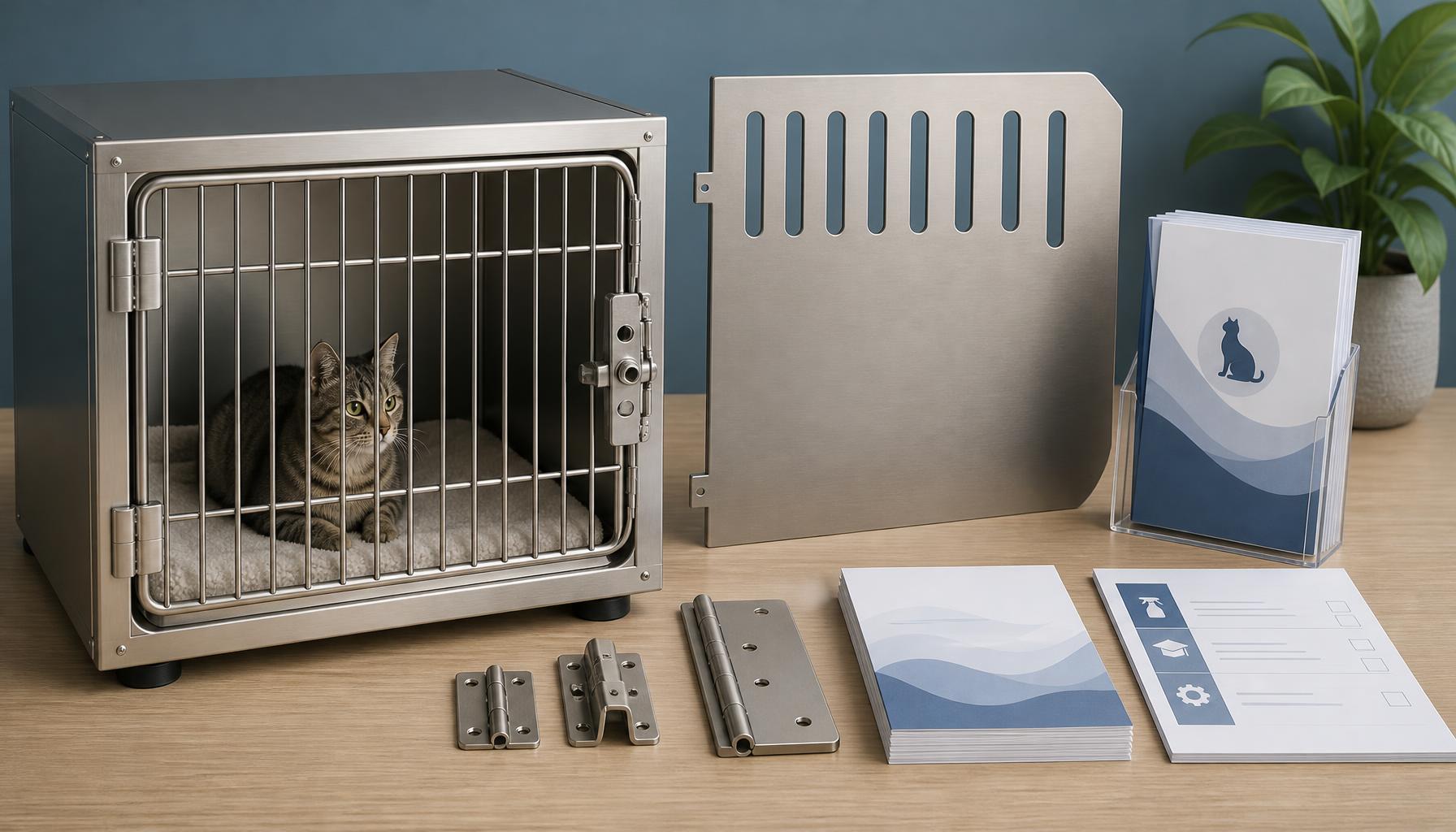
- Cleaning documentation: request approved cleaning and disinfection guidance for stainless steel, acrylic, and any other materials included in the quote, together with restrictions that affect the clinic’s existing cleaning products.
- Training scope: confirm who provides handover, which staff should attend, and whether training covers cleaning responsibilities, permitted component removal, and when to contact service.
- Consumables and replacement parts: request an itemized list distinguishing routine consumables, if applicable, from replaceable boards, panels, door hardware, and other fitted components.
- Service terms: confirm warranty coverage, exclusions, technical support contact, spare-part ordering information, expected availability, and responsibility for labor, travel, and freight.
Ask whether spare parts can be identified from a model code alone or require a serial number and configuration record. Include those records in the clinic’s equipment handover package.
What should a cat cage purchase order include?
A cat cage purchase order should attach the agreed configuration and divide costs and responsibilities clearly enough to compare quotations.
Request separate treatment of the enclosure, optional dividers, delivery, unloading, installation, training, replacement parts, and ongoing service. Where powered accessories or ventilation connections are included, ask which associated components and maintenance obligations are included in the price.
For an imported installation, ask HQS to confirm the product classification, applicable certification and conformity documents, labeling, and shipping documentation for the quoted configuration and destination market. The importer or local compliance adviser should confirm the destination-specific requirements before shipment.
Approve the purchase when the cage drawings match the intended clinical use, the site responsibilities are accepted, and cleaning and service arrangements are documented. For an isolation application, make the clinic’s approval of the ventilation arrangement a purchase condition—not an inference drawn from solid dividers or stainless steel construction.