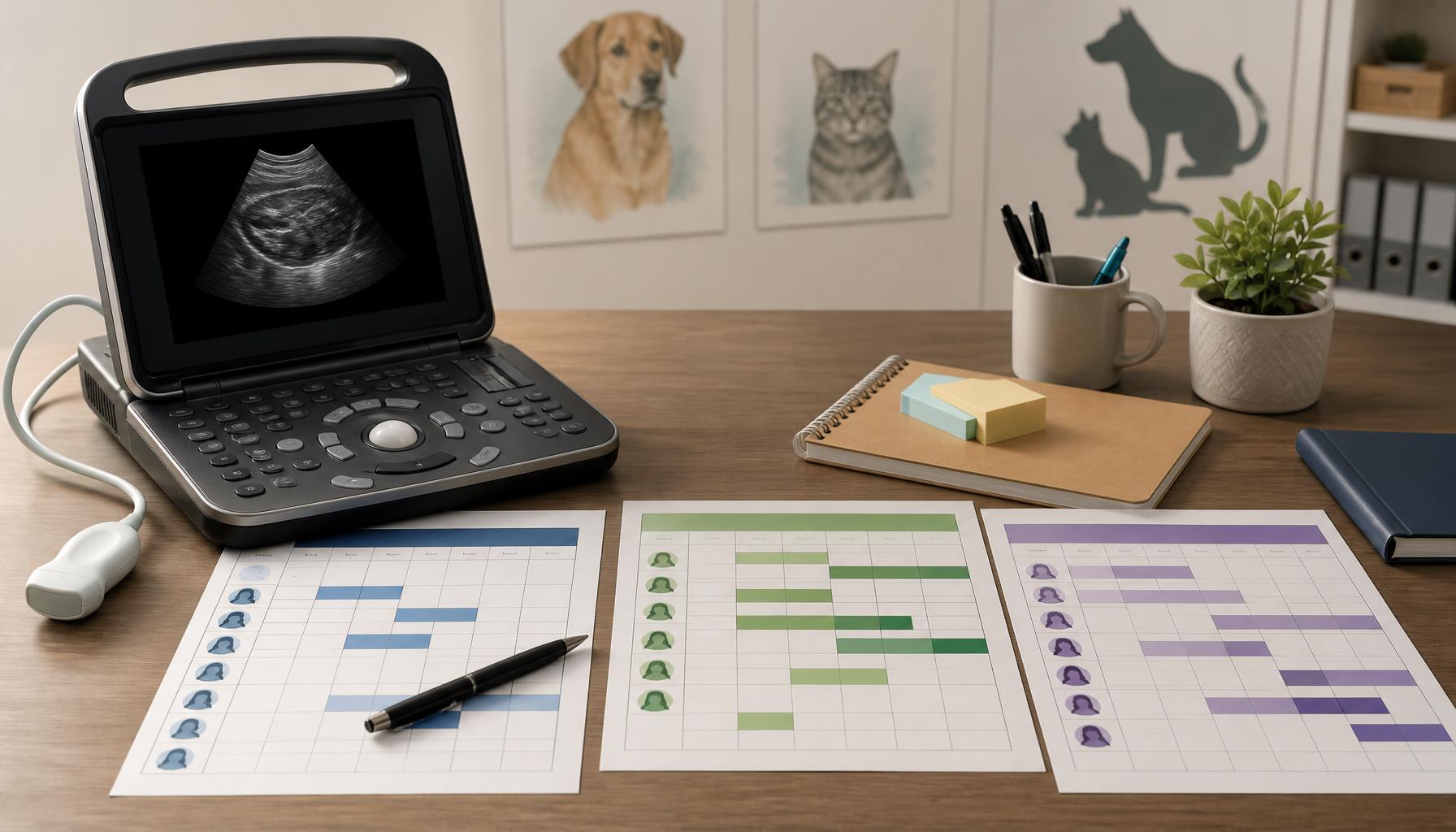
Before purchasing an Animal Ultrasound Scanner, ask for a training proposal tied to the quoted probes, intended examinations, and staff roles—not just a demonstration of the controls. For this equipment category, budget separately for supplier instruction, staff time away from appointments, supervised learning, cleaning responsibilities, and ongoing support. Set training hours from an agreed scope rather than a generic estimate.
An animal ultrasound scanner is a veterinary diagnostic imaging device used to assess internal structures and support examinations such as pregnancy assessment. Clinical usefulness depends on matching the scanner and probe configuration to the intended work; completing equipment orientation is not the same as establishing clinical proficiency.
How much staff time should animal ultrasound scanner training include?
Animal ultrasound scanner training should have separate allowances for equipment orientation and clinical learning, with named participants and written deliverables.
Ask the supplier to specify what the quoted instruction covers: equipment handover, supported probes, image storage, approved cleaning requirements, and access to technical support. Separately, have the clinical lead define the supervision and education needed for the examinations the practice intends to offer.
Use the supplier’s proposed schedule and the clinic’s actual staffing costs to build the budget. Include:
- Supplier training fees, travel expenses, and any charges for repeat or remote sessions.
- Paid attendance time for veterinarians and support staff, including replacement coverage or appointments deliberately removed from the schedule.
- Clinical supervision, case review, and refresher instruction agreed by the clinical lead.
- Administrative time for asset records, document review, service coordination, and staff onboarding.
For an emergency dog-and-cat service, ask whether instruction can reach staff across shifts and whether the quoted probes suit the proposed examinations. For a mobile equine reproductive service, prioritize training coverage for the selected probe, transport arrangements, charging, and pregnancy-record handling. These are different purchasing scopes, not interchangeable training packages.
Which HQS ultrasound scanner features affect training scope?
HQS ultrasound scanner features should define what the supplier demonstrates during acceptance, rather than serve as a promise of reduced training time.
Within the Ultrasound Scanner category, the following published model details identify practical questions for a quotation. Battery standby and working time describe different conditions and should not be compared as equivalent scanning endurance.
| Model | HQS-listed feature relevant to onboarding | Listed standby time (h) | Listed working time (h) | Ask HQS to confirm |
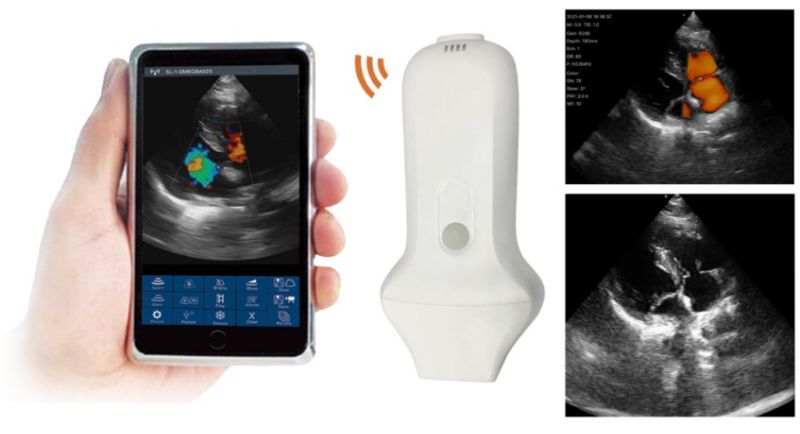
| Animal Ultrasound Scanner KX-V1 | Automatic probe recognition; wireless image transmission | Over 5 | Confirm for the quoted configuration | Included probes, wireless display requirements, and training coverage for the proposed receiving setup |
| Animal Ultrasound Scanner KX-RKU10 | USB file management and Excel export of pregnancy records | Over 6 | Confirm for the quoted configuration | Export compatibility, interface and training languages, and supported record workflows |
| Digital B/W Ultrasound Scanner US-S1 | Convex-array scan mode; listed configuration includes a 6.5 MHz rectal probe | Confirm for the quoted configuration | More than 4 | Exact supplied probe set, suitability for intended examinations, and instruction for each purchased probe |
HQS lists Chinese obstetric charts for the KX-RKU10. An English-speaking practice should therefore request a demonstration of the interface, chart content, and exported records it expects to use. HQS lists a user’s manual, adapter, and storage card in the US-S1 configuration; confirm the language and exact contents of the quoted package.
A color screen is not, by itself, evidence of color Doppler capability. Likewise, automatic probe recognition does not establish that every required probe is included. Ask for the exact imaging functions and accessories in writing before defining the training plan.
What installation requirements should an animal ultrasound scanner quote cover?
An animal ultrasound scanner quotation should identify the complete working setup, including power, probe storage, accessories, and image-transfer arrangements.
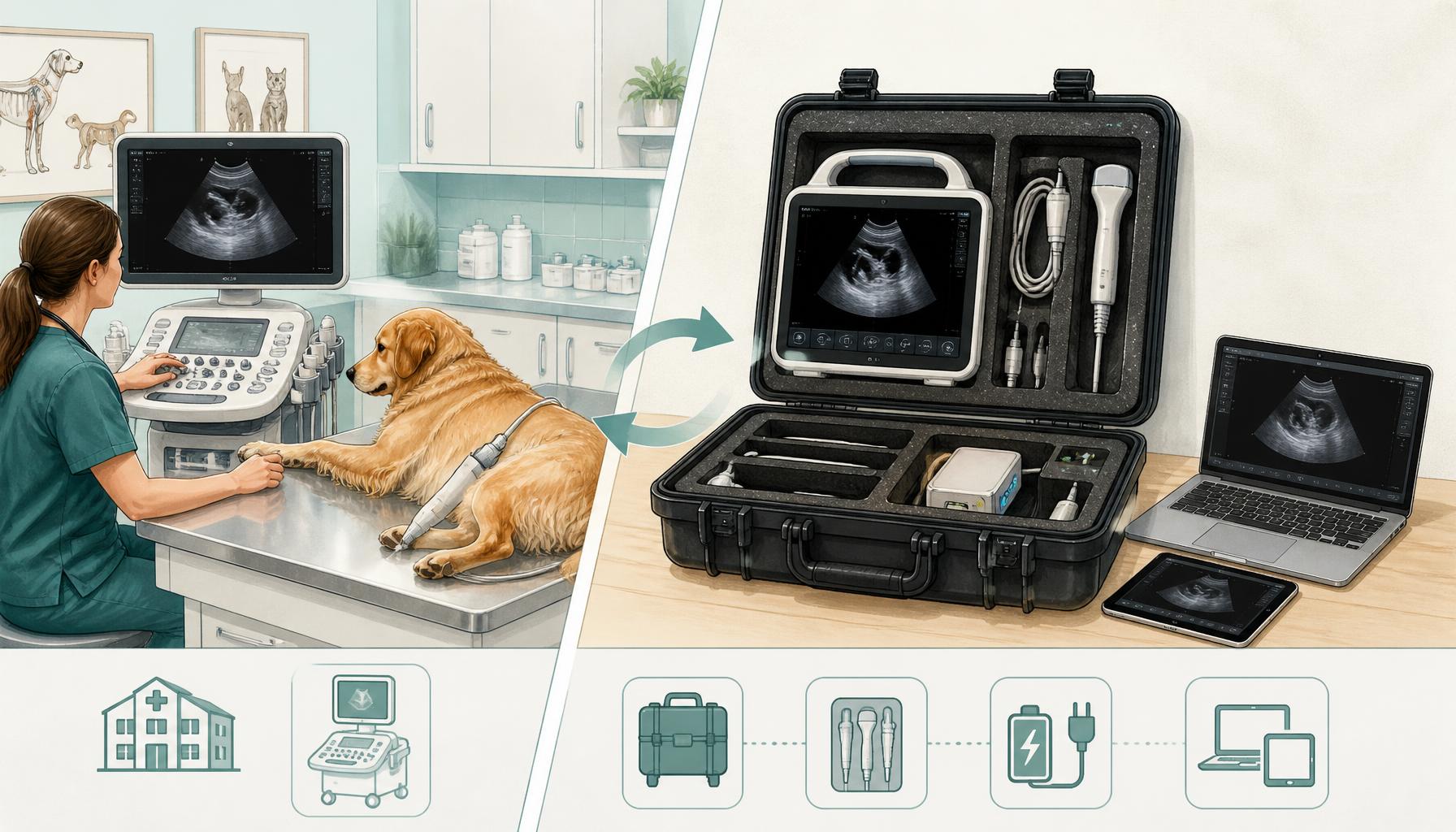
For a fixed consultation room, confirm the required electrical supply, adapter and plug, equipment support or trolley, safe charging location, and space for protected probe storage. For mobile work, ask about the quoted carrying arrangement, charger options, operating environmental limits, and replacement-battery arrangements. Portability alone does not resolve these requirements.
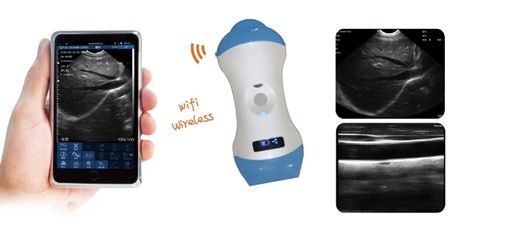
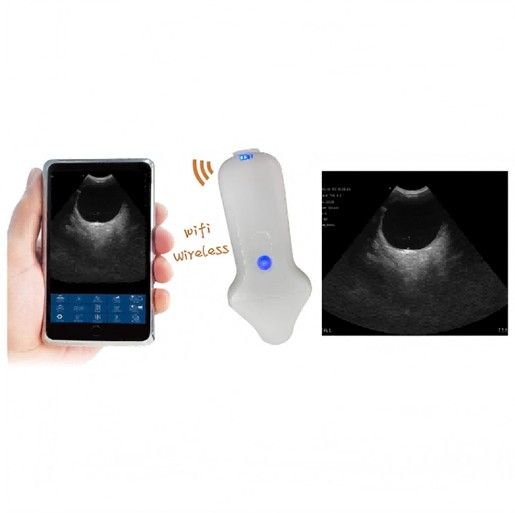
HQS lists wireless image transmission for the KX-V1 and USB-based record functions for the KX-RKU10. Request an acceptance demonstration using the intended receiving display or clinic computer, as applicable. Identify who supplies the receiving equipment, who configures the connection, and who supports compatibility problems.
Make successful handover a purchasing condition: the agreed accessories should be present, the intended image-transfer workflow should be demonstrated, and the responsible staff should receive the relevant documentation. Obtain model-specific instructions rather than relying on another scanner’s installation guide.
Who is responsible for ultrasound scanner cleaning and maintenance?
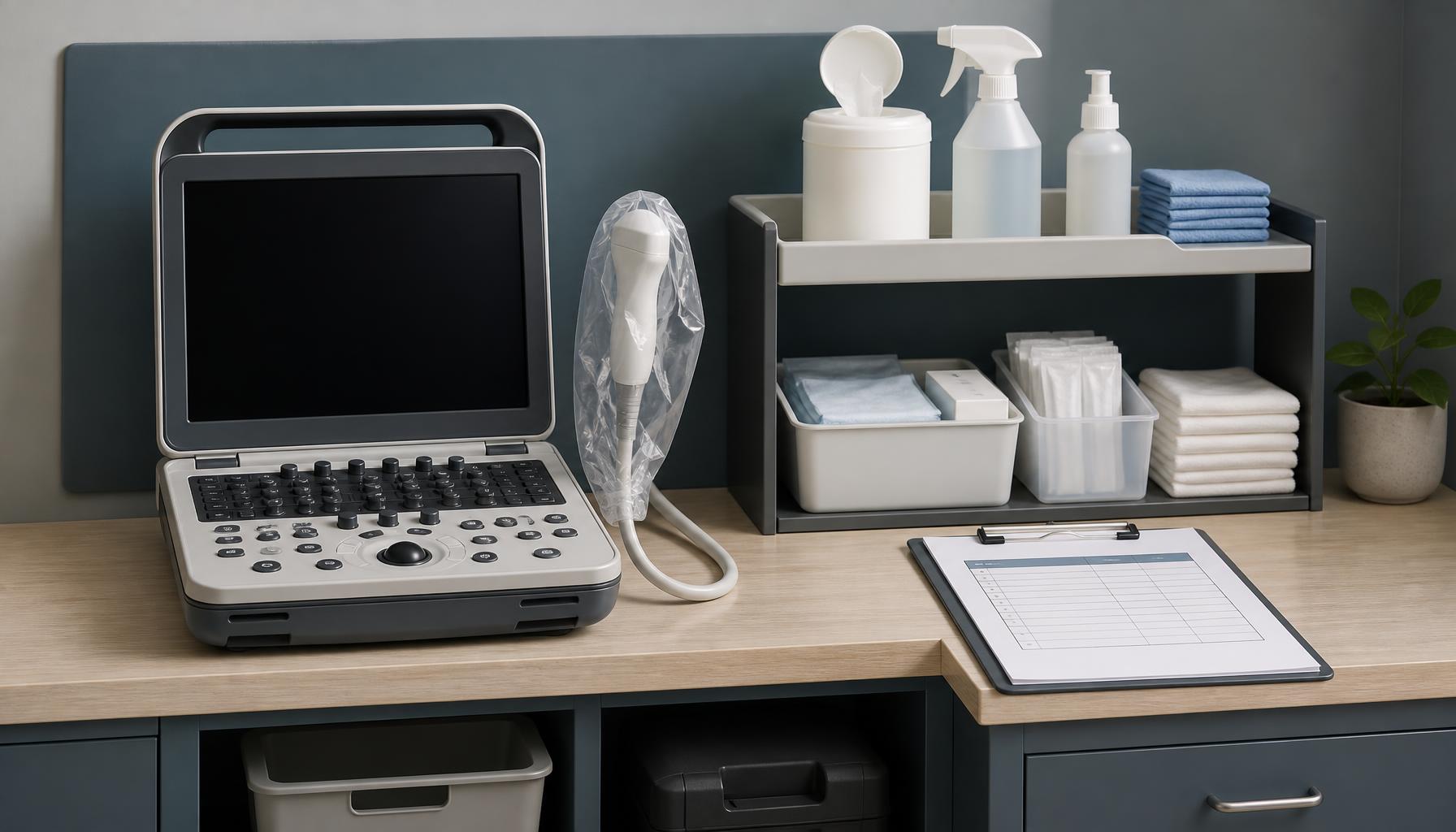
Ultrasound scanner cleaning and maintenance responsibilities should be assigned before delivery, with approved materials and service boundaries confirmed for the exact scanner and probes.
Separate routine cleaning from scheduled maintenance and repairs. The clinic needs to know which tasks its staff may perform, which require a service provider, and what records must be retained. Do not adopt cleaning, calibration, or repair instructions from a different model.
HQS describes the KX-RKU10 as splash-proof, dustproof, and easy to clean. Those descriptions do not establish compatibility with a particular disinfectant or permission to immerse a component. Request the applicable cleaning instructions for the scanner, probe, cable, protective case, and accessories.
- Ask for approved cleaning and disinfection products, any required contact conditions, and restrictions for each component.
- Confirm the coupling gel and any probe covers required for the intended examinations, including compatibility and whether initial supplies are included.
- Obtain the maintenance schedule, authorized service responsibilities, and any associated charges.
- Name a clinic owner for consumable ordering, cleaning documentation, and arranging service.
Keep consumables separate from spare parts in the budget. Gel, compatible cleaning supplies, and any required probe covers belong in recurring purchasing; probes, batteries, chargers, and protective accessories need replacement quotations and availability commitments.
What ultrasound scanner service and spare-parts terms should buyers request?
Ultrasound scanner service terms should specify how the clinic obtains help, who handles repairs, and how replacement parts reach the destination market.
Request a written response covering technical-support hours and language, remote troubleshooting arrangements, repair location, freight responsibility, and any loan-unit terms. Ask for quoted availability and lead times for the selected probes, batteries, chargers, and connectors or cables supplied with the system.
Clarify whether software updates, additional training, and support for image export are included or chargeable. For warranties, ask which components are covered, what exclusions apply, when coverage begins, and whether replacement parts carry separate terms.
For an imported system, ask HQS to confirm the documents applicable to the exact configuration and destination market. Assign responsibility for import clearance, electrical documentation, battery-shipping paperwork where applicable, and any local registration requirements. A document describing the manufacturer should not be treated as proof that the quoted device meets every local requirement.
When is an animal ultrasound scanner ready for purchase?
An animal ultrasound scanner is ready for purchase when the clinic can approve the configuration, staffing commitment, handover conditions, and support arrangements together.
Approve the order only after the clinical lead accepts the proposed scanner and probes for the intended work, the practice manager allocates attendance and coverage time, and the supplier confirms installation, cleaning documentation, consumables, spare parts, and service terms.
Compare quotations on that complete scope. A lower equipment price does not settle the purchasing decision if training, receiving hardware, replacement accessories, or service freight must be purchased separately. The useful outcome is a scanner the clinic can introduce with clear responsibilities—not an unsupported promise that staff will be ready after a brief demonstration.