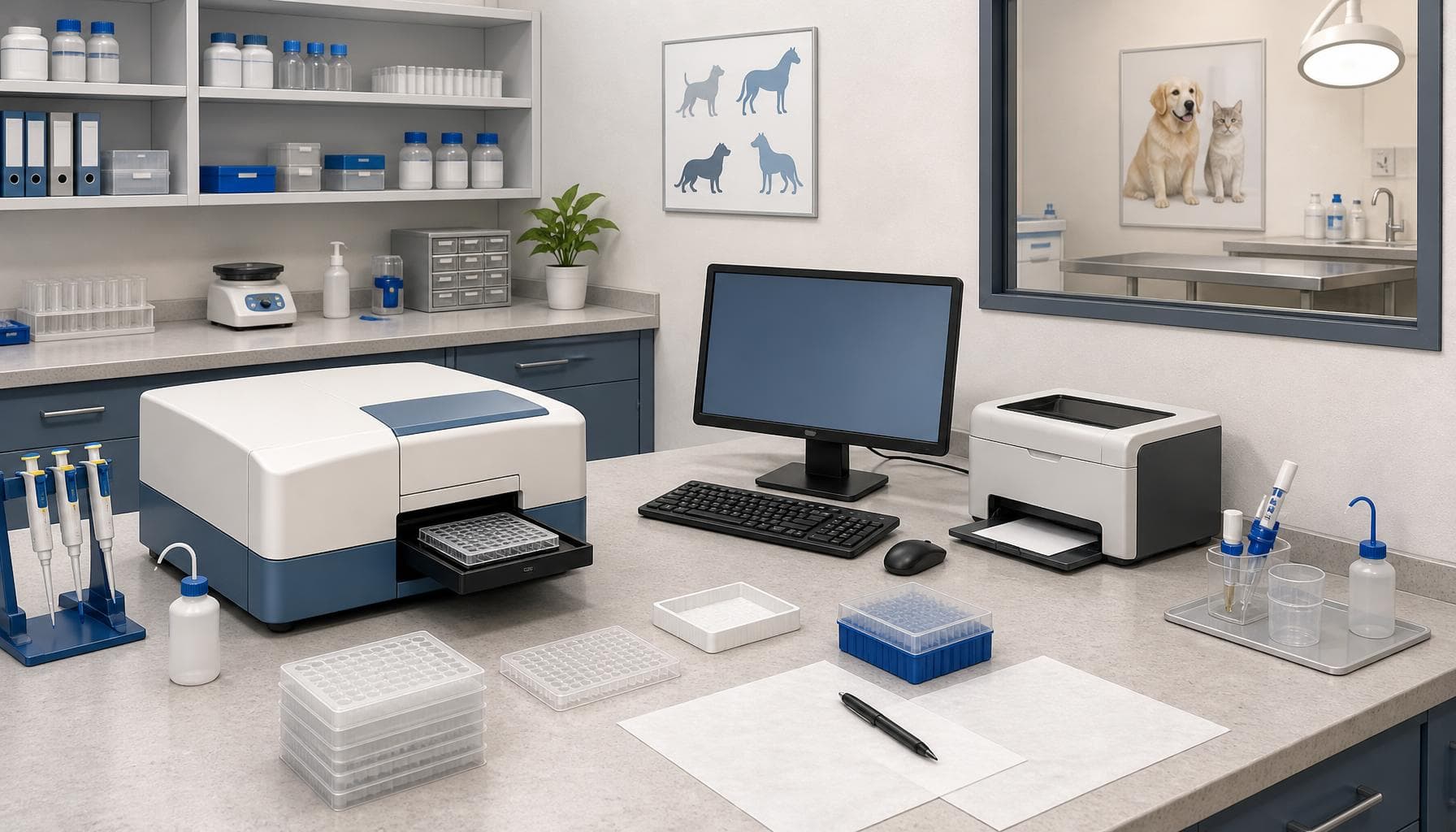
Before purchasing an Elisa Reader, confirm the instrument’s dimensions, required installation clearances, power configuration, and computer arrangement—not just whether the reader fits on a bench. HQS models differ in built-in versus external computing, so the quotation should identify the complete workstation, compatible software and peripherals, installation responsibilities, and ongoing support.
An Elisa Reader is a microplate instrument that measures absorbance for enzyme-linked immunosorbent assay (ELISA) testing. In veterinary purchasing, its value depends on compatibility with the intended assays and a workable reporting process, rather than the reader specification alone.
How much bench space does an Elisa Reader need?
An Elisa Reader’s published dimensions describe the instrument, not the complete installed workstation.
Plan the bench around the quoted configuration: reader, computer or display, printer, cable connections, and access required for service. Ask HQS to confirm installation clearances and the space needed to access the plate compartment before approving a layout. Do not treat the housing dimensions as a minimum bench specification.
HQS lists the HE-201 at 44 × 37 × 24 cm and 13 kg. The HE-800 product page lists dimensions of 400 × 290 × 220 mm. For either model, have the installer approve the proposed bench arrangement and support requirements. For the HE-202, request a dimensioned installation drawing with the quotation.
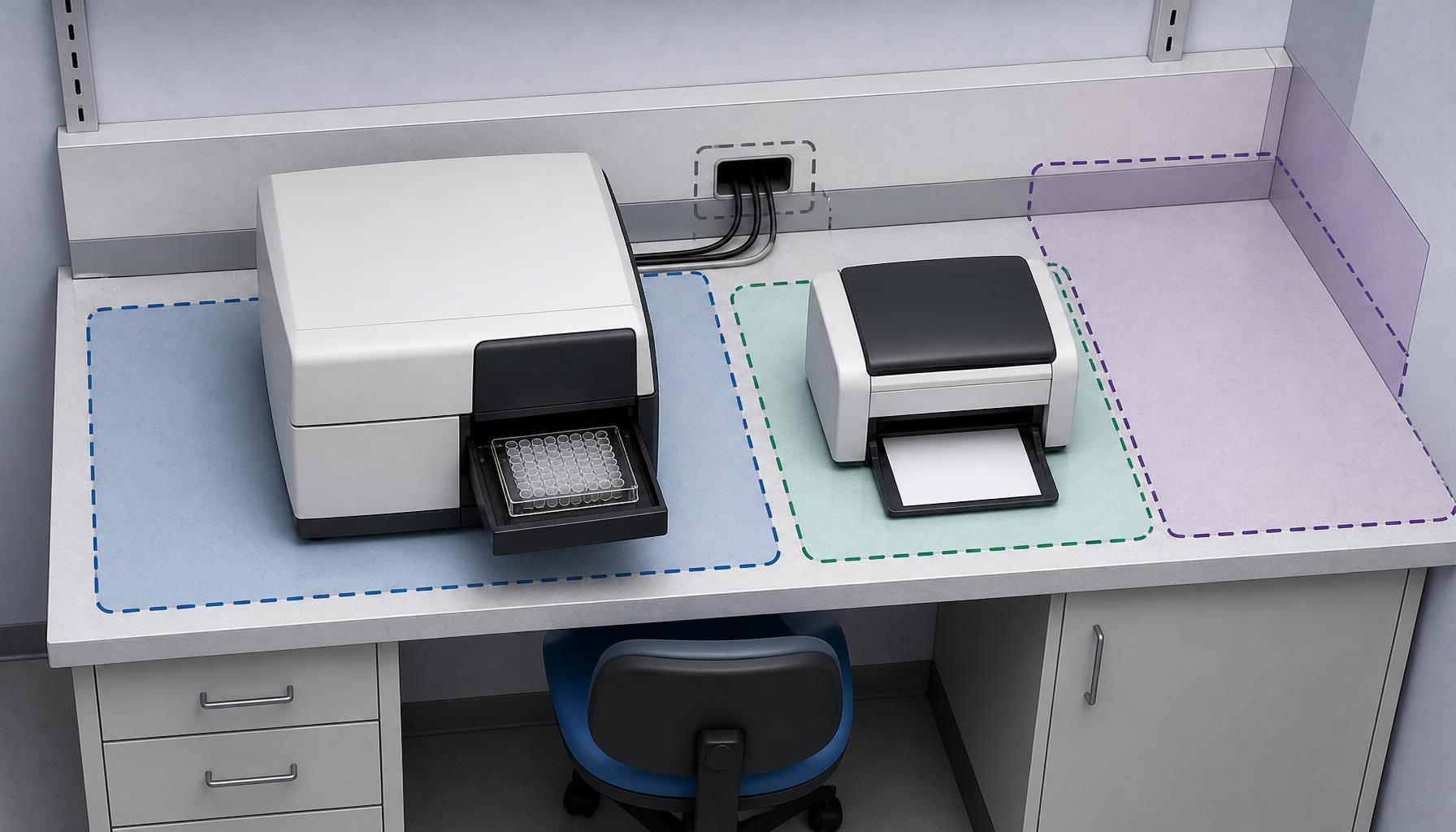
Elisa Reader computer and power configurations compared
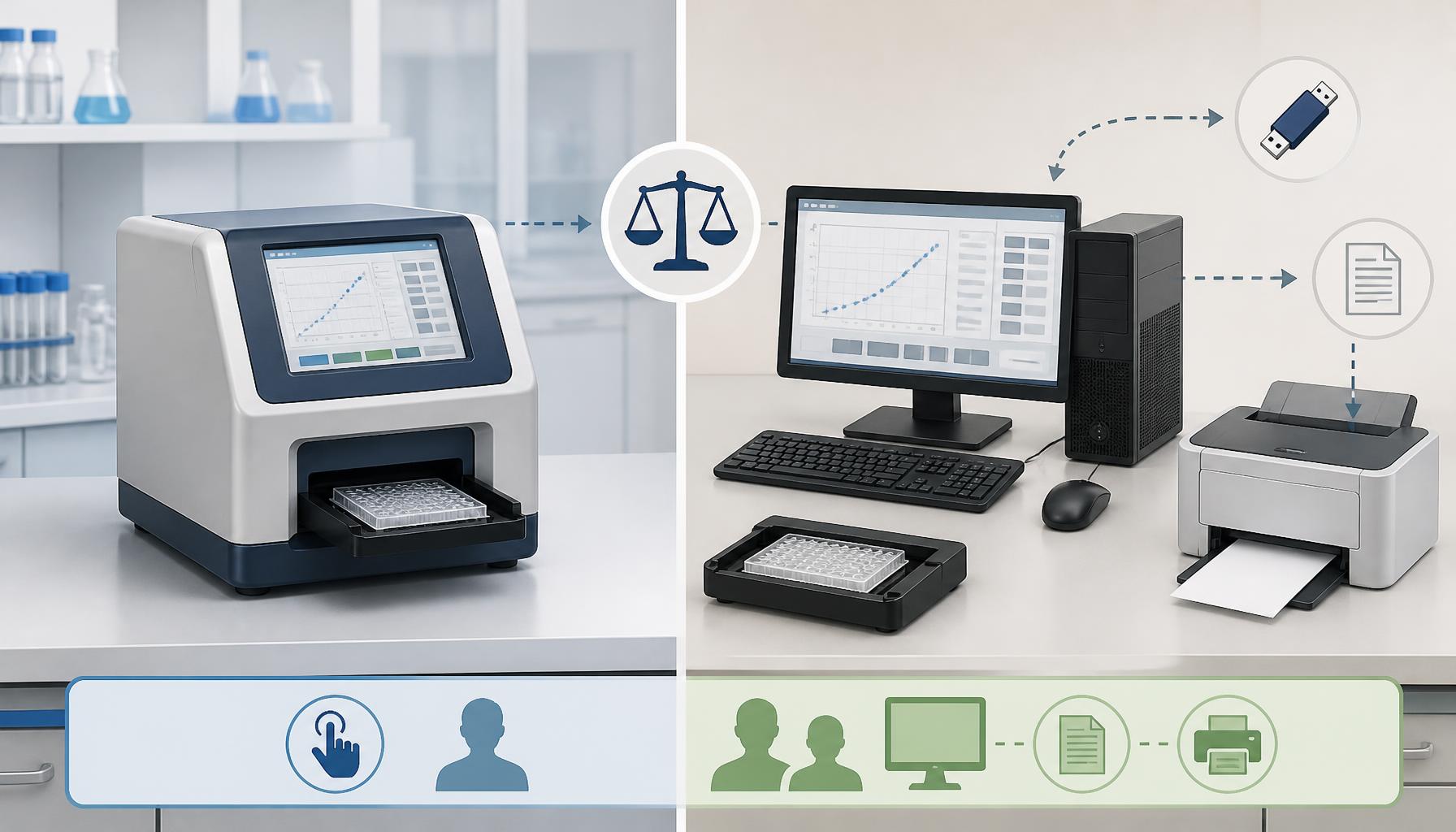
Elisa Reader computer requirements differ by model, and a Windows interface does not by itself establish compatibility with a clinic’s existing computer.
HQS product pages document the following hardware arrangements. Use them to shortlist a configuration, then have HQS confirm the installation requirements for the exact equipment being quoted.
| Model | Published computer or display arrangement | Published dimensions | Published power supply (V, Hz, W) | Confirm with HQS |
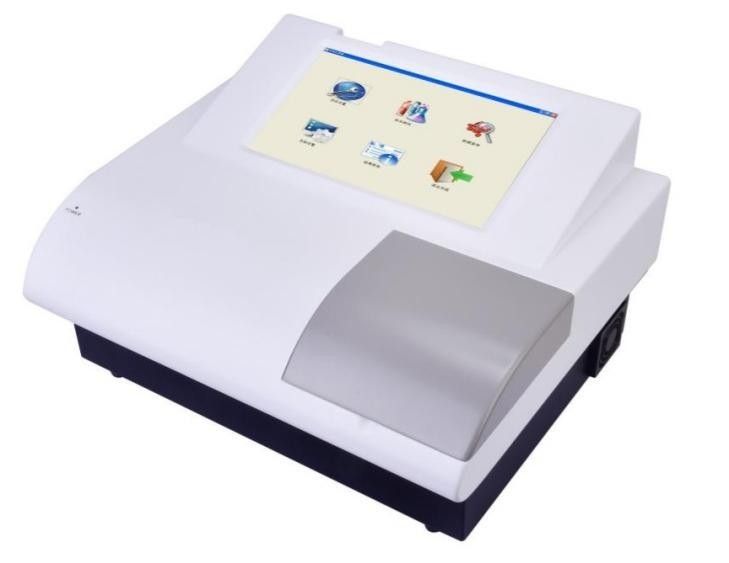
| HE-201 | Built-in portable computer; 10.4-inch color touch LCD; Windows operation interface | 44 × 37 × 24 cm | 220 VAC ±15% or 110 VAC ±15%; 50–60 Hz; 100 W | Delivered voltage configuration, included peripherals, and any external PC requirements |
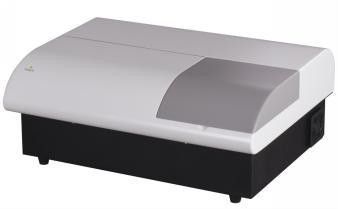
| HE-202 | External computer; external large LCD color screen; Windows operation interface | Request installation dimensions | 220 VAC ±15% or 110 VAC ±15%; 50–60 Hz; 100 W | Computer and display inclusion, supported operating system, drivers, and connection requirements |
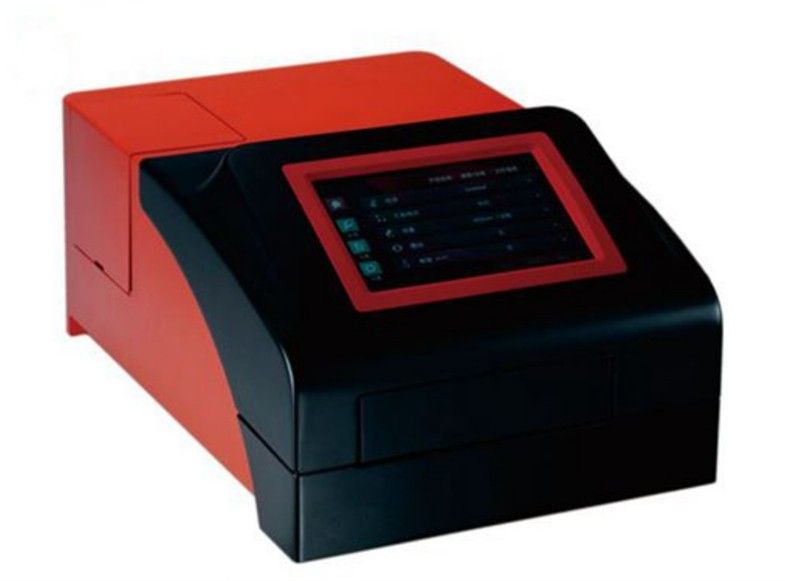
| HE-800 | Built-in software; 7-inch color touch screen; USB data transfer and printer ports | 400 × 290 × 220 mm | 100–240 V; 50/60 Hz; adapter | Any external computer requirement, adapter inclusion, export formats, and printer compatibility |
HQS lists an operating environment of 5–40°C and humidity ≤85% for the HE-201 and HE-202. Ask HQS to approve the proposed room conditions for the selected model rather than applying those limits to every reader.
The electrical plan should cover the complete workstation, not only the reader. Confirm suitable outlets, the delivered plug and power configuration, and the computer and printer power requirements with the installer.
Which HQS Elisa Reader configuration fits the clinic?
Elisa Reader configuration should follow the clinic’s intended assays, plate format, and reporting workflow.
HE-201 Elisa Reader
The Elisa Reader HE-201 supports 96-well plates and has a 10.4-inch color touch LCD. Its built-in computer arrangement is relevant when the clinic wants to avoid specifying a separate reader-control computer; confirm whether any additional computer is needed for reporting or data management.
HE-202 Elisa Reader
The Elisa Reader HE-202 supports 96-well plates and lists RS232, USB, and PC connectivity. Its external-computer arrangement makes workstation inclusion and software compatibility important quotation items.
HE-800 Elisa Reader
The Elisa Reader HE-800 supports 96-well and 384-well plates with a maximum plate height of 15.3 mm. HQS lists installed filters at 405, 450, and 620 nm; confirm the filters required by the intended assays rather than assuming the full wavelength range is installed.
For a dog-and-cat clinic planning a defined set of veterinary ELISA tests, prioritize assay compatibility, included computing, and patient-report handling. Confirm suitability for the intended species and test kit before ordering.
For an equine referral laboratory or veterinary research facility considering 384-well work, the HE-800’s plate support is a relevant distinction. Higher-density plate capability should only influence the purchase if the planned assays and supporting laboratory equipment require it.
What should the Elisa Reader computer quotation include?
An Elisa Reader computer quotation should specify the working system, not simply promise “PC connectivity.”
- Identify the computer, display, keyboard, mouse, cables, and printer included in the order, along with responsibility for sourcing anything excluded.
- Confirm supported Windows versions, hardware requirements, software licensing, installation permissions, and responsibility for future updates.
- Request sample report and export files so the clinic can assess patient identification, file handling, and compatibility with its existing records process.
- Agree on backup, restoration, and support access arrangements with the clinic’s IT contact before installation.
HQS lists USB data transfer for the HE-800 and RS232 and USB interfaces for the HE-201 and HE-202. Those interfaces do not establish direct integration with practice-management software. Any proposed integration should be specified and demonstrated separately.
For printing, HQS lists HP PCL5, PCL5c, and PCL5e compatibility for the HE-800. Have HQS approve the exact printer model. For the HE-201 and HE-202, confirm the external printer included or supported in the quoted package.
Who handles Elisa Reader installation, training, and cleaning?
Elisa Reader installation, training, and cleaning responsibilities should be agreed in writing before delivery.
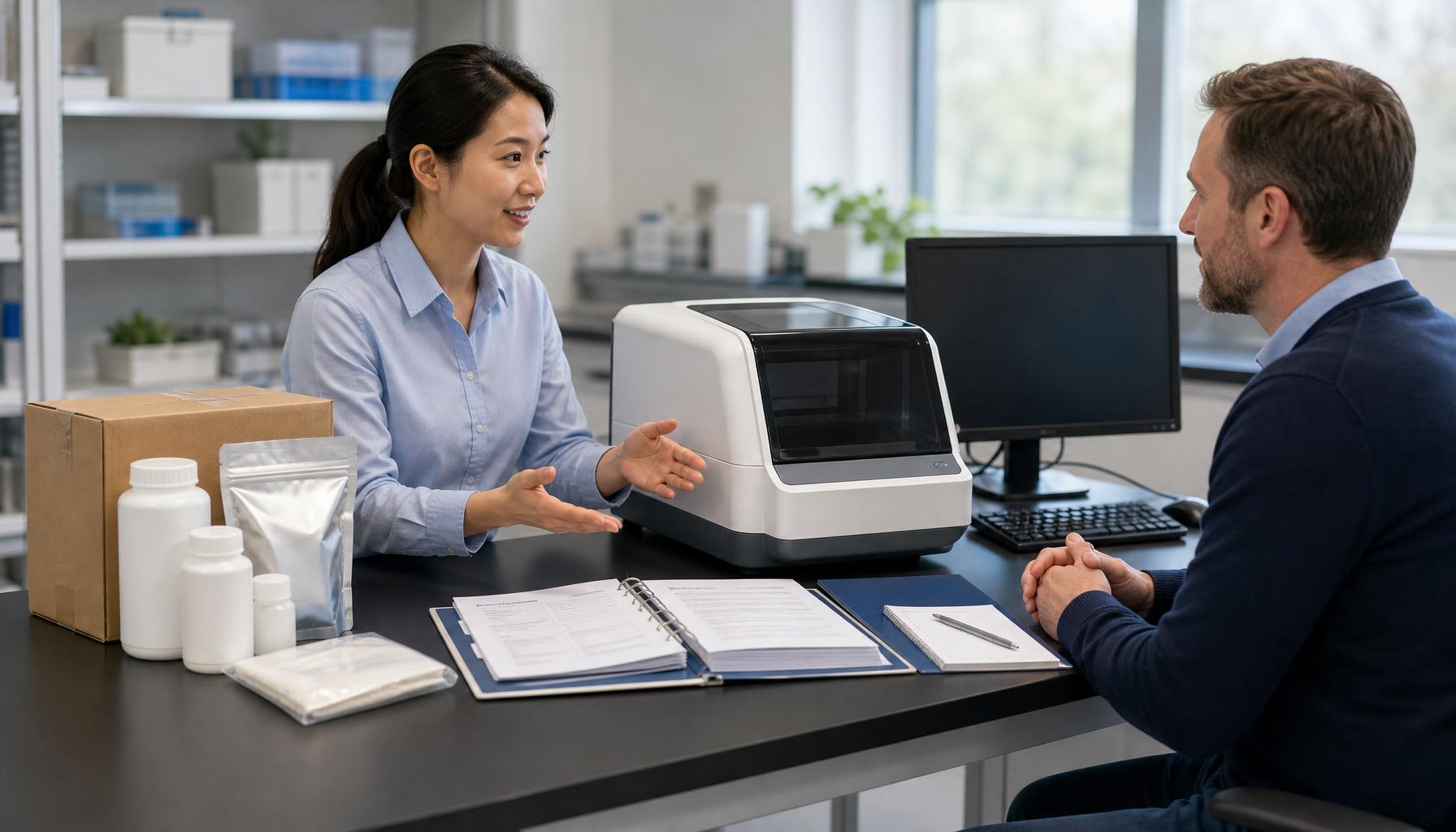
Ask the quotation to identify who unpacks and installs the equipment, sets up software and peripherals, checks the delivered configuration, and documents handover. Training should distinguish routine laboratory use from administrator tasks such as managing test parameters, reports, and stored data.
- Confirm whether training is on-site or remote, who may attend, and whether follow-up training is included.
- Request the model-specific cleaning instructions, approved cleaning materials, and a clear division between user cleaning and service work.
- Agree on the required installation and acceptance records, including how the clinic will confirm that reporting and data transfer work as quoted.
Cleaning, calibration, and maintenance procedures should come from the applicable model documentation and service agreement. Procurement specifications are not a substitute for those instructions.
Elisa Reader consumables, spare parts, and service costs
Elisa Reader ownership costs should be itemized separately from the instrument purchase.
Request separate quotation lines for assay kits, compatible microplates, assay-required controls, printer supplies, software charges, installation, training, and service. Confirm which items HQS provides and which the clinic must source elsewhere. Kit-specific storage requirements should be checked when planning the wider laboratory space.
For service planning, ask HQS which parts are user-replaceable and which require a technician. Request availability, lead times, and replacement terms for the quoted model’s light source, filters, power components, and computing hardware. Confirm whether support is local, remote, or return-to-service, and who pays shipping and associated charges.
For imported equipment, ask HQS to confirm the compliance documents applicable to the quoted configuration and destination market. Coordinate the required customs documentation, importer responsibilities, warranty coverage, and service arrangements before shipment.
When is an Elisa Reader ready for purchase approval?
An Elisa Reader is ready for purchase approval when the quotation resolves the complete installation and support arrangement.
Approve the order only after the selected assays and plates match the configuration, the bench layout is accepted, the computer and printer package is explicit, and training, cleaning, maintenance, and service responsibilities are assigned. A compact reader or a built-in touchscreen can simplify part of the installation, but neither replaces a documented workstation plan.