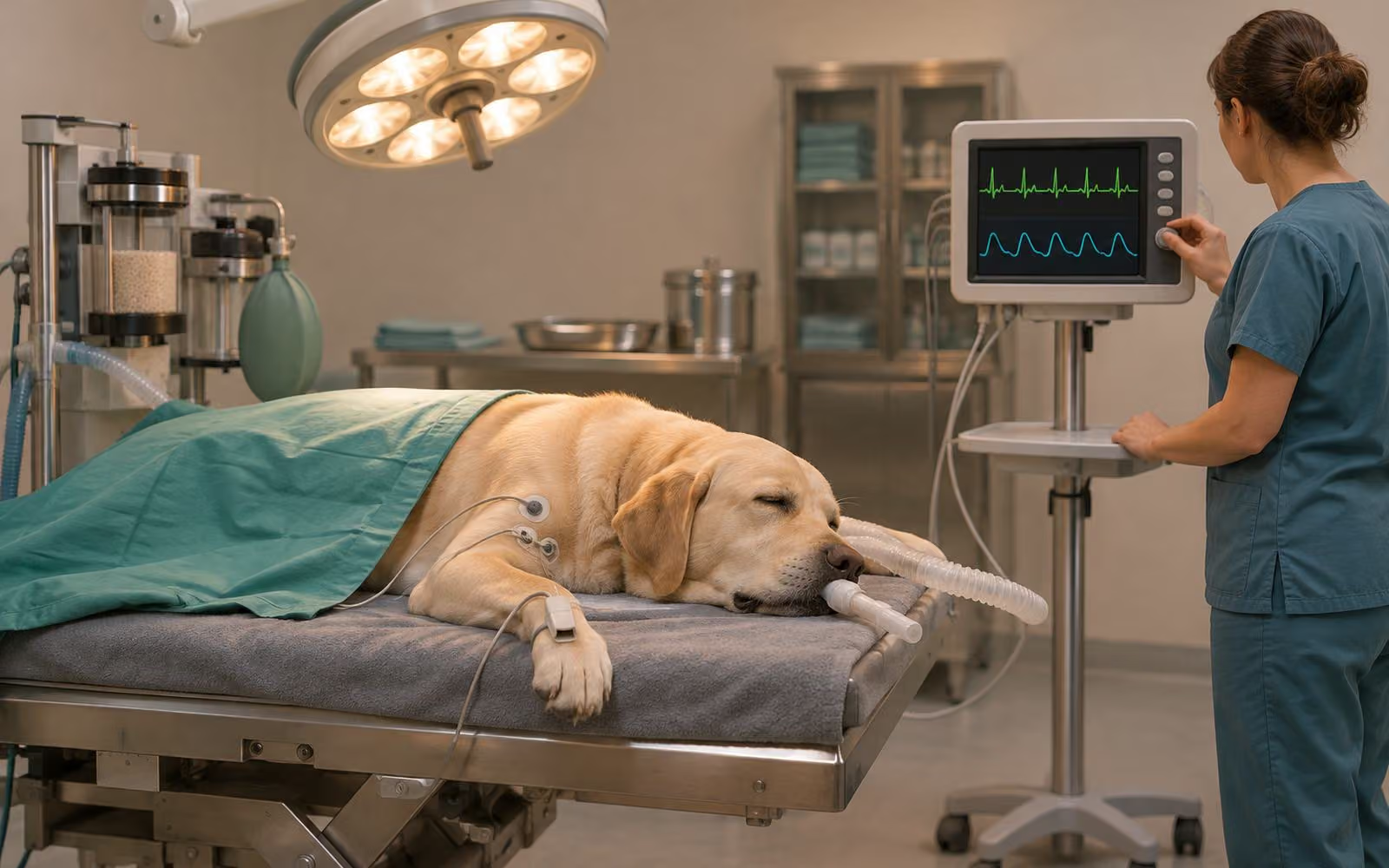
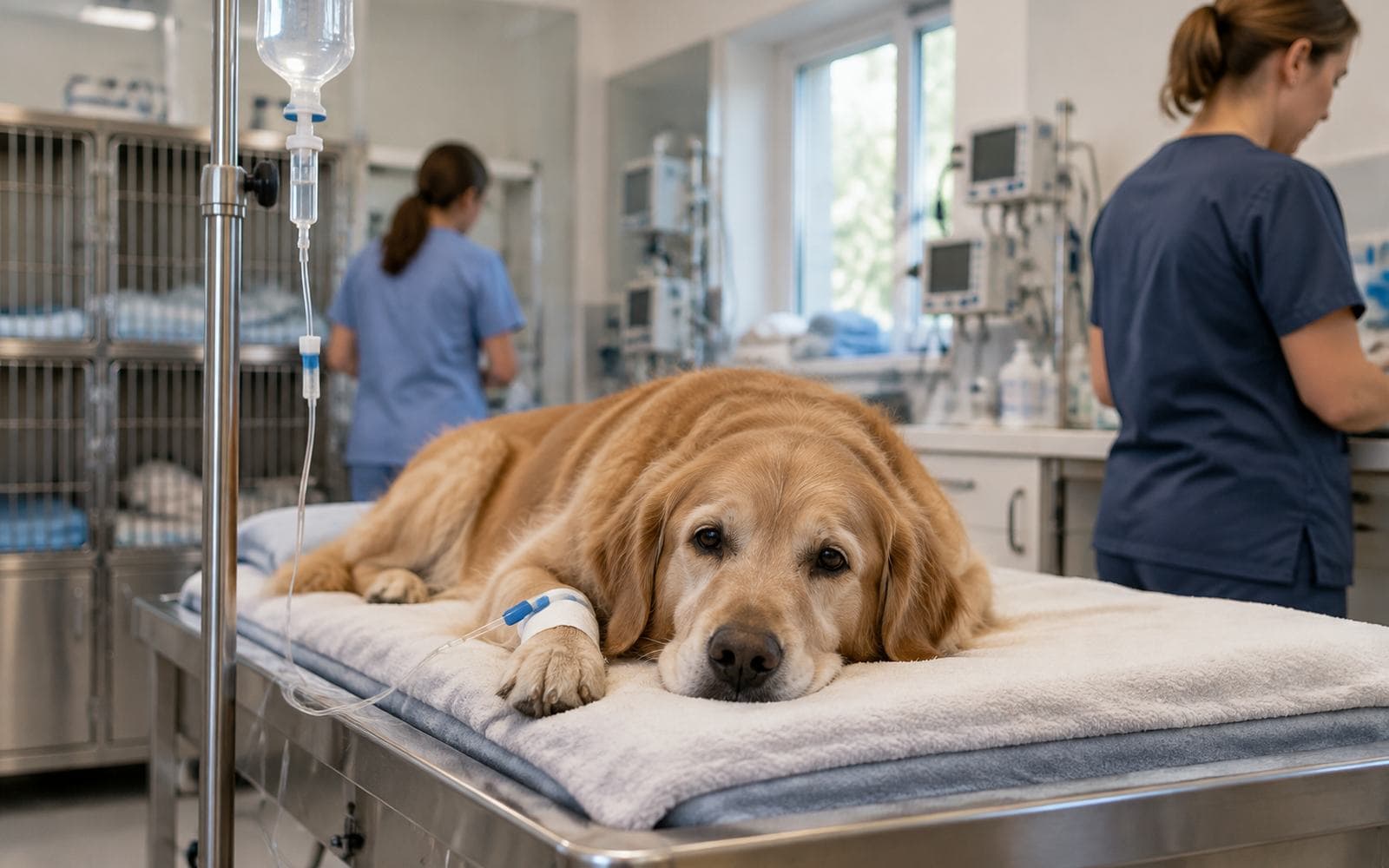
A veterinary operating table budget should separate the quoted equipment and options from delivery, installation, staff training, cleaning supplies, preventive maintenance, and repair support. Before approving a purchase, ask HQS to itemize those responsibilities for the exact configuration and destination. Comparing the table price alone leaves important ownership costs unresolved.
A veterinary operating table is a patient-support platform used to position animals for surgical procedures. Within the Operating Table category, the purchasing question is which configuration fits the clinic’s patients, room, cleaning workflow, and available service support—not simply which table carries the highest load rating.
What should a veterinary operating table quote include?
A veterinary operating table quote should distinguish the equipment package from the services and recurring purchases needed to keep it available for clinical work.
- Equipment and options: identify the model, quoted configuration, included accessories, and separately priced additions.
- Delivery and installation: specify freight, import-related charges where applicable, unloading, internal transport, assembly, positioning, and packaging removal.
- Training and handover: identify the training format, staff covered, documentation, and responsibility for confirming installation is complete.
- Upkeep and repairs: separate cleaning supplies, replaceable accessories, scheduled service, spare parts, labor, travel, and return freight.
Ask for each item to be marked as included, separately charged, or the clinic’s responsibility. Optional heating, for example, should appear as a defined configuration rather than an assumption attached to the model name. A usable comparison also states the delivery terms, payment milestones, and conditions for accepting the installed equipment.
Which veterinary operating table specifications affect installation costs?
Veterinary operating table dimensions, height range, and load capacity help screen a purchase, but they do not replace a model-specific installation plan.
HQS lists the following specifications on its product pages. Use the table to identify which models warrant a detailed quotation; ask HQS to confirm the final installed envelope, access requirements, and configuration before arranging delivery.
| Model | Listed length × width or overall footprint (mm) | Listed height range (mm) | Listed load capacity (kg) | Confirm with HQS |
| OT-001 | 1300 × 600 | 450–1050 | 250 | Installed clearance, delivery route, and electrical requirements for the quoted options |
| OT-002 | 1400 × 650 | 760–1060 | 250 | Clearance for the quoted tabletop configuration and responsibility for installation |
| OT-005 | 3700 × 1200 | 600–870 | 1500 | Unloading arrangements, floor suitability, transport route, and working envelope |
For a dog-and-cat surgical clinic, compare the listed height ranges against patient-transfer arrangements and the team’s working positions. For an equine surgical facility, start with the larger table’s access route, unloading arrangements, floor assessment, and patient-transfer plan. A load-capacity figure alone does not establish suitability for either setting.
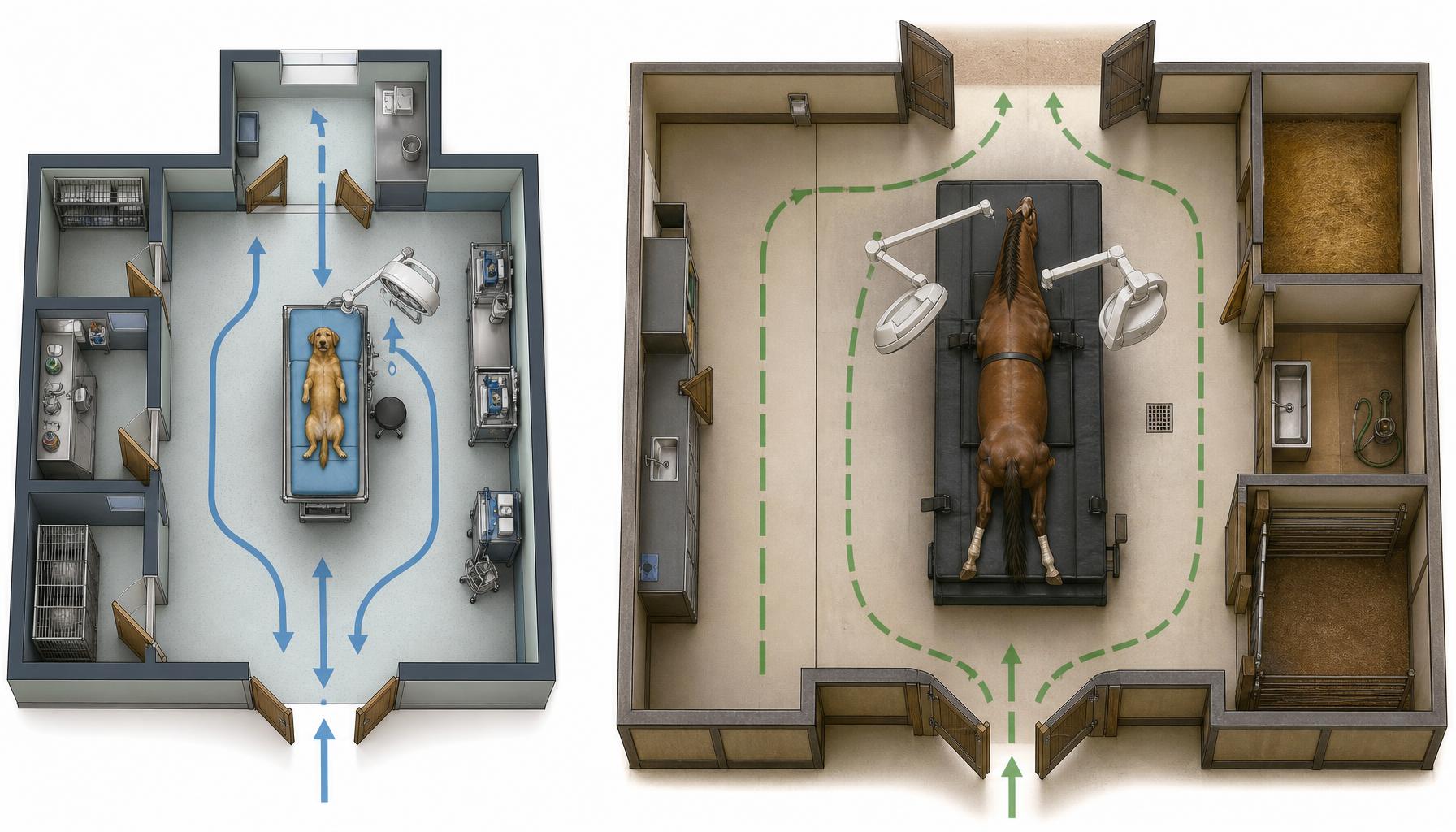
HQS veterinary operating table models to include in an inquiry
- Veterinary Operating Table (Electric) OT-001: HQS lists fully 304 stainless steel construction and an optional thermostatic control heating system. Request separate pricing and support terms for the heating option.
- Veterinary Operating Table (Electric) OT-002: HQS lists manual V-shape adjustment and optional thermostatic heating. Confirm which functions and accessories are included in the quoted configuration.
- Veterinary Operating Table OT-005: HQS describes an electric-hydraulic table for bulls and horses with four detachable leg supports. Ask how delivery, assembly, and accessory handover are handled.
Who handles veterinary operating table installation and training?
Veterinary operating table installation and training responsibilities should be agreed before shipment, with a named owner for each task.
Ask HQS for the site requirements applicable to the exact table and options: electrical supply and connection, floor requirements, assembly needs, and access for future service. Have the receiving team check the packed shipment against the unloading equipment, entrances, corridors, and lifts along the delivery route—not just the operating-room doorway.
The purchase order should identify who unloads and unpacks the table, who completes any required assembly and installation checks, and who signs the handover record. Request the applicable declaration, certificate, labeling, and import documentation for the quoted configuration and destination market early enough for the clinic’s importer or compliance adviser to review them.
Training should cover the model’s intended use, limitations, approved cleaning instructions, routine user responsibilities, and the route for reporting faults. Confirm whether training is on-site or remote, whether repeat sessions are chargeable, and how replacement staff can obtain the same materials.
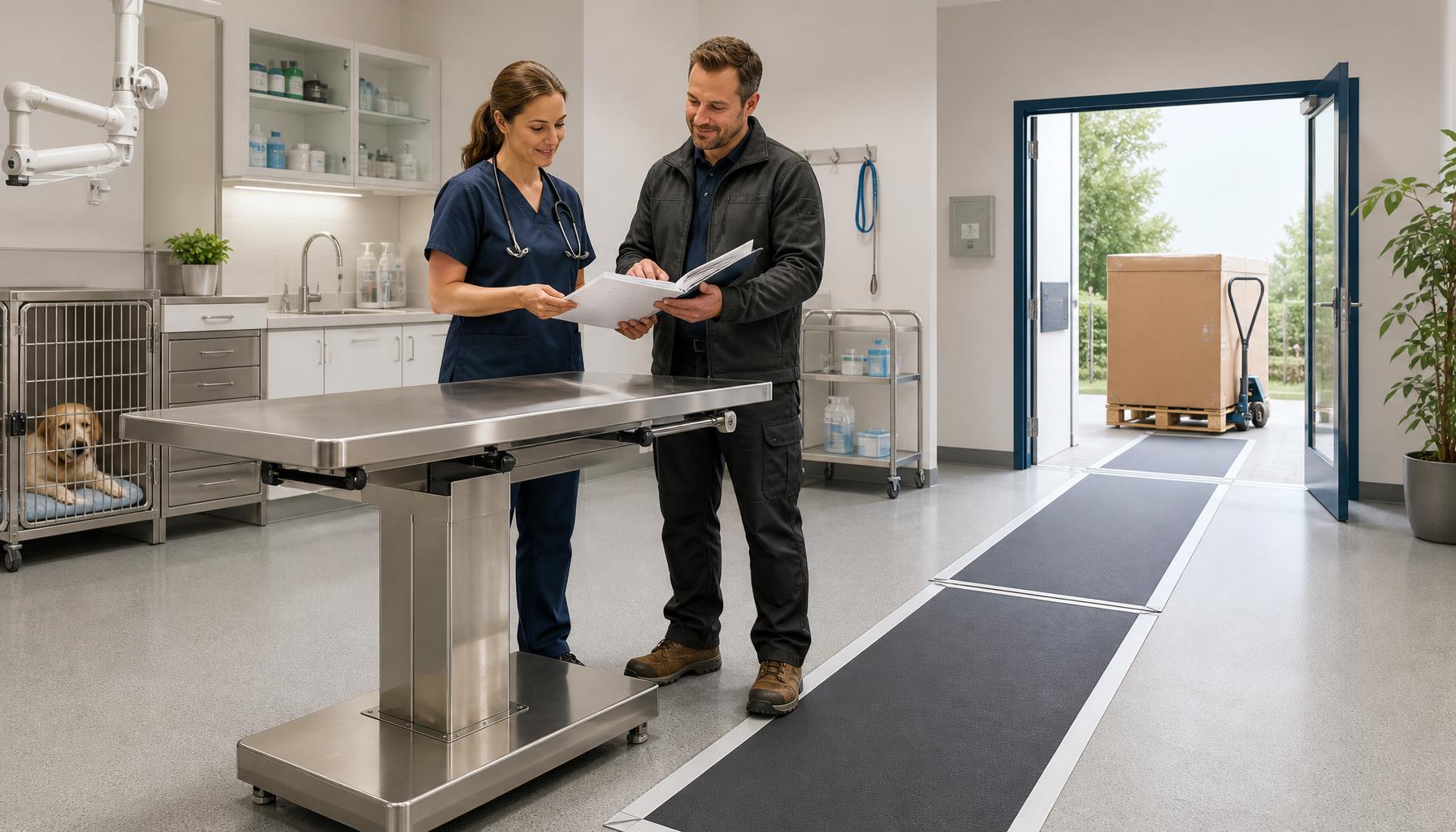
What cleaning and maintenance costs should a veterinary operating table budget cover?
Veterinary operating table upkeep should be budgeted from the model’s approved cleaning instructions and maintenance schedule, rather than from the stainless steel description alone.
HQS describes the stainless steel tabletop and basin of OT-001 and OT-002 as easy to clean. That description does not specify which cleaning products are compatible with every surface, control, accessory, or optional component. Request the model-specific instructions before the clinic commits to its cleaning supplies.
Ask HQS to separate the recurring requirements into three groups:
- Clinic cleaning supplies: approved agents, applicators, and any restrictions affecting the clinic’s existing infection-control purchasing.
- Replaceable items and accessories: identify any required covers, pads, collection items, or other components, and confirm whether each is reusable, disposable, included, or purchased separately.
- Technical maintenance: obtain the service schedule, permitted user tasks, technician-only work, and the parts and labor included in each service visit.
Do not assume a veterinary operating table needs proprietary consumables—or that routine cleaning is its only recurring expense. Ask for an itemized list for the quoted configuration. Assign daily cleaning to a clinic role and technical maintenance to the agreed service provider so neither responsibility falls between teams.
Which veterinary operating table spare parts and service terms matter?
Veterinary operating table service terms are useful only when they explain how the clinic obtains diagnosis, parts, and repair support in its location.
Request a configuration-specific spare-parts list with ordering references and quoted availability. Ask HQS which components are field-replaceable, who is authorized to replace them, and whether repair requires an on-site visit or return shipment. For an optional heating system, request its service coverage separately rather than assuming it follows the table’s other components.
- Warranty scope: confirm coverage for parts, labor, travel, freight, and optional accessories, plus the applicable exclusions.
- Support route: identify the service contact, support hours, language, and information needed to open a service request.
- Parts and downtime: request current lead times, dispatch arrangements, repair-location options, and any available temporary replacement arrangements.
A quoted response time is not the same as a repair-completion commitment. Ask the supplier to distinguish initial contact, diagnosis, parts dispatch, and technician attendance. Clinics with limited spare surgical capacity should evaluate those terms alongside the purchase price.
When is a veterinary operating table quote ready for approval?
A veterinary operating table quote is ready for approval when the clinic can identify both the delivered configuration and who pays for each installation and upkeep responsibility.
For a small-animal clinic, resolve room fit, transfer height, cleaning compatibility, and local repair support before adding optional features. For an equine facility, resolve unloading, site suitability, patient-transfer arrangements, and service access before treating load capacity as sufficient justification.
Ask HQS to return an itemized equipment-and-service quotation tied to the selected model, options, destination, and installation address. Compare that quotation with the clinic’s own site-work and recurring-supply costs. The purchasing decision should rest on that documented scope—not on an unsupported lifetime-cost estimate or the lowest equipment line item.