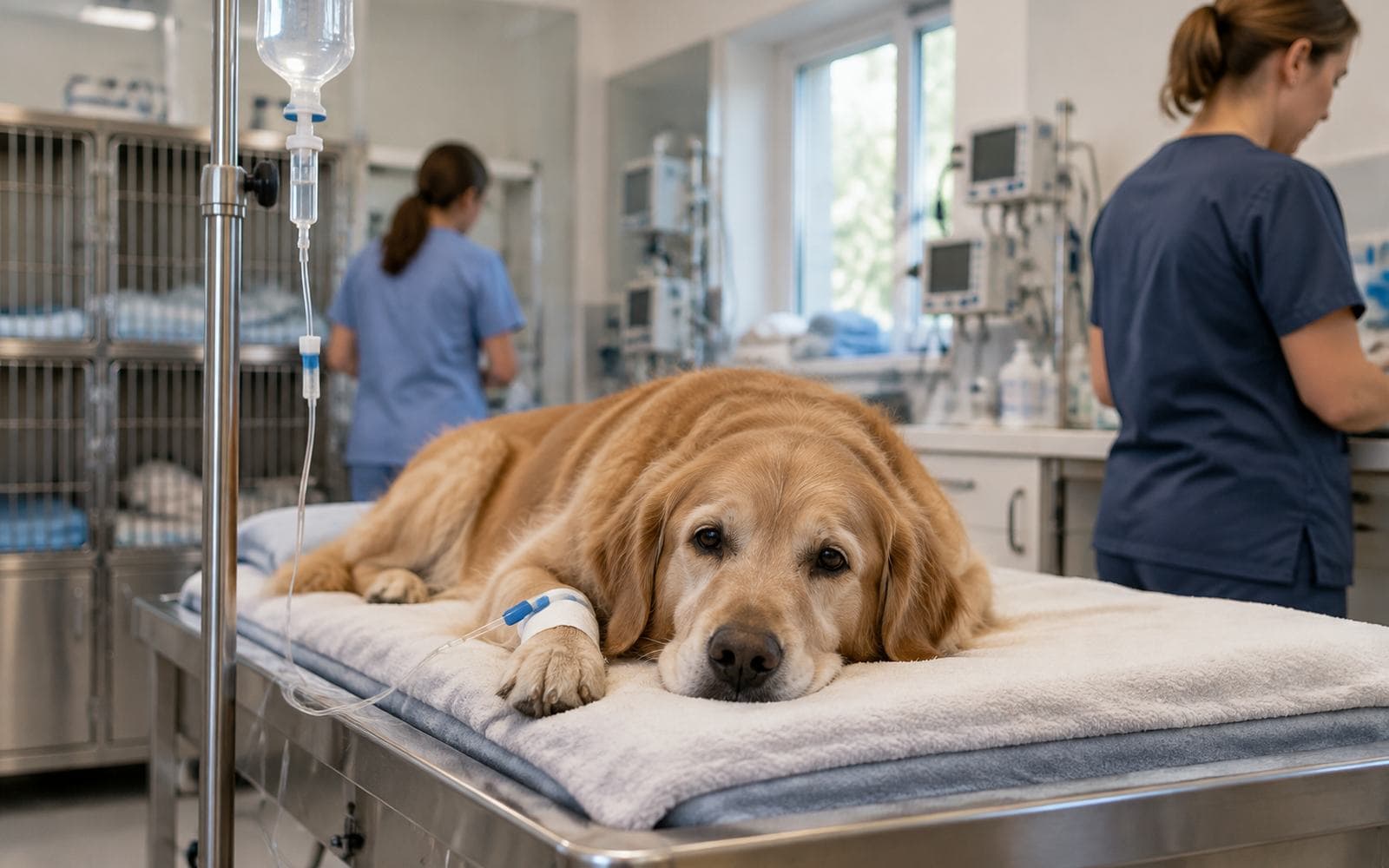
A veterinary infusion pump is an electronic device that pushes intravenous fluids or drug solutions into an animal at a set rate, measured in millilitres per hour (mL/h), instead of relying on gravity and a roller clamp. The veterinarian or nurse enters the rate or the volume and time, and the pump delivers it steadily, alarms if the line is blocked, contains air or runs empty, and keeps a record of what was given. Clinics use two main kinds: volumetric (large-volume) pumps that work on a standard IV set, and syringe pumps that slowly drive the plunger of a syringe for small, precise volumes.
What is a veterinary infusion pump?
An infusion pump controls flow. Fluid therapy, continuous drug infusions and transfusions all depend on how much reaches the patient per hour, and in small patients the margin between too little and too much is narrow. With gravity drip, the rate is set by counting drops and turning a roller clamp; it changes when the bag empties, the animal moves or the catheter position shifts. A pump holds the programmed rate regardless of bag height and tells staff when something stops the flow.
Veterinary pumps are the same technology as hospital pumps. What matters in animal practice is a wide rate range, from below 1 mL/h for a kitten to several hundred mL/h for a large dog or a foal, a body-weight calculation mode, and alarms that are loud enough in a busy ward.
How does a volumetric infusion pump work?
Most volumetric pumps use a linear peristaltic mechanism. The IV tubing is laid in a channel behind the pump door, and a row of fingers presses on it one after another, squeezing the fluid forward in a wave. The motor speed sets how fast the wave moves and therefore the flow rate. Around this mechanism sit the sensors that make the pump safe:
- Occlusion (pressure) sensor: detects rising pressure when the line or catheter is kinked or clotted. The HQS IP-50, for example, offers three occlusion levels: low 60, medium 90 and high 120 kPa (±15 kPa).
- Air-in-line detector: a sensor on the tubing that stops the pump and alarms when a bubble passes.
- Door and empty-bag detection: the pump will not run with the door open and alarms when the container is empty.
- Anti-bolus function: after an occlusion is cleared, the pump releases the built-up pressure so the patient does not receive a sudden surge of fluid.
Accuracy depends on the tubing as well as the pump. Peristaltic pumps are calibrated for particular IV sets, so using the set recommended by the manufacturer keeps the stated accuracy.
How does a syringe pump work?
A syringe pump holds a standard syringe in a cradle and pushes its plunger with a screw-driven carriage. Because the volume per millimetre of plunger travel is known for each syringe size, the pump can deliver very small, steady flows. Syringe pumps are used for continuous-rate drug infusions, small patients and any situation where a few millilitres per hour must be precise. The HQS SP-30 accepts 5, 10, 20, 30, 50 and 60 mL syringes and is rated at ±2% accuracy when the syringe brand is correctly calibrated.
Volumetric pump vs syringe pump vs gravity drip
| Feature | Gravity drip with roller clamp | Volumetric (peristaltic) pump | Syringe pump |
|---|---|---|---|
| How flow is set | Counting drops per minute | Programmed in mL/h | Programmed in mL/h |
| Typical use | Maintenance fluids in larger, stable patients | Fluid therapy, larger volumes, transfusion | Small volumes, continuous drug infusions |
| Container | Fluid bag | Fluid bag with IV set | Syringe up to 50–60 mL |
| Rate stability | Changes with bag height and patient movement | Held by the motor | Held by the motor, very steady at low rates |
| Alarms | None | Occlusion, air, door, empty, battery | Occlusion, near-empty, syringe position, battery |
| Records | Manual charting | Event history in the pump | Event history in the pump |
Gravity drip still has a place in many clinics. The cost and workflow trade-offs are covered in gravity drip vs infusion pump: a cost-benefit veterinary view.
Key infusion pump functions explained
- Rate mode and time mode: enter a rate in mL/h, or a volume to be infused (VTBI) and a time, and the pump calculates the rate.
- Body-weight (dose) mode: the pump calculates the flow rate from the patient's weight, the drug amount and the diluent volume, and the prescribed dose rate entered by the veterinarian. This reduces manual calculation steps.
- KVO (keep vein open): after the programmed volume is finished, the pump continues at a very low rate so the catheter does not clot. The IP-50 KVO rate is adjustable from 0 to 5 mL/h.
- Bolus and purge: a bolus delivers a set extra volume at a set rate on command; purge flushes air from the line before connection.
- Drug library: stored drug names with limits, used on more advanced pumps. The IP-70 stores no fewer than 2,000 drugs.
- Event history: the IP-50 stores 2,000 events and the IP-70 more than 5,000 entries, which helps when reviewing what happened during an overnight infusion.

Specifications compared: HQS IP-50, IP-70 and SP-30
| Specification | IP-50 infusion pump | IP-70 infusion pump | SP-30 syringe pump |
|---|---|---|---|
| Type | Volumetric | Volumetric, touch screen | Syringe |
| Accuracy | ±2% | ±5% | ±2% with correct calibration |
| Rate range | 0.1–1200 mL/h | 0.01–1200 mL/h | 0.1–2000 mL/h (50/60 mL syringe) |
| KVO | 0–5 mL/h | 0.01–5 mL/h | Programmable |
| Occlusion settings | 3 levels (60/90/120 kPa) | 12 levels | 3 levels (60/90/120 kPa) |
| Display | Large LCD | 4.3-inch colour touch screen | Not listed |
| Battery | 2,000 mAh lithium, 12 h continuous | 2,600 mAh, more than 9 h at 25 mL/h | 2,600 mAh lithium, 8–10 h |
| Protection | Class I, Type CF, IPX4 | Class I, CF, IP24 | Class I, Type CF, IP34 |
| Weight | 1.7 kg | About 1.6 kg | 2.0 kg |
The IP-50 infusion pump is a volumetric pump with a large LCD, DPS dynamic pressure display and an RS-232 interface. The IP-70 infusion pump adds a touch screen, drip, ramp, sequence and drug-library modes. The SP-30 syringe pump covers small, precise infusions. All three are made by HQS Medical.
Safe use in the clinic
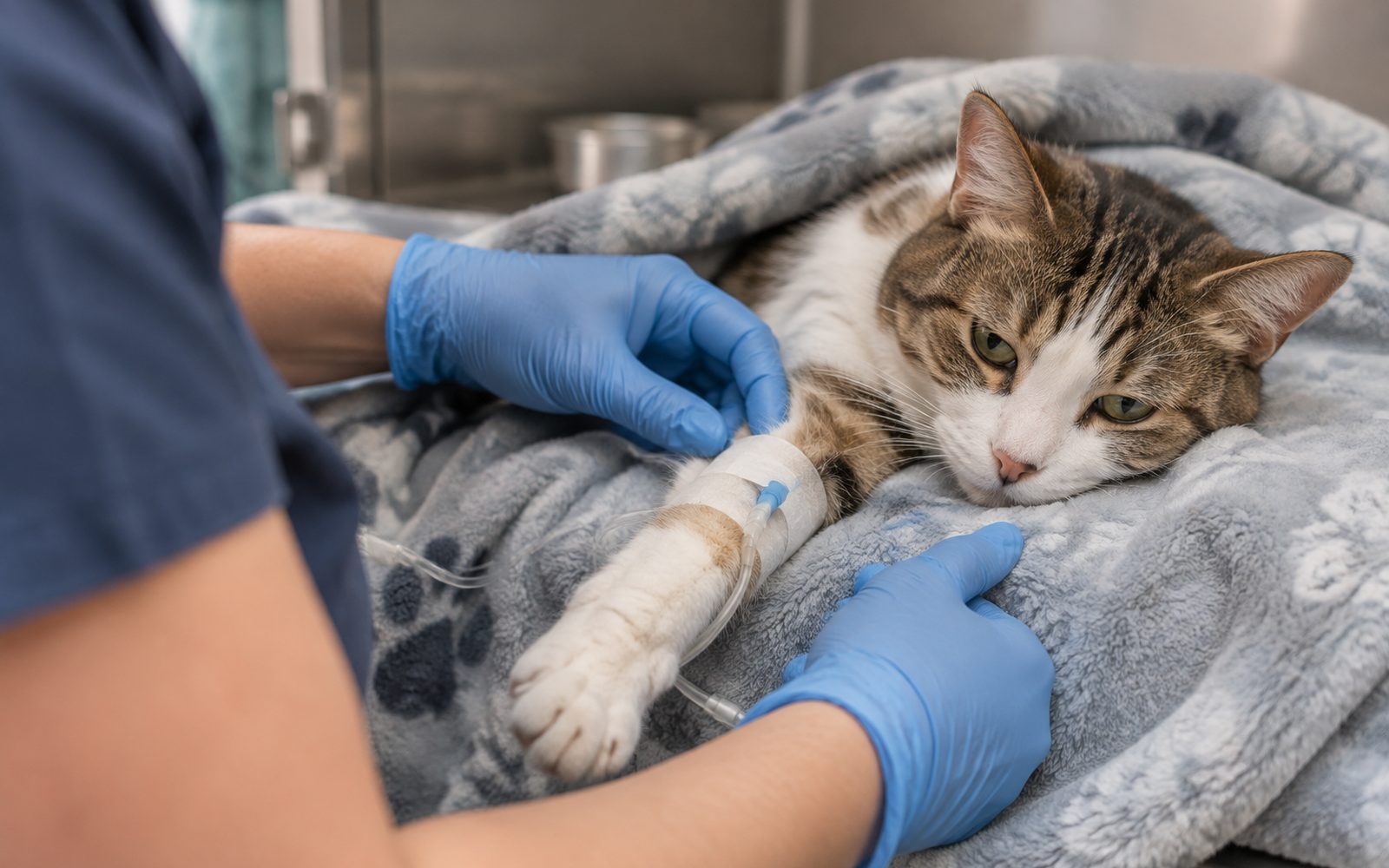
- Prime the line fully and use the purge function to remove air before connecting the patient.
- Check the programmed rate and volume against the written prescription before pressing start; a second person checking is good practice for drug infusions.
- Set the occlusion level to suit the patient and catheter size; a lower threshold alarms sooner.
- Look at the catheter site regularly. A pump keeps pushing into tissue if the catheter has moved out of the vein, and pressure alarms do not always catch this early.
- Keep the pump plugged in when possible and check the battery before transport.
- Clean the housing between patients with a disinfectant the manufacturer approves, and keep fluid out of the door mechanism.
FAQ
What is the difference between an infusion pump and a syringe pump?
An infusion (volumetric) pump moves fluid from a bag through an IV set, usually with a peristaltic mechanism, and suits larger volumes. A syringe pump drives the plunger of a syringe and suits small volumes and low rates where precision matters most.
Can a human infusion pump be used in a veterinary clinic?
Yes, the technology is the same. What to check is the low end of the rate range, the availability of compatible IV sets and syringes locally, and whether a body-weight mode is included.
What does KVO mean on an infusion pump?
KVO stands for keep vein open. After the programmed volume is delivered, the pump runs at a very low rate so the catheter stays patent until staff respond.
Why does an infusion pump alarm for occlusion?
The pressure in the line has passed the set threshold, usually because the line is kinked, a clamp is closed, the catheter is blocked or the limb is bent. Staff should find and clear the cause before restarting.
Who makes the IP-50, IP-70 and SP-30?
They are made by HQS Medical, a veterinary equipment manufacturer based in Jinhua, Zhejiang, China, which supplies distributors and veterinary clinics directly.