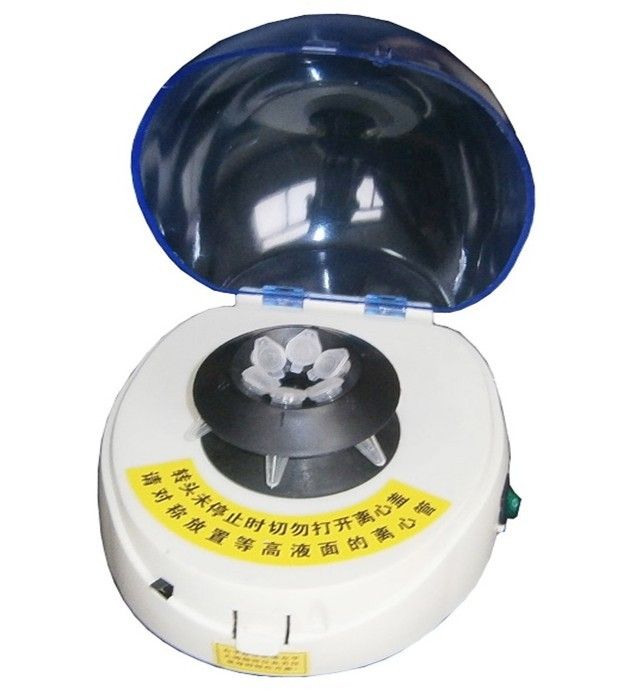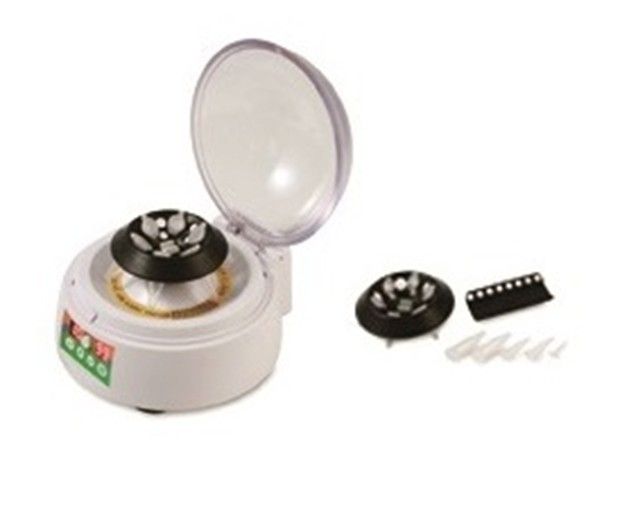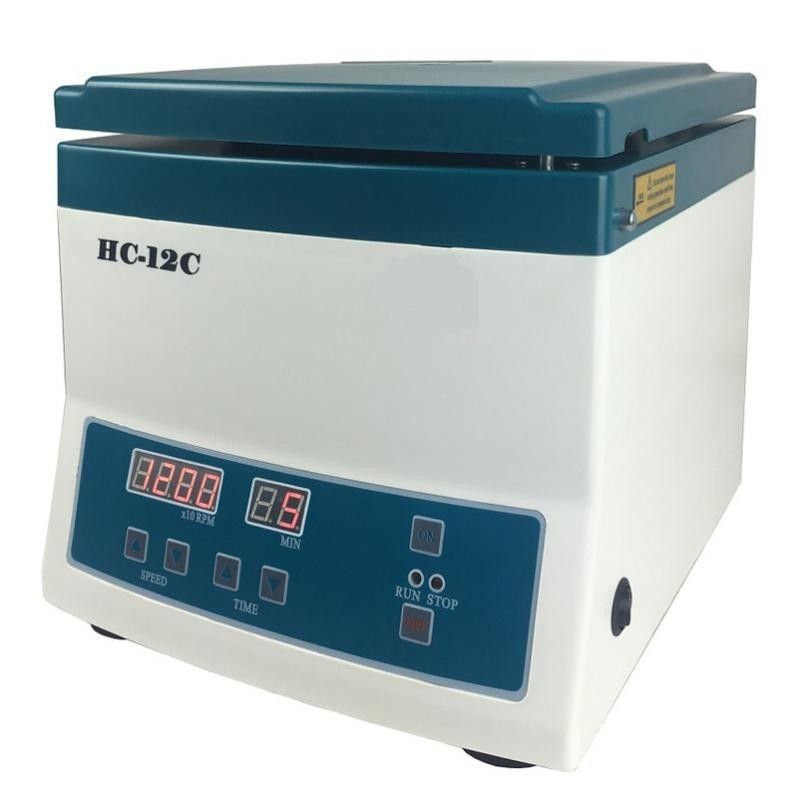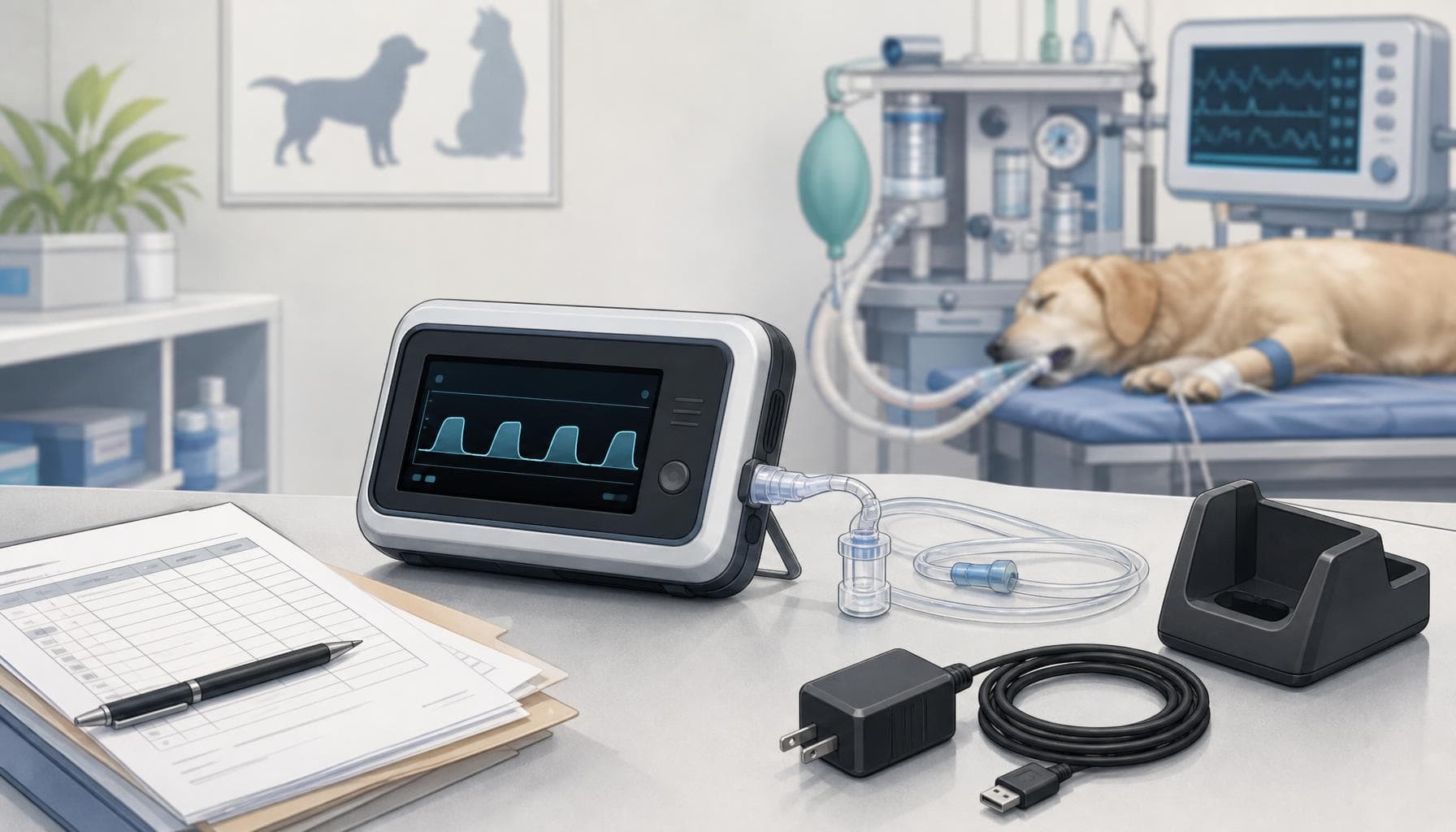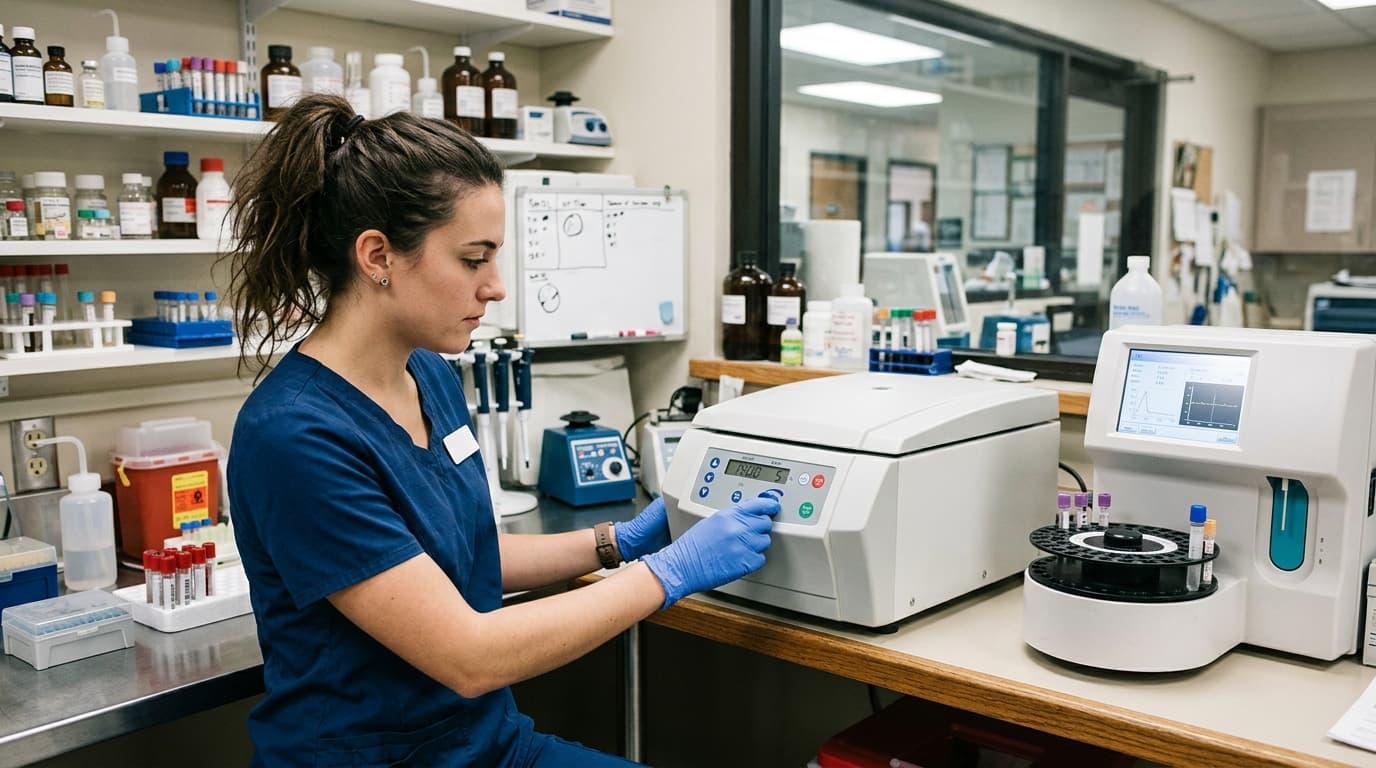
In veterinary diagnostics, many practices report inconsistent hematocrit and serum yields simply because laboratory protocols are standardized in Revolutions Per Minute (RPM) rather than Relative Centrifugal Force (RCF). While RPM measures the speed of the rotor, RCF (measured in g-force) calculates the actual gravitational pull exerted on the biological sample. Entering 3,000 RPM on a microcentrifuge yields a vastly different separation force than 3,000 RPM on a large benchtop unit. Standardizing protocols via RCF conversion eliminates these mechanical variables, ensuring that blood, urine, and cytology samples separate correctly without cellular damage.
Efficiency Gains: 2 Clinical Scenarios Compared
Establishing accurate RCF values directly impacts clinical workflow. In an emergency ICU setting, stat serum chemistry requires immediate, clean separation. If a technician runs a sample at 4,000 RPM on a small-radius rotor, the resulting g-force may fall short of the required 1,500 x g, leaving fibrin strands in the sample that can clog a veterinary chemistry analyzer. Conversely, in routine outpatient diagnostics, applying excessive force to a fragile lipemic sample can induce hemolysis, invalidating the test results.
By shifting the laboratory standard from RPM to RCF, clinics standardize the processing force regardless of the equipment used. A reliable equation (RCF = 1.118 × 10♠−5 × radius × RPM²) bridges the gap between different rotor sizes. Integrating these precise calculations allows multiple departments to achieve identical separation quality, reducing the need to redraw patient samples.
3 Settings That Cut Procedure Time
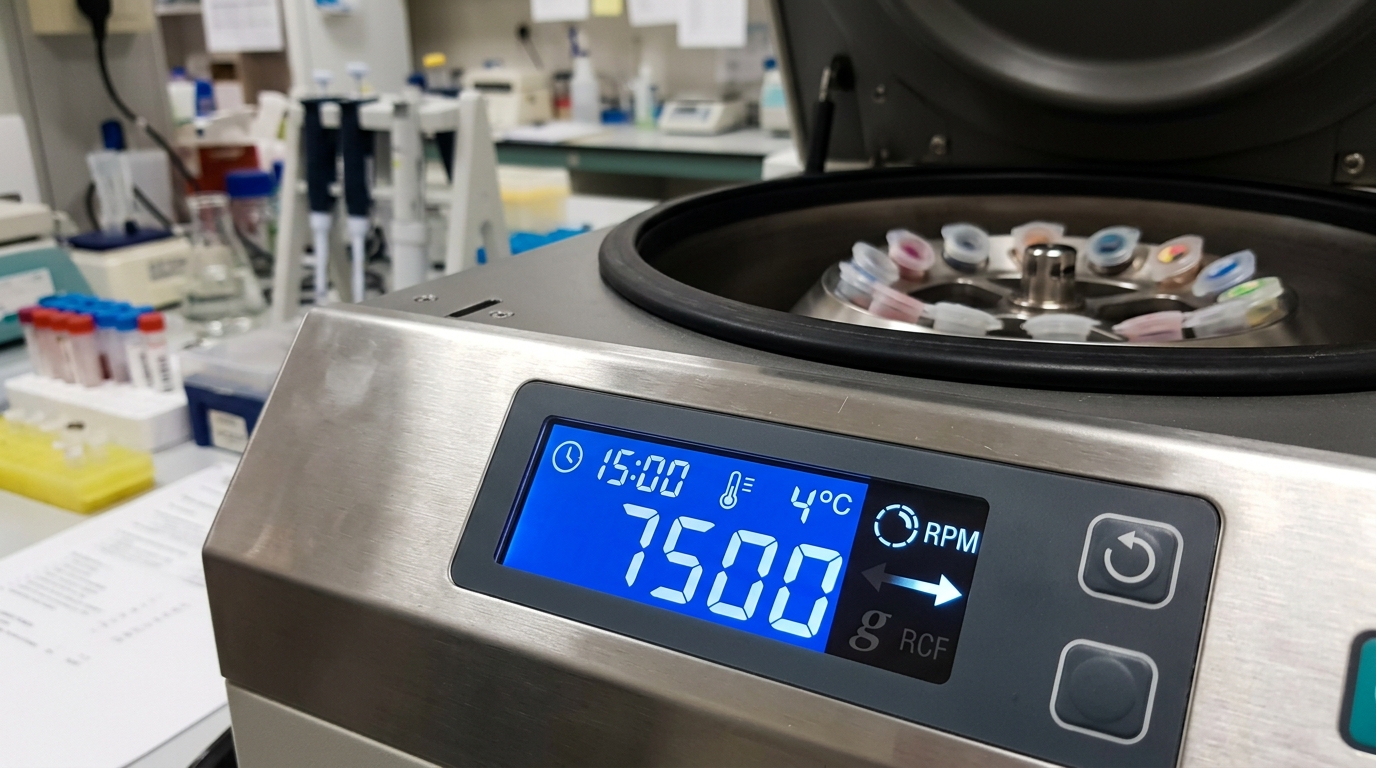
Evaluating and locking in the correct parameters prevents both under-spinning and over-spinning. The transition to RCF relies on three integrated settings: the rotor radius, the target RPM, and the spin duration. The rotor radius must be measured from the center axis to the bottom of the tube bucket. Once the radius is known, operators can align the RPM to hit the exact RCF target for specific procedures, such as urine sediment compaction or packed cell volume (PCV) separation.
Different clinical applications demand specific force thresholds. Below is a comparison of 4 common equipment classes and their operational parameters.
| Equipment Type | Typical RPM / RCF Range | Primary Clinical Scenario | Estimated Replacement Cost |
|---|---|---|---|
| Standard Benchtop Fixed-Angle | 1,500 - 4,000 RPM (up to 2,500 x g) | Routine serum separation and urine sediment | $300 - $800 |
| Microhematocrit Rotor | 10,000 - 12,000 RPM (approx. 14,000 x g) | Rapid PCV determination for anemia | $500 - $1,200 |
| High-Speed Cytology Unit | 4,000 - 15,000 RPM (up to 21,000 x g) | Fluid cytology and specialized diagnostics | $1,500 - $3,500 |
| Refrigerated Variable Speed | 500 - 15,000 RPM (up to 21,000 x g) | Temperature-sensitive protein assays | $4,000 - $8,500 |
Error Rate: 30% Variance in Untrained Staff
Clinical data indicates that untrained personnel who default to generic RPM settings introduce significant variance into diagnostic workflows. When operators fail to consult a conversion nomogram, sample integrity suffers. In our manufacturing experience, switching an older model for a modern unit like the High Speed Centrifuge HC - 16A—which features automatic RCF calculation—can drastically reduce these operator errors.
Staff members relying purely on rotational speed often apply too much force to small-volume tubes, leading to a measurable increase in cellular rupture. Proper training on the mathematical relationship between speed and radius ensures that biological samples yield high-quality serum or plasma, maintaining the accuracy of subsequent biochemical assays.

Downtime Cost: The $450 per Hour Impact of Misuse
Operating a centrifuge at inappropriate RPM settings or with unbalanced loads accelerates mechanical wear. An unbalanced rotor operating at 15,000 RPM creates asymmetric stress that damages the drive shaft and motor bearings. When a primary laboratory unit fails, the resulting diagnostic delays can cost a busy practice approximately $450 per hour in stalled workflows and diverted reference lab fees.
Furthermore, consistent misuse invalidates equipment warranties. Reviewing essential operating tips for low speed refrigerated centrifuges and high-speed units helps clinical directors establish strict load-balancing protocols. Symmetrical sample placement, combined with precise RCF targets, extends the lifespan of the motor assembly and ensures continuous diagnostic availability.
4-Step Maintenance Interval Benchmarks
Preventative maintenance is non-negotiable for high-speed laboratory equipment. Based on HQS clinical observation, centrifuges operating in high-humidity clinical environments exhibit accelerated carbon brush degradation when daily cleaning protocols are ignored. Moisture and microscopic glass debris from broken tubes can fuse to the rotor chamber, causing friction that alters the true RCF output.
Implementing a rigid 4-step maintenance schedule ensures the machine operates at its specified calibration.
| Frequency | Task | Key Action |
|---|---|---|
| Daily | Chamber and Rotor Wipe-down | Remove spills immediately with neutral pH disinfectant; check for glass debris. |
| Weekly | Bucket and Cushion Inspection | Assess rubber tube cushions for cracks or hardening; replace to ensure balance. |
| Monthly | Motor and Hinge Check | Listen for abnormal grinding noises during spin-up; lubricate lid latches. |
| Annual | Tachometer Calibration | Perform professional optical tachometer verification to confirm RPM matches digital display. |
Frequently Asked Questions
How do I manually calculate RCF from a known RPM?
You can determine the Relative Centrifugal Force by using the formula: RCF = 1.118 × 10♠−5 × r × RPM², where 'r' is the radius of the rotor in centimeters measured from the central spindle to the bottom of the tube.
Why does rotor radius alter the g-force output?
Centrifugal force is dependent on the distance the sample travels around the central axis. A larger rotor creates a wider circle, meaning the sample is subjected to a stronger gravitational pull (RCF) at the exact same RPM compared to a smaller rotor.
Can the same RPM setting be used for all blood and urine tubes?
No. Blood serum separation typically requires around 1,500 to 2,000 x g, whereas urine sediment compaction generally requires only 400 to 500 x g to avoid destroying delicate casts. You must adjust the RPM to hit the specific RCF target for the specimen type.
Data Summary: Optimization Impact
Transitioning from RPM estimation to strict RCF protocols yields measurable improvements in diagnostic reliability and equipment longevity. Standardizing the parameters protects sensitive clinical samples and minimizes overhead costs associated with mechanical failure.
| Operational Metric | RPM-Based Workflow | RCF-Standardized Workflow |
|---|---|---|
| Cross-Device Consistency | Highly variable across rotor sizes | Uniform separation force applied |
| Sample Hemolysis Risk | Elevated (due to over-spinning) | Minimized via exact force calculation |
| Calibration Drift Detection | Often unnoticed until failure | Caught during scheduled tachometer checks |
| Financial Downtime Risk | High ($450/hour typical impact) | Low (managed via daily maintenance) |