HQS Editorial Team Usage Guide

Reamer Drill Service Plans and Spare-Part Lead Times

Quick Answer

Compare 4 maintenance intervals, service-plan terms, and Reamer Drill spare-part lead times to budget uptime, sterilization, and repair-cost risk.

Reamer Drill Service Plans and Spare-Part Lead Times - HQS Medical

Article Content

A Reamer Drill purchase should be evaluated as an uptime decision, not only a capital-equipment decision. Four support intervals—daily, weekly, monthly, and annual—define whether a clinic identifies wear before a scheduled orthopedic case is delayed. For a busy small-animal hospital, the meaningful comparison is not simply drill speed or torque: it is whether batteries, couplings, reamer attachments, seals, and sterile-processing instructions remain available when needed.

In the broader Bone Drill & Saw category, reamer-capable systems support medullary canal preparation in fracture repair and selected orthopedic procedures. They may be used differently in canine trauma, equine referral work, and exotic-animal cases, but procurement priorities are consistent: controlled speed, dependable accessory compatibility, documented reprocessing instructions, and a service path that does not depend on an uncertain overseas shipment.

Efficiency Gains: The Numbers Speak

Use four measurable records to evaluate service value: planned cases completed without equipment substitution, accessory-related delays, sterile-processing exceptions, and days awaiting parts. These are more useful than supplier claims about “reliability” because they reflect the clinic’s actual caseload.

A clinic performing occasional fracture repair may accept a loaner arrangement and longer noncritical-part lead times. A referral center with orthopedic lists several days per week generally needs either an on-site backup handpiece or guaranteed temporary replacement terms. In equine practice, transport time, larger reamer diameters, and limited access to emergency inventory can make redundancy more valuable than an extended warranty.

  • Track procedure delays in minutes and record whether the cause was the handpiece, attachment, battery, power supply, or sterilization release.
  • Separate consumable wear from repairable failures; dull reamer bits are not evidence that the motor has failed.
  • Require a named escalation route for urgent clinical cases, including service contact hours and loaner eligibility.
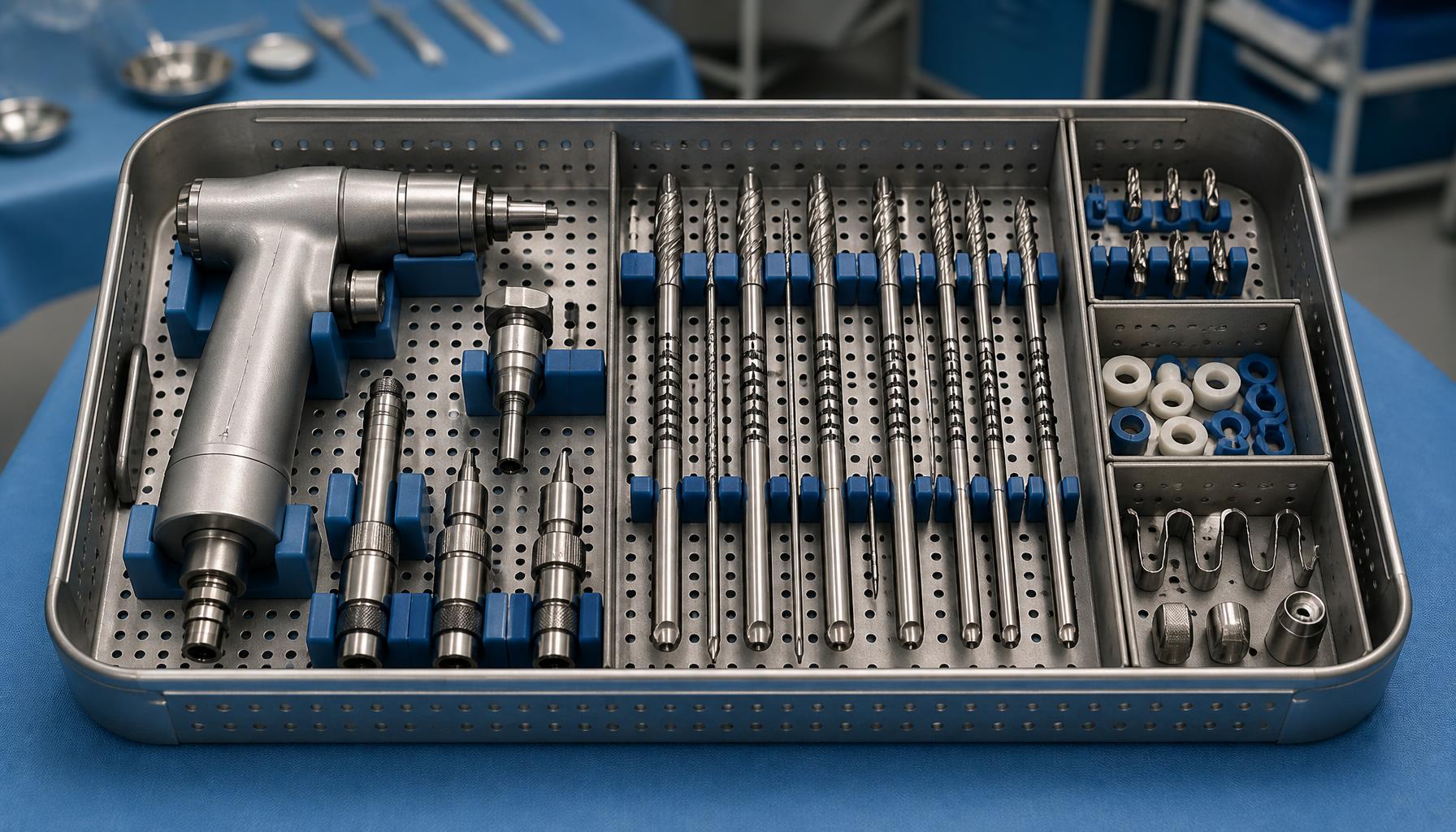
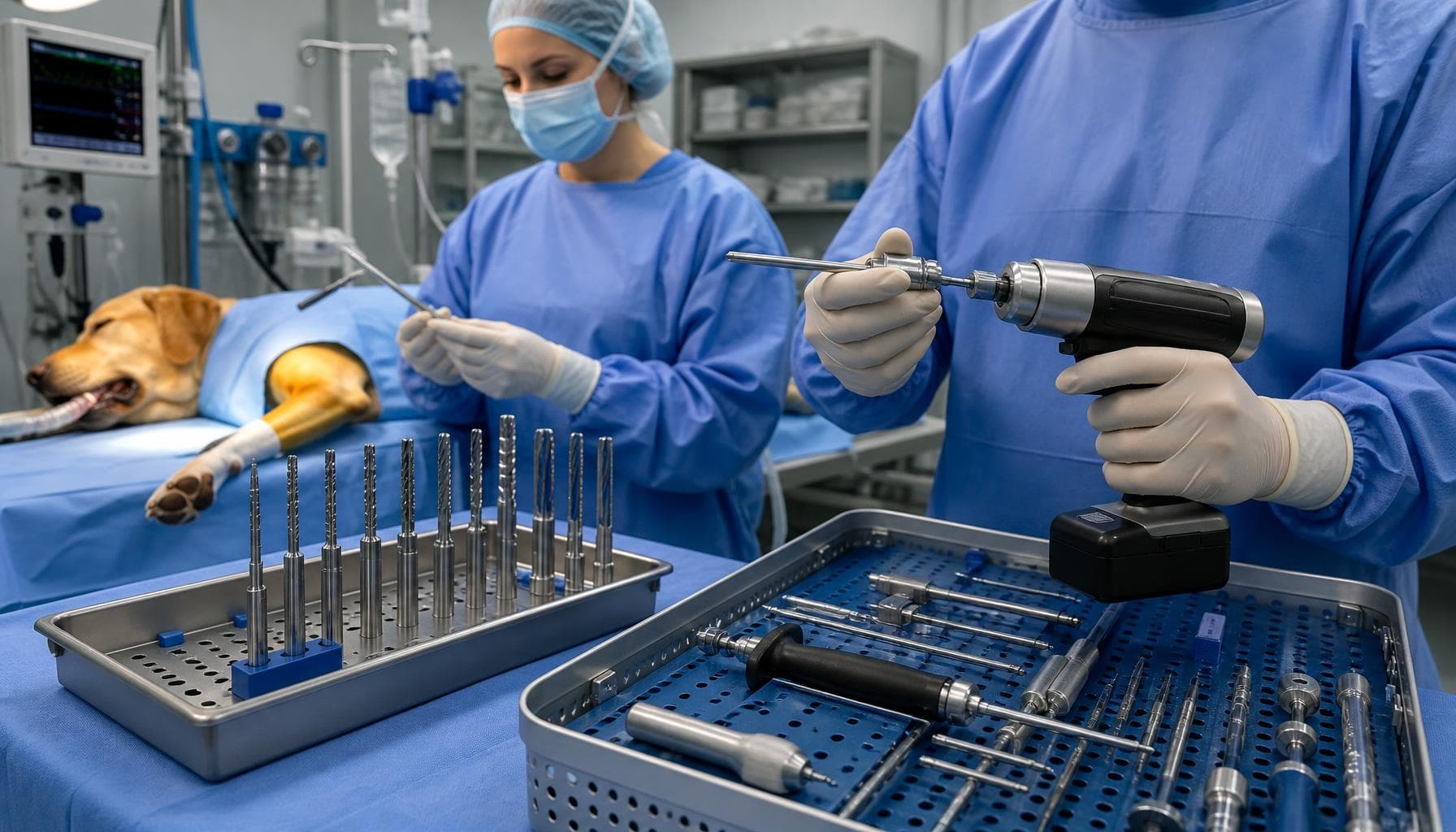
Sterile veterinary orthopedic instrument tray showing a reamer drill handpiece, couplings, depth-marked reamer attachments, and segregated accessories for inventory review.

3 Settings That Cut Procedure Time

Three configuration decisions usually matter more than headline maximum speed: speed range, torque-control behavior, and attachment interface. A system with appropriate low-to-medium speed control and stable torque delivery is often more useful for reaming than a unit selected solely for its highest revolutions-per-minute figure. The purchase specification should state the intended reamer diameter range and animal types rather than relying on a generic “orthopedic” label.

Configuration Useful specification to confirm Clinical fit Cost and uptime implication
Battery-powered reamer drill Number of batteries, charge-cycle documentation, battery sterilization restrictions Mobile trauma room, equine field support, backup capability Higher battery inventory requirement; rapid swap capability can reduce case interruption
Console-powered drill Power-cable length, console output compatibility, serviceable connectors Fixed orthopedic theater with regular caseload Fewer battery replacements, but console failure can affect multiple tools
Quick-coupling system Coupling wear limits, compatible reamer shafts, lock confirmation method Mixed fracture and joint procedures requiring multiple attachments Faster setup only if compatible attachments are stocked and identified
Dedicated reamer configuration Supported reamer sizes, torque range, reprocessing instructions for attachments High-volume orthopedic work and larger canine or equine cases More focused inventory; reduces dependence on adapters that may delay a case

During evaluation, ask for a compatibility matrix listing every handpiece, coupling, battery, cable, reamer attachment, and sterilization tray by part number. This document is more valuable than a broad promise of “universal” compatibility. For clinical workflow considerations beyond procurement, Veterinary Reamer Drill – Clinical Best Practices provides useful context on matching reaming technique to equipment condition.

Error Rate: Trained vs. Untrained Staff

There is no credible universal percentage separating trained from untrained reamer-drill staff; case mix, equipment design, and local sterile workflow vary too widely. A more defensible clinic metric is a 10-case competency review. Record the number of setup corrections, unavailable accessories, battery changes, coupling issues, and reprocessing deviations before and after structured training.

Training should cover four roles: surgeon, circulating technician, sterile technician, and biomedical or facilities contact. “Trained” should mean each person can identify correct attachments, verify coupling engagement, follow the manufacturer’s instructions for use, document an abnormal sound or vibration, and isolate a device pending inspection. It should not mean that a staff member has merely watched a product demonstration.

Based on HQS clinical observation, recurring setup problems are often inventory-control failures rather than operator-carelessness failures. Reamer attachments may be stored separately from compatible couplings, backup batteries may be charging in another department, or a sterilizable component may be incorrectly treated as a disposable accessory. A pre-case kit list reduces these avoidable gaps.

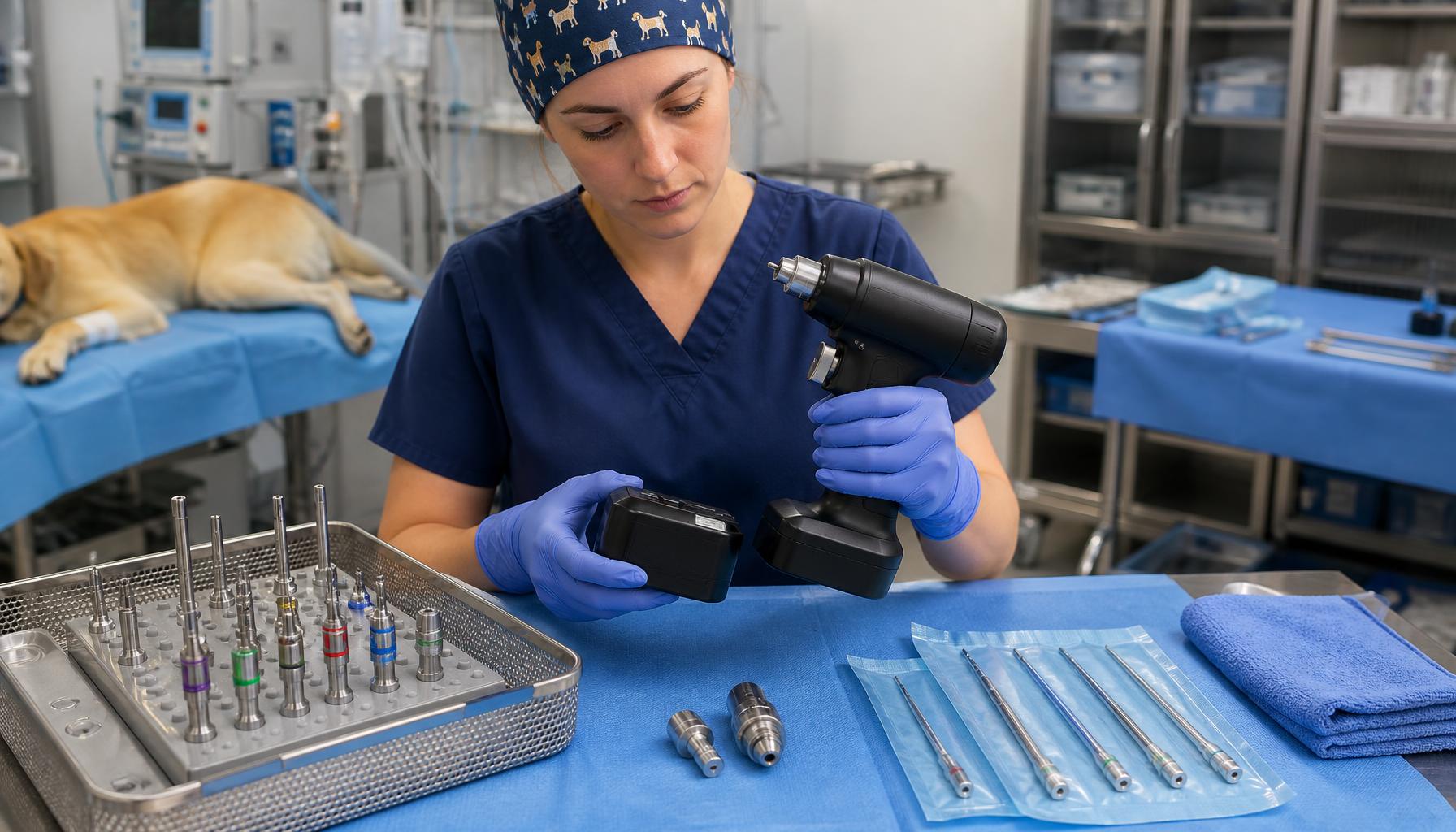
Veterinary technician checking a powered orthopedic drill battery, quick coupling, and labeled sterile-compatible reamer accessories before surgery.

Downtime Cost per Hour of Misuse

Calculate downtime using local figures rather than generic industry averages. A practical formula is: delayed operating-room time + staff overtime + rescheduled case margin + emergency rental or courier cost + repair shipping. Even a short delay can become expensive when anesthesia, surgeon availability, and operating-room turnover are affected.

For budgeting, model three events: a 30-minute attachment problem, a same-day handpiece failure, and a multi-day parts delay. Assign each event your actual hourly operating-room cost and expected case value. This makes the difference between a basic warranty and a service plan visible without inventing a universal dollar figure.

  • Ask whether diagnostic evaluation, labor, return freight, and replacement loaners are included or billed separately.
  • Clarify whether accidental damage, liquid ingress, worn couplings, and battery degradation are excluded from coverage.
  • Confirm who authorizes repairs and whether an estimate is required before chargeable work begins.

For hospitals coordinating complex orthopedic cases, equipment downtime should also be considered alongside anesthesia availability. A compatible veterinary anesthesia machine and reliable patient monitoring cannot recover lost theater time if the orthopedic power tool is unavailable.

Maintenance Interval Benchmarks

The following schedule is a procurement baseline, not a substitute for the specific manufacturer instructions for use. Some powered handpieces, batteries, cables, and consoles have different cleaning or sterilization limitations. Suppliers should provide those instructions before purchase, along with a preventive-maintenance checklist and the price of required inspections.

Frequency Task Key Action
Daily Visual condition and functional check Inspect housing, cable, battery contacts, couplings, and reamer attachment lock; remove damaged components from service.
Weekly Inventory and charging review Verify charged backup batteries, compatible reamer sizes, sterile trays, and documented accessory locations.
Monthly Wear and performance assessment Review unusual noise, vibration, heat reports, coupling play, repeat delays, and reamer-bit replacement needs.
Annual Preventive service and calibration review Arrange manufacturer-authorized inspection, replace specified wear items, confirm electrical safety records, and update service documentation.

Reamer-bit sharpness deserves separate inventory control. A dull attachment can increase resistance and heat generation even when the drill itself is functioning normally. Clinics should define a retirement rule based on visible damage, difficult cutting, repeated-use limits stated by the manufacturer, and surgeon feedback—not on appearance alone.

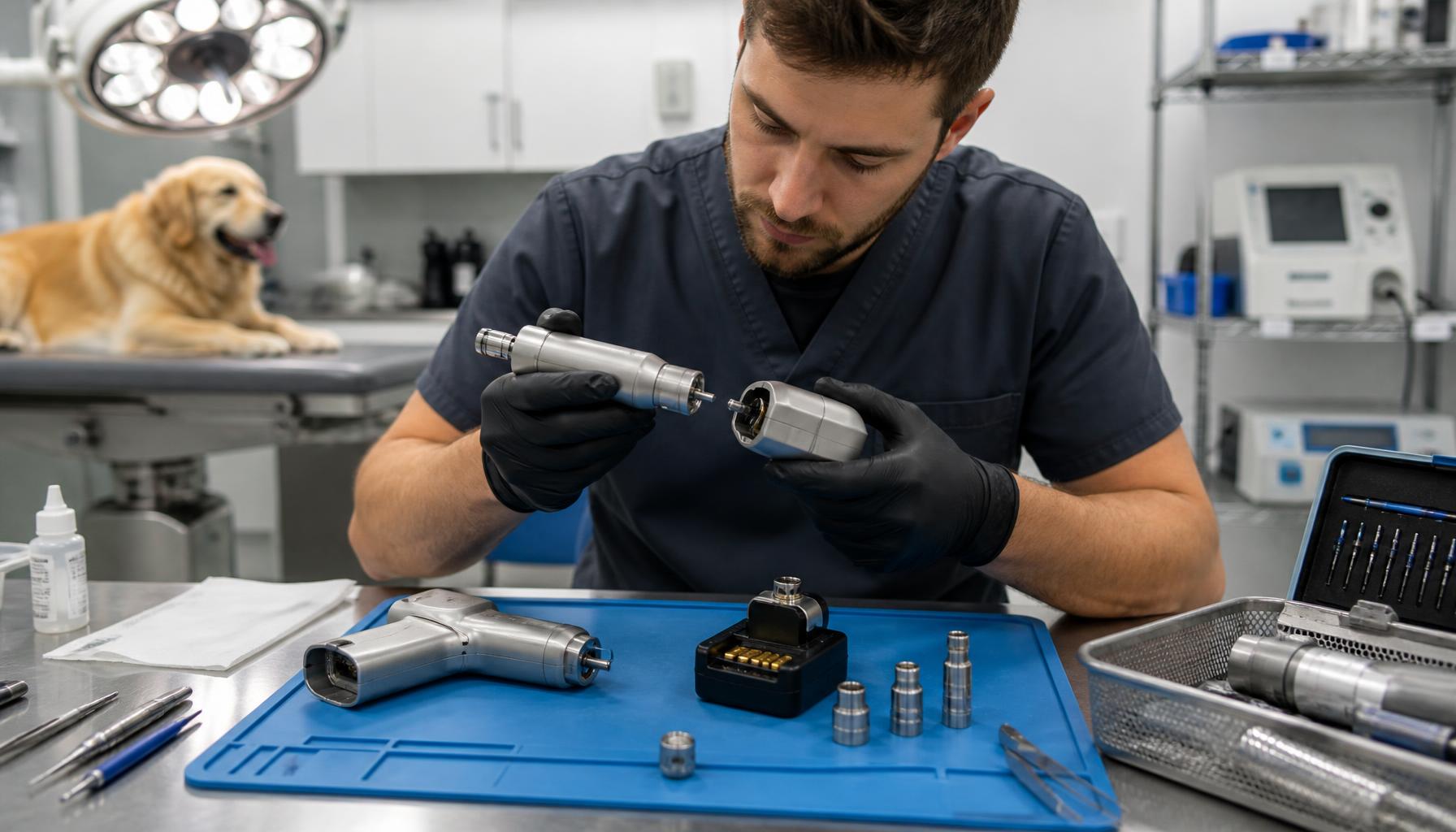
Biomedical service technician inspecting a veterinary reamer drill coupling and battery contacts during scheduled preventive maintenance.

4 Service-Plan Terms That Predict Spare-Part Delays

Compare service plans using four written terms: response time, repair turnaround target, loaner policy, and parts availability statement. “Priority service” has little value unless it identifies when the clock starts, whether shipping days count, and what happens when a part is backordered. Ask whether common items are stocked locally, regionally, or only at the factory.

Procurement should request lead-time estimates for at least four likely items: battery, charger or power cable, coupling, and handpiece seal or motor assembly. Lead times vary by destination, import documentation, customs clearance, and stock position. A supplier should distinguish between an in-stock dispatch estimate and a factory-build estimate; combining them creates false expectations.

According to our technical lab's test experience with powered orthopedic assemblies, frequent connector cleaning and early removal of worn couplings generally reveal problems before a handpiece must be sent away. That does not eliminate failure risk, but it supports a practical policy: keep one clinically appropriate backup path for the procedures the clinic cannot safely postpone.

Frequently Asked Questions

What should a Reamer Drill service plan include?

A useful plan identifies covered parts, labor, shipping, preventive inspection, expected response time, loaner conditions, exclusions, and the approval process for non-covered repairs. Ask for these terms in writing rather than accepting a general warranty statement.

Which spare parts should a veterinary clinic keep on site?

Priority stock usually includes charged batteries or the relevant power connection, a compatible charger where applicable, commonly used couplings, and procedure-specific reamer attachments. The correct list depends on the clinic’s case mix and the supplier’s confirmed lead times.

Can all reamer drill components go through the same sterilization cycle?

No. Reamer attachments, handpieces, batteries, cables, and consoles can have different cleaning and sterilization requirements. Purchase only after reviewing the manufacturer’s instructions for use and confirming that the clinic’s sterilizer capacity supports the required process.

How should an imported Bone Drill & Saw system be evaluated?

Confirm local medical-device import requirements, electrical plug and voltage compatibility, customs documentation, warranty jurisdiction, spare-part logistics, and access to authorized repair. A lower purchase price may not offset a long repair pathway for a critical orthopedic tool.

Data Summary: Optimization Impact

Decision area Data to collect Practical purchasing conclusion
Equipment readiness Four maintenance intervals and case-delay records Choose a system with a documented preventive-maintenance pathway.
Configuration Speed range, torque behavior, attachment compatibility, battery inventory Match the system to actual canine, feline, equine, or exotic caseloads.
Training Ten-case competency review and setup-correction count Budget for cross-functional training, not surgeon instruction alone.
Service support Response, repair, loaner, and parts lead-time terms Buy defined uptime commitments rather than broad reliability language.

The strongest Reamer Drill purchase is one that fits the clinic’s orthopedic workload and has an auditable recovery plan when a component fails. Confirm accessory compatibility, sterile-processing requirements, service-plan exclusions, and spare-part lead times before the first case is booked.

Explore Our Bone Drill & Saw Solutions

Interested in learning more about our professional range? Check out our full selection of specialized equipment designed for modern clinics.

Share: